

Anoushka Shankar, a globally acclaimed British American sitar player of Indian heritage, recently teamed up with the City Chamber Orchestra of Hong Kong for a sweeping orchestral rendition of Chapters — a trilogy of cathartic emotional vignettes she had composed following a heartbreak. Rob Garratt reports.
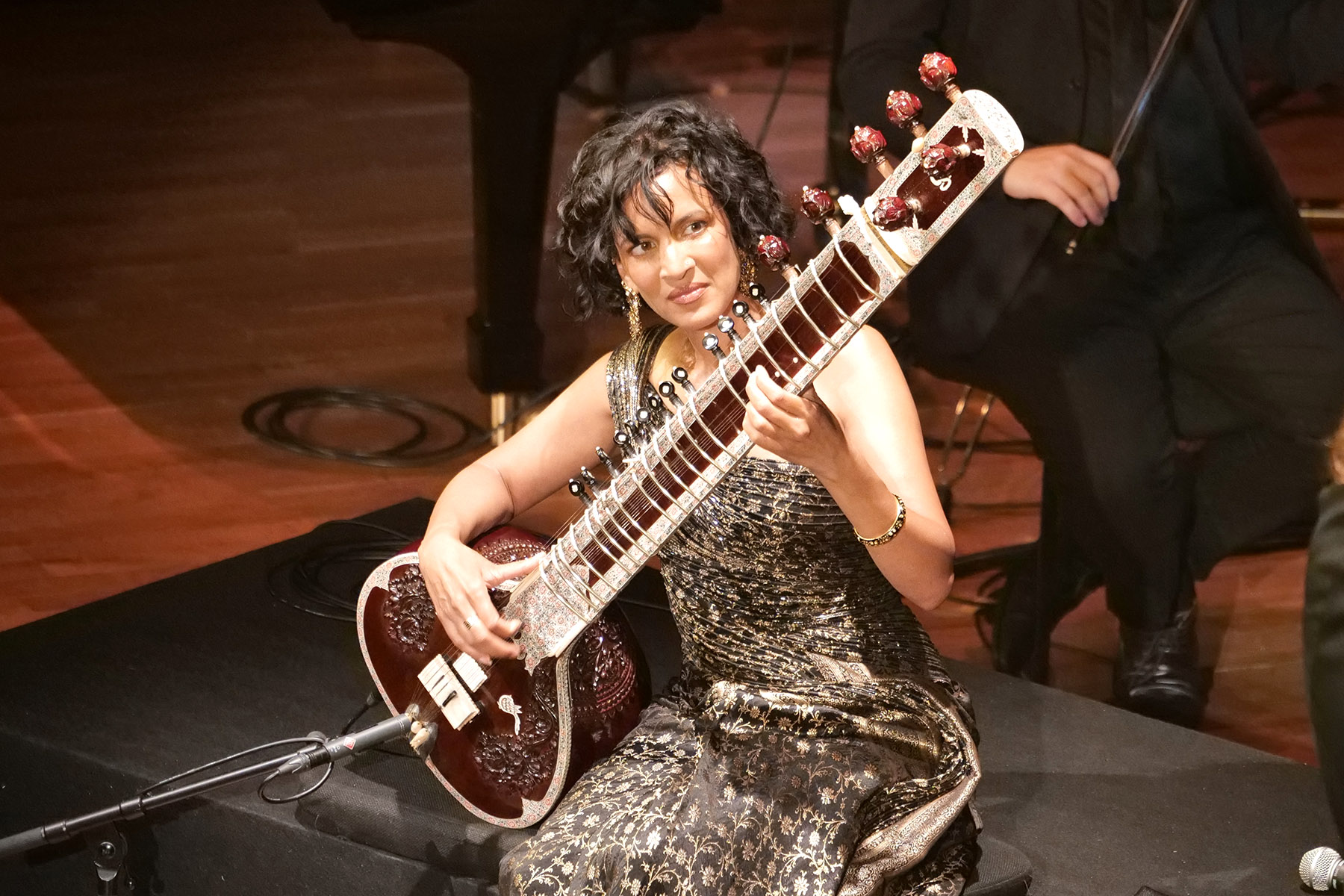
Before her recent sold-out show with the City Chamber Orchestra of Hong Kong (CCOHK), Anoushka Shankar had visited the city just once, in 1999. She was still a teenager, on tour with her father, sitar maestro Ravi Shankar (1920-2012) — arguably the world’s most famous Indian classical musician. “I have really vivid memories of the energy of Hong Kong,” remembers Shankar. “You could just tell there was this huge atmosphere everywhere.”
In the intervening 27 years, she had followed in her father’s footsteps by dedicating her life to the sitar, while carving her own distinct path — as was evident at her June 3 performance at Hong Kong City Hall. Shankar presented Chapters, an ambitious orchestral suite, premiered at London’s Royal Albert Hall as part of the BBC Proms — the world’s largest and longest-running classical music festival.
READ MORE: A decade of dialogues
The Hong Kong concert marked the work’s fourth-ever performance and first outside Europe, a major coup for the city. The huge crowd’s warm and ecstatic response said it all. Music teacher Krista Chencharick noted that she had “never seen such an enthusiastic response” to a classical music performance in Hong Kong.
Chapters of life
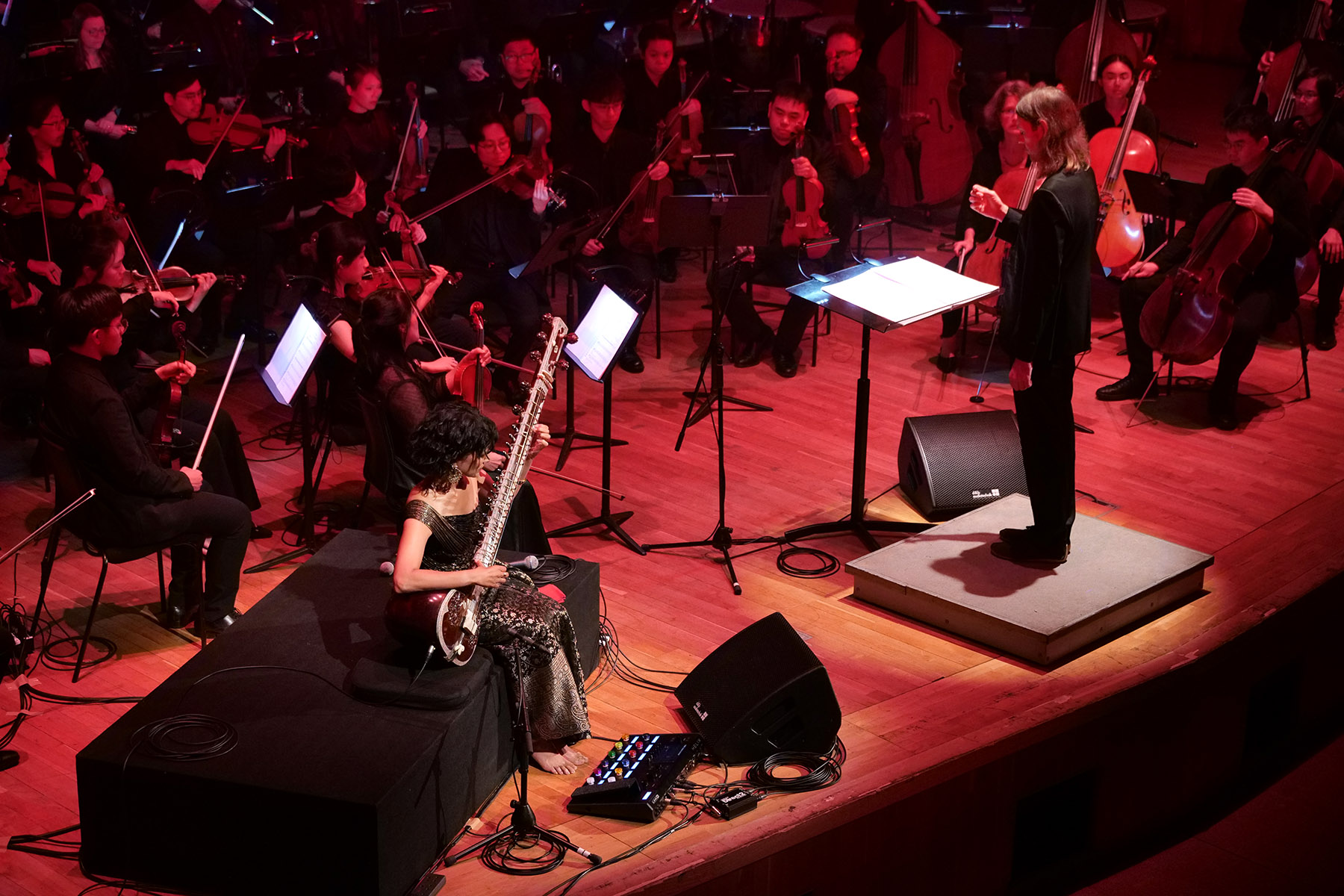
Chapters is a sweeping orchestral suite. It took a cast of more than 50 musicians to bring it to life in Hong Kong. However, its genesis happened in intimate moments of private meditation. In mid-2018, Shankar went through a very public divorce from Joe Wright, the British film director behind blockbusters Pride and Prejudice (2005), Atonement (2007) and Darkest Hour (2017). Her starkly confessional 2020 EP album Love Letters carried the subtlety of a sledgehammer — its first track, Bright Eyes, opening with the line: “Does she feel younger than me, as you’re lying in your bed?” sung by guest vocalist Alev Lenz.
The pandemic meant Shankar never got the chance to widely tour this cathartic set of emotional vignettes. Instead, she healed at home, and on holiday. On a beach in the popular Indian tourist destination of Goa, on New Year’s Day 2023, she conceived of a trilogy of short, simple EPs documenting her mental landscape while navigating “a very difficult period in life.” Music became an escapist “solace” free from commercial purpose, “because at that time, life was kind of feeling like the work”.
Soon Chapter I: Forever, For Now (2023) emerged. Recorded a few months later, Chapter II: How Dark it is Before Dawn (2024) went “deeper into what healing means to me”. Finally, Chapter III: We Return to Light (2025) welcomes a new day with the brightness of a rested mind and a healed heart.
“Whatever I go through in life, I trust that weird process of putting it into art and assuming that at least for someone out there it might be something that they need,” the artist says.
Unique challenges
Each of the three Chapters originated as an intimate, often improvised, musical encounter — duo and trio performances pairing Shankar’s searching sitar lines sparingly with acoustic instruments such as harmonium, accordion and piano. Built around slight musical sketches, they did not sound like material that could be rearranged for a full Western orchestra.
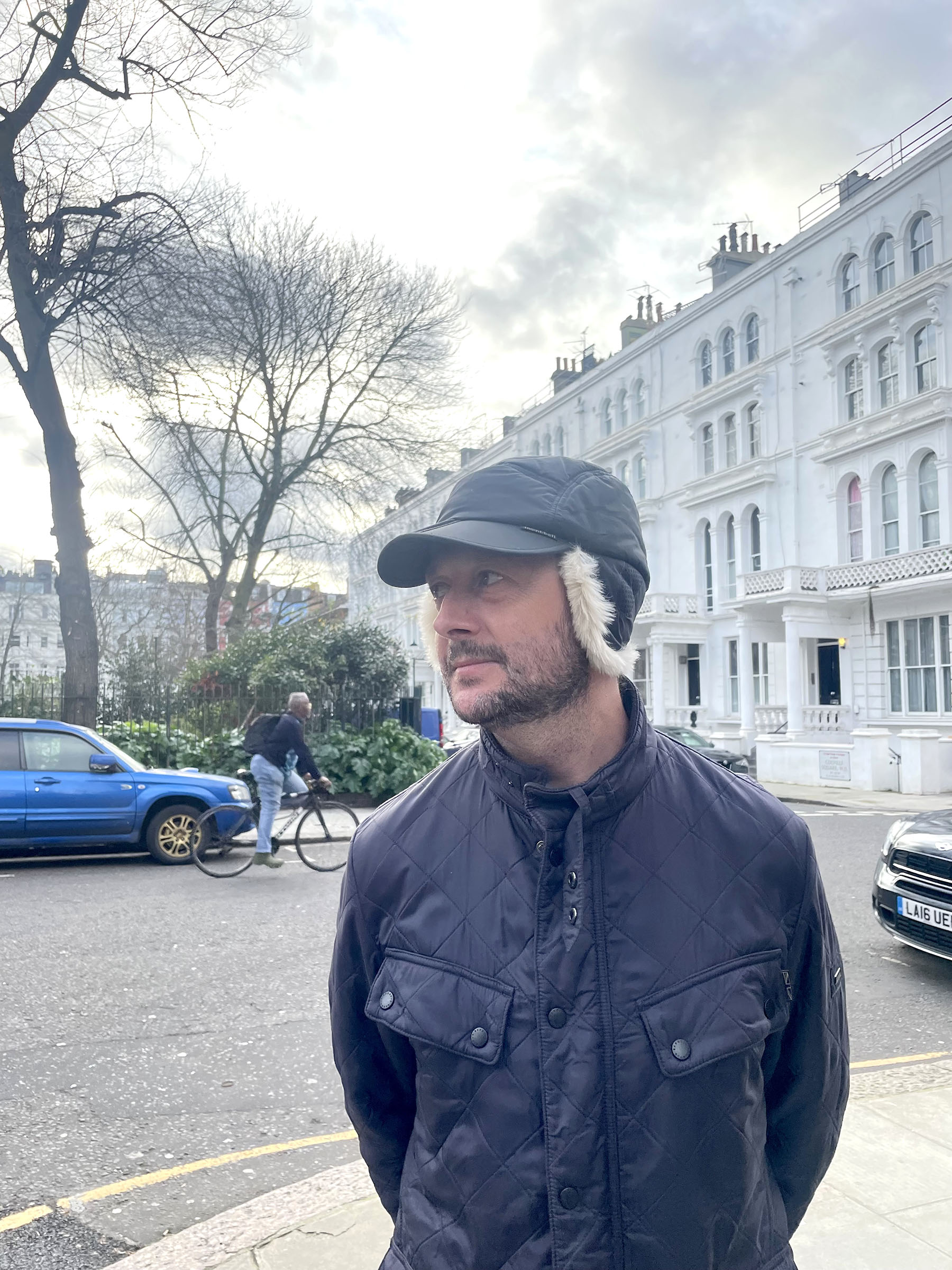
To close the emotional arc, Shankar turned to composer and conductor Robert Ames, co-artistic director and co-principal conductor of the London Contemporary Orchestra, to orchestrate the complete set of 16 stand-alone compositions into a unified orchestral work.
CCOHK played a vital role in realizing the project, joining the BBC Proms and Belgian arts center deSingel as co-commissioners. As such, CCOHK was the second-ever ensemble to tackle the resulting work — an ambitious 70-minute slow-burning suite that builds stirringly from the opening Chapter’s atmospheric soundscapes, to the soaring, sunny melodies in the final third.
Shankar joined the orchestra for rehearsals just a few days before the Hong Kong concert. “She kept herself to herself and let the music do the talking,” remembers CCOHK trumpet player Caspar Billington, noting that the first time he heard Shankar talk was on stage. “She didn’t interfere with the music, which I think for her was very powerful, carrying a lot of personal emotions.”
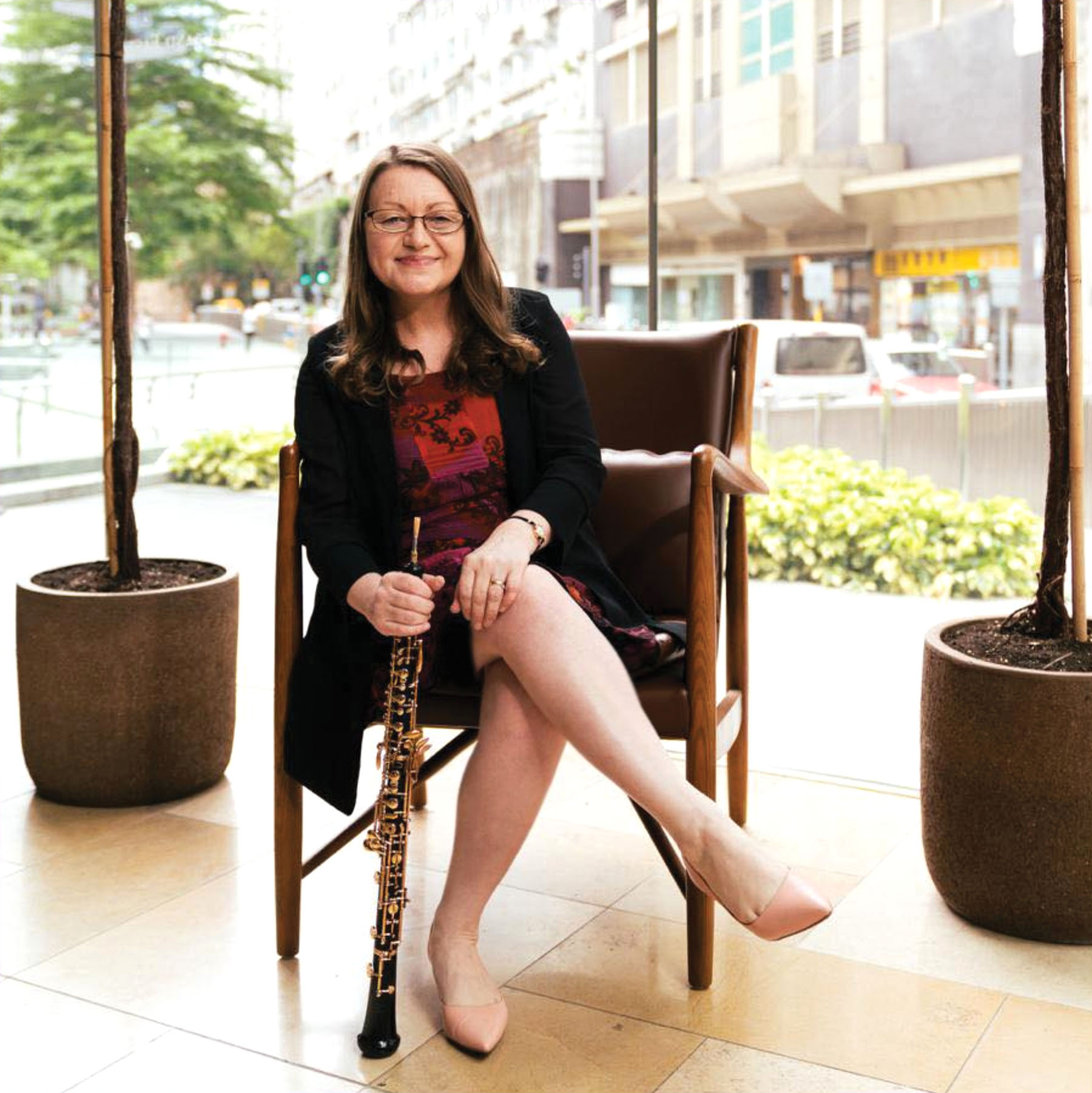
The piece’s “tricky Indian rhythms” presented unique challenges to the players, says CCOHK Artistic Director Leanne Nicholls — as did the circular bowing required of string players in creating the minimalist drones. “The result may sound simple to the audience, but on the inside for the musicians, there were quite a few tricky things going on.”
Billington describes the score as “unlike anything I’d played before,” drawing attention especially to the piece’s “vast dynamic range”. However, for him the greatest challenge was staying focused amid the music’s meditative flow. “The challenge as a musician was not to get too drawn into it,” he adds. “I felt myself relaxing into it, being whisked off somewhere else.”
Not everyone arrived at the same destination, though. Musician James W Hedges, a member of the Hong Kong-based experimental instrumental rock band Virgin Vacation, says that he enjoyed aspects of the performance but left the concert feeling that at times, Ames’ orchestration detracted from the intimacy of the original EP releases.
“I thought it was much better with the more minimal arrangement in the original recording. I guess the orchestra here didn’t get so much practice.”
For Hong Kong-raised Indian music enthusiast Ashvin J, the music was secondary: “It meant a huge amount to the city’s Indian community that Anoushka chose to perform such an important personal work here.”
The road ahead
Between performing Chapters in Europe and bringing it to Hong Kong, Shankar was in Canada to present her father’s second concerto, Raga-Mala, with the Toronto Symphony Orchestra. While it’s an honor to be able to keep her father’s repertoire alive, a career spent exclusively paying tribute would not be completely satisfying, says the artist, who saw little of her celebrity father during her childhood.
However after her parents married when she was 7, her father began earnestly mentoring his youngest daughter in the Hindustani classical tradition. By 13, she was on stage, and at 17, her eponymous debut album — a traditional instrumental set composed and produced by her father — had been released.
“A lot of my choices were family-led,” Shankar says. “I was a pretty Indian princess, daughter of someone legendary, playing an exotic instrument that they could place on a platform and put flower artwork around.”
ALSO READ: Brazilian beats
However, she found her own voice with Rise (2005), an ambitious mix of Indian tradition with electronic production, which she considers her true debut album. Her sonic horizons expanded with subsequent releases — the flamenco fusion work Traveller (2011), and Land of Gold (2016) — her response to the European migrant crisis around 2015. Since Chapters, these once-controversial cultural crossovers are being more favorably reassessed. “I can really see a shift in how I’m perceived,” says the artist. “What I’ve been doing for a long time now makes sense to people.”
In the coming months, Shankar will be touring Chapters in Singapore, Malaysia and Japan before closing the year with orchestral performances in Antwerp and Prague. She is quick to thank CCOHK for kick-starting Chapters’ Asia sojourn and having “trust and faith in this piece before it even existed”.
The writer is a freelance contributor to China Daily.
