

Two years ago, K11 Craft and Guild Foundation — a Hong Kong-based charity dedicated to the preservation of traditional Chinese artifacts — partnered with the Palace of Versailles Research Centre (CRCV) on a project that led to the Prosocour Database — a growing list of noteworthy individuals present at the French court before the beginning of the French Revolution in 1787.
To mark this occasion, CRCV Director Mathieu da Vinha gave a lecture, titled “Gold, Silver, and Jewellery: Luxury and Covetousness at Chateau de Versailles” at the Gentry Club Central in Hong Kong last month.
READ MORE: Back to the future
During the lecture, da Vinha shared his team’s findings, revealing that a number of Versailles’ treasured objects were inspired by Chinese culture. While Louis XIV — who ruled France from 1643 to 1715 — shared a special relationship with his Chinese counterpart, Emperor Kangxi — who reigned from 1661 to 1722 — it was during Louis XV’s reign (1715-74) that the chinoiserie style gained popularity in the French court. In their French adaptations, Chinese porcelain objects were fitted with gilded bronze mounts.
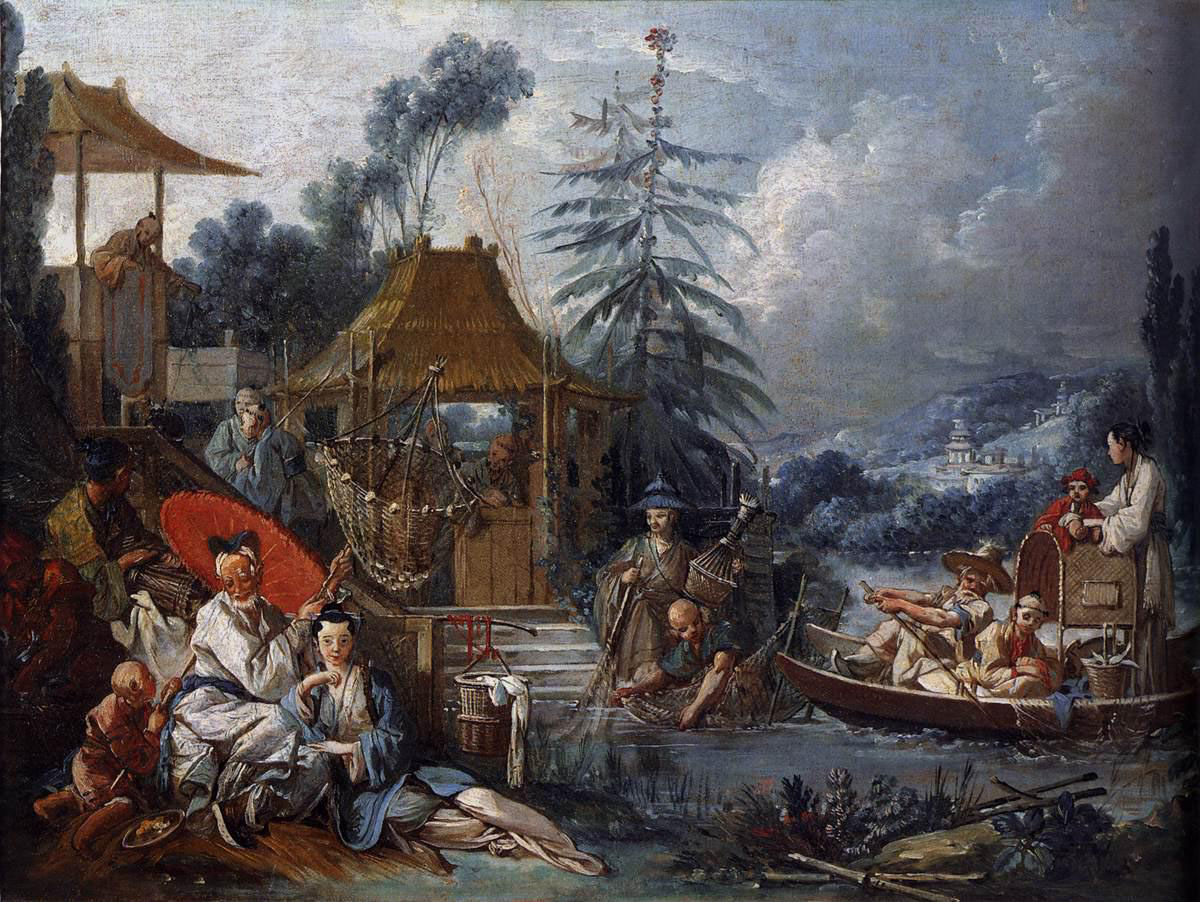
François Boucher (1703-70), a leading rococo painter, adapted cultural motifs from Chinese-made lacquer screens and paintings in his tapestries. His La Pêche Chinoise (Chinese Fishing) depicts a Chinese fishing village, painted in French rococo style. Subsequently, the image became part of a famous series of tapestries known as La Tenture Chinoise (Chinese Tapestry), woven by French artisans and sent over to Emperor Qianlong — who reigned from 1735 to 1796 — as gifts by Louis XV.
ALSO READ: Hong Kong artists shine bright at Florence Biennale
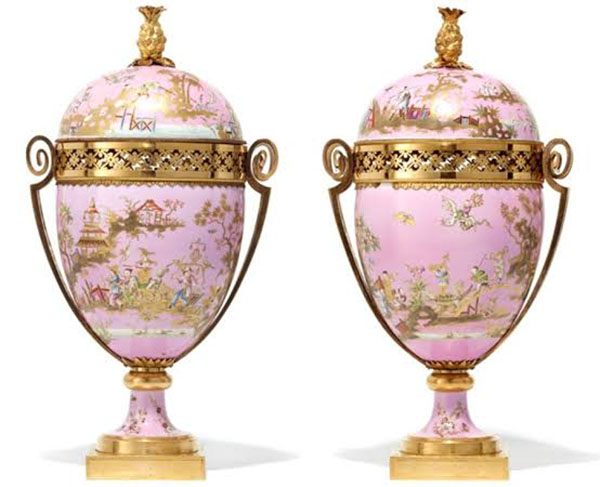
The lecture by da Vinha also drew attention to a pair of egg-shaped vases produced in 1779 at the French crown-protected porcelain factory Manufacture de Sèvres. The chinoiserie motifs — pagoda-roofed structures, for example — on the surface were painted by Jean-Jacques Dieu, while the bronze finish was added by Jean-Claude-Thomas Duplessis. Another pair of Sèvres-made garden vases from 1780, created by Antoine-Joseph Chappuis and Henry-François Vincent, also depicted a Chinese scene. The decorative plaque on which Charles-Éloi Asselin painted his imaginary portrait of Emperor Qianlong in 1776 was also made in the Sèvres factory.
