

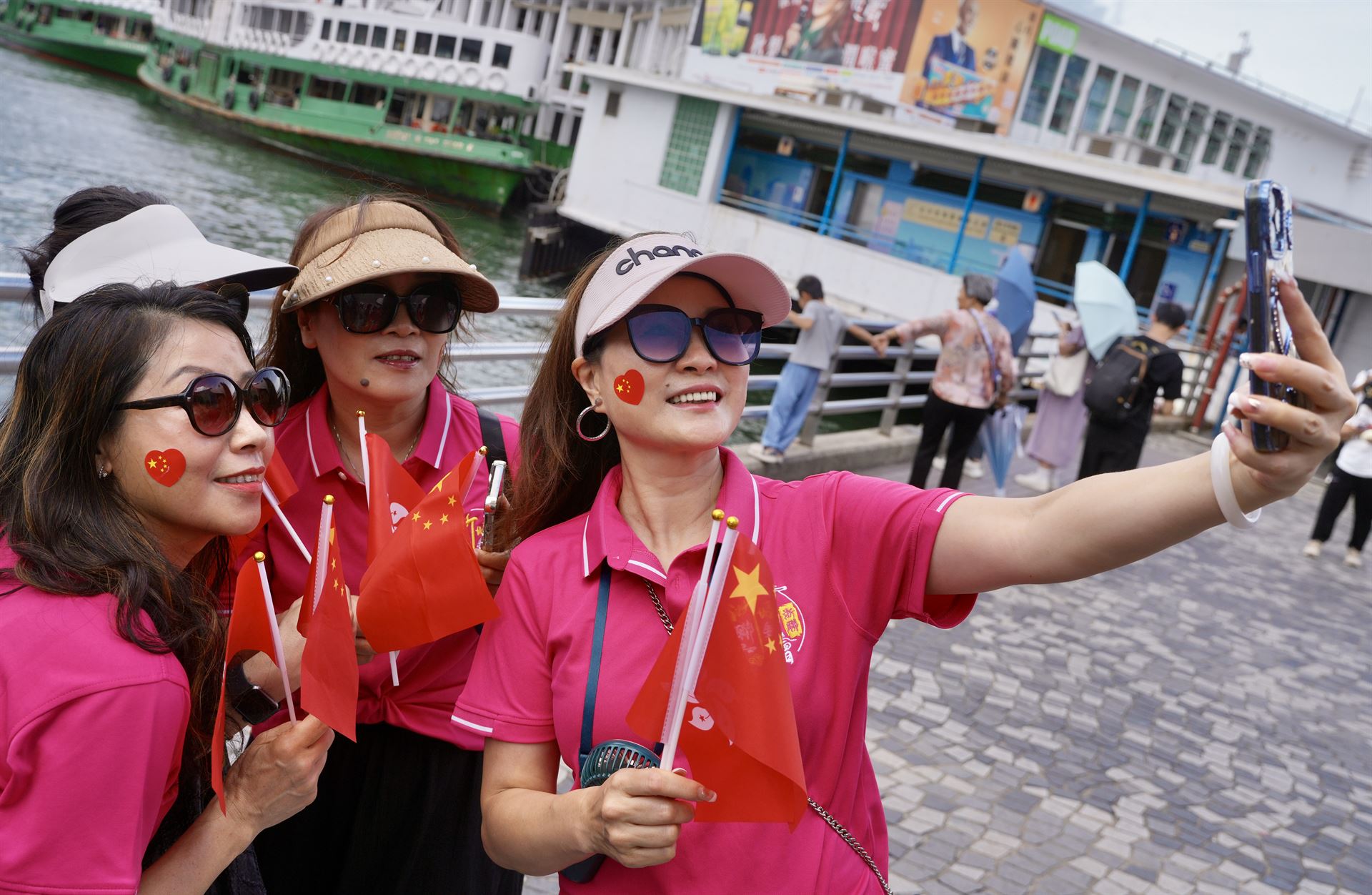
Hong Kong on Wednesday showered visitors and residents with a suite of enticements — free museum access, public transportation concessions, retail perks, and celebratory events — as the city marked the 29th anniversary of its return to the motherland.
Free entry was offered across the city’s flagship cultural attractions, such as the Hong Kong Science Museum and Hong Kong Space Museum. The Hong Kong Wetland Park also opened to all comers free of charge, joined by free admission to regular exhibitions at M+ Museum and the Hong Kong Palace Museum (HKPM).
The HKPM said on Wednesday that free admission tickets had been completely booked the day before. However, visitors were able to enjoy free access to designated exhibitions in M+ without advance registration.
ALSO READ: Birthday show for HKSAR
By 10 am, the footbridge into the West Kowloon Cultural District — Hong Kong’s cultural precinct that accommodates both the HKPM and M+ — was already thick with visitors. Parents hurried along, young children in tow, clearly intent on arriving before the museums’ official opening times to secure an early spot in the waiting lines.
Mark Huang was one of the early birds, accompanied by his son. Huang said he had made a point of bringing his child out on the anniversary day to experience the city’s festive spirit and be part of the celebration.
“I’ve watched Hong Kong grow and thrive over the past years, and I am proud of how prosperous it has become,” he said. “July 1, with the national flags and HKSAR’s regional flags fluttering from every corner across the city, is certainly a celebration of that progress one can see and feel.”
Huang noted that his son’s kindergarten had earlier introduced students to the history of Hong Kong’s return, in the hope of cultivating a deeper appreciation for both national and local development trajectories among children, as well as a greater sense of national identity and belonging.
ALSO READ: CE Lee vows to speed up formulation of Hong Kong's five-year plan
His son’s interest in Chinese history and culture, Huang added, had already taken root. The boy had been to HKPM before but was keen to return for exhibitions that showcase the Forbidden City of the Ming (1368–1644) and Qing (1644–1912) dynasties.
“The architecture, calligraphy, paintings, costumes, and more — he seems to think that no matter what he’s already seen, there’s always more waiting for him to discover,” said the father.
Additionally, 14 revitalized heritage sites — among them Central’s Tai Kwun, the sprawling former police headquarters, and the Former Police Married Quarters on Hollywood Road, a converted old police dormitory that now houses studios and shops — each added extra free guided tours.
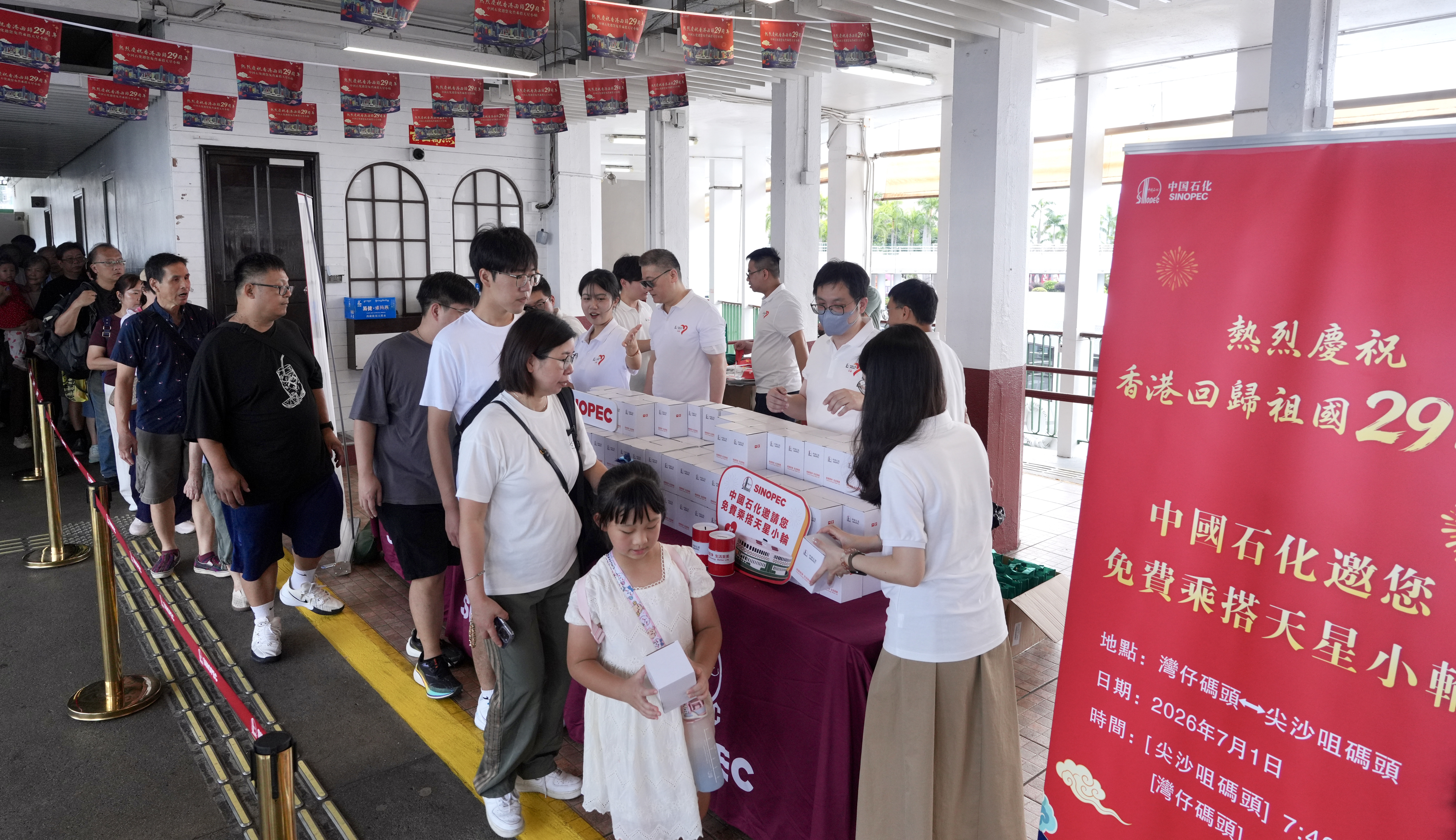
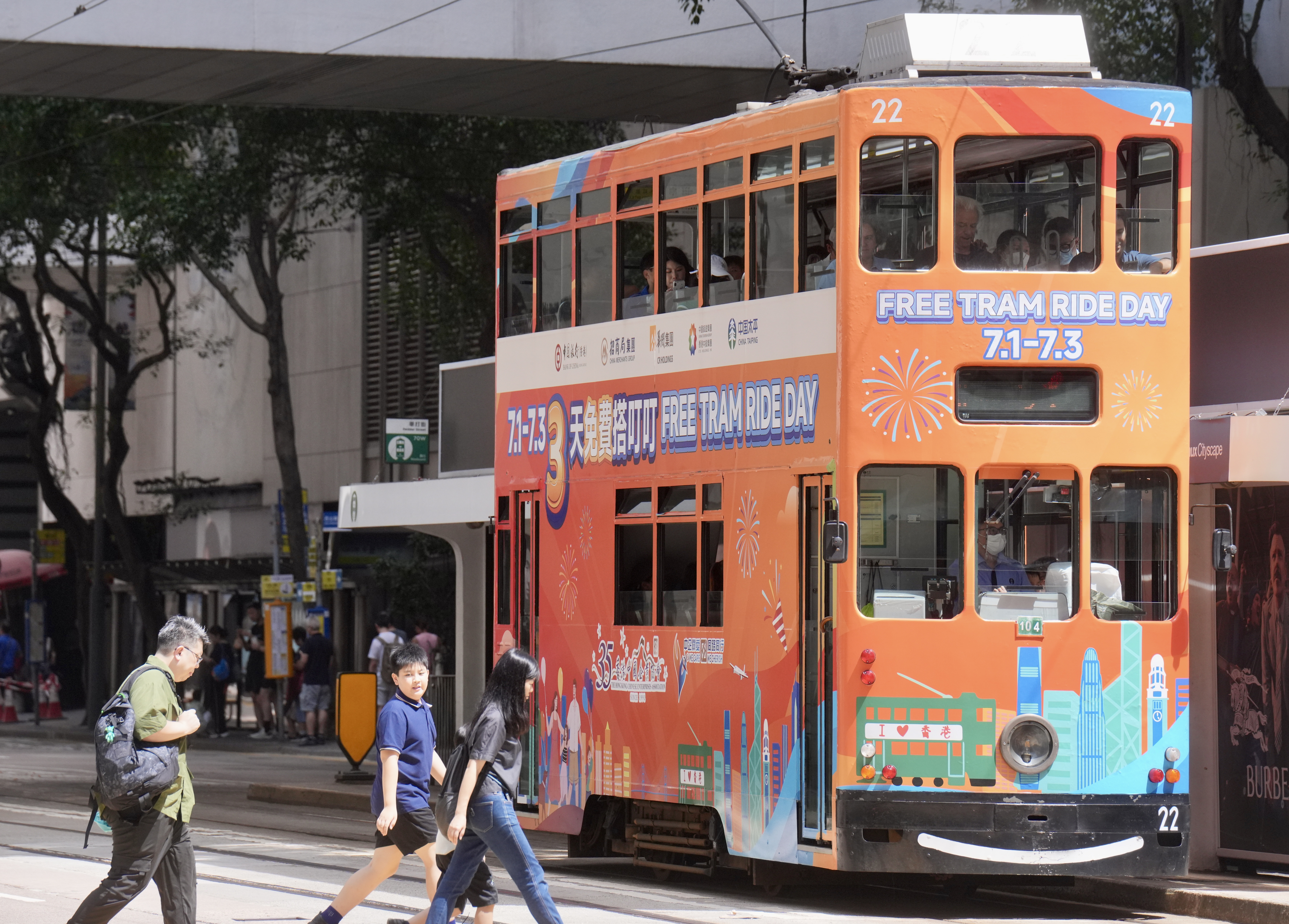
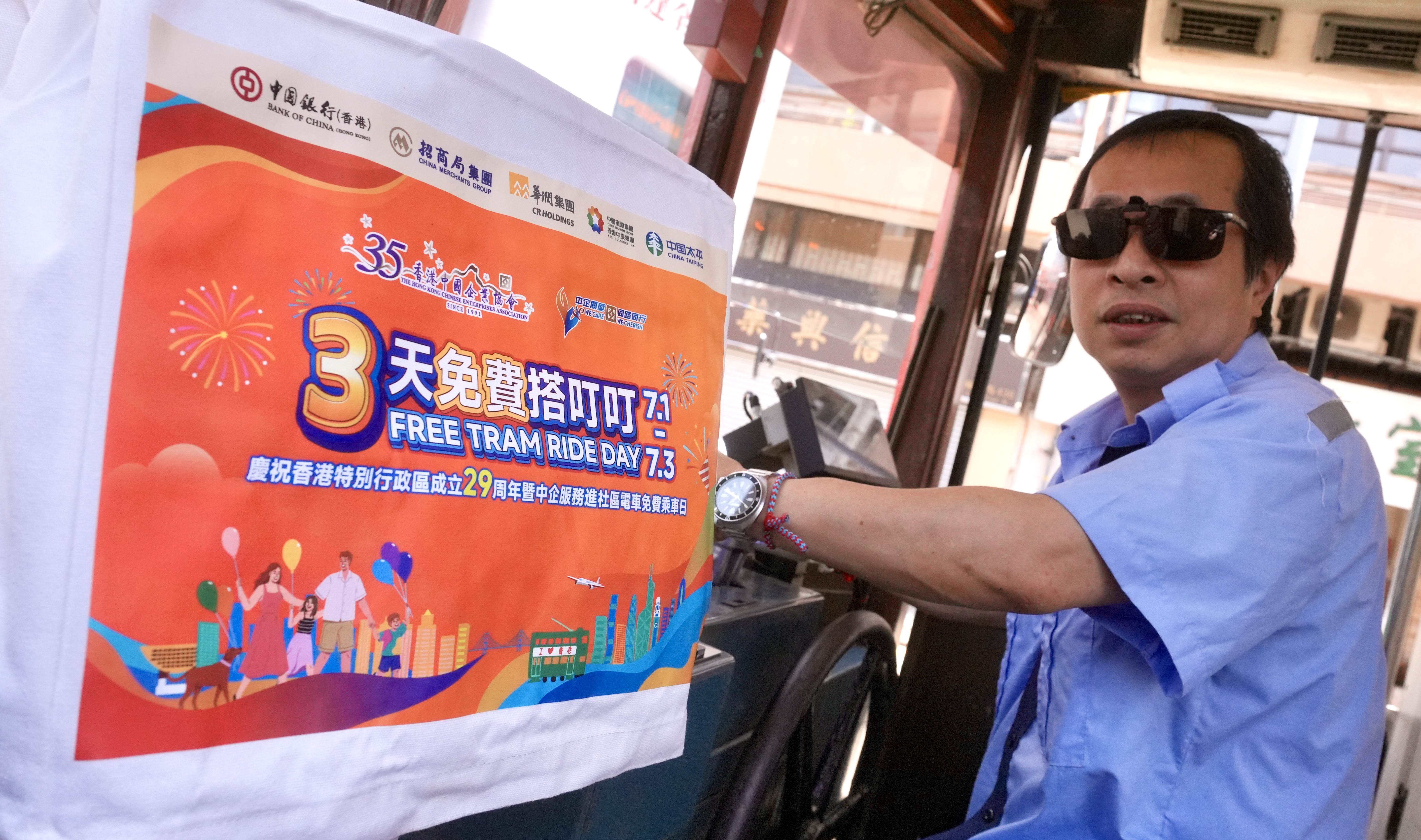
Getting around the city was just as seamless. The MTR Corp raffled off 71,000 free single-journey tickets; the city’s vintage double-deck trams, dubbed “Ding Ding” for their distinctive bell, offered free rides on all routes from Wednesday to Friday; and the Star Ferry waived fares on its Tsim Sha Tsui–Wan Chai route — a scenic harbor crossing — on Wednesday.
Xie Yu and Li Jialin, close friends who had come to Hong Kong from Chongqing — a metropolis in the country’s southwest — for a day trip, were up early to board the “Ding Ding” to Kennedy Town. They realized, “much to their delight”, that their visit had fallen on the July 1 celebration.
ALSO READ: Toasts and best wishes from space
The sweltering weather did little to discourage the tourist crowd, who stayed at tram stops for photos and lined up to hop aboard. “The tram was very crowded and moved slowly, with its own charming character,” Xie noted.
Li added that they planned to make the most of their brief visit and the celebratory events to experience as much of Hong Kong as they could.
Over 3,000 merchants citywide also handed out coupons, with many offering 29 percent off all dine-in bills throughout the day.
Also on Wednesday, the waterfront at North Point’s East Coast Boardwalk was turned into an open-air gallery. Its roadside wall bears a 100-plus-meter banner featuring parts of Chinese artist Liu Zhong’s traditional Chinese ink scroll.
The work, completed in 2023 to commemorate the 10th anniversary of the Belt and Road Initiative, traces the journey of a giant panda — China’s time-honored emblem of peace and friendship — along the Belt and Road Initiative's (BRI) land and sea corridors across five continents.
Li Lee, a member of the Eastern District Council and one of the exhibition’s organizers, said the display sought to capitalize on the return anniversary to heighten public interest in the artwork, and thereby, to raise their awareness of the BRI.
The banner will be on view for one month.
Zeng Ziwen and Roys Zhang contributed to the story.
