

Hong Kong is going all out to elevate its global shipping hub status, with new rules in the making to keep more vessels under its flag and offer high-value maritime services in an industry marred by geopolitical uncertainties. Gaby Lin and Wang Zhen report.
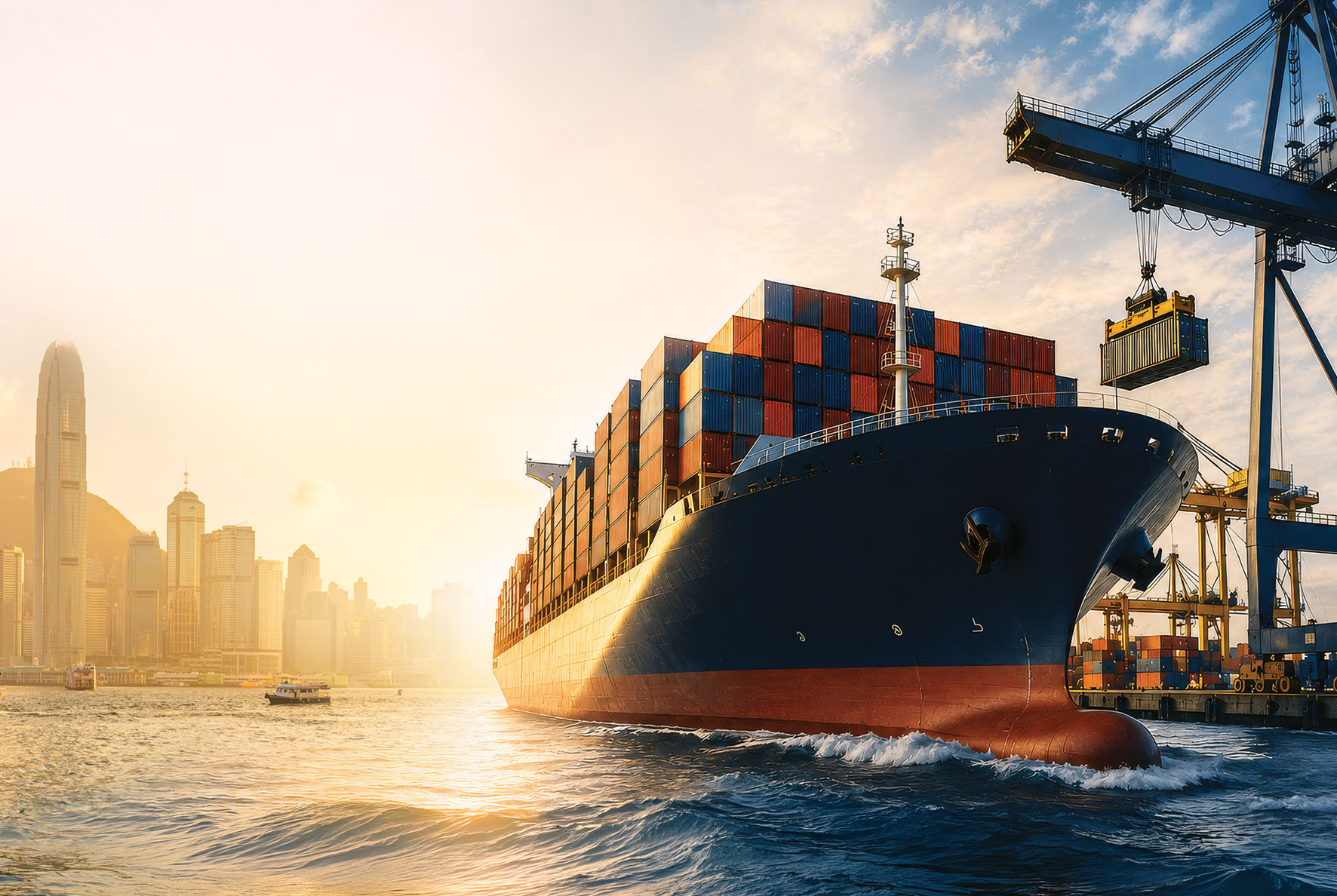
Hong Kong’s maritime industry is at a critical turning point.
With competition having intensified in recent years, the traditional shipping hub’s once-unassailable position in Asia has been eroded. Advanced ports have sprouted across the region, rival centers are rapidly upgrading their services and policy frameworks, while mounting geopolitical uncertainties are compounding the pressure, leading to a tonnage outflow from Hong Kong.
Navigating challenges
Alarm bells are ringing, prompting a growing, shared realization within the Hong Kong Special Administrative Region government and the private sector. The searing question is: How can the city stay competitive and keep vessels under its flag? There is no alternative but for the SAR to reinvent itself and move toward a high-value, more sophisticated maritime services ecosystem.
As a two-month public consultation exercise on Hong Kong’s inaugural five-year development plan continues, the city’s maritime ambitions have come under the microscope.
READ MORE: HK leverages maritime strengths to bolster global shipping's green shift
According to the consultation document, the city aims to reinforce its status as an international maritime center, with specific goals to consolidate its advantages as a shipping registry and foster high-value-added maritime services.
Industry insiders are already moving ahead of the blueprint, seeking opportunities to strike gold in specialized niches as new pockets of growth emerge, particularly in cross-border maritime financing structures and specialized ship registration regimes.
Under international law, every merchant ship must register and sail under the flag of a certain jurisdiction. The registration determines the laws that regulate a vessel’s operation, as well as the authority responsible for enforcing safety, environmental and labor regulations.
The Hong Kong Shipping Register, operated by the Marine Department, has been one of the world’s leading registries thanks to its distinctive appeal, including its simple registration process, an efficient and business-friendly civil service, and a shipping incentives tax regime.
However, since early 2025, Hong Kong has seen an outflow of registered ships as a fair number of shipowners have reflagged their vessels elsewhere to diversify fleet exposure and manage regulatory risks in the face of Sino-US trade disputes and global geopolitical volatility. This has led to the SAR losing its long-held position as the world’s fourth-largest ship registry, having been overtaken by Singapore, according to maritime publication, Lloyd’s List.
By the end of May, Hong Kong’s registry had 1,998 vessels with a gross tonnage of about 108 million — down more than 12 percent year-on-year.
The shifting geopolitical landscape is also affecting other ship registry territories, particularly those commonly associated with a so-called “flag of convenience” as authorities worldwide tighten compliance requirements for merchant vessels amid rising uncertainties, says Hing Chao, chairman of the Hong Kong Chamber of Shipping.
A “flag of convenience” refers to the practice of registering a vessel in a jurisdiction whose registry typically offers extremely low tax rates and high administrative flexibility. Those registries, such as Panama and Liberia, are attractive to many shipowners seeking operational efficiency.
“A lot of shipowners are now looking to move their flags outside Panama as they are facing increasingly stringent compliance issues,” Chao says.
While stricter regulations help ensure a healthy market and reduce exposure to various risks, increasing requirements on safety, sanctions screening, emissions, ownership transparency and inspections as such may also leave registries bogged down in bureaucratic processes, slowing operations and driving up fleet costs.
Hong Kong, however, doesn’t compromise on regulatory rigor. Instead, its competitive edge lies in institutional efficiency. Chao says the city will be “fundamentally competitive” under such circumstances.
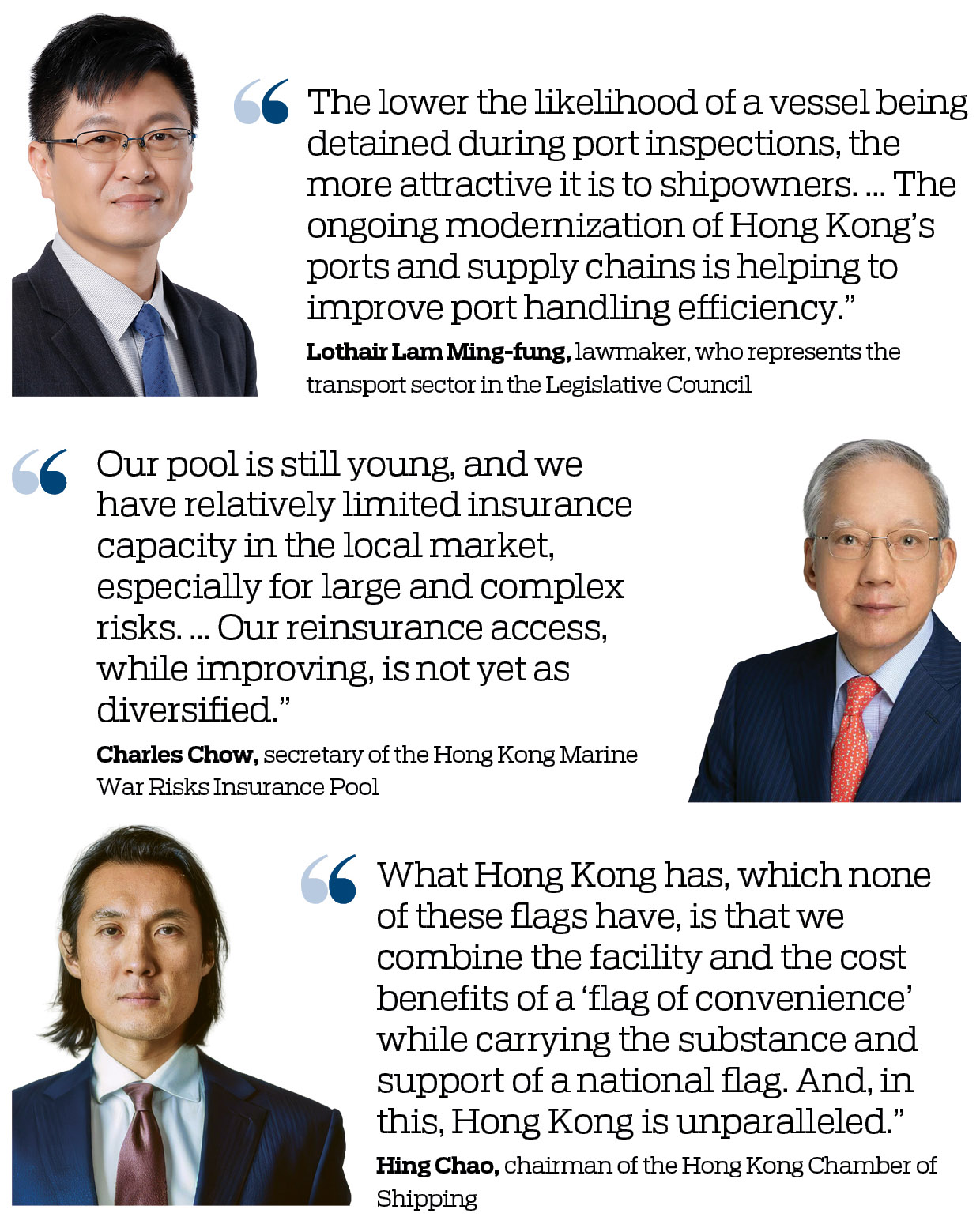
“What Hong Kong has, which none of these flags have, is that we combine the facility and the cost benefits of a ‘flag of convenience’ while carrying the substance and support of a national flag. And, in this, Hong Kong is unparalleled,” he says.
Lawmaker Lothair Lam Ming-fung, who represents the transport sector in the Legislative Council, is on the same page, saying Hong Kong’s advantages as a ship registry are reflected in its strong international reputation and well-developed supporting infrastructure. The biggest draw, however, is the consistently low detention rate of Hong Kong-registered ships.
“The lower the likelihood of a vessel being detained during port inspections, the more attractive it is to shipowners. Furthermore, the ongoing modernization of Hong Kong’s ports and supply chains is helping to improve port handling efficiency,” the former ship captain says.
According to an International Maritime Organization audit report, Hong Kong-registered ships’ port state control detention rate stood at 0.69 percent — significantly below the global average of 3.3 percent.
“Now that the HKSAR government is planning to amend the rules for merchant shipping registration … this will be attractive to more shipowners,” Lam says.
At a LegCo meeting in June, the HKSAR government briefed lawmakers on its proposals to overhaul its ship registration rules. It plans to introduce a dual-flag registration arrangement for ships, allowing vessels to be registered in the SAR, as well as another registry, subject to certain conditions. Although similar mechanisms exist in other ship registry jurisdictions, the proposal, if realized, would mark a notable shift in the local registration regime.
In a LegCo filing, the government says this will “more effectively align with the diverse business models of international shipping enterprises and help attract more international shipowners to choose Hong Kong for ship registration”.
Experts say a rebound in registered tonnage is only half the battle. The real victory lies in building a more comprehensive, high-value-added maritime services ecosystem that can better support different stakeholders.
While Hong Kong consistently ranks among the world’s top equity markets and serves as a premier international initial public offering powerhouse, Chao says that the capital market specifically tailored for the maritime industry remains relatively underdeveloped.
He believes there would be enormous potential for Hong Kong to foster its maritime finance services in terms of capital raising and listing. “We can also produce other types of financial products in relation to the maritime industry, not just shipping, but also marine technology, ports and infrastructure companies.”
While building a specific maritime capital market is a long-term play, the marine insurance sector can be an immediate, high-stakes gold mine.
“Hong Kong already has abundant suppliers for H&M (hull and machinery) and P&I (protection and indemnity) insurance. In contrast, marine war risk coverage is rare and represents a niche, highly specialized market, which is a critical area for shipowners and the wider insurance market, but not well served by the local market,” says Charles Chow, secretary of the Hong Kong Marine War Risks Insurance Pool.
Expanding services
Aimed at addressing the market gap and bolstering underwriting capacity for local and Chinese mainland shipowners facing war, piracy and other geopolitical risks, a dedicated marine specialty risks insurance pool was launched in Hong Kong late last year with support from five local underwriters and the Insurance Authority.
The pool now covers around 1,000 vessels in less than seven months, representing a nearly hundredfold increase from its inception when roughly 10 vessels were enrolled.
Nittin Handa, director of regulatory affairs of the Hong Kong Shipowners Association, lauds the pool’s convenience, saying it offers a more streamlined and cost-effective alternative for shipowners, noting that shipowners in Hong Kong previously had to navigate through a broker to access traditional insurance markets. Now, they can secure coverage directly from the local pool to cut costs.
In the same vein, Chow says the pool is a more cost-effective option for many vessels, particularly those operating in Asia, due to the closer time-zone alignment, as well as language and cultural familiarity which can enable more seamless communication with shipowners in the region. “We’re far more accessible than the London market, and our insurance providers are familiar names to local clients,” he says.
He also highlighted Hong Kong’s well established legal system based on common law, and the robust financial infrastructure that’s characterized by the free flow of capital, strong banking and ship financing institutions, and an absence of foreign exchange controls.
ALSO READ: Hong Kong ranks fifth in global ocean competitiveness
However, challenges remain. Chow says that Hong Kong’s risk pool still lacks brand recognition and lags in its information technology and data infrastructure, creating limitations in accelerating insurance quotations and risk monitoring, thus prompting many international shipowners and brokers to still choose London.
“Our pool is still young, and we have relatively limited insurance capacity in the local market, especially for large and complex risks, compared to London or continental European markets. Our reinsurance access, while improving, is not yet as diversified,” he says.
Nevertheless, Chow is optimistic about the future. “We aim to grow the number of enrolled vessels (of the pool) from approximately 1,000 to around 2,500 in three to five years, with meaningful penetration in India, South Korea and wider markets, or a market share of 30 percent locally, and maintain our strong position in Asia, while selectively covering Middle East-related trades.”
He envisions the pool becoming Asia’s leading marine war risk facility and a credible alternative to London for regional fleets. The ultimate goal is to develop a recognized pricing benchmark for Asia-originated war risks.
“The HKSAR and the Chinese mainland can gradually transition from being price takers to price makers in selected marine war risk segments,” says Chow.
Contact the writers at gabylin@chinadailyhk.com
