

At a family-run snack shop tucked away in an alley, locals return for suanshui, a distinctive soup that has become a symbol of home, Bai Shuhao reports in Huichang, Jiangxi.
In Huichang, Jiangxi province, summer rain arrives without warning — sudden, heavy and absolute. By the time I stepped into Old Tree Cold Bar, one of the county's most beloved snack shops, the storm had just passed. The pavement was still slick, and rainwater pooled on the empty plastic tables outside.
Business is always slow when it rains, the owner, Zhong Lanping, told me with a shrug. She seemed used to it.
READ MORE: The quiet power of a county
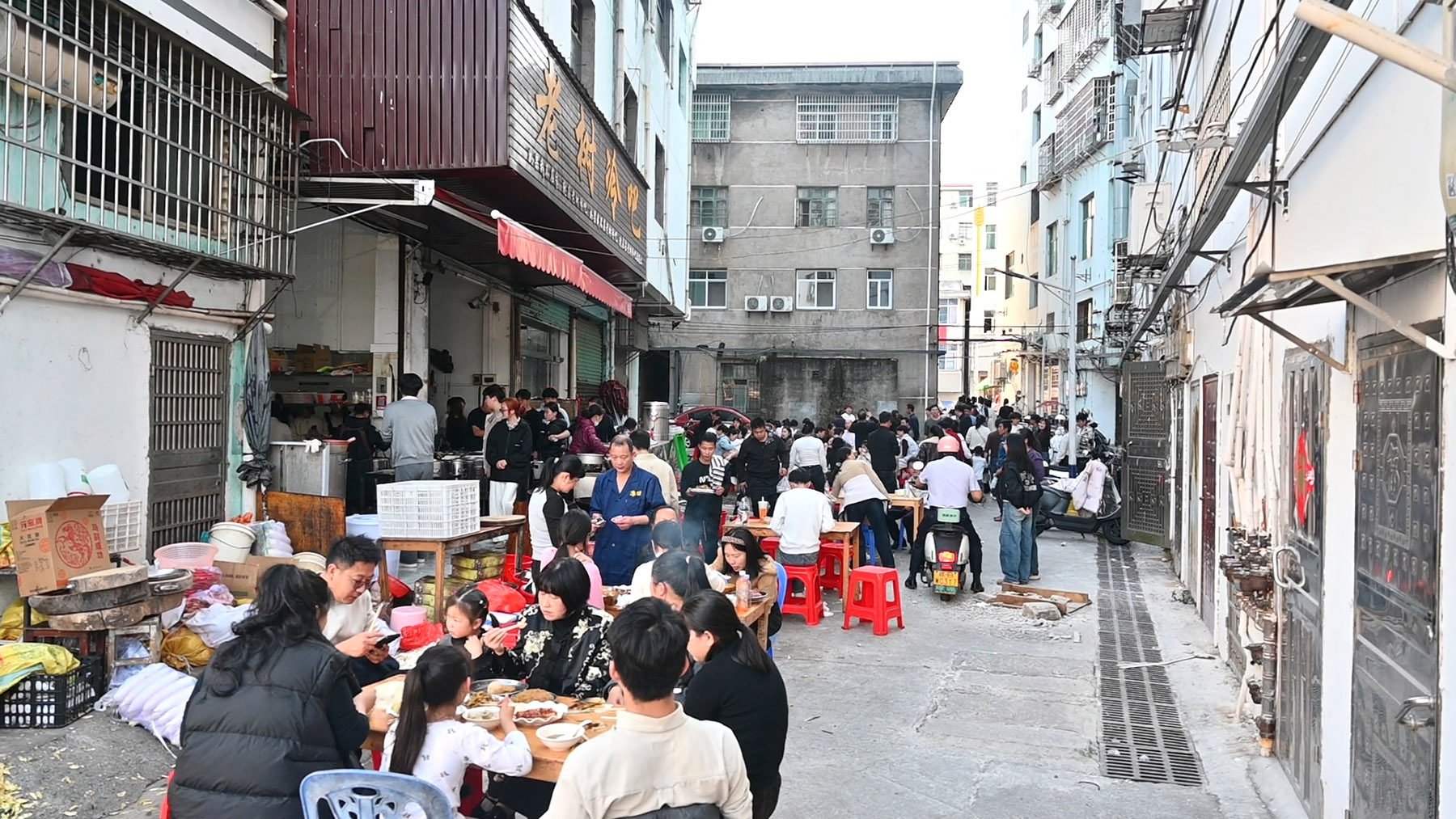
The shop sits deep inside a residential alley, tucked between aging apartment blocks, the kind of place you would almost never find without a local guide. Its name suggests shade and roots, yet there isn't a tree in sight. Huichang's famous twin banyans in the theater district are a five-minute walk away.
Ordering here doesn't begin with a menu. Instead, it starts with a gesture: pointing at trays of prepared dishes lined across the counter.
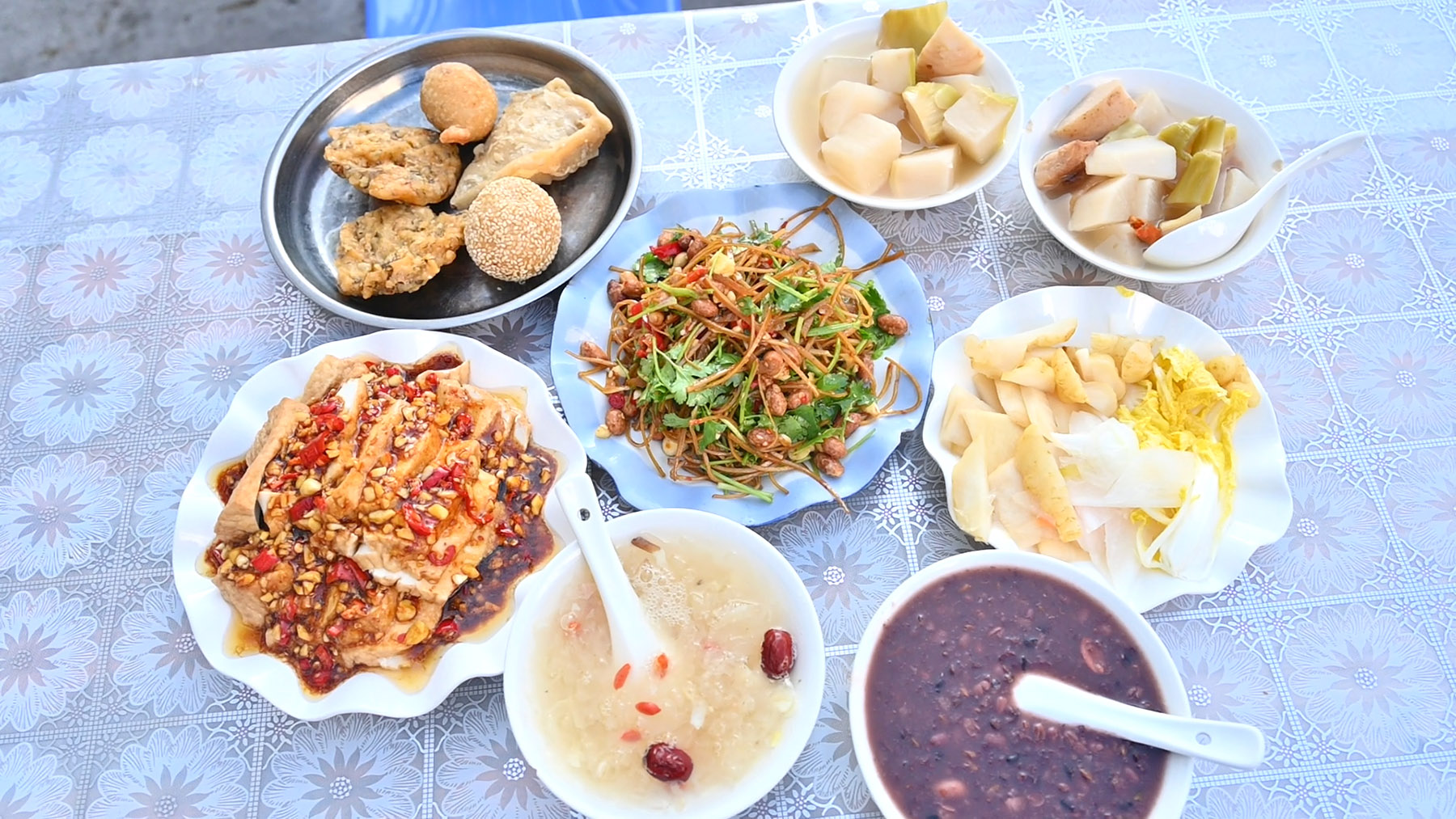
The snacks are divided into cold and hot dishes. The cold offerings include deep-fried eggplant and sweet potato, chilled taro and dried tofu. The hot dishes range from beef and chicken soups to steamed meatballs wrapped in sweet potato starch, and dumpling-like cakes made from mugwort leaves and glutinous rice. Only locals can name them all correctly.
Zhong has run the shop for nearly 20 years. Counting both local specialties and recipes she picked up elsewhere, she estimates she makes nearly 100 kinds of snacks — far more than what's listed on the wall. But I had come for one thing: suanshui, literally, "sour water".
I had heard of tangshui, the cooling sweet soups of southern China. But sour water?
In the long, damp, plum-rain season of southern China, when the air is thick enough to kill your appetite, the mere thought of something sour feels enough to wake the taste buds.
Near the entrance, a metal pot simmered, clouded with pale broth and steam. Inside floated baby taro, bamboo shoots and radish — humble vegetables that are easy to find in the surrounding hills and fields.
Enduring appeal
When I told Zhong I wanted to try it, she muttered something in the local dialect and assembled a cautious sampler: a little of everything in a small bowl, topped with chopped scallions and dried chili.
"Out-of-towners don't always like it," she said. "Better to see if you can handle the taste first."
I braced myself for vinegar-level aggression. But the sourness, when it came, was unexpectedly gentle and round.
The acid gives taro, a type of food that usually has little personality of its own, an unexpected spark. Chewing it feels almost like biting into a thundercloud: soft and sticky, yet alive with tiny bursts of energy striking against the roof of your mouth. The bamboo shoots and radish are just as layered, though in different ways. Locals, Zhong said, often drink the broth down to the last drop.
The secret, she explained, lies in the liquid.
In rural Huichang, nearly every household once kept a clay jar of pickles by the door. The broth for suanshui comes from that fermenting water. But unlike pickles, where vegetables are left to sour in the liquid, suanshui uses the fermented brine to cook fresh vegetables directly.
Like many enduring dishes, it comes with a legend. During the Tang Dynasty (618-907), a starving young monk collapsed while begging for food. An elderly woman rescued him, but had nothing at home except taro and radish — and fetching fresh water meant walking too far. So she improvised, boiling the vegetables in the sour brine from her pickle jar. The monk survived, and later sold the dish on the street, earning the nickname "the Sour Water Monk".
Whether the story is true hardly matters. In Huichang, suanshui feels indispensable.
"If you open a snack shop here, you have to sell it," Zhong said."Eighty or 90 percent of people in Huichang love sour water."
She learned the craft from her mother. As a child, Zhong watched her mother sell the snacks outside schools, earning enough to keep the family afloat.
Later, Zhong left Huichang with her husband to work in Zhejiang province. But homesickness, she said, always tasted like sour water.
"The first thing I'd do after getting off the train was come straight here," she told me. "If I didn't eat it, I couldn't sleep properly."
In 2007, after the birth of her first daughter, Zhong and her husband returned home and took over a snack shop near the banyan trees. They kept the original name — Old Tree Cold Bar — even after relocating.
Afternoon treats
Around 4 pm, the rain had completely cleared, and Huichang was slipping into its second daily rhythm: afternoon snacks.
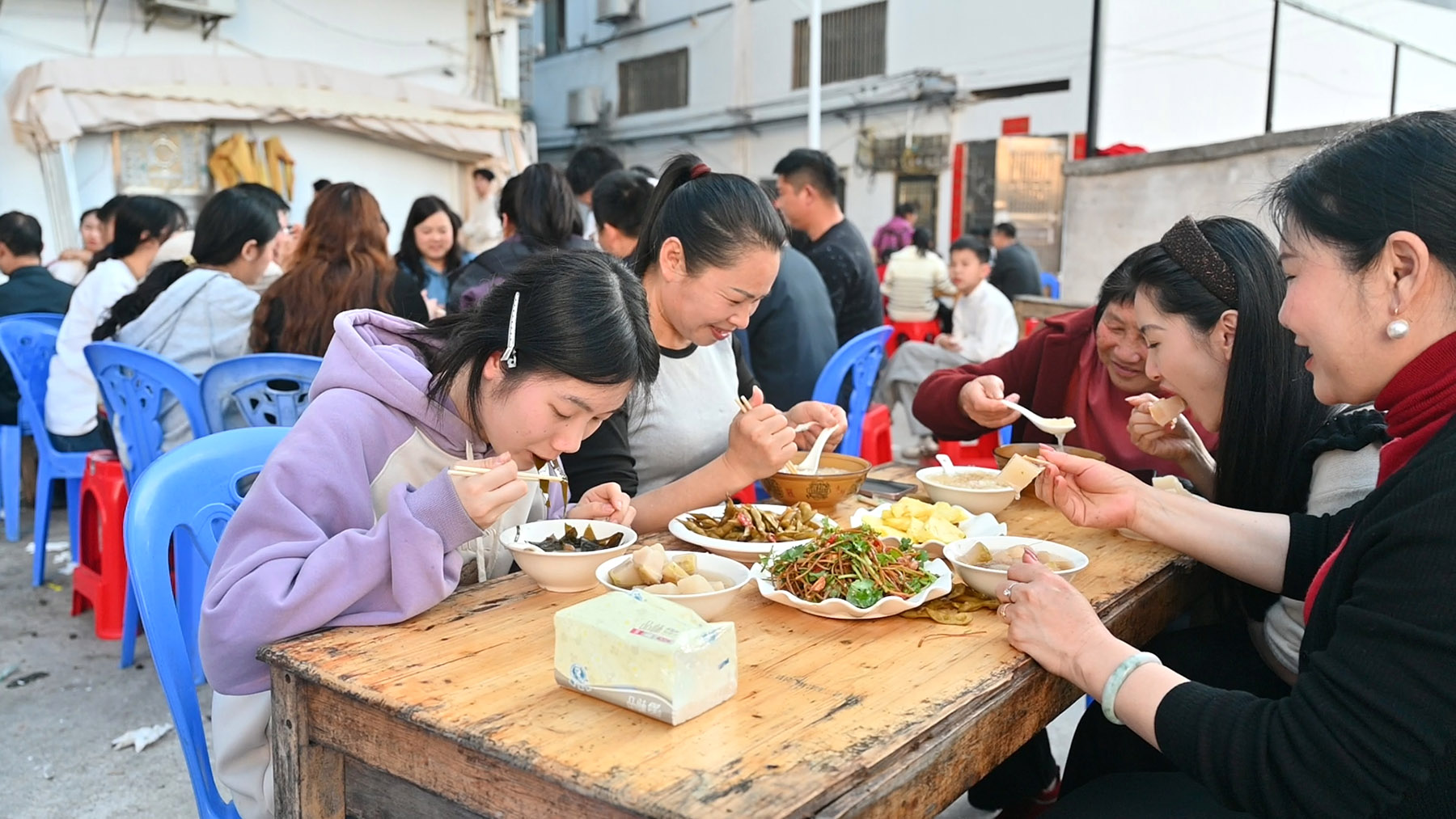
This is something like afternoon tea, except there is little sweetness involved. Families and friends gather over bowls of sour, spicy and salty dishes. A few dollars buy enough for everyone to share.
According to locals, the custom of afternoon snacking may have grown out of Huichang's relaxed, slow-paced way of life.
The county abounds with good eateries, but their opening hours are anything but fixed. They might open in the afternoon or sometimes in the morning, and you never know when you'll arrive to find them closed.
The outdoor tables filled quickly. Zhong's conversation with me was interrupted every few minutes by new orders. She employs six middle-aged women, along with nieces and nephews, but on busy afternoons even that isn't enough.
Two young men in their 20s walked in, greeting her like family. They had grown up eating at the shop, Zhong said.
The friends ordered dumplings drenched in chili oil and cilantro, which were already dressed and needed no dipping sauce, along with hand-peeled sour bamboo shoots, their fibrous outer skin stripped away to reveal the crisp heart inside.
"This place represents Huichang," one of them told me. When he was studying out of town, he once asked his friend to vacuum-seal snacks from the shop and mail them to him.
For many locals, Zhong said, this shop is both the first stop when they return home and the last before they leave.
"This is our local pride. You can't find this kind of happiness outside Huichang," she said.
Huichang's food is built from simple things: soybeans, taro, bamboo shoots and sweet potatoes, the ordinary crops of mountain fields. Yet from them come dishes layered with texture and color: dried tofu, taro balls, sour water and herbal jelly.
ALSO READ: A place to practice the freedom of the Eight Immortals
It is a cuisine shaped by necessity, by heat, humidity and rugged land.
Even plants that are inedible on their own are ingeniously combined with other ingredients and brought to the table.
Before leaving, I ordered more: herbal jelly, taro balls, steamed meatballs wrapped in sweet potato starch. The rain had cooled the air into something clear and breathable.
Somewhere in the rush, I forgot my umbrella at the restaurant.
I have a private superstition: whenever you leave something somewhere, it means you are meant to return. In a place with 100 dishes still left to taste, it felt less like an accident than a promise.

If you go
Street food: Huichang is known for a variety of local snacks and street foods, including dried tofu and xianren ban, a refreshing herbal jelly popular in southern China.
Dishes: Must-try local favorites include fried rice noodles, Hakka stuffed tofu, and the famous Jiangxi stir-fries, known for their intense smoky flavor from high-heat cooking. Recommended dishes include stir-fried pork belly and tofu with crispy pork crackling.
Restaurants:
• Beimen Restaurant is a long-established favorite in the theater village, serving refined Hakka and southern Jiangxi cuisine.
• Lai Mama Private Kitchen is inspired by the home cooking of renowned playwright Stan Lai's mother. Alongside local Hakka dishes, it offers creative fusion cuisine such as Bhutanese beef and the signature Stan Lai Invisible Pizza.
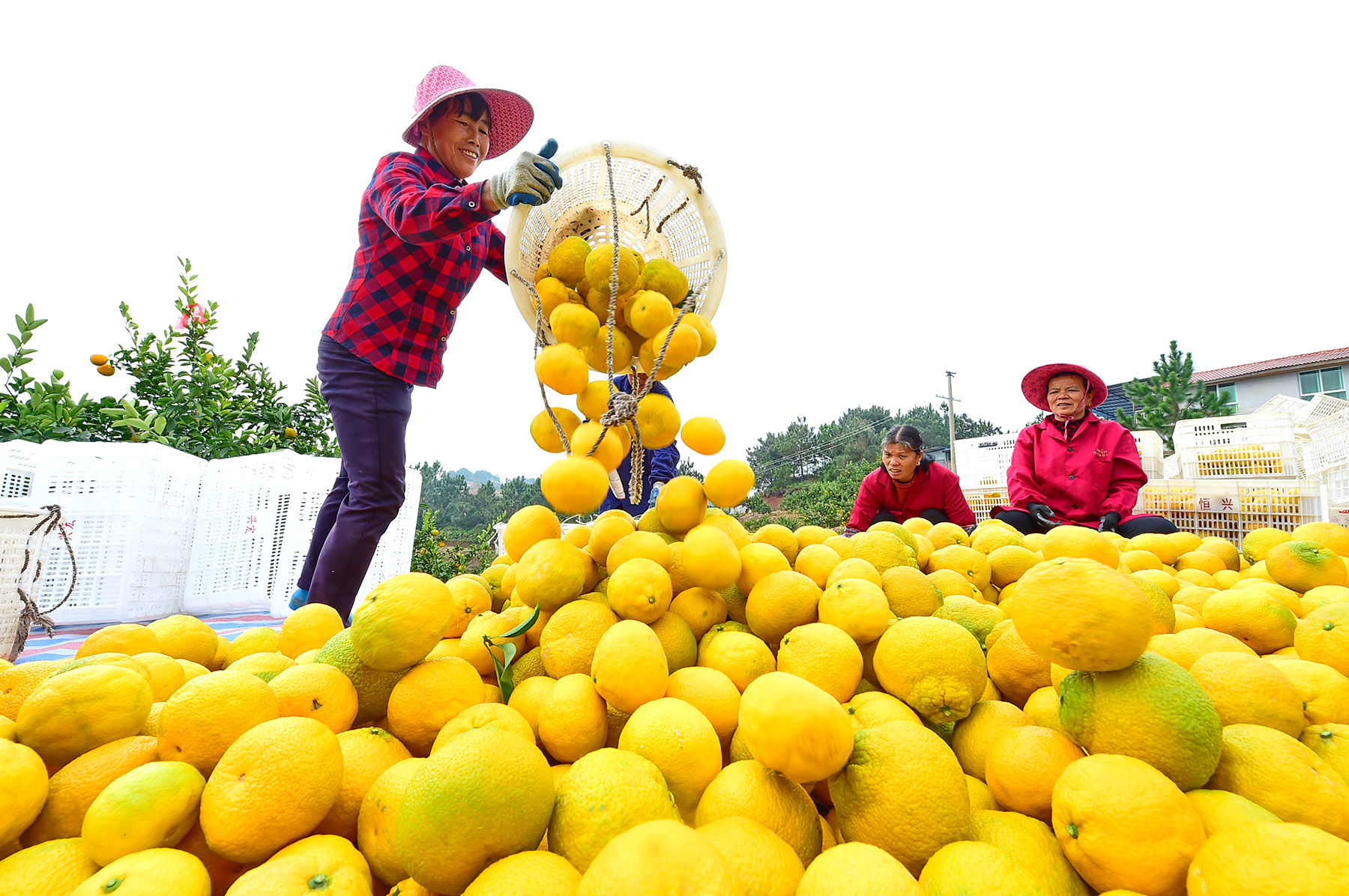
Souvenirs: Popular local products to take home include pumpkins, pomelos, and navel oranges, all well-known specialties of the region.
Contact the writer at baishuhao@chinadaily.com.cn
