

A playwright's family roots inspire a theater village where art blurs the line between audience and performer, Bai Shuhao reports in Huichang, Jiangxi.
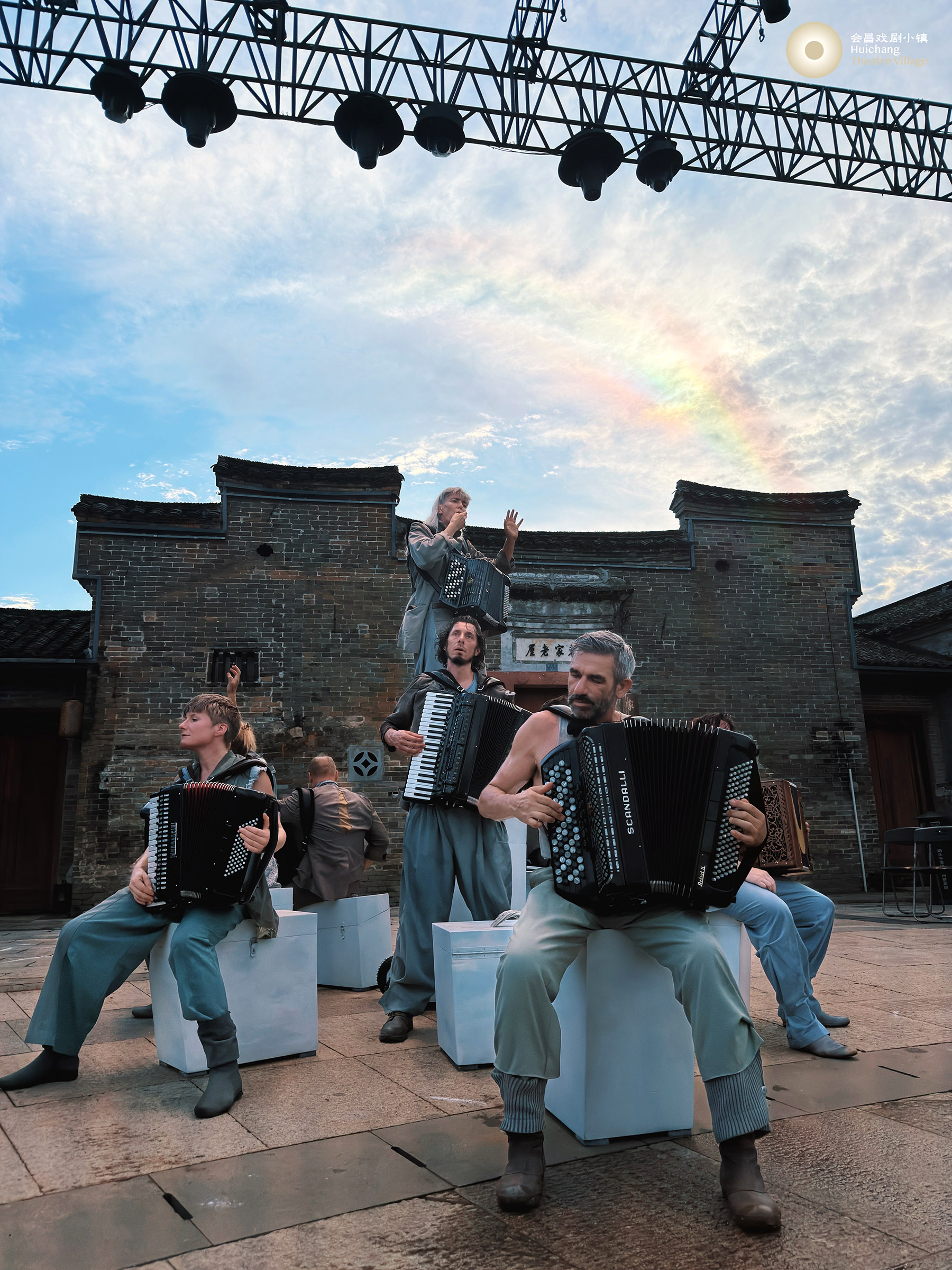
The theater begins before you even realize you have entered it. At the heart of Huichang's theater village this summer stands a miniature cinema unlike any other — a black box capable of rotating 360 degrees.
Audience members step inside, take their seats, and wait for the curtain to rise. But there is no film. Instead, the stage is the world outside: the town square itself, its weathered facades, passing pedestrians and clusters of curious onlookers.
During the just-concluded Huichang Theater Season 004, this performance, titled Panorama, unfolded almost daily.
Crowds packed around the small structure as actors drew passersby into the action, inviting them to dance, improvise and slip into unexpected roles.
READ MORE: The quiet power of a county
Even those with little interest in theater found themselves lingering. One afternoon, Brigitte Lin Ching-hsia, the revered star of Chinese cinema, sat quietly inside the black box, watching.
For a moment, it was impossible to tell who was performing and who was simply living.
The script
That ambiguity feels fitting here, because Huichang's theater village is itself a story — one written long before any curtain rose.
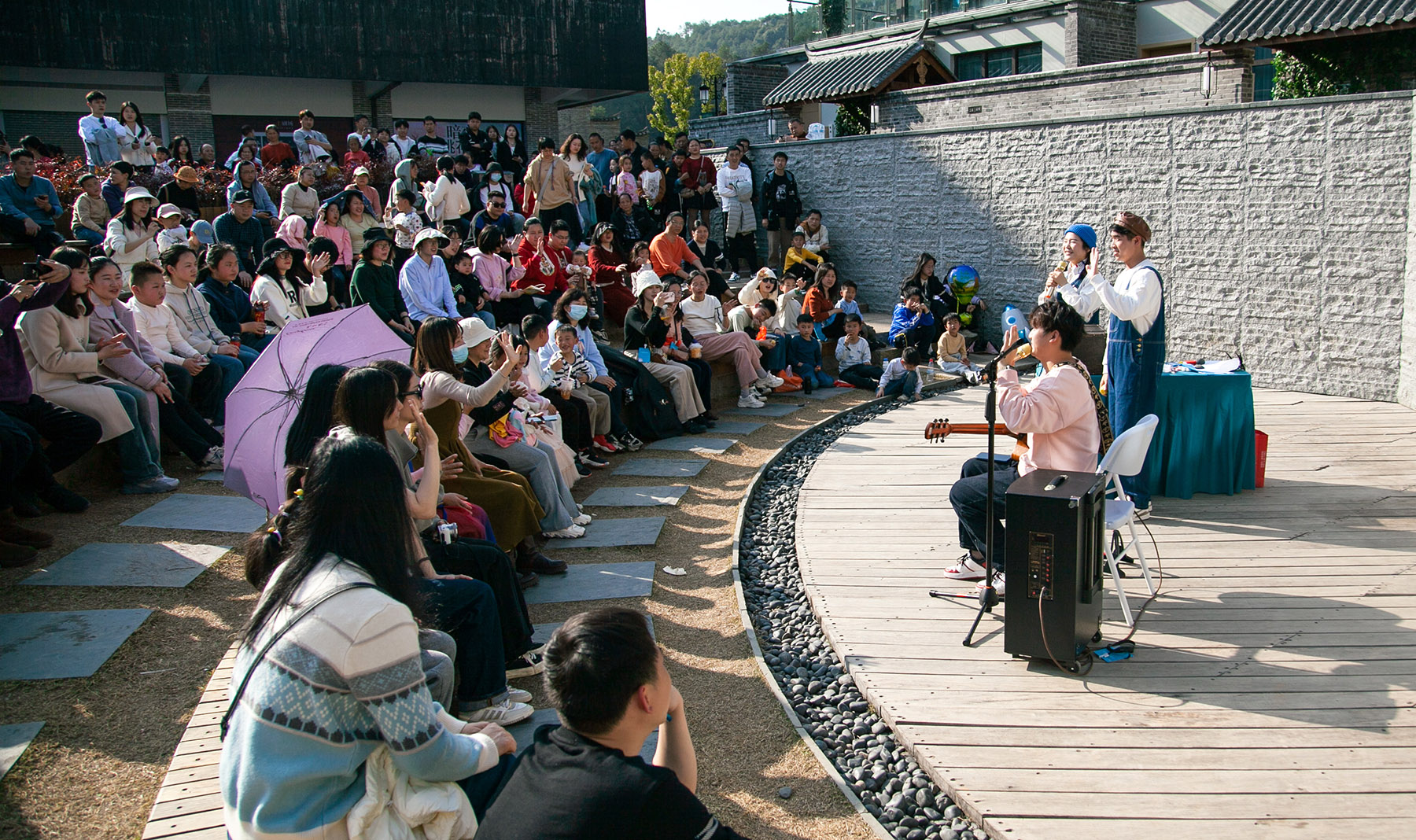
In the 1980s, while studying in the United States, playwright and director Stan Lai received a letter from relatives in Huichang county, Jiangxi province, introducing him to the hometown he had never known.
His father was born there but rarely spoke about it. In 1949, the family left for Taiwan and later settled in the US. When Lai was 14, his father died. It was only through letters from relatives in Huichang that he began to piece together the place his father had left behind.
By 1986, Lai had become one of the most influential figures in Chinese-language theater with Secret Love in Peach Blossom Land. In Chinese lore, the Peach Blossom Land is an unreachable utopia. In Lai's work, both his father and Huichang seemed to linger in the background.
When he first visited Huichang in 1997, the journey took nearly 20 hours along mountain roads. Northwest Street, where his father once lived, was lined with crumbling houses.
"I never thought Huichang was my Peach Blossom Land," Lai says.
In 2015, Lai staged one of his plays in Huichang for the first time and vowed to return every year. Two years later, when the county began renovating the old town, he proposed turning his father's old neighborhood into a theater community.
The first Huichang Theater Season opened in 2024. This year, in its fourth edition, the festival brought nearly 30 productions from China and abroad, with close to 400 performances across the town.
Despite not being born here, Lai has become unmistakably local. Residents speak of him less as a celebrity than as a neighbor.
"I went to school with his nephew," one resident says.
"I live right next to his old house," says another.
If you happen to see him strolling through the town, you can simply call him Teacher Lai.
The stage
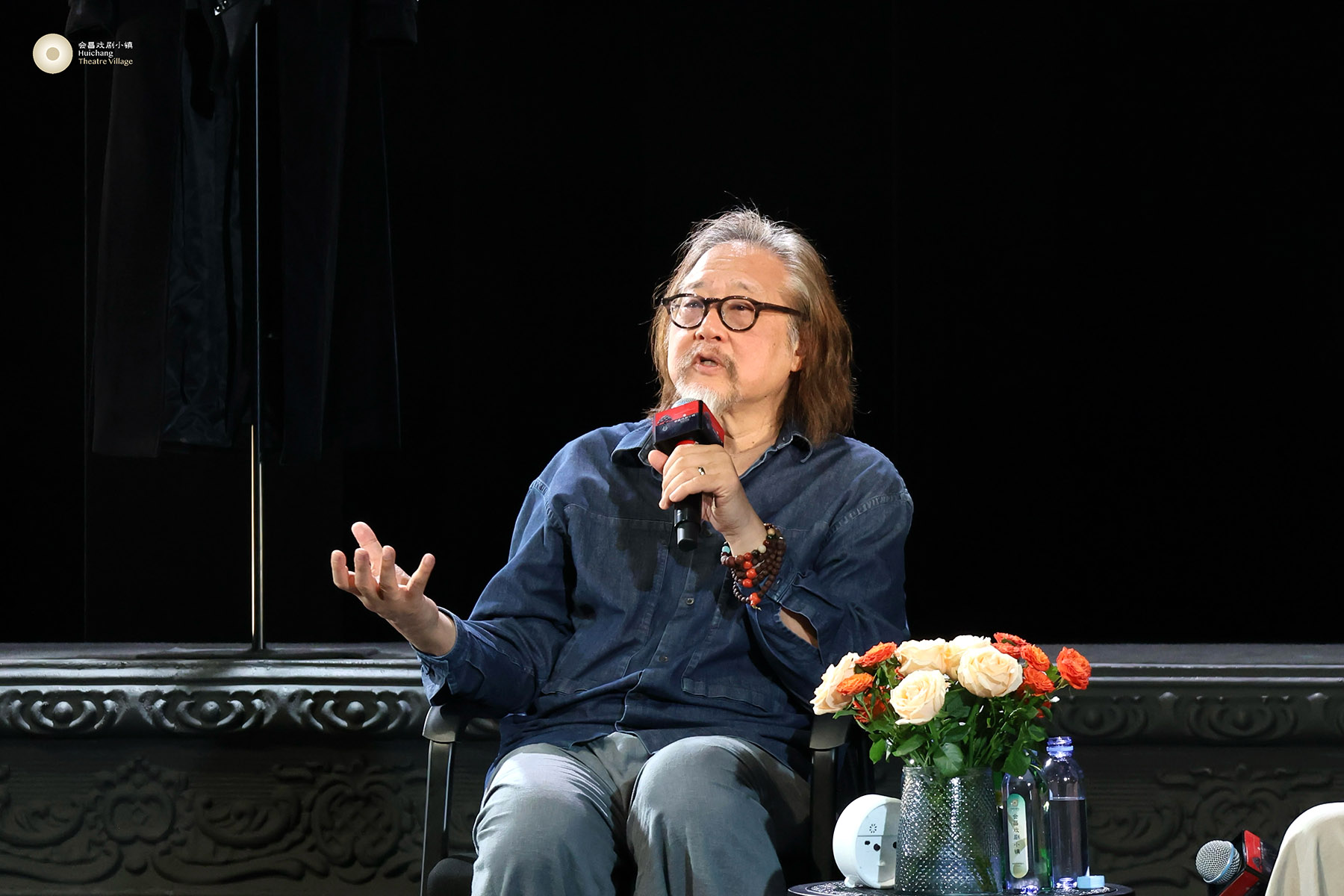
The origin story of Huichang's theater village is compelling enough on its own. The town itself provides the props.
Situated at the confluence of three rivers and embraced by nearly a kilometer of Southern Song Dynasty (1127-1279) walls, Huichang was once a thriving inland port.
Today, people gather here again — not for trade, but for performances. At the entrance stands a 400-year-old banyan tree. Beside it, a stone arch bears four characters: ci chu you xi ("theater is here").
Farther in rises another ancient banyan. At its roots lies an old well. Each year, at the opening of the festival, Lai and his guests draw water from it to pour onto the tree, a ritual that feels like a blessing for both the festival and the town.
The two banyans are more than landmarks; they are witnesses. Looking at their sprawling branches, it is easy to imagine the countless meetings and farewells they have seen. They seem almost like audience members themselves, quietly observing the human drama unfolding below.
Nearby sits Huichang's local museum, its walls crowded with wooden plaques. In Hakka tradition, these intricately carved pieces are gifts of praise, symbols of honor passed between families and generations.
The same Hakka architecture shapes much of the town. Its signature venue, the Courtyard Theater, was once an ancestral hall built in 1772. For Hakka families, such halls served as the spiritual center of communal life, places to worship ancestors, settle disputes, and mark births, marriages and funerals.
The theater still carries that history. Its walls are weathered, its timber darkened by time. An open courtyard frames the sky above. Even without a performance, it is worth sitting there during the rainy season, watching water trickle down chains and fall in a slow, measured rhythm.
Elsewhere, another ancestral hall has become the Xiuchun Theater. This year, Lai's immersive production Dream Walk guided audiences through its rooms after dark. Under moonlight spilling into the courtyard, the building seemed suspended between dream and reality.
Outside Lai's family home, now transformed into another open-air stage, choreographer Zhu Fengwei staged his dance work Cosmic Tree.
With the old gate behind him, Zhu says he felt strangely connected to his surroundings, a fitting sentiment for a work centered on mortality and reflection.
Even the old print factory and abandoned houses along Northwest Street have become venues. Ancient and modern, local and foreign converge here, just like the three rivers converging just beyond the town walls.
The actors
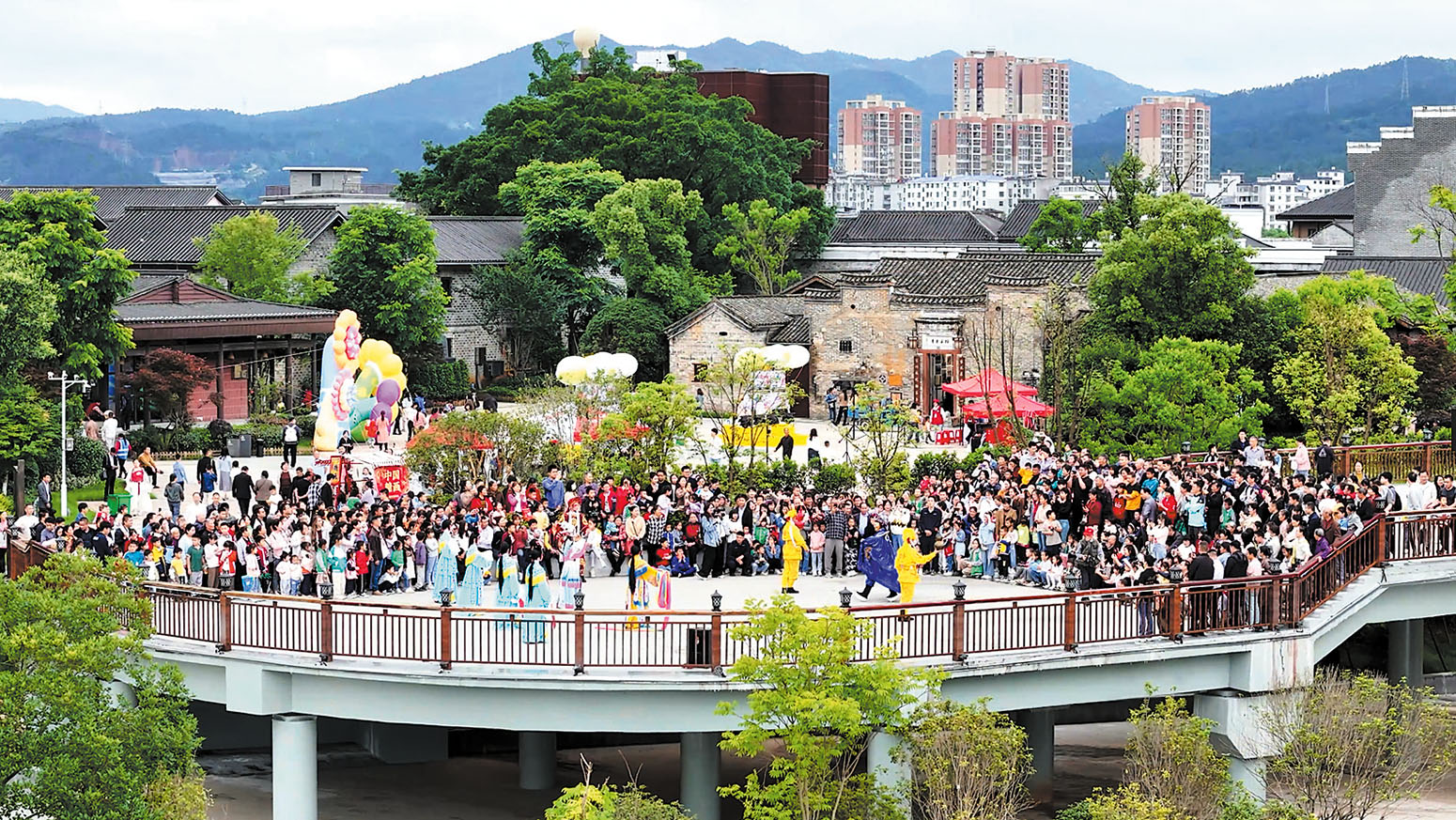
In Huichang, everyone seems to become part of the cast.
As dusk falls, the square fills with people. This is when the theater village feels most alive. Huichang is small enough that familiar faces quickly find one another, and conversations begin almost immediately.
Sometimes, the "celebrities" you run into are not the ones you expect.
There is, for instance, a 90-year-old local photographer who still walks the streets with a camera in hand. Spot a visitor, and he is quick to pull out his photos, proudly showing the images he has taken of the theater village over the years.
That is one kind of fame.
But during the festival, there is another kind, too. For a few days each year, the town fills with actors, directors and theater troupes from across China and around the world.
In Huichang, celebrity feels strangely unremarkable. You might share dinner with a famous actor or find yourself seated beside one during a performance.
ALSO READ: A place to practice the freedom of the Eight Immortals
Each year, Lai follows a local custom: setting out long Hakka banquet tables laden with local dishes for performers and guests. People raise glasses, exchange stories, and, when the mood strikes, break into a dance.
But the true protagonists of Huichang are its residents.
Last year, when Lai invited 60 actors from Greece to perform here, many were visiting China for the first time. Residents helped them find hotels and guided them through the town if they got lost.
"It's here that they really get to know what Chinese people are like," Lai says.
In Lai's view, it is that Hakka sincerity — straightforward and unpretentious — that has allowed the theater village to thrive.
Here, theater has no threshold. There is little distance between performers and audiences. Perhaps that is why performance feels so immediate, so real and so deeply shared.
Contact the writer at baishuhao@chinadaily.com.cn
