

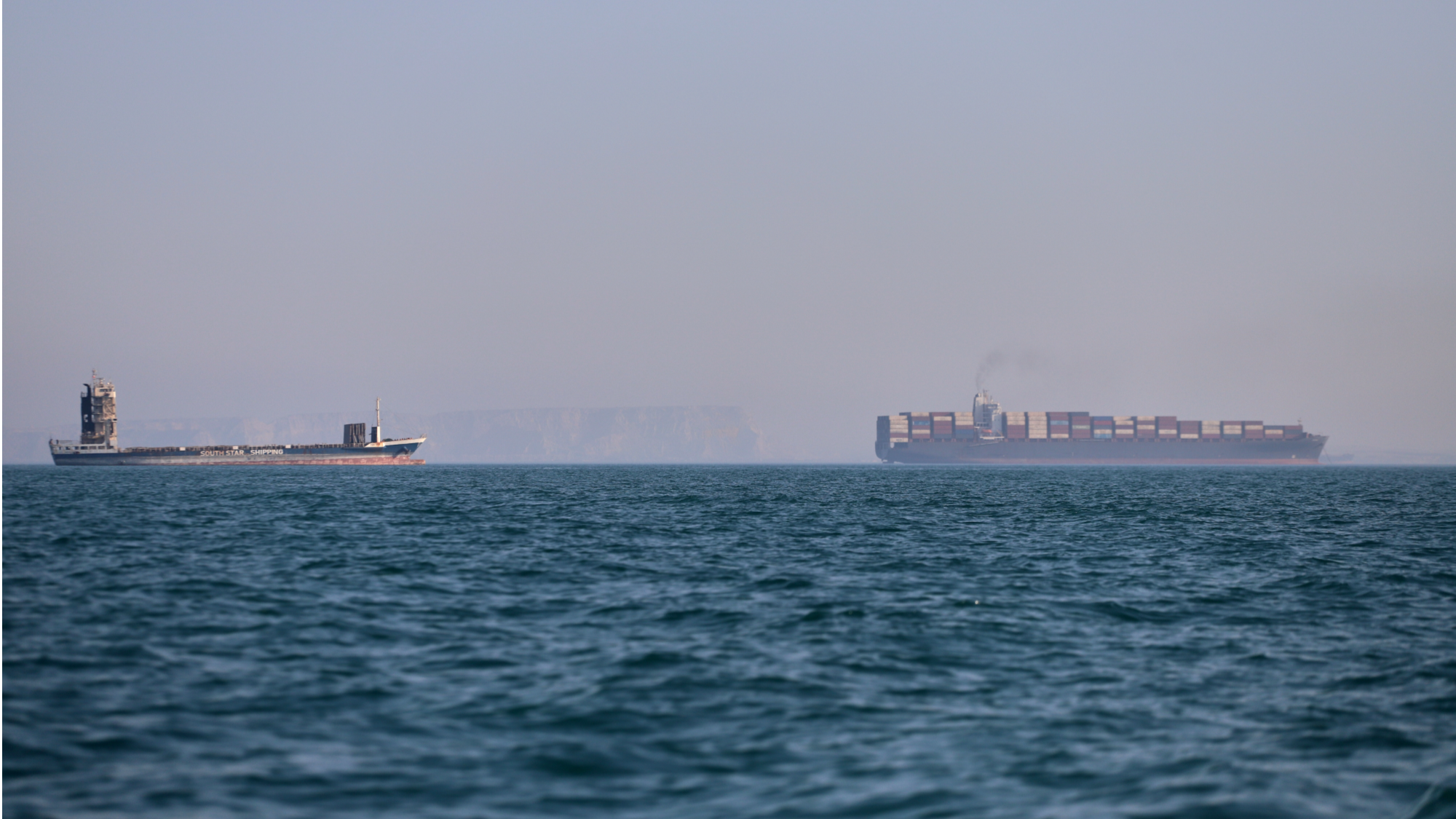
BEIJING – Normal navigation through the Strait of Hormuz should be restored as soon as possible to ensure the stability of global industrial and supply chains, Chinese Foreign Minister Wang Yi said on Wednesday.
Wang, also a member of the Political Bureau of the Communist Party of China (CPC) Central Committee, made the remarks in a phone conversation with Pakistan's Deputy Prime Minister and Foreign Minister Mohammad Ishaq Dar.
Dar expressed warm congratulations to the CPC on the upcoming 105th anniversary of its founding, saying that the Pakistani side admires the extraordinary achievements China has made under the leadership of the CPC, and that he hopes to strengthen exchanges with the Chinese side on experience in party and state governance.
Xi Jinping, general secretary of the CPC Central Committee, noted that the CPC is committed to the great rejuvenation of the Chinese nation, and the centenary only ushers in the prime of life, said Wang, noting that under the guidance of Xi Jinping Thought on Party Building, the CPC has led the Chinese people in successfully blazing a development path suited to China's own national conditions.
ALSO READ: Iran's chief negotiator: Hormuz will be administered by Iran
Wang said that the Chinese side is willing to strengthen inter-party exchanges with the Pakistani side and share experience in state governance.
Dar briefed Wang on the situation regarding the new phase of negotiations between Iran and the United States, and thanked China for its consistent and firm support for Pakistan's peace mediation efforts.
Dar said that the four-point proposal on promoting peace and stability in the Middle East put forward by President Xi and the five-point initiative for restoring peace and stability in the Gulf and Middle East region proposed by China and Pakistan have played an important role in guiding the de-escalation of the situation.
He said that Pakistan looks forward to continuing close coordination and cooperation with China to jointly play a constructive role in achieving lasting peace and stability in the region.
Wang thanked the Pakistani side for promptly informing China of the new stage of negotiations between Iran and the United States. He said that the signing of the memorandum of understanding (MoU) between the two countries was the result of the joint efforts of the international community, and Pakistan played a key and unique role in it.
The peace process has just begun, and there is still a long, even tortuous and difficult road ahead, Wang noted, stressing that China will, as always, support Pakistan and other like-minded countries in continuing to play a constructive role, and stands ready to maintain close communication and coordination with Pakistan.
READ MORE: Pakistan: Iran-US technical talks to resume next Tuesday
Wang pointed out three key priorities in the next stage.
First, it is essential to consolidate the comprehensive ceasefire and cessation of the war, and under no circumstances should the war be reignited, he said.
The Iran-US MoU aligns with Iran's fundamental and long-term interests, as well as the shared expectation of the international community, Wang said, adding that China is willing to work with all parties to firmly support the negotiations to advance without interference.
Second, normal navigation through the Strait of Hormuz should be restored as soon as possible to ensure the stability of global industrial and supply chains, he noted, adding that arrangements concerning the strait should respect the sovereignty and legitimate rights and interests of states bordering the strait, while conforming to international practices and the common aspirations of all countries.
Third, efforts should be made to support Middle East countries in improving their relations and exploring a new regional security architecture, said Wang.
The Middle East, including the Gulf region, should no longer serve as an arena for great power competition or a victim of geopolitics, and regional countries should uphold genuine strategic autonomy and firmly keep their future in their own hands, he noted.
The Palestinian issue has always been the core of the Middle East issue, said Wang, calling on countries in the region to speak with a more unified voice and take more coordinated actions in addressing the Palestinian issue, so as to implement the two-state solution at an early date and realize lasting peace and stability in the region.
