

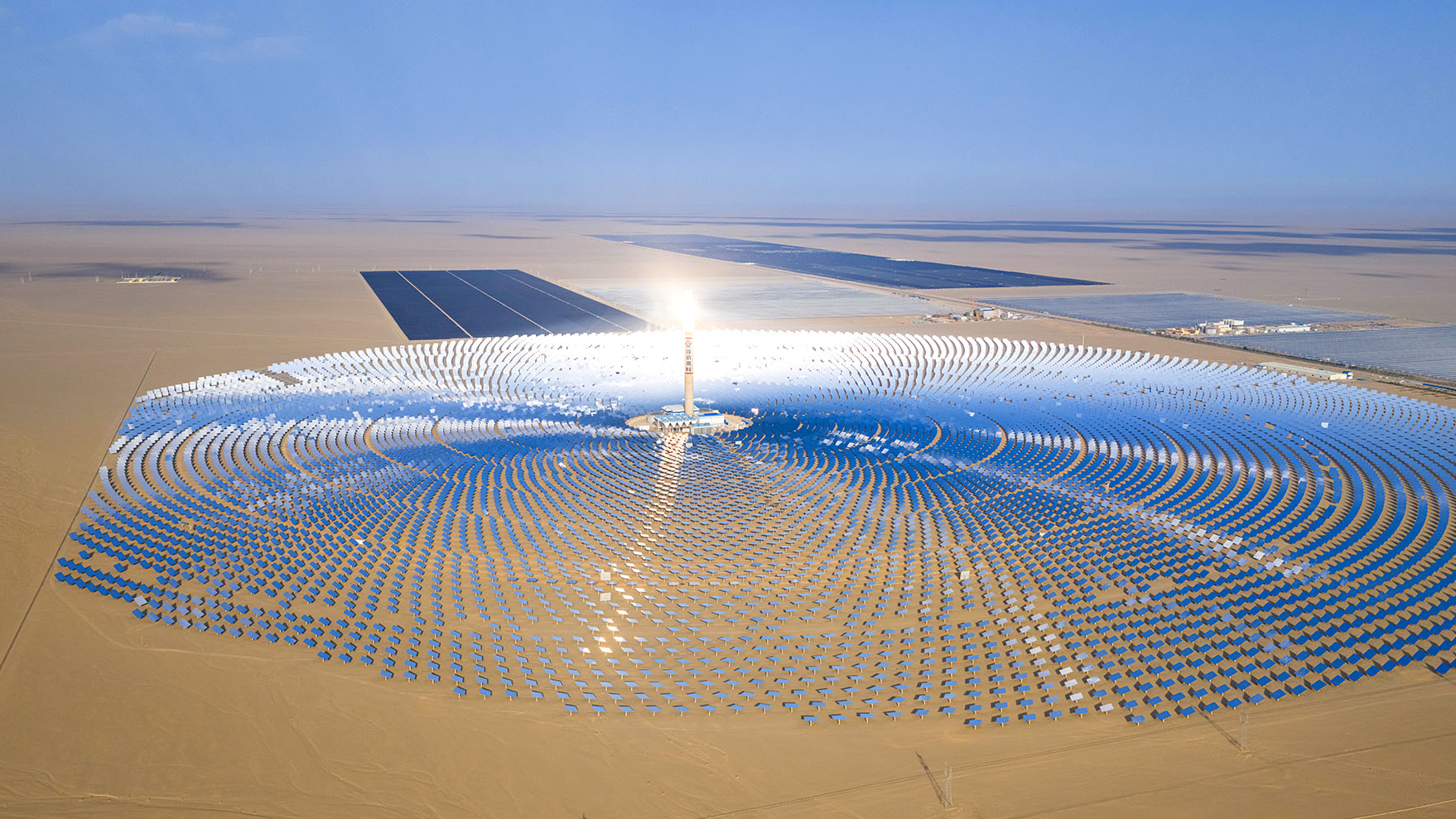
China's concerted investment in renewable energy has helped its total installed power generation capacity overtake the combined total for the United States, the European Union, India, Japan and Russia, according to data released Thursday.
The National Energy Administration (NEA) data points to a remarkable acceleration in the pace of expansion, with China's power generation capacity now sitting at 4.01 billion kilowatts. While it took the country eight years to grow capacity from 1 billion kW in 2011 to 2 billion kW in 2019, and another five years to hit the 3-billion-kW mark by April 2024, the latest 1 billion kW of capacity took around two years to generate.
ALSO READ: Targeted consumption strategies urged as green power supply rises
Overall, from 2010 to 2025, China's power generation capacity maintained an average annual growth rate of 9.7 percent, outpacing the growth rates of the US, the EU, India, Japan and Russia during the same period.
This rapid expansion has been overwhelmingly driven by a structural shift toward clean energy, with non-fossil fuels emerging as the absolute main contributor to incremental growth. Since 2010, non-fossil energy sources have accounted for 74 percent of all newly added capacity nationwide.
As a result, the picture of China's energy mix has been significantly transformed. The proportion of coal-fired power capacity plunged from 61 percent in 2010 to 32 percent by the end of May this year, while, over the same period, the share of non-fossil fuel capacity soared from 25 percent to 62 percent.
READ MORE: China's green transition applauded
The share of total installed renewable energy capacity jumped from 24 percent in 2010 to 61 percent by May.
Since 2010, renewables have constituted 73 percent of all new power capacity additions across China, with solar and wind power alone accounting for 43 percent and 21 percent of the newly added capacity, respectively.
