

Progress made in Switzerland with road map to final deal agreed on
The first round of Pakistan and Qatar-mediated in-person talks between the United States and Iran in Switzerland wrapped up with "encouraging progress", all parties acknowledged, with a road map to a final deal agreed to be reached within 60 days.
China's Foreign Minister Wang Yi said on Monday that maintaining and implementing the memorandum of understanding between Iran and the United States will help consolidate the hard-won ceasefire, open new prospects for Iran-US relations and bring peace back to the Middle East.
Al Jazeera reported on Monday that Iran's top negotiators — led by Iranian Parliament Speaker Mohammad Bagher Ghalibaf — had left the Lake Lucerne Summit for Tehran.
READ MORE: Iran's chief negotiator: Hormuz will be administered by Iran
However, Iran's technical team — led by Deputy Foreign Minister Kazem Gharibabadi — is due to continue the technical negotiations on the Islamabad Memorandum of Understanding.
Iranian Foreign Minister Abbas Araghchi said in a post on X that the first real test of the talks would be the "Lebanon de-confliction cell".
Iranian Foreign Ministry spokesman Esmaeil Baghaei told Iranian state television IRIB after the summit that "good progress was made" on issuing licenses for Iranian oil sales and freeing the country's frozen assets, Iran's Mehr News Agency reported, adding that both sides agreed to establish a mechanism for the safe passage of ships through the Strait of Hormuz.
Baghaei said the four-party meeting among Washington, Tehran, Islamabad and Doha, which started on the morning of Sunday, lasted 18 hours and was disrupted when the White House issued a new threat, prompting Iran to declare it would not continue in that format.
Just before talks officially began on Sunday, Fox News quoted US President Donald Trump as saying he had told Iranian officials "you won't have a country" if they tried to close the strait again.
Mediators Qatar and Pakistan intervened to keep the talks going, Baghaei said. He said the Iranian negotiating team's task at this stage is finished, but technical teams were due to continue their work on Monday.
Pakistan and Qatar released a joint statement on Monday saying that the summit "was conducted in a positive and constructive atmosphere" and that encouraging progress has been made, including the creation of a mechanism for further technical talks.
The statement also affirmed an agreed-upon road map to reach a final deal within 60 days, laying the foundation for the immediate commencement of further technical talks.
Safe passage
A communication line has been formed between the parties "to avoid incidents and miscommunication" in securing safe passage for commercial vessels through the Strait of Hormuz.
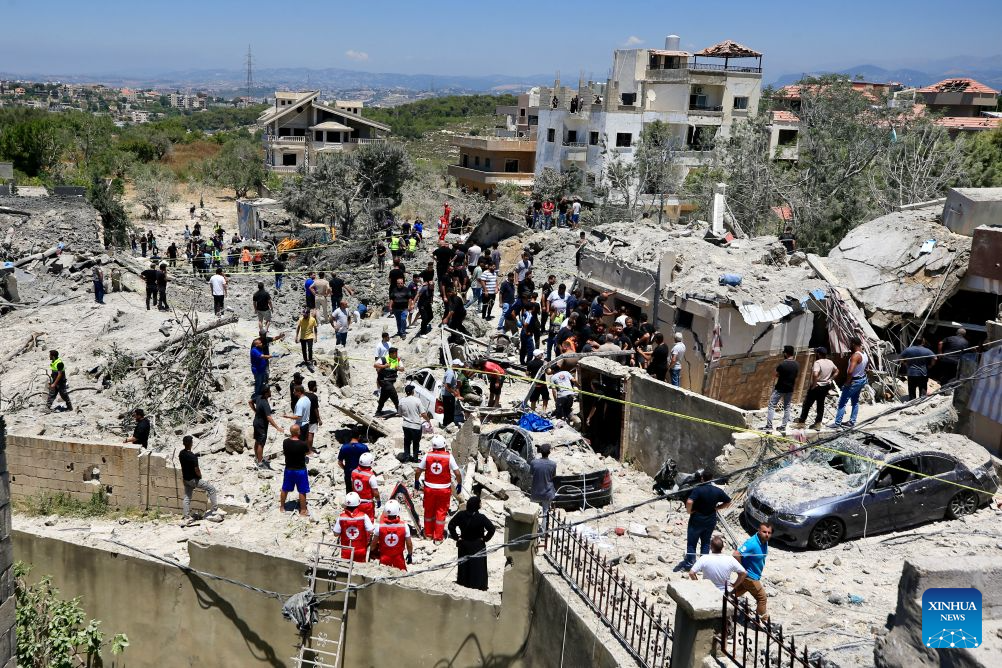
"The parties agreed on the creation of a de-confliction cell between the parties, the Lebanese Republic, and facilitated by the mediators to ensure the adherence of the termination of military operations in Lebanon as per the MoU," the statement said.
US Vice-President JD Vance said on Monday that the talks had laid a good foundation for reaching a final deal on ending the Middle East conflict.
Chinese Foreign Ministry spokesman Guo Jiakun on Monday expressed China's support for mediation efforts by Pakistan, Qatar, and other parties following the first round of talks between Iran and the United States in Switzerland.
ALSO READ: Hezbollah chief rejects any Israeli military presence in Lebanon
Wang Yi, when meeting in New Delhi with Ghadir Nezami, deputy secretary of Iran's Supreme National Security Council, on Monday, said maintaining and implementing the MoU serves not only Iran's fundamental interests but also the shared expectations of the international community.
As Iran's comprehensive strategic partner, China has always upheld a just position and supported all efforts conducive to peace, he said.
He added that China supports Iran in safeguarding its sovereignty, security and national dignity, as well as in improving relations with Gulf countries and other countries in the region.
Shi Guang in New York and Mo Jingxi in Beijing contributed to this story.
Contact the writers at jan@chinadailyapac.com
