

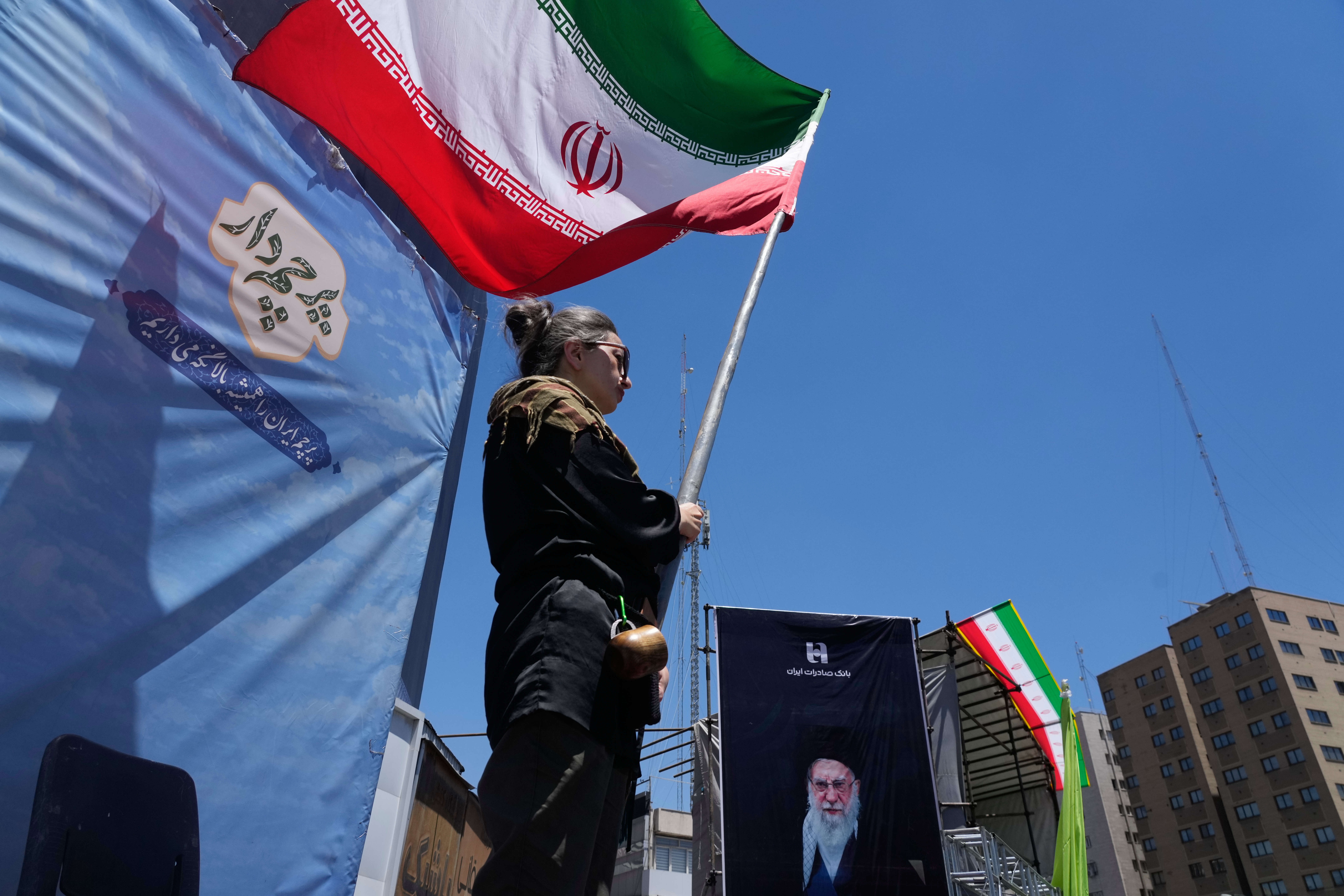
WASHINGTON/TEHRAN/BAGHDAD - The United States and Iran have agreed to pause mutual attacks "for now" and hold talks on Tuesday in Doha, the capital of Qatar, to work out their dispute over the Strait of Hormuz, US media outlet Axios reported Sunday.
The two sides will stand down "for now" and "vessels can move freely" as technical talks are set to continue, a US official was quoted as saying.
The Tuesday talks were originally set to be held in Switzerland and focused on Iran's nuclear program. However, renewed tensions in the Strait of Hormuz prompted the talks to be moved to Doha, shifting the focus to shipping security in the strategic waterway.
ALSO READ: Several explosions heard in S. Iran as US claims additional strikes
During negotiations in Switzerland a week ago, the US delegation agreed with Iran to establish a "hotline" between the US military and Iran's Islamic Revolution Guard Corps to coordinate traffic in the strait.
However, as of Saturday, the "hotline" still wasn't operational, according to the report.
The United States conducted strikes on Iranian targets on Friday and Saturday, citing "continued Iranian aggression against commercial shipping" in the Strait of Hormuz. Iran responded by striking US military positions in the region.
Iran claims strikes in retaliation
Iran's Islamic Revolution Guard Corps (IRGC) said its forces fired ballistic missiles and drones at US military facilities in Kuwait and Bahrain early Sunday in retaliation for recent US strikes against five Iranian coastal posts.
In a statement on its official news outlet Sepah News, the IRGC said its navy and aerospace force launched a joint retaliatory attack against the US Army's eight important infrastructure facilities at the Ali Al Salem Air Base in Kuwait and the US Fifth Fleet in Bahrain.
It added that the United States had attacked five Iranian coastal posts early Sunday under the pretext of responding to the IRGC Navy's "confrontation with a violating ship."
The IRGC said from now on, vessels seeking unauthorized passage through the Strait of Hormuz would be dealt with more powerfully than in the past, and any potential aggression under any pretext would be met with a crushing response.
It warned that violating the ceasefire is in breach of a recently signed peace memorandum of understanding (MoU) between Iran and the United States on ending the war, and would lead to the complete cessation of all diplomatic processes.
It added that under the peace MoU, Iran is responsible for managing maritime traffic in the Strait of Hormuz.
ALSO READ: Report: Strait of Hormuz sees record traffic since start of conflict
Kuwait on Sunday strongly condemned what it described as repeated Iranian attacks targeting its territory, saying the latest attack violated its sovereignty and threatened regional efforts to ease tensions.
In a statement posted on social media platform X, Kuwait's Ministry of Foreign Affairs described the attack as a "flagrant violation" of the country's sovereignty, saying it posed a direct threat to Kuwait's security and stability as well as to the safety of its citizens and residents.
Meanwhile, Bahrain's Interior Ministry said a residential building in Muharraq Governorate was damaged as a result of an Iranian attack.
The ministry said on X that no casualties were reported in the attack, adding that authorities had begun taking necessary measures at the site.
Several explosions were also reported in Iran's southern Hormozgan province and on Qeshm Island early Sunday, according to Iranian media.
READ MORE: Iran's chief negotiator: Hormuz will be administered by Iran
The US Central Command (CENTCOM) said in a Sunday post on X that its forces had conducted "additional strikes against multiple targets in Iran," adding that the strikes were in response to an earlier drone attack by Iranian forces against a Panama-flagged tanker transiting near the Strait of Hormuz.
CENTCOM stressed that its forces' strikes were in "direct response to continued Iranian aggression against commercial shipping," noting that "US military aircraft targeted Iranian military surveillance infrastructure, communication systems, air defense sites, drone storage facilities and minelayer capabilities."
Similar clashes occurred early Saturday when CENTCOM claimed airstrikes against Iran's southern coasts, and the IRGC said its naval forces had, in retaliation, struck the US military positions in West Asia.
On June 18, Iran and the United States signed an MoU on ending the war across the region, including in Lebanon. The two countries are currently in negotiations to reach a final agreement.
Iraqi leaders, Iranian foreign minister meet on Iran-US MoU
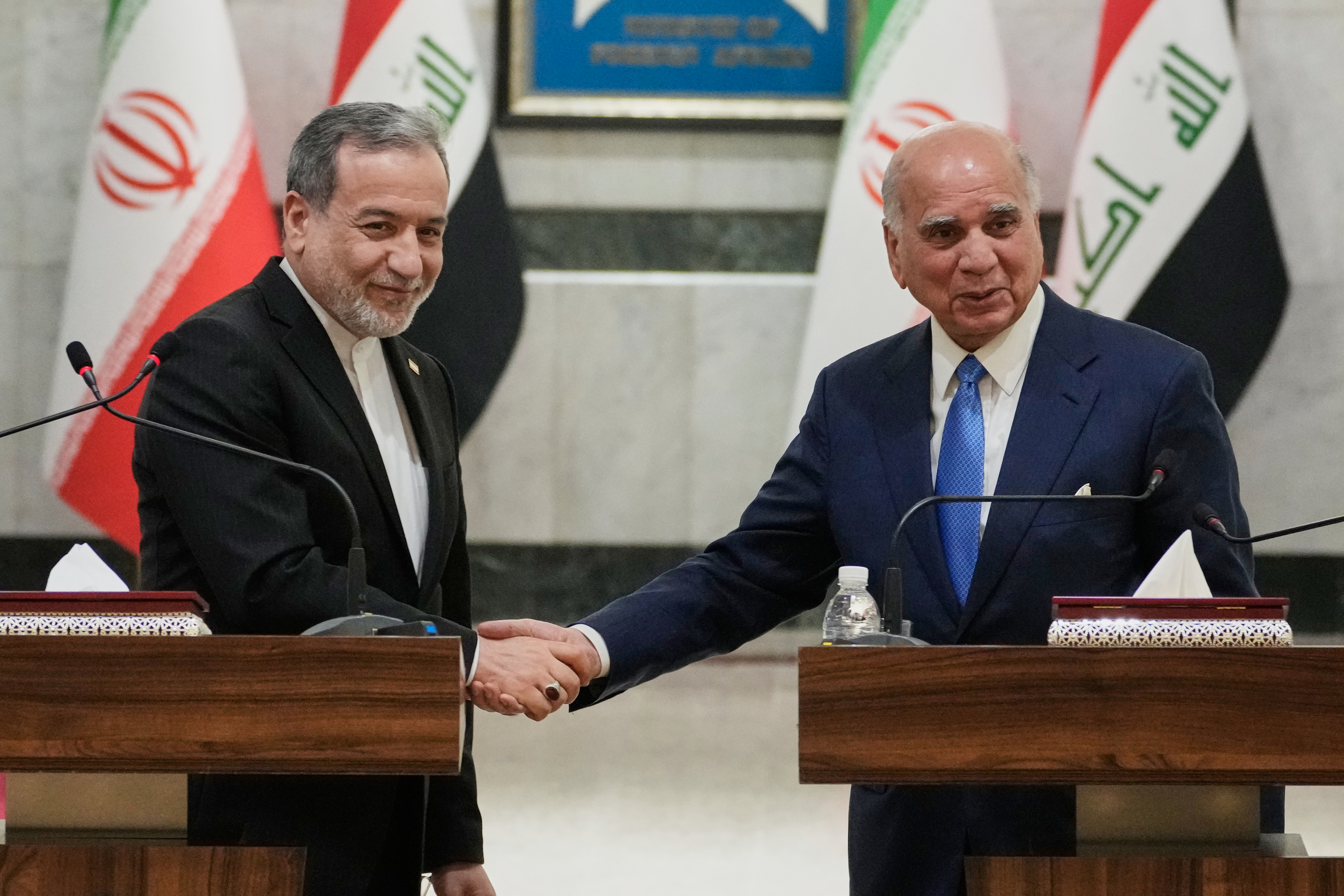
In Baghdad, Iraqi President Nizar Amedi and Prime Minister Ali al-Zaidi held separate meetings on Sunday with visiting Iranian Foreign Minister Seyed Abbas Araghchi to discuss the recent Iran-US memorandum of understanding (MoU) aimed at ending their war.
Amedi stressed the importance of dialogue in fostering a more stable regional environment and paving the way for lasting understandings that address outstanding issues, according to a statement by the Iraqi presidency.
Al-Zaidi affirmed that Iraq supports prioritizing an end to wars and adopting dialogue and negotiations as the path toward strengthening stability in the region, noting that this would create greater opportunities for development and prosperity for the peoples of the region, said a statement by his media office.
For his part, Araghchi expressed Tehran's appreciation for Iraq's role in containing crises and bridging differences. He reaffirmed Iran's commitment to building strong relations with its Arab neighbors and maintaining close coordination with Iraq to expand bilateral cooperation.
