

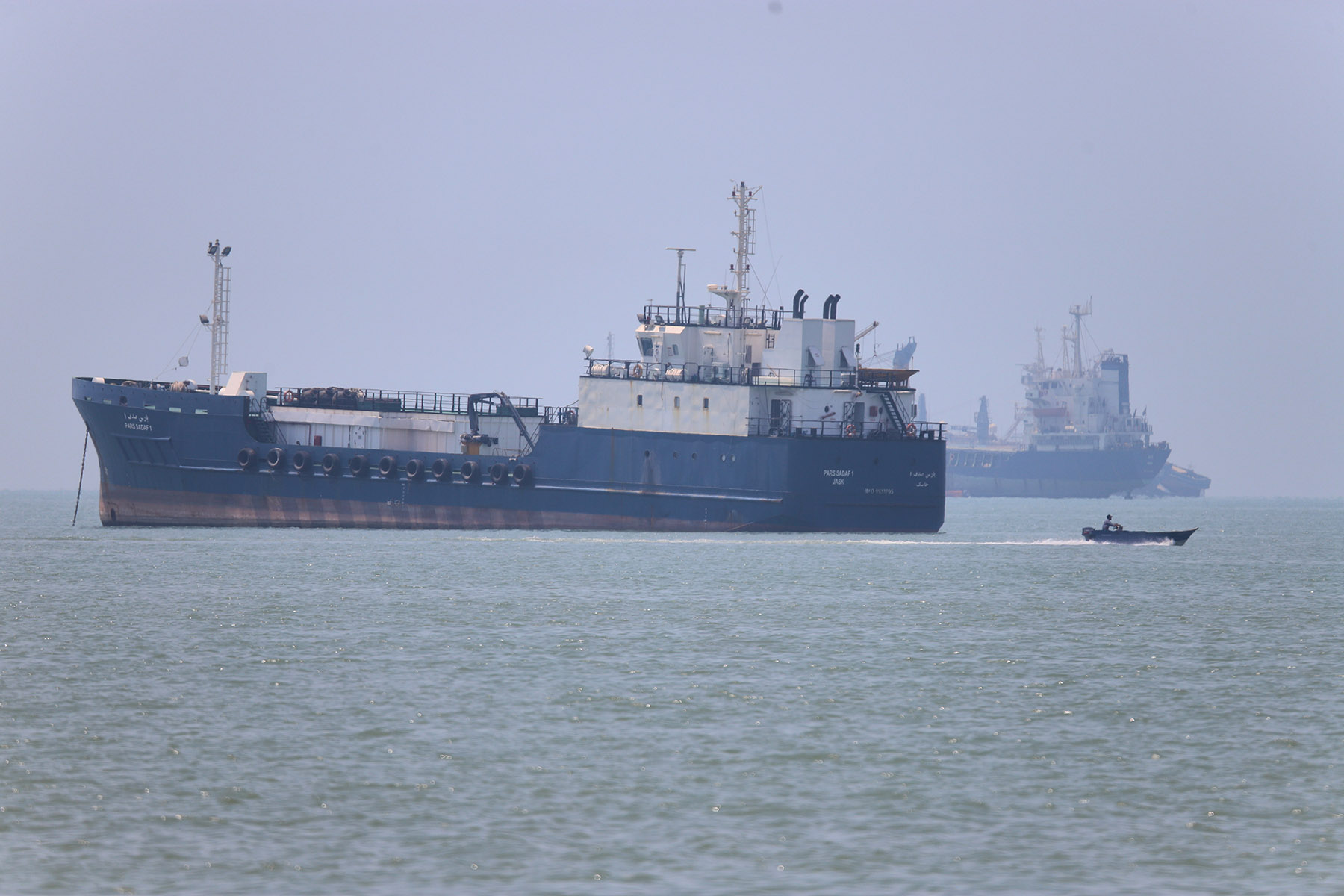
Disputes over shipping access in the Strait of Hormuz have sparked fresh tensions between Iran and the United States, with each side accusing the other of breaching a fragile interim accord signed less than two weeks ago to end their four-month conflict, a war that disrupted global maritime trade and sent shockwaves through international energy markets.
Iran launched missiles and drones at US military sites in Kuwait and Bahrain early on Sunday, responding to US airstrikes on 10 Iranian military targets. Tehran warned that all war-ending negotiations could come to a complete halt if Washington conducts further strikes.
Iran's Revolutionary Guard said in a statement that the US strikes had violated the ceasefire and "will result in the complete halt of all diplomatic processes", according to state-run Press TV. The IRGC navy command said US bases in the region "will experience hell in the coming days".
READ MORE: Report: US, Iran to halt strikes ‘for now,’ to meet in Doha over Hormuz
In an earlier social media post, US President Donald Trump confirmed that the US had "struck Iranian missile and drone storage locations, and coastal radar sites", warning of a point where the US may no longer be able to be reasonable "and will be forced to militarily complete the job". "If that happens, the Islamic Republic of Iran will no longer exist!" he wrote.
About an hour after Trump's post, the Kuwaiti army said its air defenses were responding to "hostile" missile and drone attacks, while sirens sounded in Bahrain, according to Bahrain's Interior Ministry. Both nations condemned the attacks, calling them a blatant violation of national sovereignty.
The US military hit Iran's Sirik, Bandar-e Lengeh and Qeshm Island on Saturday. The US Central Command said the attacks were in response to an Iranian drone attack on the Panama-flagged oil tanker Kiku near the strait on Saturday.
The vessel was reportedly attempting to navigate an alternative shipping lane along Oman's coastline, a bypass route separate from the Iran-regulated waterway, Reuters reported.
This latest flare-up follows a tit-for-tat exchange just days earlier, after the Singapore-registered container ship Ever Lovely was hit by a drone on Thursday. The US retaliated with strikes near Sirik, and Iran responded by targeting US military outposts across the Gulf.
The Strait of Hormuz once handled one-fifth of global oil and natural gas shipments. Washington has pushed for a southern shipping corridor off Oman's coast, while Tehran maintains that all transiting vessels must use its designated channel and warns any alternative routes violate the ceasefire terms.
Amid the exchanges on Sunday morning, CMA CGM's Galapagos container ship sailed out of the strait in what the shipping giant called "an important milestone in a regional context that remains complex".
Iranian Foreign Minister Abbas Araghchi said on Sunday that "the Strait of Hormuz remains under the total oversight and management of Iran throughout the 30 coming days, and after all obstacles are removed, the total capacity of the waterway will be restored".
ALSO READ: Several explosions heard in S. Iran as US claims additional strikes
"Any fresh military escalation will worsen the situation, delay the full reopening of the strait and push tensions even higher," he added, warning outside powers not to interfere.
Wolfgang Pusztai, a Vienna-based defense analyst, said that while US-Iran hostilities have reignited, the conflict remains containable, though accidental full-scale escalation cannot be ruled out.
"The scale of retaliatory strikes from both Iran and the US does not signal either side intends all-out war. To my mind, there remains room for a negotiated diplomatic settlement," he told the Al Jazeera news outlet.
Contact the writers at cuihaipei@chinadaily.com.cn
