

More than a decade ago, when I brought my executive students to Kazakhstan and Uzbekistan for Belt and Road Initiative study tours, many of them asked why we had chosen such distant destinations. To most people in Hong Kong and even on the Chinese mainland, Central Asia seemed remote, unfamiliar, and far removed from daily concerns. Yet standing in Bukhara, where the call to prayer echoed off empty madrassas and my footsteps fell on sun-cracked flagstones, among a profound silence impossible to find in Hong Kong, I was reminded that this region has always been a vital crossroads of civilizations.
 I stood before the Afrasiab murals in Samarkand for a long time. A seventh-century painting depicting Tang Dynasty (618-907) envoys beside Sogdian kings and Turkic khans vividly illustrates the depth of China’s historical presence in the region. For more than two millennia, Central Asia was not a periphery but a hub — a place where trade, diplomacy, and culture intertwined, shaping the Silk Road as the world’s first truly global network. Hong Kong likes to call itself a hub. So was Bukhara. So was Samarkand.
Today, with Chief Executive John Lee Ka-chiu’s historic visits to Kazakhstan and Uzbekistan, Hong Kong is rediscovering this part of the world. Central Asia is no longer outside our radar; it is becoming an important frontier for Hong Kong’s global engagement. Just as the Belt and Road Initiative (BRI) has revived ancient routes, Hong Kong can contribute by bringing financial depth, legal expertise, and international networks to complement the mainland’s presence.
To understand the significance of this moment, we can examine Hong Kong’s role in Central Asia through five perspectives: geopolitics, economy and finance, education and people-to-people ties, institutional advantages, and political symbolism.
First, the visit aligns Hong Kong with national strategy while broadening its horizons. Central Asia has reemerged as a strategic arena in global politics. Once overshadowed by the Soviet legacy, the region is now a focal point of competition among major powers, particularly in the wake of the Russia-Ukraine conflict and rising tensions in Iran.
The challenge now is to translate this rediscovery into a forward looking partnership — one that broadens Hong Kong’s horizons, diversifies its economy, and strengthens its role in the global order. The Silk Road never died. It simply waited for us to look west again
For China, Central Asia is the geographic heart of the BRI, a land bridge connecting East Asia to Europe and the Middle East. Hong Kong’s outreach is therefore more than symbolic. The agreements signed during the visit — covering aviation, finance, green development, and education — demonstrate that Hong Kong is not a passive observer but an active participant in China’s broader geopolitical engagement.
Second, geopolitical alignment has opened new markets for both sides. Nearly 100 agreements and memorandums of understanding (MoUs) were signed across trade, finance, aviation, and green development. These pacts create opportunities for Hong Kong’s financial institutions and professional services. Central Asia’s resource wealth and infrastructure needs align with Hong Kong’s strengths in capital markets, structured financing, and risk management.
Hong Kong’s booming initial public offering market should appeal to Central Asian companies, especially given the growing number of startups across the region. Cathay Pacific’s announcement of direct flights to Almaty, alongside exploratory talks on tax and investment treaties, further lowers barriers for business. These steps show that Hong Kong’s financial depth is being matched with practical connectivity.
Third, deals alone do not make a partnership — people do. Kazakhstan is already a major source of students from BRI economies for Hong Kong, reflecting the city’s growing appeal as a study destination. Central Asia is becoming an important pillar in Hong Kong’s ambition to build an international education hub. The visit reinforced this trend, with new MoUs signed between Hong Kong universities and Nazarbayev University to deepen research collaboration and student exchanges.
Alongside the Association of Southeast Asian Nations and the Middle East, Central Asia is now a key pillar of Hong Kong’s education strategy. Student exchanges, joint research, and scholarships are not only people-to-people ties; they are investments in Hong Kong’s long- term global competitiveness.
The Belt and Road Scholarship program, already supporting students from Central Asia, is a concrete example of how Hong Kong is diversifying its talent pool. Just as merchants once converged on Bukhara, today students from Kazakhstan and Uzbekistan are converging on Hong Kong’s campuses, strengthening cultural understanding and building networks that will underpin future ties.
Fourth, Hong Kong offers something that no mainland city can replicate. Central Asian countries’ understanding of Hong Kong and its role remains limited, but the chief executive’s visit helps promote and export the Hong Kong brand. Hong Kong’s greatest comparative advantage lies in its institutions. The common law system, transparent regulations, and internationalized professional services are precisely what Central Asian economies lack.
These institutional strengths are not easily replicated, and they give Hong Kong a unique role in BRI cooperation. By exporting its institutional brand, Hong Kong helps attract global investors. This is about ensuring that the deals underpinning BRI-related projects are more credible, bankable, and internationally recognized. In this sense, Hong Kong is not just participating in BRI cooperation; it also helps shape the rules of cooperation.
Finally, and most subtly, the visit carries symbolic weight. In a city whose international identity has often been questioned, stepping into Central Asia is a quiet declaration. Hong Kong is not retreating. It is looking west, to places once considered peripheral. The delegation returned with dozens of agreements — trade, finance, aviation, green development, and new education partnerships. These documents are not mere symbolism; they are its proof. For a city like Hong Kong, the act of showing up is the substance. The Silk Road was not built on contracts alone. It was built on the belief that a caravan would arrive. Hong Kong’s caravan has arrived.
Central Asia is no longer a distant frontier or a question mark on Hong Kong’s mental map. It is becoming a vital partner — rough edged, resource rich, and reforming — geopolitically, economically, institutionally, and educationally. Hong Kong can do what it has always done best: Finance the deal, write the contract, educate the next generation of traders, and remind the world that a small, rules-based city still matters.
Just as the Silk Road once made Bukhara and Samarkand crossroads of civilizations, today Hong Kong is rediscovering Central Asia as a partner in trade, finance, and education. The challenge now is to translate this rediscovery into a forward looking partnership — one that broadens Hong Kong’s horizons, diversifies its economy, and strengthens its role in the global order. The Silk Road never died. It simply waited for us to look west again.
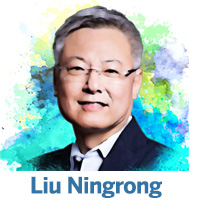
The author is a professor of globalization and business at the City University of Hong Kong.
The views do not necessarily reflect those of China Daily.
