New interdisciplinary master’s and undergraduate programs to prepare tech-savvy, culturally aware professionals
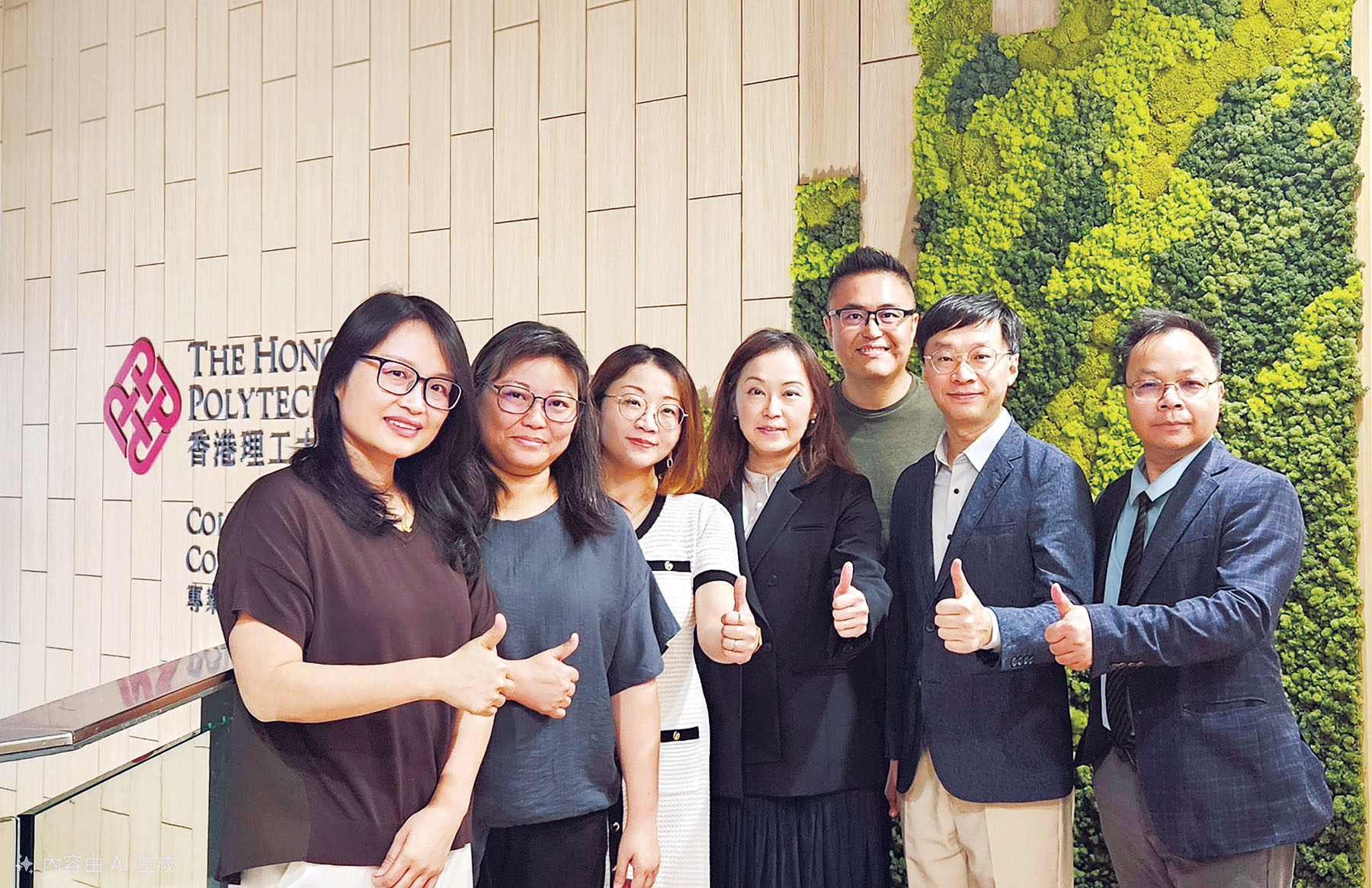
As artificial intelligence transforms workplaces worldwide, universities in some regions have begun trimming humanities enrollments, fueling speculation that liberal arts graduates could be among the first displaced by automation.
Yet at the same time, technology leaders are emphasizing human judgment and ethics, and are reportedly offering premium salaries for humanities-driven roles such as “chief storyteller”, “game storytelling designer”, and “content evaluator”.
These contrasting signals have left many wondering: in 2026, when AI tools are more powerful than ever, what distinctive value do language and cultural studies still provide?
In response, the Division of Languages and Communication at the College of Professional and Continuing Education of the Hong Kong Polytechnic University (PolyU) is betting on integration with technological progress rather than retreat.
In the 2026/27 academic year, it will launch two new master’s programs that combine AI applications with bilingual and cross-cultural expertise, along with a rebranded undergraduate degree, to cultivate interdisciplinary professionals equipped for the future.
Dr Nina Jiao, program leader of the Master of Arts in Applied Chinese with Language Technologies (ACLT), said AI has generated a range of emerging roles, including AI narrative designer, large language model (LLM) humanities trainer, and AI ethics researcher.
“These positions urgently require people who understand both Chinese language and AI,” Jiao said. She noted that many students from Chinese studies, linguistics and education are interested in technology integration but lack structured pathways into the field. The ACLT program aims to bridge the gap, enabling such students to master AI tools without needing to start from scratch in computer science.
The curriculum comprises nine compulsory and six elective subjects. One of the core courses, AI Technologies for Chinese Language Research, trains students to treat AI as a research assistant. They will learn how to convert their research materials into a searchable personal database, allowing AI to generate responses grounded strictly in this “reference library”.
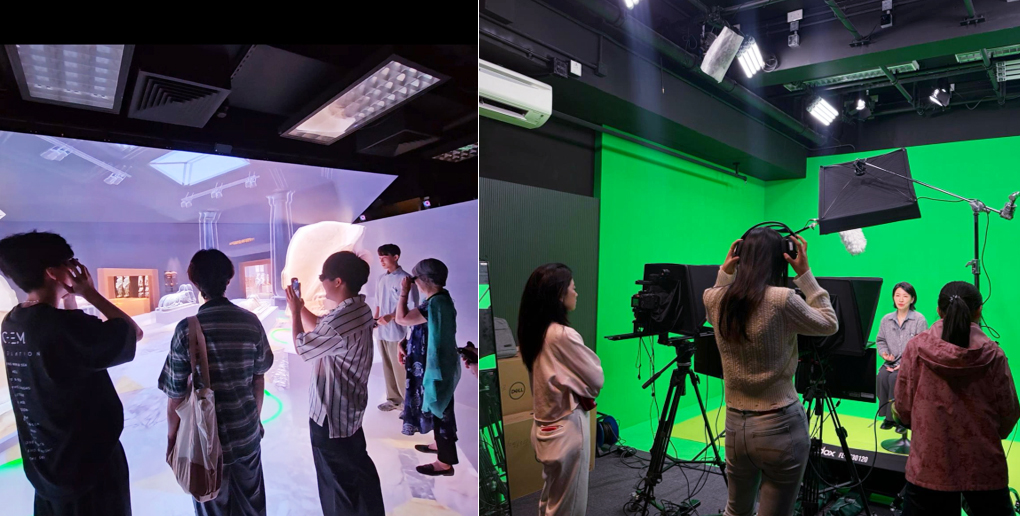
AI will also handle the “grunt work” of Chinese-language studies, such as organizing datasets that can run into the millions and extracting insights from massive text corpora.
Courses are delivered through workshops, combining lectures, practical exercises and projects. Faculty members include database specialists and computational linguists.
Jiao said linguistics provides rigorous academic training that cultivates systematic skills to identify, describe and solve problems. “People with these capabilities remain irreplaceable by AI,” she said.
This set of abilities serves as a versatile toolkit that can be applied across various sectors, including business communications, culture and tourism, language technology, and the media, Jiao added.
While ACLT focuses on efficient collaboration between humans and technologies, the Master of Arts in Cross-cultural Bilingual Studies (CCBS) emphasizes human-to-human communication.
Program leader Dr Frieda Kwok said the program centers on “cultural judgment, ethical awareness, critical evaluation and intercultural mediation” — areas in which humans retain a clear advantage.
“Communication is human-oriented. AI can help polish grammar, but it may not be so detailed in addressing issues related to cultural awareness or the differences among cultures. Humans are more culturally sensitive in this regard,” she said.
The program aims to develop students’ cultural intelligence, which Kwok defines as the ability to interpret, adapt to, and respond appropriately in different cultural contexts. Among its seven compulsory subjects, courses like Cross-cultural Bilingual Communication in Practice through a Translation-mediated Approach are designed to build that capacity.
Graduates proficient in Mandarin, Cantonese and English, with strong cultural intelligence, are positioned for careers in education, media, tourism and international exhibitions, Kwok said. Such skills are particularly sought-after in the Guangdong-Hong Kong-Macao Greater Bay Area, an 11-city megalopolis known for its economic dynamism and cultural diversity.
To broaden students’ competencies, elective subjects include regional language and cultural studies, such as Japanese and Korean, alongside courses in lyric writing and online literature research.
According to the division’s management, the two master’s programs underwent multiple rounds of rigorous consultations and reviews prior to establishment. Advisory board and validation panel members from academia and industry conducted detailed assessments to ensure the curricula aligned with labor market demands and postgraduate study needs. Experts from publishers, media organizations, museums, universities and technology firms also provided valuable feedback.
Meanwhile, the division has rebranded its Bachelor of Arts (Honors) in Language Studies with Technology-assisted Applications (LST), which transcends the conventional boundaries of language learning by integrating Chinese, English and technology into an interdisciplinary curriculum.
Program leader Dr Melody Lu said the LST offers “high upside with a strong safety net”, meaning that when graduates pursue master’s degrees, they have the flexibility to continue in humanities or pivot toward technology-related fields.
“What matters most is building a strong foundation, so as to equip students with the skills that keep diversified pathways open for their future,” she said.
Based in Hong Kong, a city known for its multilingual and global connections, the Division of Languages and Communication also offers programs that blend local distinctiveness with international perspectives, including BA (Hons) in Chinese Language and Culture, BA (Hons) in Language and Professional Communication (Digital Media), MA in Chinese Creative Writing and Media Culture, and MA in AI and Technology-assisted Language Teaching.
These programs awarded by PolyU emphasize a “human-technology collaboration” learning model that equips students to use AI for language analysis and content creation, while maintaining critical judgment and ethical reasoning, said the division’s head, Dr Esther Tong.
They also place strong emphasis on cross-cultural and interdisciplinary communication, as well as creativity and narrative competence, connecting academic learning with real-world and industry applications so that learning outcomes directly respond to societal and workplace needs, she added.
Tong said she believes that today, languages and communication education is entering a new phase that integrates generative and multimodal AI models, digital technologies, humanistic concerns, creative thinking and other higher order cognitive training. The focus of education is consequently shifting from merely “imparting knowledge” to “shaping capabilities”.
“The core value of the humanities lies in their boundless potential to inspire deep reflection, connect cultural threads, and foster innovation. Far from being marginalized in the AI era, these attributes are increasingly essential,” she said.