

Through research, technology and community support, various sections are captivating new audiences with dynamic appeal, Yang Feiyue reports.

From digital avatars to forest trails and hands-on brick-making, different sections of the Great Wall are drawing new audiences and redefining what heritage protection can mean. At Banchangyu Great Wall park, visitors can walk the same ground where Ming Dynasty (1368-1644) soldiers once stood, touch bricks fired nearly 500 years ago, and try their hand at making a Great Wall brick.
On weekends, children crowd the brick-making workshop, mixing clay and carving their names into fresh blanks, while hikers follow trails through the area's thick forests.
Each morning, one man broadcasts it all to the world. At 7 o'clock sharp, Xu Guohua, without fail, turns on his phone and begins his livestream.
READ MORE: Ancient armor opens wide
Three phones are mounted in front of him, streaming live to Douyin and WeChat simultaneously. The 73-year-old wears a plain dark blue cotton jacket. His weathered face, tanned by years of outdoor work, catches the light. In his hand, he holds a small wine cup, no wider than two fingers.
"Look at this artifact from the Ming Dynasty — we dug it up in our village," he says to the camera.
Xu usually gets 1,000 to 2,000 views a day as he talks about artifacts, brick kilns and folk stories from beneath the centuries-old Banchangyu Great Wall.
"I don't really understand the internet, but I have been doing this every morning for five years," he says.
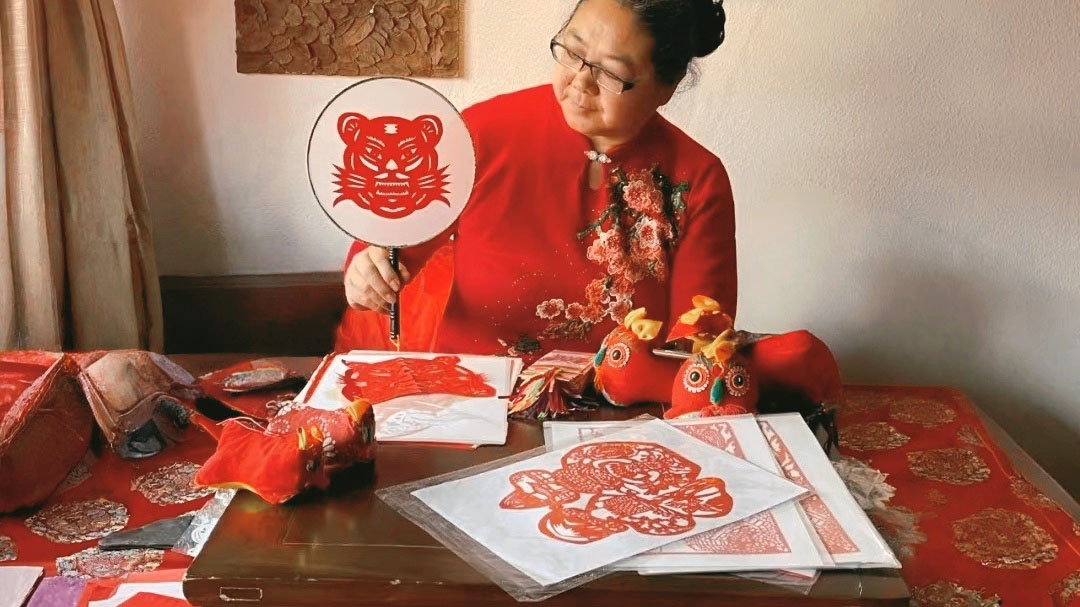
He takes pride in promoting the history and culture of the Great Wall in his birthplace.
A man from southern Guangdong province came all the way to see him after watching his broadcast, while a couple from Yunnan province traveled by train. Xu met them, showed them around, and sometimes bought them lunch.
The centerpiece of the Banchangyu site in Qinhuangdao, Hebei province, is a vast collection of brick kilns.
In the early 2000s, excavations revealed brick kilns that had been buried for nearly 500 years. Archaeologists have since uncovered more than 200 kilns, turning the area into one of the country's most important Great Wall industrial heritage sites.
Bricks from nearby Great Wall sections match the dimensions of those fired in Banchangyu's kilns.
"This was where they made the bones of the wall," Xu notes.
Running several coal mines in the 1980s, Xu rose from rags to riches. The kiln discovery, along with tightening restrictions on small coal mines, prompted him to shift his focus to heritage preservation.
He then leased more than 30 square kilometers of land along the Great Wall and built a small museum beside the kilns, filling it with tablets, bricks, stone balls, and firearms he had collected from fields and farmhouses. He researched each piece, consulting ancient texts and experts to confirm their identities.
"I grew up at the foot of the Great Wall, and my family has guarded this place for generations," he says, adding that his grandmother always told him they came from the south to build the Great Wall.
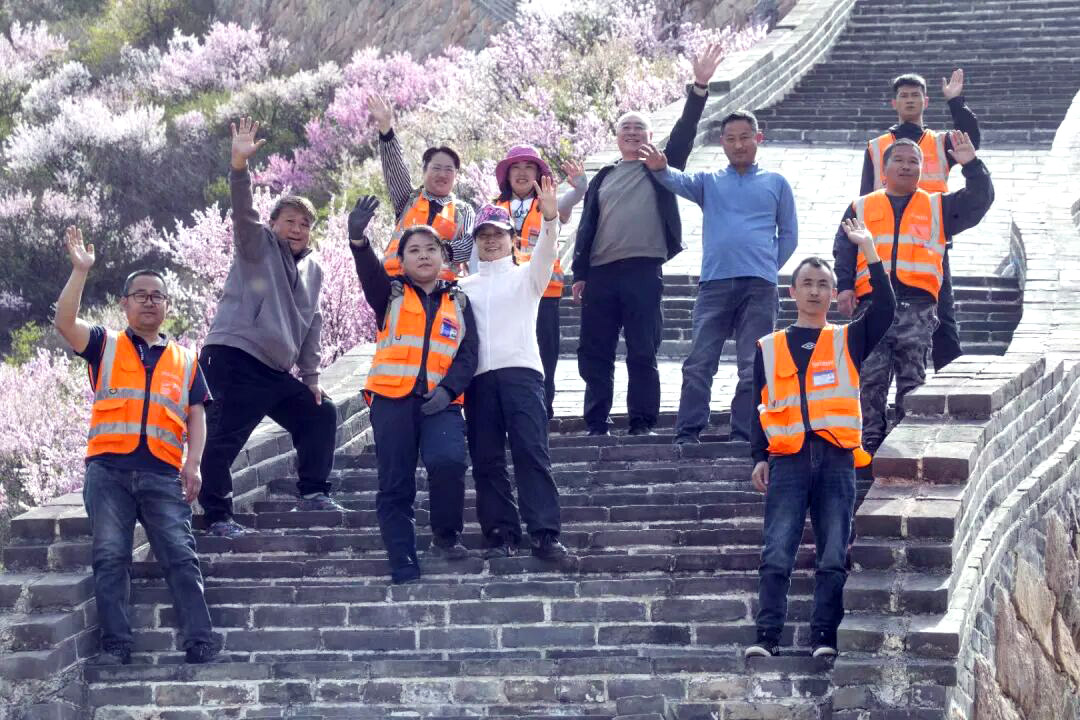
Over the years, Xu and his family have built an extensive network of trails and access roads through the mountains surrounding the Great Wall.
His persistence moved his son and encouraged him to join the cause. Today, his son oversees walking trails and infrastructure throughout the park.
Additionally, his grandson returned to Banchangyu after graduating from Jimei University in Xiamen, Fujian province, in 2021, when he began working to package Banchangyu Great Wall culture into a curriculum with the support of local schools. The study programs introduce students to subjects ranging from Great Wall engineering to geology and traditional craftsmanship.
ALSO READ: Where ancient barriers became bridges
At the hands-on brick-making workshop, children can first visit the kiln ruins to hear the story of their discovery. Then they go to the workshop to mix clay, fill molds, and form brick blanks. Finally, they carve their names into the unbaked bricks.
To date, the number of partner schools has grown from three to over 30. More than 30,000 students have visited, Xu shares. Study tours now account for one-third of the park's revenue.
Xu still livestreams every morning, aiming to reach more potential visitors. Recently, he even started experimenting with an AI avatar to help explain artifacts online.
"At my age, I never imagined I'd be learning things like this," he says with a laugh.
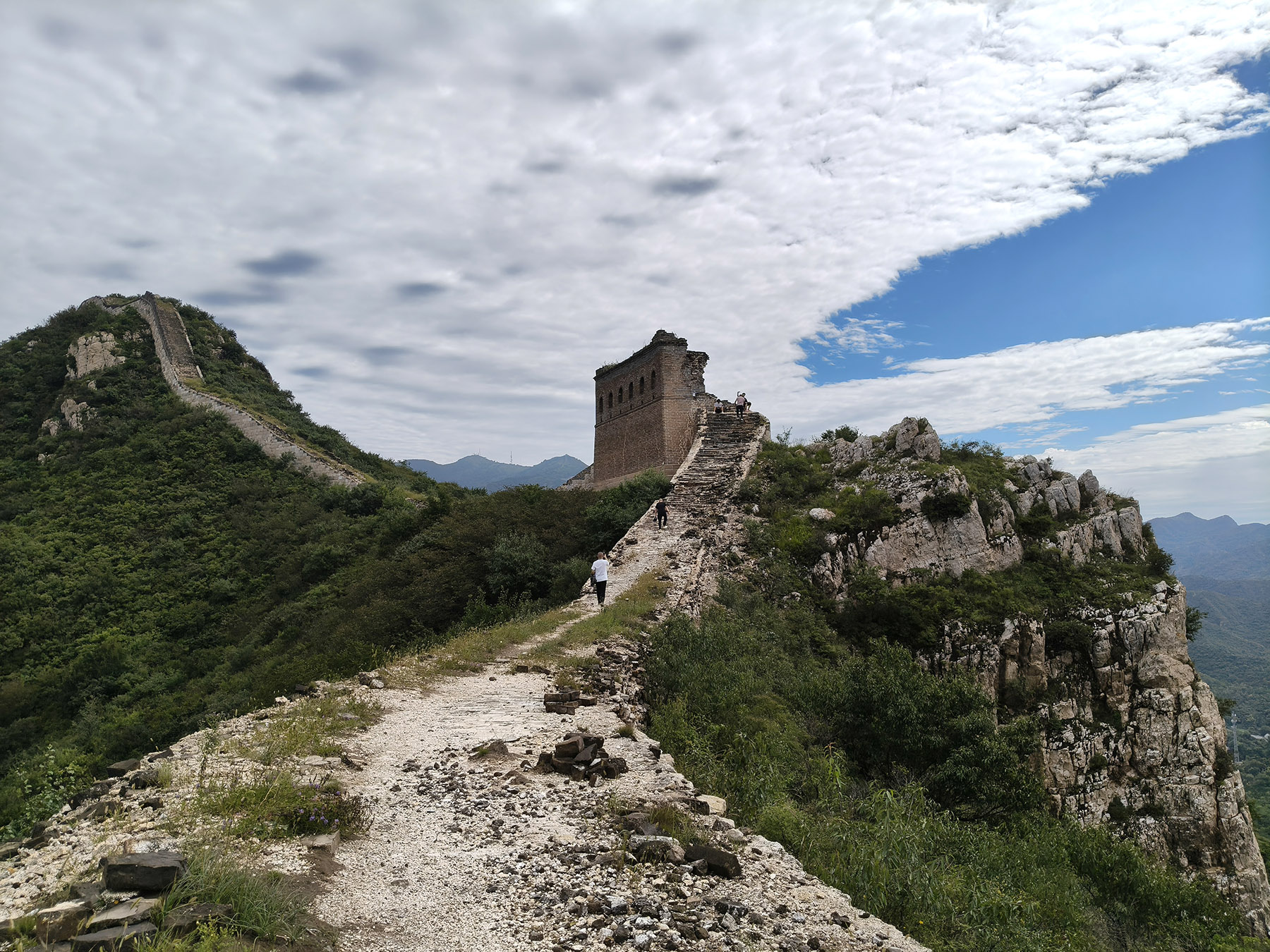
From crumbs to incomes
West of Banchangyu, Shixia village in Beijing's northwestern Yanqing district offers another model of Great Wall revitalization.
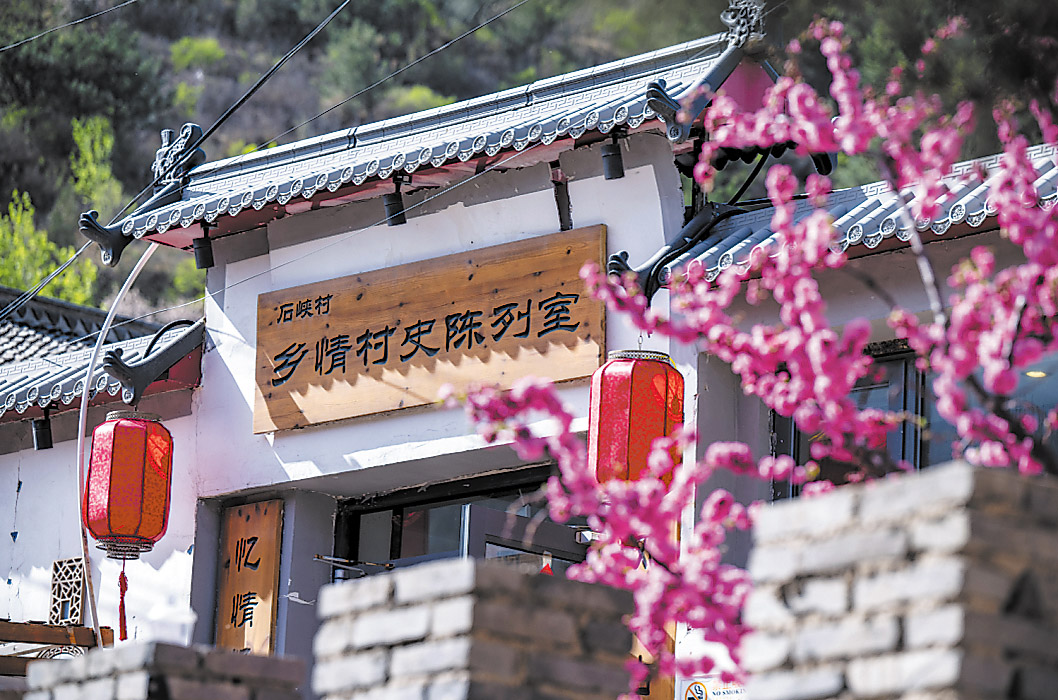
On weekends and holidays, travelers flock to the village to sip coffee at a restored farmhouse, learn dough sculpting from local artisans, and hike a trail along the ridge where the Great Wall meets the forest.
Founded during the Ming Dynasty, the village sits at the foot of the Shixiaguan section. For decades, its remote mountain location limited development. That gradually began to change after China introduced its first Great Wall protection regulation in 2006.
Villagers formed protection teams, while entrepreneurs and cultural tourism operators started restoring abandoned courtyards. One of them was He Yuling, who arrived in 2014 and rented a crumbling traditional courtyard house on a 20-year lease. Villagers initially found the decision puzzling.
She answered with action. Today, her Shiguang Great Wall Boutique B&B brand operates 18 renovated courtyards, each with a different theme, such as spring dwelling, quiet summer and winter retreat.
She brought her family's sauce-making recipe to the village and combined it with the local stone-cooked feast. Annual revenue has exceeded 10 million yuan ($1.47 million).
Some villagers now run their own guesthouses, while others work in tourism and hospitality.
Gu Wenting, the Party secretary of Shixia village, has witnessed the transformation firsthand since returning from the military in 2013.
"The spirit of the whole village changed completely, and people have become more confident about what the village can become," Gu says.
"The sense of honor, belonging and purpose — all of it has risen."
A 6-kilometer forest trail opened beside the Great Wall at the end of 2025 after more than two years of planning and construction. Following the mountain's contours, the trail connects visitors with a nearby section while preserving the original landscape. Since its opening, it has attracted more than 20,000 hikers, according to local officials.
The village's collective income reached 1.2 million yuan in 2025, a 75 percent year-on-year increase.
"This number represents a real leap forward. Our cultural tourism industry has taken off, and the village's reputation has spread," Gu observes.
At the village entrance, signs point visitors toward coffee shops, bookstores and workshops on intangible cultural heritage. A 40-hectare crabapple orchard has just been upgraded, offering tours, picking, and study programs.
At dusk, children run through a campground. The smell of braised pork drifts from guesthouse kitchens.
According to Gu, the village plans to expand its Great Wall study programs next year while adding new camping and lodging facilities for young travelers.
"We want visitors to stay longer and experience village life more deeply," he says.

An emotional connection
East of Shixia village, in northeastern Beijing's Miyun district, visitors can step through a "time gate" where old photographs of the Great Wall come to life, question a digital Ming Dynasty general, and watch ancient weapons emerge from a virtual encyclopedia. These experiences await at three newly opened digital centers in Gubeikou, Yaoqiaoyu and Guanmen.
Miyun has rich Great Wall resources, with over 180 kilometers of Ming Dynasty walls and 61 registered fortresses. However, there is a problem.
"Many of its fortresses have disappeared above ground, leaving only ruins," says He Ding, an associate professor at Beijing University of Civil Engineering and Architecture, who led the centers' design.
His team spent a year on the project to create an emotional connection.
"The hardest part was not the technology but designing the content — getting the narrative logic and interactive details right," he says.
They combed through archives in China and abroad, searching historical texts and maps for clues about the frontier world of Miyun.
For instance, one Ming text recorded the distribution of Mongol tribes north of Miyun, he says.
"We thus added two Mongol chieftains to our digital scroll, because we want visitors to understand that the frontier was a multiethnic place," he explains.
Inside the Gubeikou center, the "time gate" uses AIGC technology to bring old photographs to life. Black-and-white images of Gubeikou begin to move, vividly re-creating a scene of merchants passing through the site in bygone days.
Beside the "time gate" stands a digital avatar of Qi Jiguang, the legendary Ming Dynasty general. The digital general's appearance draws from Ming Dynasty portraits, and his manner is calm and resolute. Visitors can ask him anything from how the Great Wall was built to how fortresses were defended, and he answers in real time.
ALSO READ: Beyond the Great Wall's end
While Gubeikou gives visitors a broad sweep of Miyun's defense network, Yaoqiaoyu zooms in on a cluster of fortresses, and Guanmen examines individual fortresses up close.
"We want visitors to go from a wide view to a narrow view, step by step," He Ding says.
Since opening, the centers have boosted local tourism. Out-of-town visitors make up a large share, especially on weekends.
"Families often spend half a day or a full day visiting all three centers," He Ding says.
He says the team will keep upgrading. "We plan to enrich Qi Jiguang's knowledge base, add more digital characters, and develop a mobile experience, so visitors can continue their tour even after they go home."
Contact the writer at yangfeiyue@chinadaily.com.cn
