

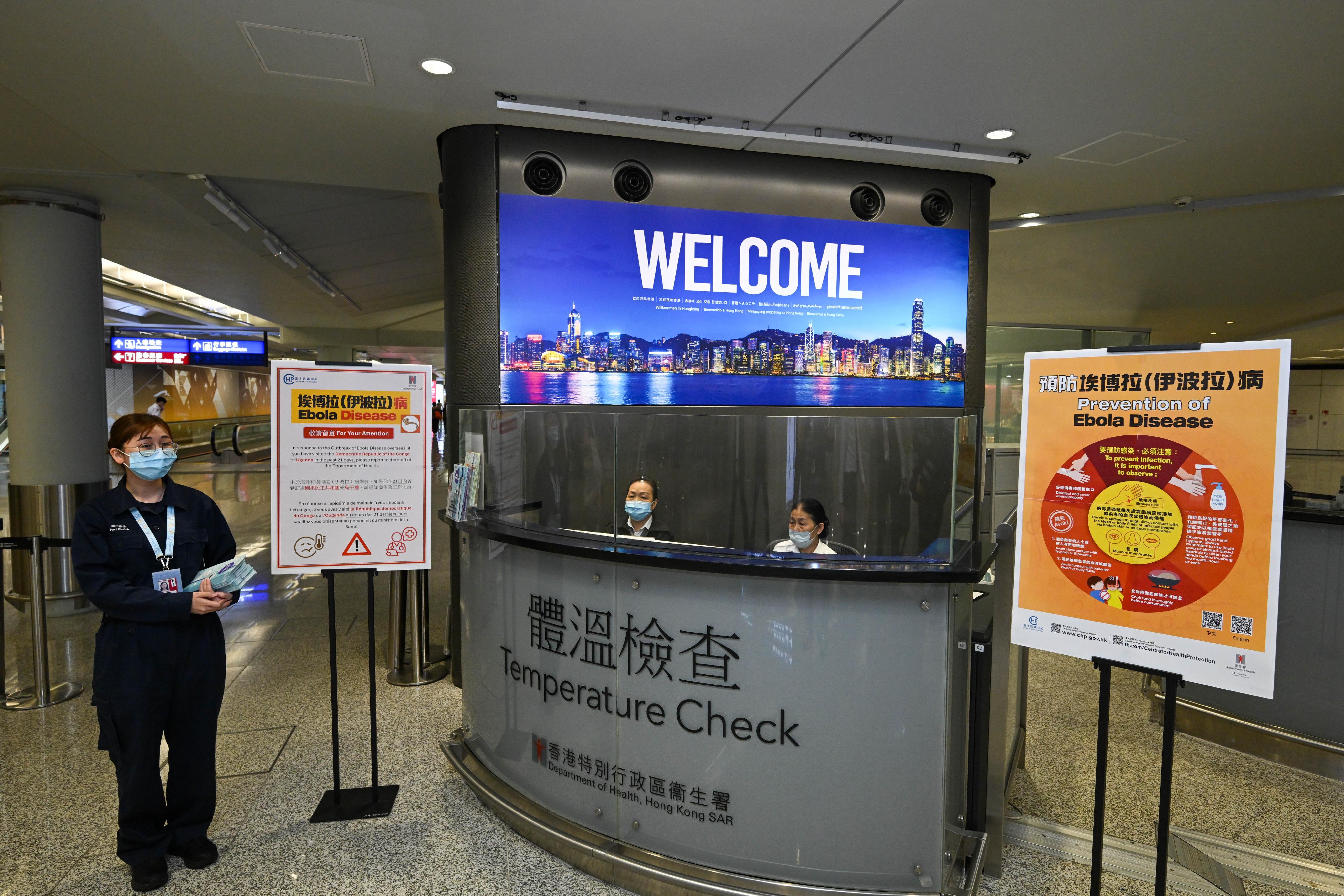
HONG KONG – The Hong Kong Special Administrative Region government has issued a red outbound travel alert urging residents to avoid non-essential travel to the Democratic Republic of Congo (DRC), with Ebola cases surging in Central Africa.
The current outbreak, which the Congolese government declared on Friday, is already the third largest on record, with 160 suspected deaths out of 670 suspected cases, Reuters news agency reported, citing DRC health ministry data published on Thursday.
The red alert, the second level in Hong Kong’s three-tier outbound travel alert system, means residents travelling to the country should adjust their plans and avoid non-essential travel due to the significant threat there.
On Sunday, the SAR government activated the “alert” response level – the lowest of the alert mechanism – after the World Health Organization (WHO) declared that fresh Ebola outbreaks in the DRC and Uganda pose a public-health emergency of international concern.
“The Department of Health (DH) has assessed the risk of local transmission spreading to other regions as very high. The HKSAR government has therefore issued a Red outbound travel alert for the Democratic Republic of the Congo,” the SAR government said in a statement on Thursday night.
Emphasizing that no confirmed cases of Ebola disease have ever been recorded locally, the government said: “At present, the risk of Ebola disease is primarily confined to outbreak areas and the immediate public health impact to Hong Kong is currently low.”
RELATED ARTICLES
- Ebola outbreak in Africa declared health emergency
- WHO chief voices concern over 'scale and speed' of Ebola outbreak
- New Ebola outbreak in eastern DR Congo raises cross-border concerns
The relevant departments are fully prepared. Once a suspected case is identified, testing and comprehensive prevention and control measures will be implemented immediately in accordance with established protocols to prevent the spread of the virus in Hong Kong, the government added.
As countries scrambled to prevent the spread of the disease, the WHO said on Wednesday that the risk of the Ebola epidemic is "high at the national and regional levels, and low at the global level," but it was not at a pandemic level.
It could take up to six to nine months before doses of the “most promising” potential vaccine against the Bundibugyo virus that is causing the Ebola outbreak in central Africa could be available, according to the UN health agency.
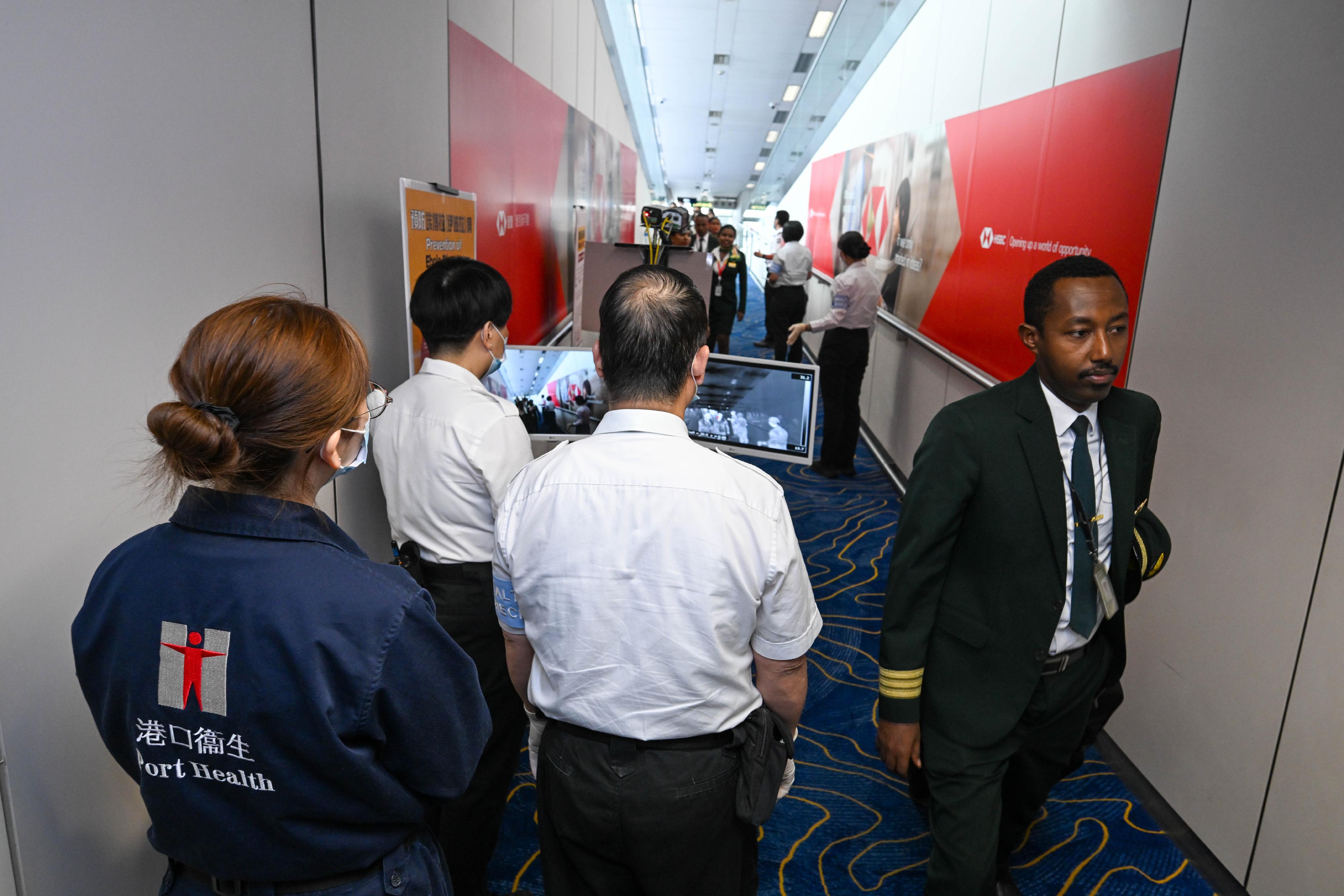
The DH said it has all along conducted health screenings for inbound travelers at all boundary control points. From May 17 to 20, 11 individuals who declared having visited the relevant regions underwent health assessments by the department. No suspected cases of Ebola disease were identified, according to the government.
DH staff also provided the individuals with health information on the spot, reminding them to seek immediate medical advice at accident and emergency departments if they develop symptoms within 21 days of arrival in the city.
The DH, in collaboration with the Hospital Authority, has established procedures for handling high-risk specimens related to suspected cases to ensure that, should a suspected case arise in Hong Kong, testing can be conducted as quickly as possible.
Meanwhile, Hong Kong residents in the Democratic Republic of the Congo who need assistance can call the Immigration Department’s 24-hour hotline at (852) 1868, call the 1868 hotline using network data or use the 1868 Chatbot via the ImmD's mobile app. They can also send message to the 1868 WhatsApp or 1868 WeChat assistance hotline or submit an online assistance request form.
Alternatively, they may contact the local Chinese Embassy in the Democratic Republic of the Congo at (243) 851474669.
