

Hong Kong’s first astronaut Lai Ka-ying, who will fly as a payload specialist on the upcoming Shenzhou XXIII manned mission, passed the flight qualification assessment with outstanding results, according to the China Manned Space Agency.
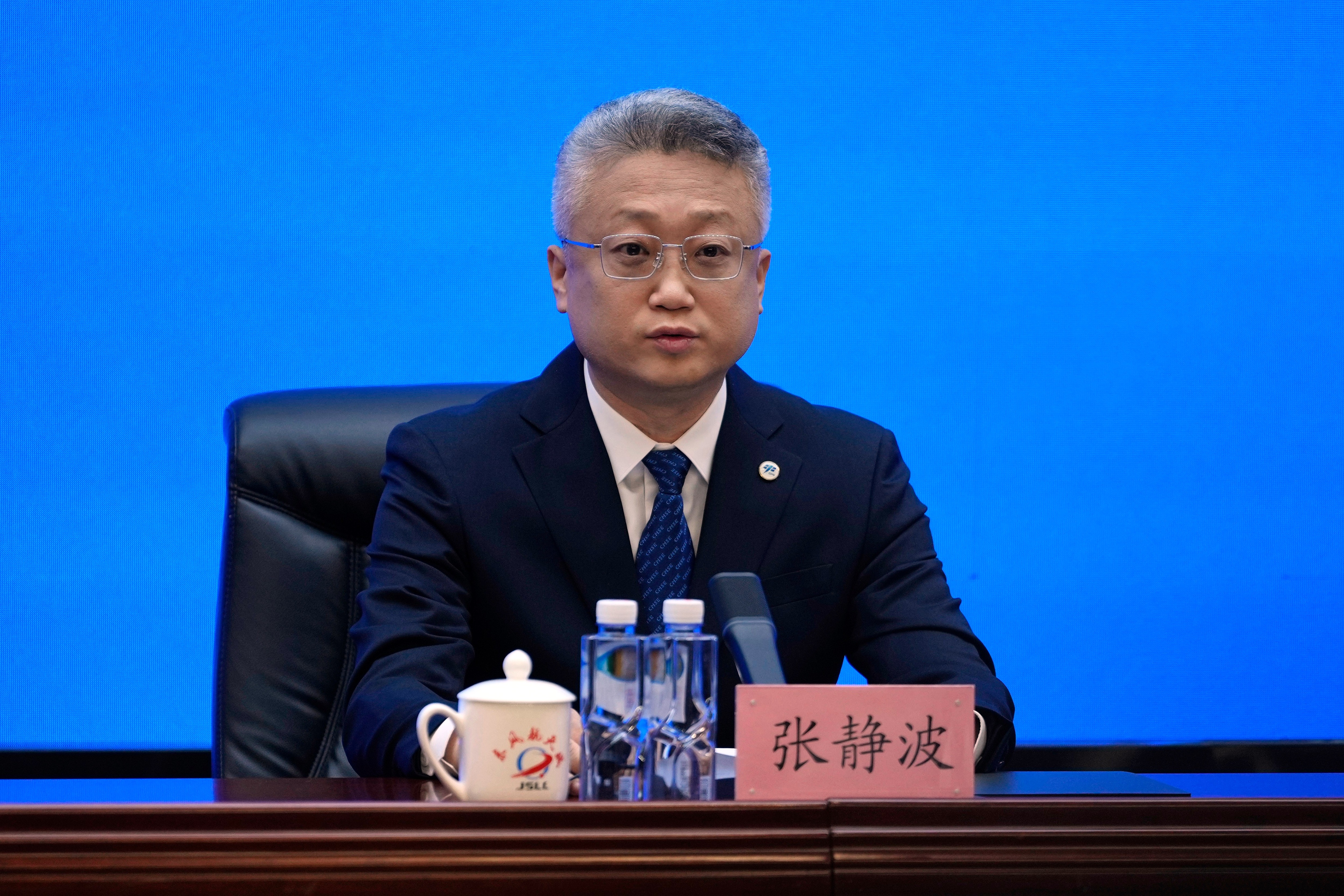
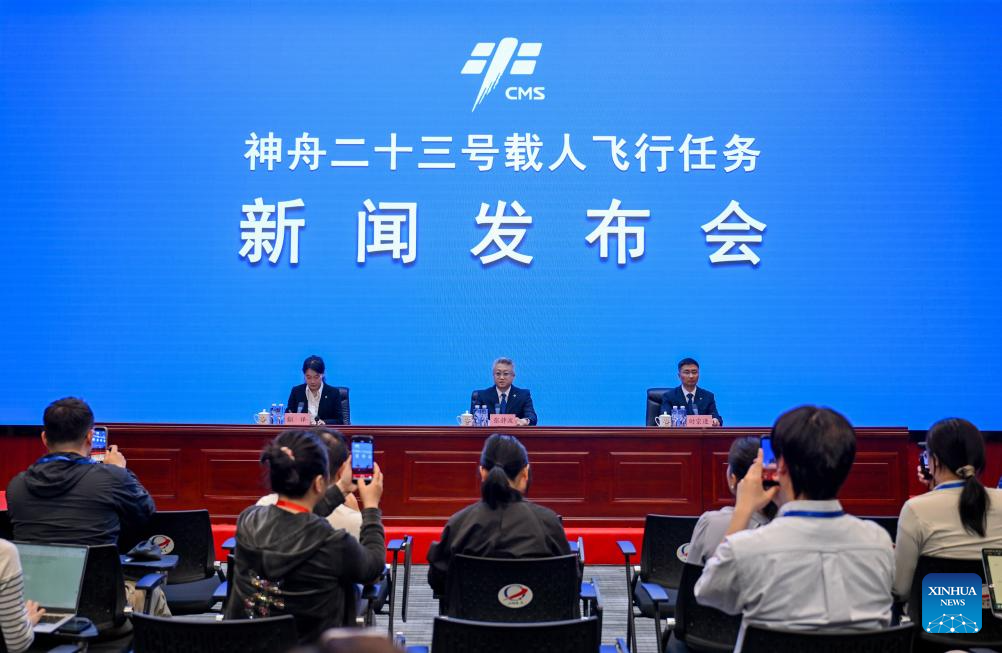
Lai joined the astronaut corps in August 2024 and has since completed training across eight major categories covering more than 200 subjects, accumulating over 1,700 training hours, Zhang Jingbo, spokesperson for the agency, said at a press conference at the Jiuquan Satellite Launch Center in Jiuquan, northwestern China, on Saturday.
The Shenzhou XXIII crewed spacecraft is scheduled to launch at 11:08 pm on Sunday (Beijing Time) from the Jiuquan Satellite Launch Center in northwestern China.
RELATED ARTICLES
- Lee: HK’s first astronaut a historic moment in city’s aerospace dream
- Lai Ka-ying: I won’t let you down
- HK security chief says ‘deeply proud’ of superintendent Lai
- Lingnan University database supports space-based greenhouse gas monitoring
- Profiles of Shenzhou XXIII crew members
A superintendent and technical specialist with the Hong Kong Police Force, Lai will fly as a payload specialist on the upcoming mission, becoming the first female civilian in the country to travel into orbit, and also the first astronaut from the Hong Kong Special Administrative Region.
“She is currently in good overall condition and demonstrates strong crew coordination,” Zhang said.
He added that Lai has completed intensive mission-specific training, including space scientific research and technical experiments, space station assembly management, as well as operation of the spacecraft and the space station’s robotic arm.
HK’s growing role
Lai’s selection marks a milestone for Hong Kong’s integration into the nation’s space program.
Speaking at the press conference, Zhang said Hong Kong has made contributions to China’s space endeavors.
In recent years, Hong Kong’s scientific research forces have been actively integrating into the broader landscape of the country’s space industry development, with Hong Kong universities and research institutions engaging in in-depth exchanges and cooperation with national research teams, he said.
Zhang specifically cited the deployment of Multi-Spectral Imaging Carbon Observatory (MUSICO), nicknamed “eye for space”, on the Tiangong space station. Developed by the Hong Kong University of Science and Technology, MUSICO is the world’s first lightweight, high-resolution, high-precision carbon dioxide (CO2) and methane (CH4) point-source detector.
Under the principle of “one country, two systems”, Hong Kong can fully leverage its international advantages to attract, develop, and cultivate high-end scientific and technological talent, thereby contributing to the advancement of China’s manned space program, Zhang said.
