

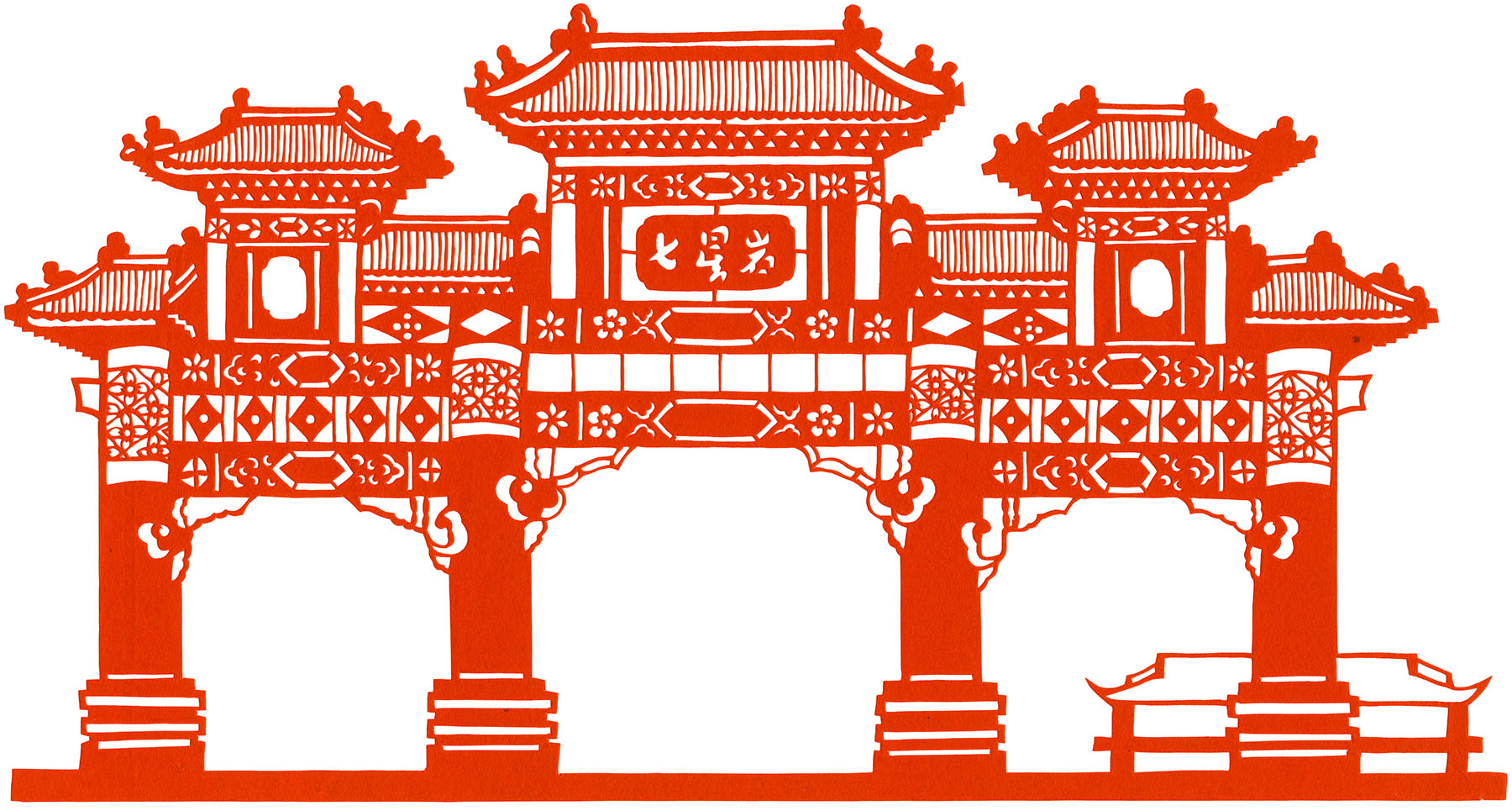
Though paper-cutting originated in ancient China, this folk art form has since absorbed cultural elements from various countries around the world. Tradition & Perfection: Paper Cuttings from China & Switzerland — an exhibition running concurrently at the University Museum and Art Gallery (UMAG), University of Hong Kong, and Kunsthaus Interlaken in Switzerland — amply demonstrates the intricate nature of the craft, while also highlighting the two distinct cultures that inform the exhibits.
The Hong Kong edition features 259 Chinese and 62 Swiss pieces, whereas the Interlaken show has 151 Chinese and 71 Swiss artworks. Curator Harald Peter Kraemer says that the idea is to have the pieces from the two cultures in dialogue.
“My exhibitions highlight traditional themes and provide an overview of the rich and fascinating cultural heritages found in Switzerland and China. This allows for comparisons in terms of content, motifs, and forms.”
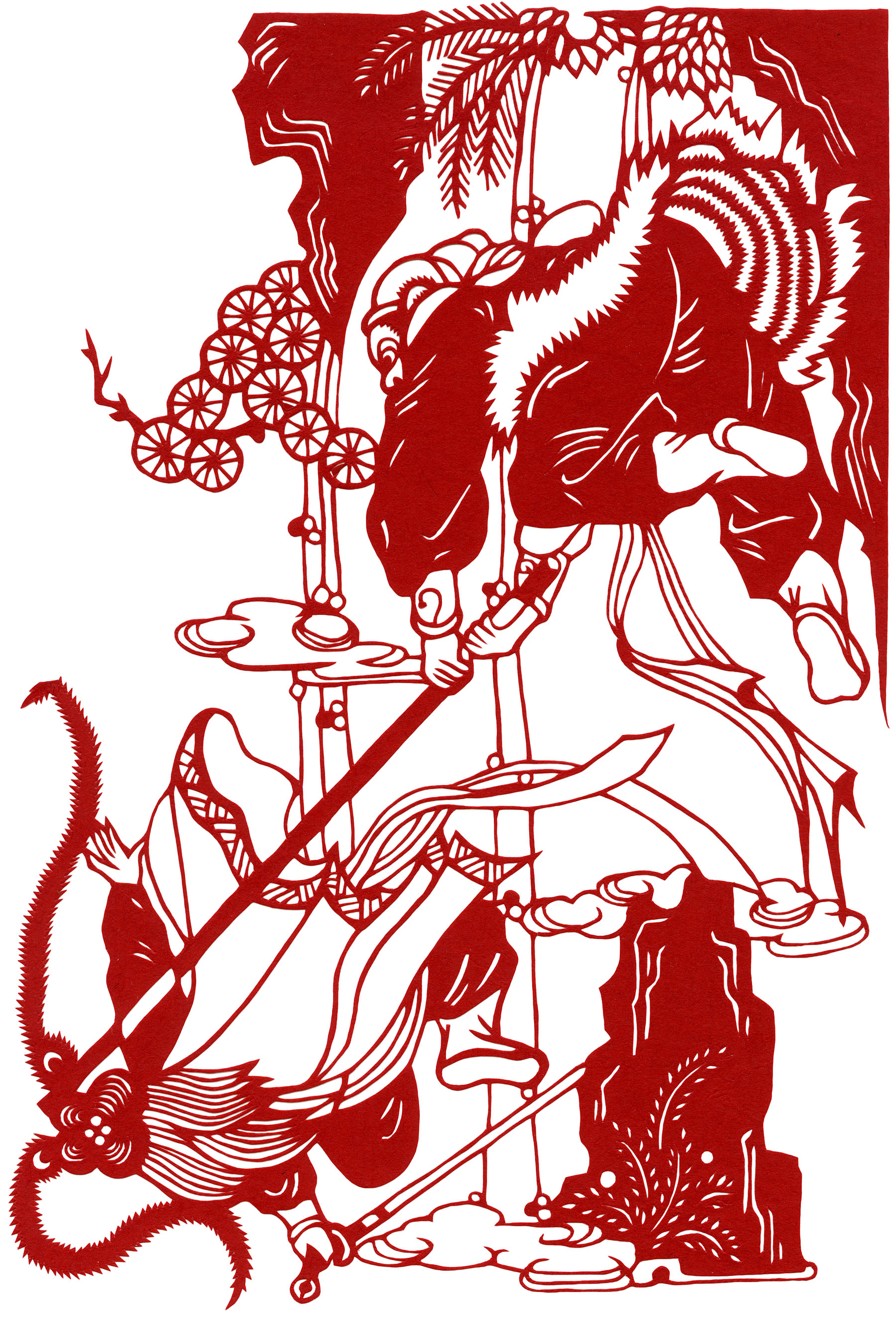
In ancient China, paper-cut artworks had a functional aspect. During the Tang Dynasty (618-907), such art was a part of religious and festive occasions, often used in rituals to summon spirits and also as hair accessory during the Spring Festival. During the Ming Dynasty (1368-1644) and Qing Dynasty (1644-1911), paper-cutting figured in embroidery patterns, fan decorations and palace lanterns.
In the West, toward the end of the 17th century, Amsterdam became the first European center for producing knipsels, the Dutch word for paper-cut pieces. Later, this new art form traveled to Geneva, which is renowned for its exquisite paper-cut creations.
Contrasting styles
The differences between Chinese and Swiss styles are easy to spot. “Swiss paper designs are created using scissors, while their Chinese counterparts are typically made with cutters,” explains Heinz Häsler, co-curator of the Interlaken exhibition. “This is one reason why Swiss paper-cuttings tend to be symmetrical.” He adds that most of them are realized in black and white, while Chinese paper-cuttings are more colorful — red, signifying luck, being a favorite. Kraemer adds that Chinese paper-cut art is rich in symbolism. The stylized renditions of animal and plant motifs convey deep meanings. “Many trees and flowers in China, as well as the 12 that represent the months, carry symbolic meanings,” he says. For example, plum blossoms, associated with winter, suggest perseverance, while bamboo, seen as a symbol of humility, is associated with summer.
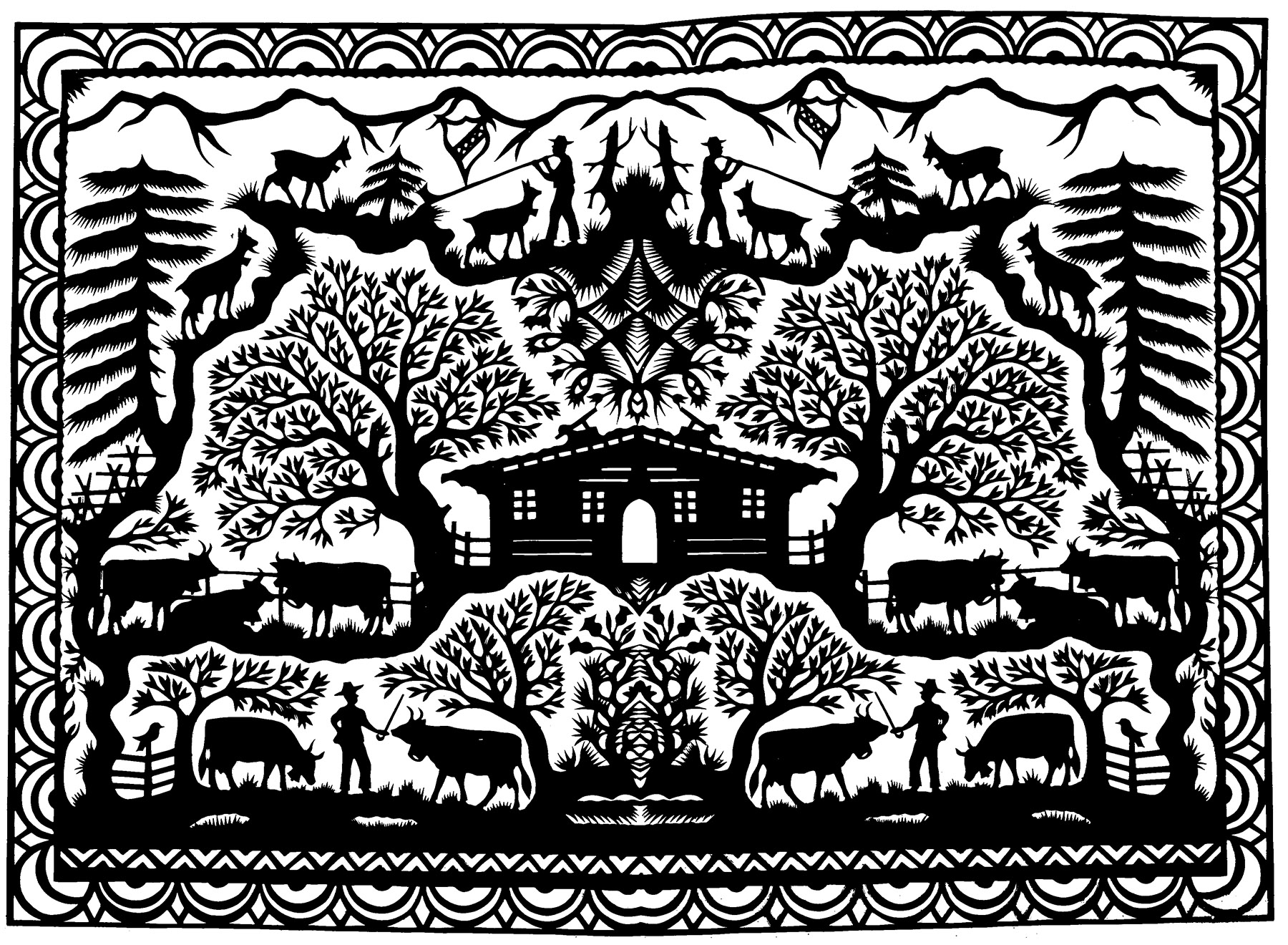
Swiss paper-cutting is usually about storytelling and often depicts Alpine life, such as scenes of farmers leading cattle to fresh grazing fields, as seen in the piece Mountain Hut with Cows, Goats, and Alphorn Players (1980) by Christian Schwizgebel (1914–93). Louis Saugy’s representations of Alpine agrarian society are dynamic, detailed, and infused with humor.
Traditionally, Chinese paper-cut artists have remained anonymous. However, Kraemer says that nowadays, artists are keen to develop unique signature styles.
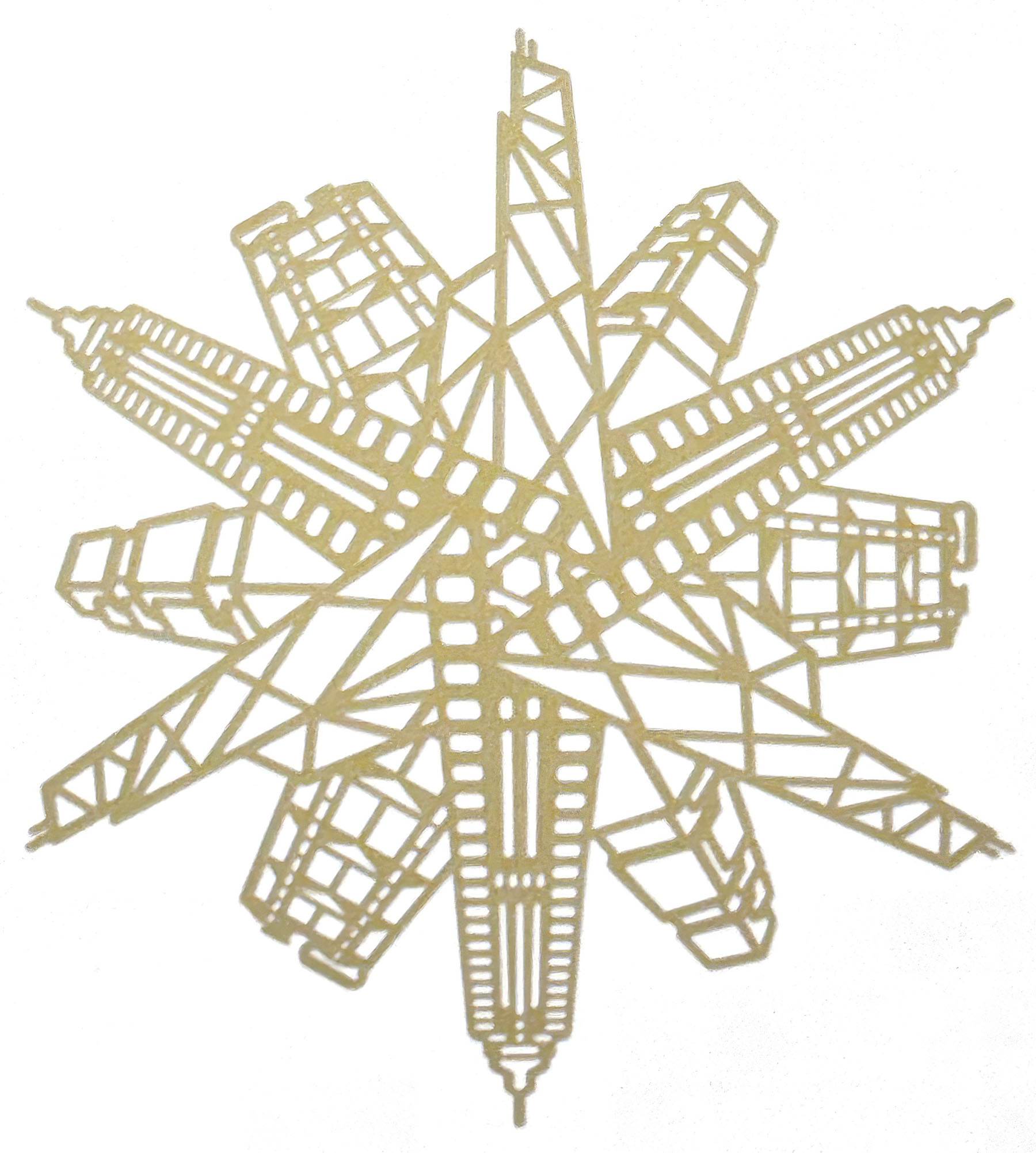
Hong Kong artist Nick Tsao created four artworks especially for the show. These include Hong Kong Snowflake (2026), which shows the iconic city landmarks fused together at the base to resemble a snowflake. Kraemer says that Tsao is “driven purely by a passion for the art, and continuously explores new techniques, thereby revitalizing the art of paper-cutting”.
A Guangzhou legacy
Ten of the artworks on show at UMAG are by artists from Foshan, the first Chinese city to mass market paper-cut products. In a series depicting Guangzhou scenery, Baiyun Mountain in Guangzhou stands out for the unconventional use of vibrant green paper.
Some of the artworks from the “cultural revolution” (1966-76) period depict scenes of class struggle. Barefoot Doctor acknowledges the roles played by medical workers who were not formally trained but provided essential healthcare to peasants.
If you go
Tradition & Perfection: Paper Cuttings from China & Switzerland
Dates: Through Jun 7
Venue: UMAG, HKU, 1/F, T.T Tsui Building, 90 Bonham Road, Pok Fu Lam, Hong Kong
https://umag.hku.hk/exhibition
Tradition & Perfektion: Papierschnitte aus China und der Schweiz
Dates: Through May 17
Venue: Kunsthaus Interlaken, Jungfraustrasse 55, CH-3800 Interlaken, Switzerland
https://kunsthausinterlaken.ch
The writer is a freelance contributor to China Daily.
