

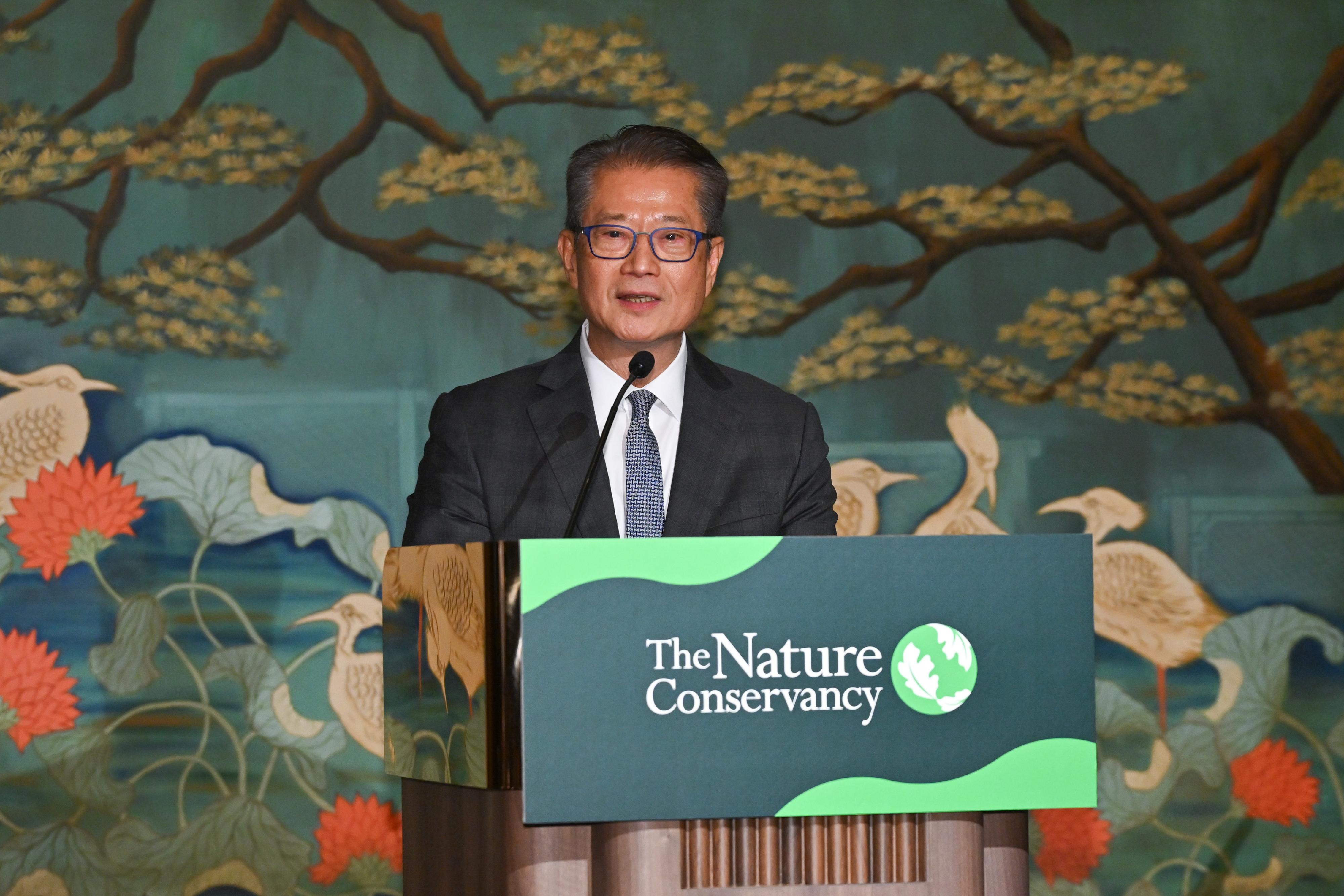
No single government, sector or institution can deliver green vision alone, Hong Kong’s finance chief has said, calling for “a truly multi-stakeholder effort” and deeper cross-border collaboration.
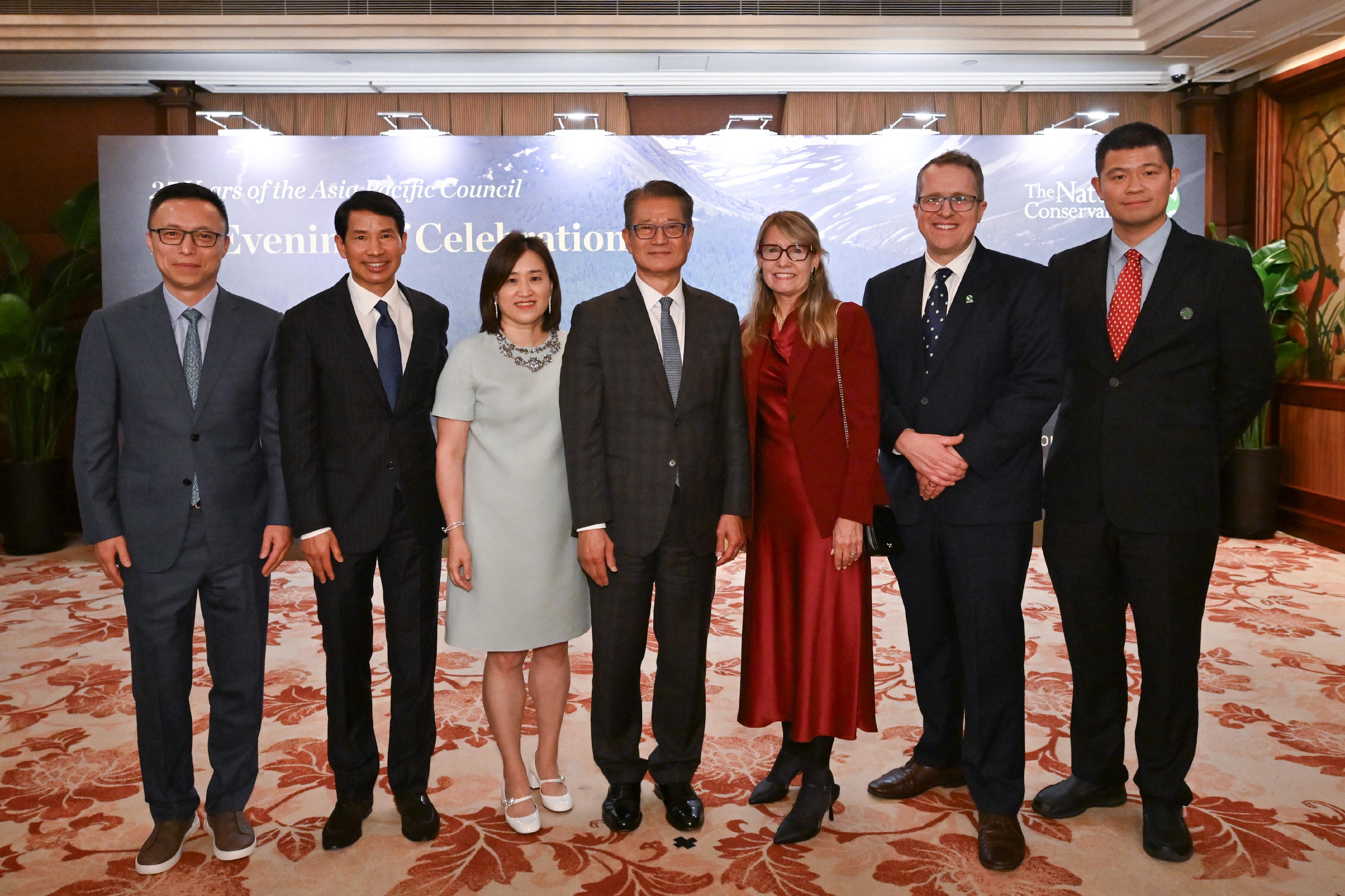
Paul Chan Mo-po made the call at the 25th anniversary dinner of the Nature Conservancy’s Asia Pacific Council on Friday.
Stressing that climate change and extreme weather events are intensifying and biodiversity loss is compounding the crisis further, he said, “Our task is to turn that vicious cycle into a virtuous one: a model of sustainable development in which economic progress, ecological health, and social well-being advance together and reinforce one another.”
To materialize the vision, commitment to environmental goals must be the starting point, he said.
Hong Kong remains steadfast in its commitment to achieving carbon neutrality by 2050 and is equally committed to protecting biodiversity, said the financial secretary.
RELATED ARTICLES
- HK's strengths to aid global green transition, says Chan
- HK engineers urged to play proactive role to drive green transition
- HK affirms commitment to decarbonization path
- Survey: HK biz has greater carbon awareness, resources, costs loom large
- HK serving as Asia’s frontrunner in green finance, forum hears
Referring to the Biodiversity Strategy and Action Plan 2035 released by the special administrative region at the end of last year, he said central to the policy is the principle of "mainstreaming."
“That means treating biodiversity not as a standalone issue, but as a consideration built into the decision-making process in infrastructure, urban planning, housing, transport and many other areas of public policy,” he added.
The SAR government firmly believes in the value and opportunities that green transition creates. With governments raising green standards and consumers, especially younger generations, demanding greener products and services, companies that lead on sustainability will win markets, not just goodwill, he said.
This momentum is already driving new technologies, industries, and value chains, said Chan. “Green transition is therefore one of the greatest investment opportunities of our time. Green finance and impact investing are gaining momentum worldwide, as investors increasingly seek growth with purpose.”
As an international financial center, Hong Kong goes beyond the volume of green financing, constantly innovating in how capital is mobilized for the green transition, he said.
“Digital green bonds, insurance-linked securities such as catastrophe bonds, and taxonomy frameworks for transition financing are recent examples of how we channel more capital into green projects,” he added.
By bringing together academia, business, talent and capital, the SAR, a growing innovation and technology hub, is building an ecosystem that can nurture and scale green solutions – from AI-powered storm prediction to sustainable aviation fuel and coral reef restoration, said Chan.
