

A county in Southwest China is boosting economy and the beverage's industry, leading to innovation and tourism opportunities, Yang Feiyue reports in Mabian, Sichuan.
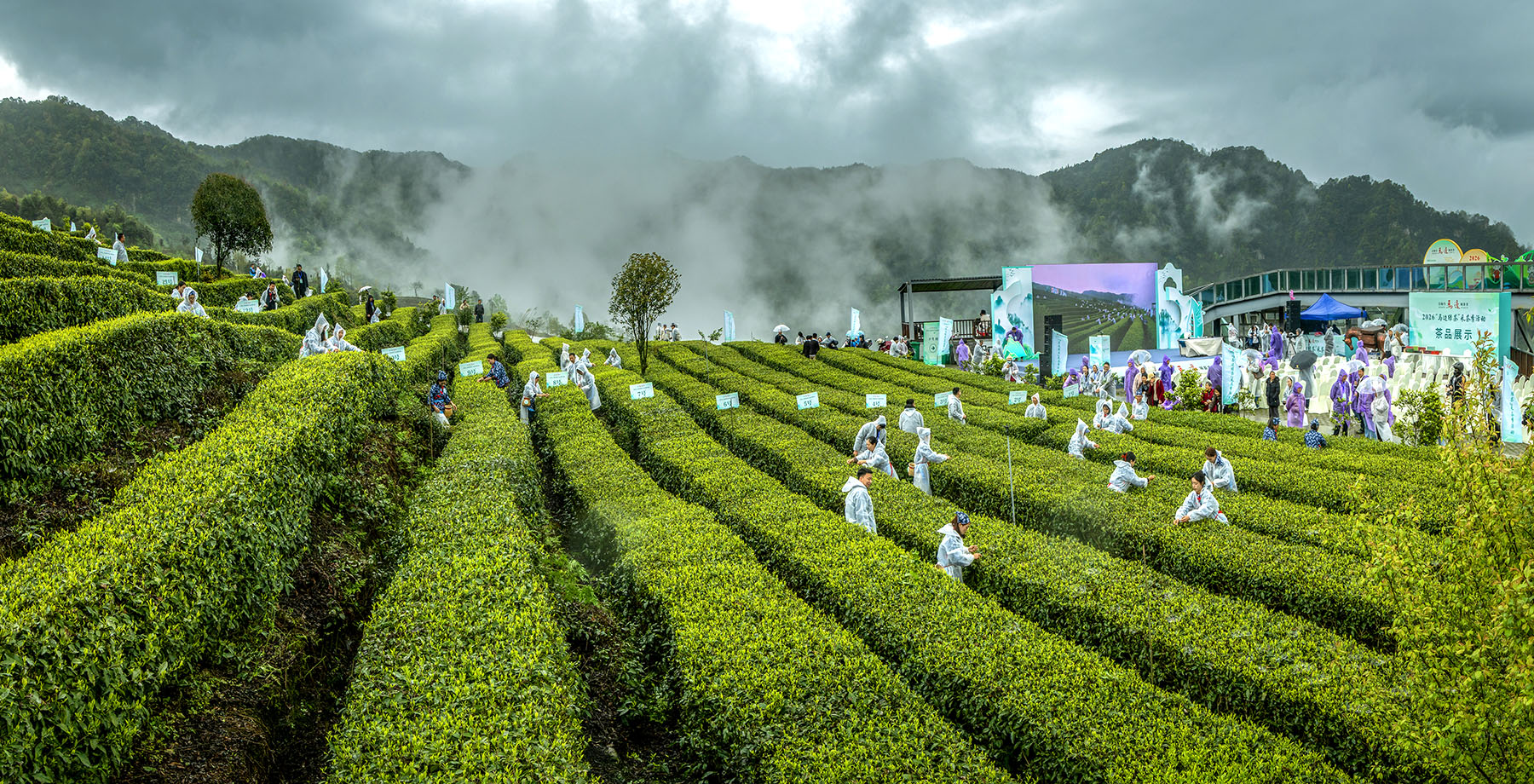
The drive from Southwest China's Sichuan province's Mabian county seat to Baixiang village is a test of one's limit for car sickness, full of sharp turns that wind upward for 11 kilometers. But roll the car windows down and everything is worth it: the sweet air permeated by the terraced tea bushes following the mountain's contours like the whorls of a giant fingerprint.
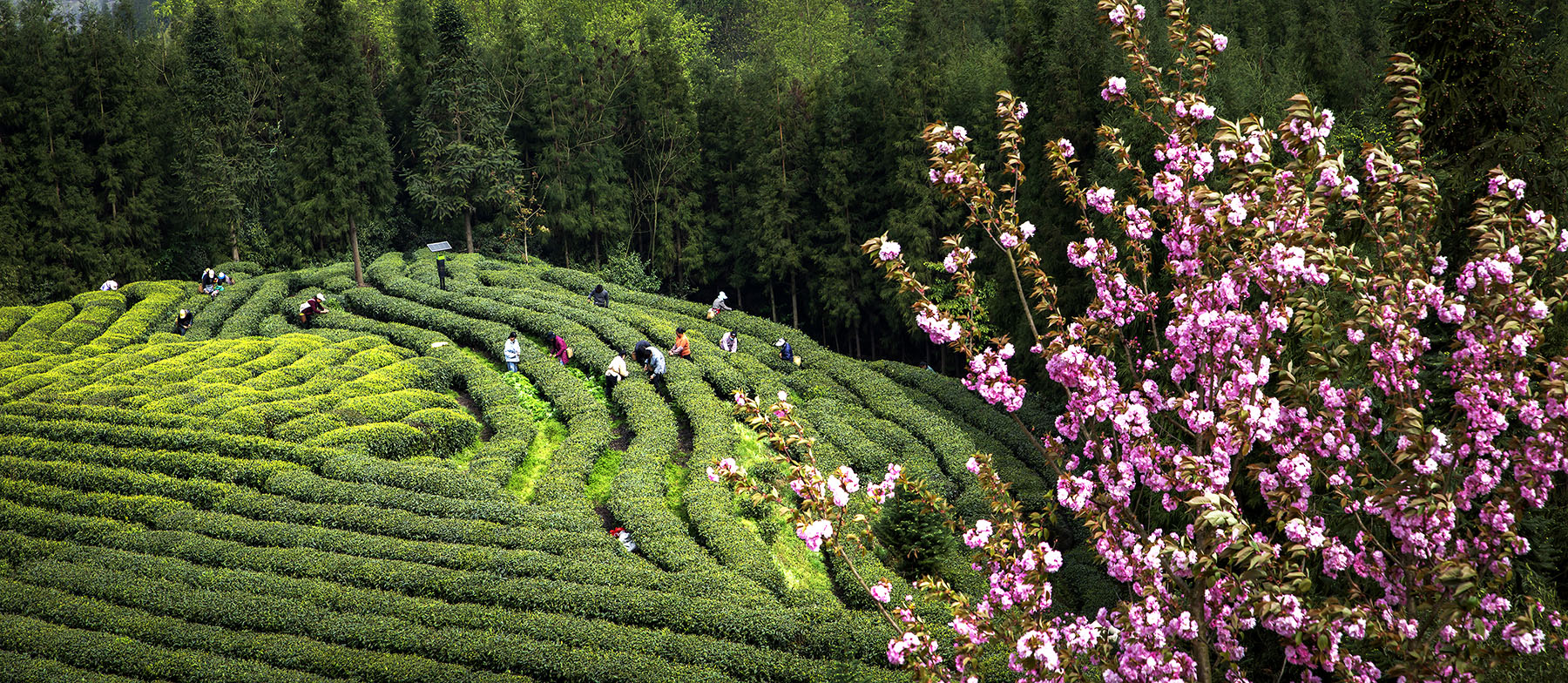
Before you lies 1,600 mu (107 hectares) of contiguous tea gardens, cascading down from 1,100 to 1,400 meters. Tea pickers dot the hillside, bamboo baskets on their backs, hands fluttering across the leafy surface to pinch off the most prized early spring buds in late March.
"Our tea garden sits at a high altitude, so the tea is just starting to sprout," says He Yingjun, who presides over the sprawling plantation.
"With the big temperature swing between day and night, the tea accumulates more beneficial compounds. The secret to good Mabian tea is right here," he says as he pinches a plump bud.
Four decades ago, this was a barren hillside without so much as a path. Then his father began planting. Today, it has become a calling card for the tea industry in the Mabian Yi autonomous county, and a lifeline for the people who live here.
His father did not start from nothing. Historical accounts show tea has been grown on these mountains for almost 2,000 years, since the Han Dynasty (206 BC-AD 220). Nestled in the Xiaoliangshan Mountains, home to the Yi ethnic group, Mabian was a key node on the ancient tea-horse route, where people of the Yi and Han ethnic groups lived side by side, trading tea for horses.
READ MORE: Wooing rural hearts with words
In the early 1980s, as China's reform and opening-up gained momentum and market demand for tea outweighed supply, He's father contracted a 70-mu collective tea garden in his hometown. He spent more than a decade learning from local tea masters.
They traveled far and wide together, even going to the provincial capital Chengdu to meet clients from abroad, He says.
"His mentor treated him well and took him everywhere," He adds. When the tea master passed away in the 1990s, his father inherited both his mentor's business connections and approach to tea cultivation.
The family's full commitment to tea came in 2006, when He's father set his sights on the barren hillside in Baixiang village.
"There was nothing — no road, no electricity, just wasteland," He recalls. The choice was simple, because it was only 11 km from the county seat, meeting the "half-hour rule" for tea processing. Fresh leaves must reach the factory within 30 minutes after picking. If they sit longer, they begin to heat up and ferment in unwanted ways, turning the bright green leaves dull and muddying the flavor, He explains.
"You then lose the freshness. Once that happens, no amount of skill or processing in the factory can bring it back," he adds.
When He was discharged from military service in 2008, he returned to Mabian. "My father was getting older, and someone had to carry on," he says.
He now manages the tea plantation and production. His father, with a knack for distinguishing Mabian tea from any other, oversees quality. Over the years, the family has witnessed the transformation of Mabian tea from backyard production to modern plantations.
Today, their family business employs 30 to 40 people year-round. During peak harvest, they have 400 to 500 pickers, and pay over 2 million yuan ($294,286) in wages annually.
In 2020, Mabian was designated "the home of Yi tea" by the China International Tea Culture Institute, and the Yi tea brand was formally established.
Five incomes, one leaf
In Mabian, growing tea pays dividends in more ways than one.
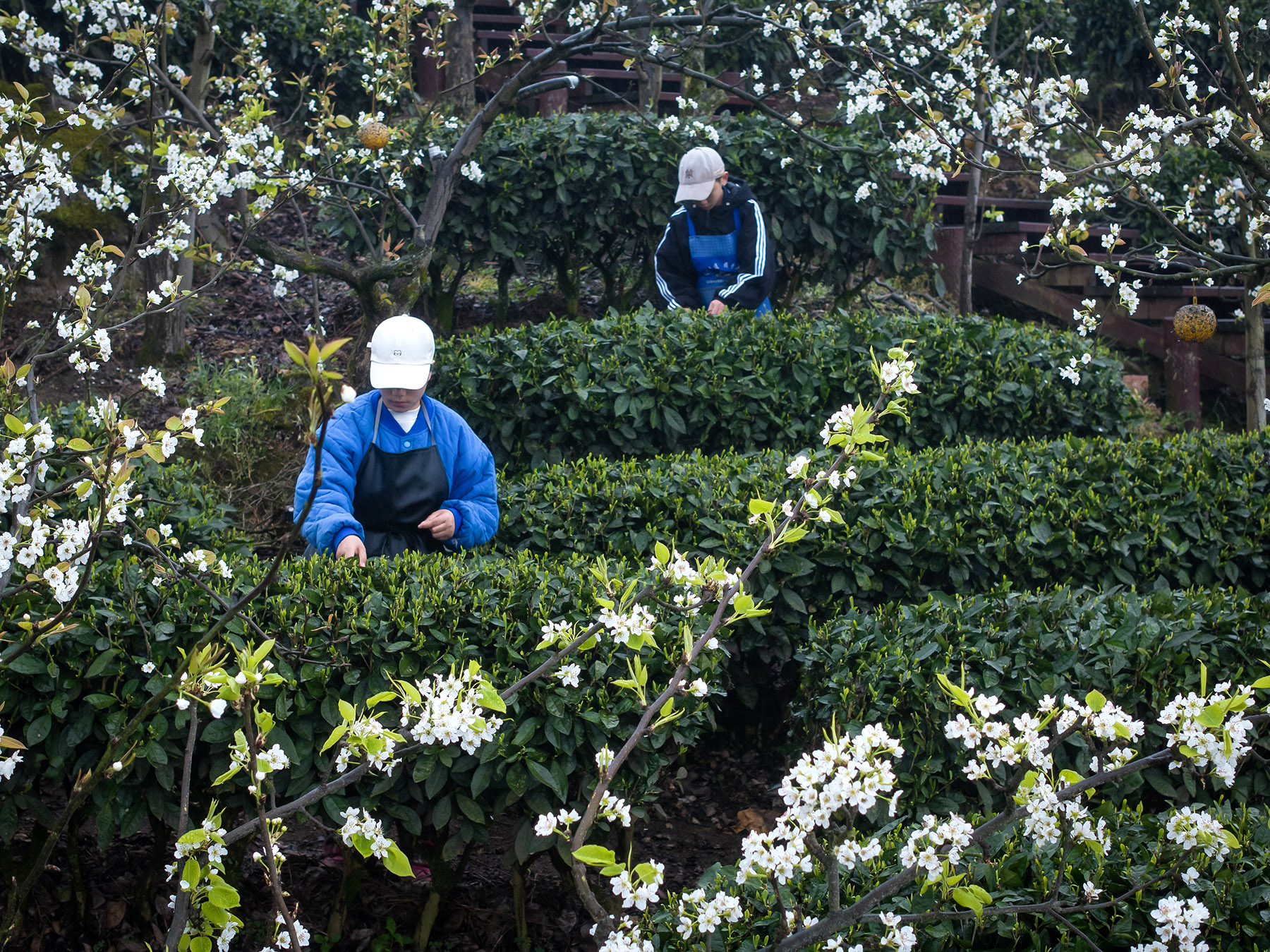
Li Min, a local official with rural affairs, points out that a farming family can earn five separate incomes from working on a tea plantation — renting land, selling fresh leaves, wages from labor-intensive work, collective village dividends, and tourism spillover from neighborhood homestays, where tourists buy directly from farmers and some villagers find work.
"A family of four, including grandparents in their 60s and 70s, can pick tea and earn 800 or 900 yuan a day," He says. "That's better than leaving town to work, and they can look after the children and pick them up from school."
Across the county, about 80,000 people are directly or indirectly employed in the tea industry, with per capita fresh-leaf income of about 6,000 yuan, according to local authorities.
"One leaf enriches one people," says Like Haomao, deputy head of Mabian, adding that the tea industry truly plays a leading role in increasing farmers' income.
However, the major bottleneck constraining local tea development is the lack of market recognition."Our tea output in Sichuan is very high, but our brands are not much," He says bluntly, adding that a large part of Mabian tea is sold as raw material or processed leaves to brand owners in other provinces.
Additionally, the underutilization of summer-autumn tea has traditionally been the county's weak spot. After the spring harvest, many gardens are left fallow.
Summer heat speeds up the tea plant's growth, producing leaves that are larger, tougher and higher in bitter compounds, He explains.
The resulting tea is more astringent and fetches lower prices, making it hardly worth the labor to pick, he adds.
Breaking new ground
Local officials say the county is now tackling the problem head-on and has been exploring new avenues in recent years.
"We've brought in a company from Hubei province to produce matcha, and we're collaborating with Anhui Agricultural University to develop mellow yellow tea, constantly innovating summer-autumn tea processing," Like Haomao says.
He Yingjun is also experimenting. On part of his plantation, shade nets have been installed to produce the raw material for matcha.
"We signed a contract with a major tea company, producing tea to their standards. If summer-autumn tea is done right, it could account for half our income," he anticipates.
He has already seen summer-autumn tea prices rising. New processing techniques have opened new markets hungry for the raw material to make novel tea drinks or functional extracts.
Beyond the product innovation conducted by tea planters like He, Mabian is also pushing tea tourism.
Kashasha Homestay is the flagship project, consisting of 10 Yi-style courtyards scattered across the tea hills of Fulai village, about an hour's drive from He's tea plantation.
Open the window, and you look out over a sea of clouds and tea fields. The only sounds are the wind and the birds. Rooms are not cheap, but during peak season, they are hard to come by.
ALSO READ: Yes, that's it, it's always tea time
"Kashasha Homestay relies entirely on the tea gardens. Without the tea gardens, that place would be barren. There wouldn't be much to see," Like Haomao says.
In 2025, the county's tea-tourism integration project attracted about 45,000 visitors and generated 32 million yuan in revenue, according to local authorities.
Standing in the Baixiang village tea garden, He Yingjun points to a construction site in the distance.
"That's our new factory. Once it's completed, we won't sell any fresh leaves. We'll process everything ourselves and pay taxes here," he says.
The new factory will give him control over the entire process, from fresh leaf to finished product. It will also allow him to experiment with new processing methods without relying on outside facilities. Whether that solves the brand problem, he does not know.
"You do it because you're in it, and you can't just stop," he says.
Contact the writer at yangfeiyue@chinadaily.com.cn
