

The unresolved Middle East conflict has reignited debate over the petroyuan. But as Luo Weiteng reports, a more consequential shift is unfolding elsewhere — in how China’s dominance in electricity and green computing heralds the start of the “electroyuan”.

Editor’s note: A new economy is emerging where energy and computing define global value. This series explores how China’s energy-computing nexus underpins a new currency logic for the digital era.
Acautious waiting game has settled over the Strait of Hormuz — more than two months after the onset of United States-Iran hostilities — as the double blow from US and Iranian blockades leaves the key energy corridor largely dormant.
But, in the boardrooms of global finance, a familiar debate has intensified. Deutsche Bank calls the conflict the “catalyst for the beginnings of the petroyuan”, citing reports that Tehran is allowing ships to sail through the Persian Gulf if the Chinese yuan is used to pay for one of the world’s most prized commodities — oil. Other investors have pushed back, arguing that the dollar’s dominance remains deeply entrenched.
As the Hormuz crisis exposes the Achilles’ heel of a fossil fuel-centered system, the petroyuan chatter feels increasingly outdated in a world that’s changing geopolitically and energetically. China has taken pole position, becoming what asset manager Robeco hails as the world’s first “electrostate”. The real focus is moving beyond crude, toward scalable export of clean-energy technologies, artificial intelligence computing built on green power and, potentially, the emergence of the “electroyuan”.
READ MORE: Energy costs fuel inflation worries in Southeast Asia
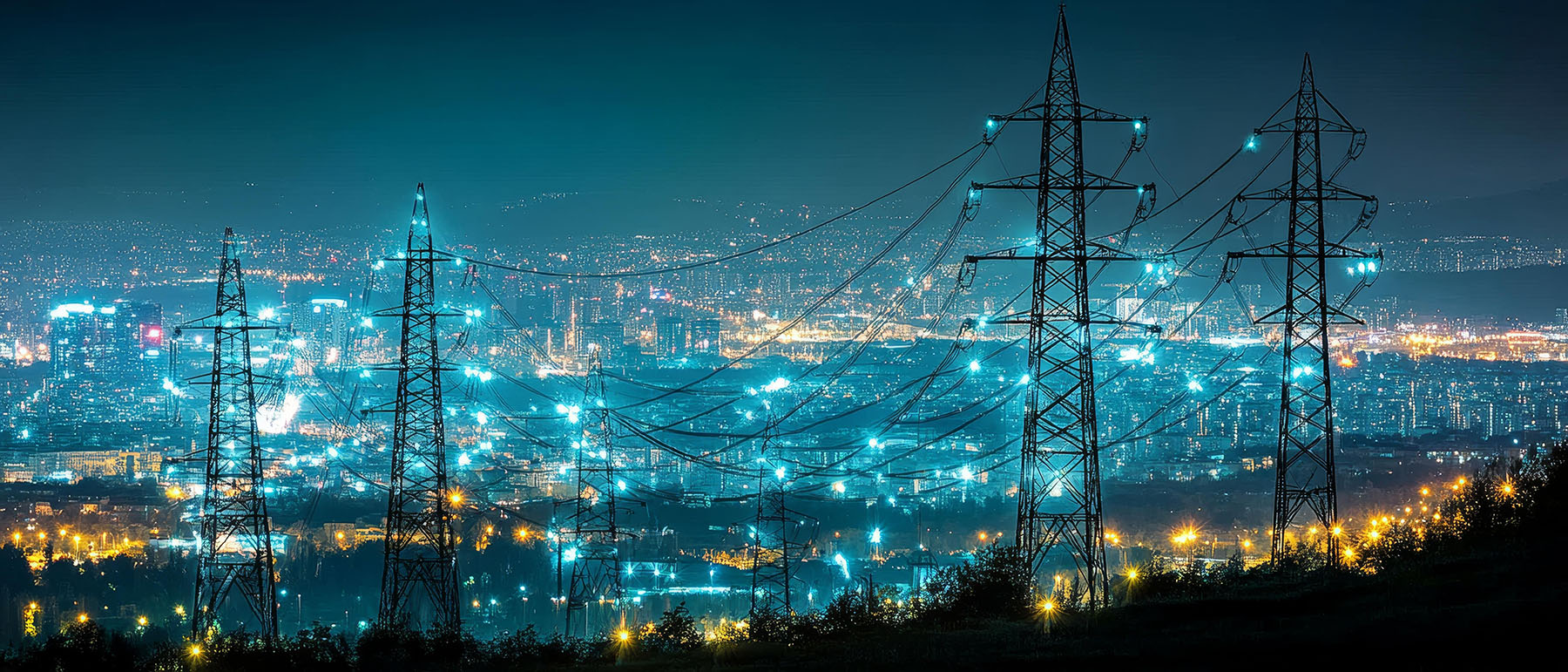
Last year, China generated one-third of the world’s electricity. Electricity accounts for nearly 30 percent of China’s energy consumption, with over 40 percent generated from renewables, according to industry figures.
Today, it operates the world’s largest fleet of wind turbines, solar farms, hydro dams and high-voltage transmission lines. China’s clean-energy sectors would be the “world’s eighth-largest economy if they were a country”, the Centre for Research on Energy and Clean Air estimates.
In March, Chinese exports of solar technology, batteries and electric vehicles hit record highs. Solar alone saw the strongest demand from hardest-hit, energy-starved emerging markets across Asia and Africa, energy think tank Ember reports.
As the war spirals in the Middle East, China Power International Development (CPID) is seeing a comprehensive reassessment of China’s power capabilities from international stakeholders “where the core value is no longer measured solely by the cost per kilowatt-hour, but by the resilience of the entire system”.
Amid mounting overseas concern over supply reliability under extreme conditions, “China is no longer just exporting cheaper alternatives to fossil fuels, it is delivering energy security”, Wang Liang, the development director of CPID, tells China Daily.
In renewable projects led by Chinese firms venturing abroad, the Hong Kong-listed company has seen a “modest increase” in the share of renminbi-denominated equipment procurement and engineering services. “When procurement, construction and financing are all provided within the Chinese ecosystem, renminbi usage can significantly mitigate risk,” it says.
Still, international electricity buyers often lack sufficient renminbi income streams to support long-term payments. Channels for recycling offshore renminbi remain underdeveloped, according to CPID.
From Uzbekistan and Brazil to Argentina, a regular drumbeat of projects puts grids and trade running on Chinese technology and currency. Jiang Fuwei, chair of the department of finance at the School of Economics, Xiamen University, points to the proven technological feasibility of the electroyuan as a sign of things to come.
Yet, currency dominance is a game of institutional gravity where the greenback is underpinned not just by oil trades, but by a dollar-centric world that owns the Swift network, the laws and the liquidity. “Ultimately, it hinges on the interplay of trust and institutional dynamics embedded in an entrenched system of global payments,” says Jiang.
CPID is feeling the institutional hurdles, pointing to cumbersome and inefficient cross-border transaction settlement, with limited offshore renminbi liquidity. “Meanwhile, the US and Europe are tightening barriers through carbon certification and environmental standards while rising protectionism has added further pressure,” it notes.
Petrodollar to electroyuan
The much-discussed petrodollar system, born out of pacts in the 1970s between the US and Saudi Arabia, rests on three pillars — oil priced in dollars, transactions settled in dollars, and oil revenues recycled into dollar-denominated assets.
But, today’s landscape looks starkly different. A world hungry for artificial intelligence and massive data processing calls for a different kind of scarcity to redefine how value is created, traded and, ultimately, denominated. Jensen Huang, chief executive of $4.8-trillion chipmaker Nvidia, promotes tokens or units of data used by AI systems as the AI era’s equivalent of barrels for oil.
The AI dollar, a digital mirror of the petrodollar where global participants trade AI inputs for greenbacks to secure a seat in US-led ecosystems, thus appears to be America’s answer to the evolving currency order.
On the other side of the Pacific, the electroyuan, a topic of enduring strategic significance, is rooted in the structural strength of China’s power system, from “the world’s most integrated renewable energy supply chain, unrivaled electricity costs, to global leadership in ultra-high-voltage transmission and energy storage”. That foundation is being recalibrated for an AI-driven world where access to reliable and cost-efficient power is becoming a defining factor in competitiveness, says CPID.
Sprawling solar and wind farms across China’s plateaued hinterlands and along its coastlines offer a meaningful computing cost advantage over Western markets. “For many multinationals, this is particularly true when the math of AI is getting increasingly complicated by the math of carbon footprints,” says Arvin Luo, marketing manager of Hong Kong Nanzhuo Data Technology.
Regulatory pressures, such as the European Union’s carbon disclosure mandates and Scope 3 (corporate value chain) standard, are pushing companies to pay for computing tied to a clear carbon track record, even at a premium. “This green premium represents China’s decisive edge in exporting its computing capacity,” says Luo.
A mass export of computing and tokens has quietly become China’s most efficient value-added energy trade. In Luo’s view, a potentially underappreciated shift here is how computing is priced and traded. Instead of renting graphics processing units by the hour, providers are increasingly looking at pricing based on billable token output adjusted for carbon metrics.
Fu explains the striking economics. The domestic market-based price of green power currently hovers at 0.3 yuan ($0.04) per kilowatt-hour. Generating one million tokens under mainstream large language models for inference-heavy workloads consumes roughly 15 to 20 kilowatt-hours, pegging the electricity expense at a negligible few yuan.
The global appetite for comparable high-quality AI outputs commands prices of $60 to $168 per million tokens. Even if overheads for server depreciation, bandwidth and research and development are factored in, the value-add of this digital trade represents “an order-of-magnitude leap over its raw input costs”.
Token export is not yet a purely green story as coal continues to feed power plants and backstop renewable supply in China. But, the sheer scale of energy output enables the pivot to green computing. “Elsewhere, data centers are struggling with power crunches and skyrocketing energy bills. The luxury of the discussion in China is typically whether our facilities are powered by renewables or thermals. The difference is telling,” says Zhang Wenquan, a research associate in the sustainable transition center at the World Resources Institute China.
CPID envisions a scalable value loop where computing services are exported, priced in renminbi and backed by electricity as the underlying input. Token exports just offer an early glimpse.
Yet, the path from vision to digital trade faces what Luo describes as hard constraints beyond currency choice. This includes the absence of a “global common language” for carbon accounting and traceability, alongside regulatory fragmentation of data governance and carbon tariffs.
More fundamentally, unlike crude, where there are clear delivery points and standardized pricing, computing output evolves with hardware advances, complicating efforts to price, benchmark and denominate the digital commodity.
Hong Kong’s strategic role
In the near term, Fu highlights renewable equipment and power infrastructure as the most practical anchors of value for an electroyuan-backed settlement system, due to their established role in the global supply chain, while CPID underscores standardized long-term power purchase agreements (PPAs) and renewable asset service contracts, given their predictable cash flows over decades.
Still, both believe “the potentially most compelling and strategic anchor” lies in electricity-driven computing and tokens.
For such architecture to take shape — translating China’s structural advantages in power and computing into internationally recognized pricing power — Fu sees much work to be done in standardization and marketization. This calls for a unified measurement framework connecting computing units, tokens and energy consumption to create a comparable cost base, alongside market-based representative indices for computing or electricity, akin to Brent or West Texas Intermediate in the global oil market. Tradable contract structures are also needed to embed electricity price signals into real transactions and cash flows, Fu says.
“This is where Hong Kong matters as a platform for extending pricing into financial assets,” says Pang Ming, a distinguished senior research fellow at the National Institution for Finance and Development.
Pang views the world-renowned financial center as a vital laboratory for monetizing the energy-computing nexus, with data center real estate investment trusts among “the most promising starting points”, though issues around ownership, asset depreciation, and cross-border collateralization and asset disposal remain unresolved.
“Hong Kong, with its common law system, is well placed to pioneer a credible legal framework for securitization, ensuring a secure and compliant global outlet for emerging electroyuan assets,” says Pang.
Beyond financial and legal innovation, attention is turning to early-stage implementation. Across the Guangdong-Hong Kong-Macao Greater Bay Area, Fu deems a regional pilot program for settlement of computing services to be a realistic steppingstone for the electroyuan to take hold. This would see Hong Kong as a clearing center, with Hong Kong stablecoins and offshore renminbi serving as settlement currencies linking both ends.
Pang expects deeper integration with existing renminbi settlement in cross-border trade and digital renminbi trials, embedding electricity and computing as digital assets into smart contracts, and leveraging digital renminbi for real-time settlement to reduce the frictions of traditional clearing frameworks.
“Over the next three to five years, offshore computing hubs are likely to become the most active arenas for renminbi pricing. Such a gradual move, from edge to the epicenter, may prove to be the most pragmatic way forward for the electroyuan to materialize,” he says.
For CPID, the gradualist philosophy for offshore renminbi use is already visible among mainland firms expanding overseas that increasingly use Hong Kong as a platform for cross-border treasury management and green financing, matching currencies between assets and liabilities to manage foreign exchange exposure.
That growing reliance on the SAR is underpinned by the city’s strategic roles. As a green finance hub, Hong Kong bridges mainland renewable assets with global capital, enabling low-cost and long-term cross-border funding, says CPID.
As a center of contractual credibility, PPAs and service contracts signed under its common law system carry greater international enforceability, winning trust from multinational clients.
“As a technology proving ground, Hong Kong’s dense and reliable urban electricity environment provides an ideal setting to test innovations, such as virtual power plants and energy-carbon management platforms,” it says. “The operational data and compliance experience gained here could serve as a template for other international cities.”
At the end of the day, Pang believes the implicit sovereign credit anchored in China’s power standards across the Belt and Road economies should never be underestimated.
“Often overlooked is the tangible appetite for the electroyuan in the developing world. Reliance on dollar settlement exposes many Belt and Road economies to high exchange fees, extreme exchange-rate swings and a liquidity crunch,” says Fu.
In Laos, for instance, the kip’s plunge against dollar in recent years has strained its state-owned power company under dollar-denominated debt.
“By enabling local currency settlement and direct banking channels, the electroyuan looks to address these systemic vulnerabilities at the source. Such a pragmatic solution to real-world pain points should prove far more compelling and livelier than any grand narrative.”
Contact the writer at sophialuo@chinadailyhk.com
