

Domestic brands ramping up for global share, with Mini LED tech narrowing gap with sector leaders
Chinese television brands are increasingly taking over the overseas operations of foreign peers, as the industry moves toward deeper integration and higher-end competition.
This trend has been highlighted by a series of recent deals. Shenzhen, Guangdong province-based Skyworth Group recently reached a long-term strategic cooperation agreement with Japanese multinational electronics manufacturer Panasonic.
Under the deal, Panasonic will transfer the operation of its TV business in the United States and Europe to Skyworth. The Chinese company will take full responsibility for joint research and development, manufacturing, sales, marketing and after-sales services for Panasonic-branded TVs in these regions, while the two sides will also collaborate on high-end OLED products.
"In the face of intensifying global competition, Panasonic's competitiveness in Europe and the US has weakened, while Skyworth, with its experience in overseas channel operations, is seeking to rapidly expand into mid-to-high-end markets," said Yang Liu, a senior analyst at research and advisory company Sigmaintell Consulting.
READ MORE: TCL to take controlling stake in Sony's TV, audio business
Yang added that as competition in the TV market becomes increasingly saturated and supply chain costs continue to rise, integration models combining "technology, supply chain, channels and scale" are likely to become a key trend.
"By leveraging technology for market access and channels for business expansion, Chinese brands are expected to steadily increase their global influence," Yang said.
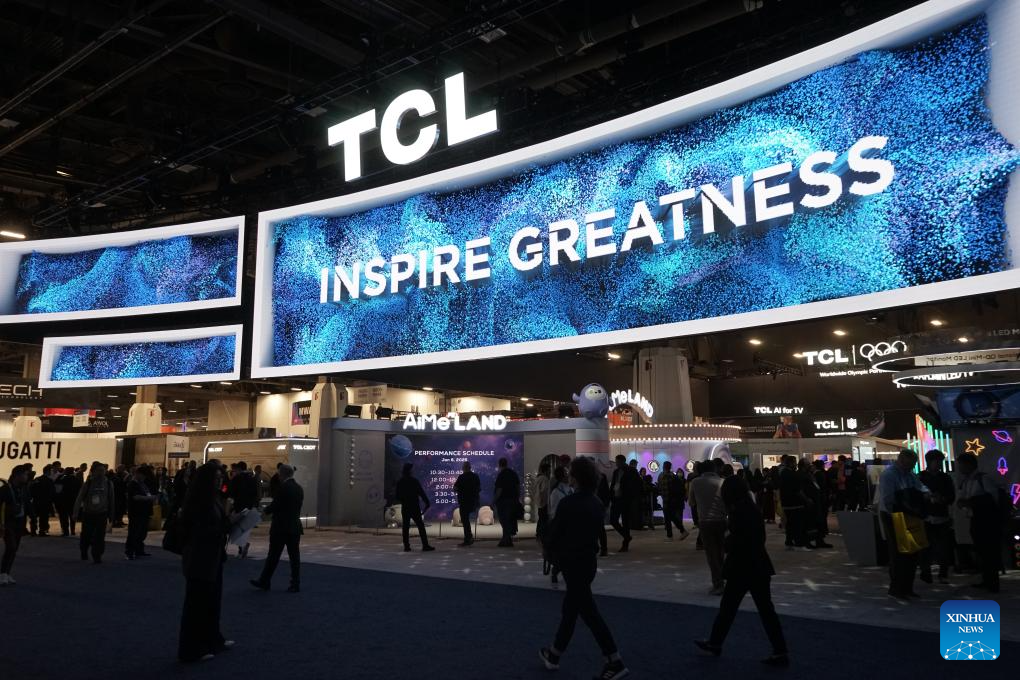
Similar moves have been seen across the industry. In January, domestic home appliance heavyweight TCL, which floated in Hong Kong, announced plans to establish a joint venture with Sony, in which TCL will hold a 51 percent stake and Sony 49 percent, to take over the latter's home entertainment business, covering the full chain from R&D to sales and customer service.
Skyworth acquired the operating rights for Philips-branded TVs in North America last year, and earlier acquired German TV brand Metz. In 2017, Hisense acquired a 95 percent stake in Toshiba's TV business, forming TVS Regza.
These developments point to the growing global competitiveness of Chinese TV brands. Data from market research institute AVC Revo show that global TV shipments reached 264 million units in 2025, with Samsung, TCL, Hisense, LG and Xiaomi ranking as the top five vendors.
Notably, TCL's shipments surpassed 30 million units for the first time, narrowing its gap with Samsung to within 5 million units.
"Whether through JVs or brand licensing, competition in the global TV sector has increasingly evolved into a contest between Chinese and South Korean players," Yang said.
At the same time, weakening demand in the domestic market is accelerating Chinese manufacturers' push overseas. AVC Revo's data show that China's TV sales fell to 27.63 million units in 2025, the lowest level on record. Research firm Omdia's analysis also indicates that as government subsidies ended and consumers had already brought forward purchases, shipments in China in the fourth quarter of 2025 dropped 25.3 percent year-on-year.
The slowdown has weighed on domestic revenues. According to TCL's annual financial results filed with the Hong Kong bourse, the company's domestic TV business generated HK $17.2 billion ($2.2 billion) in 2025, down 9.7 percent year-on-year, while Skyworth's domestic revenue in the TV sector fell 7.4 percent to 11.78 billion yuan ($1.73 billion). Hisense's TV unit also recorded a 5.14 percent decline in domestic revenue.
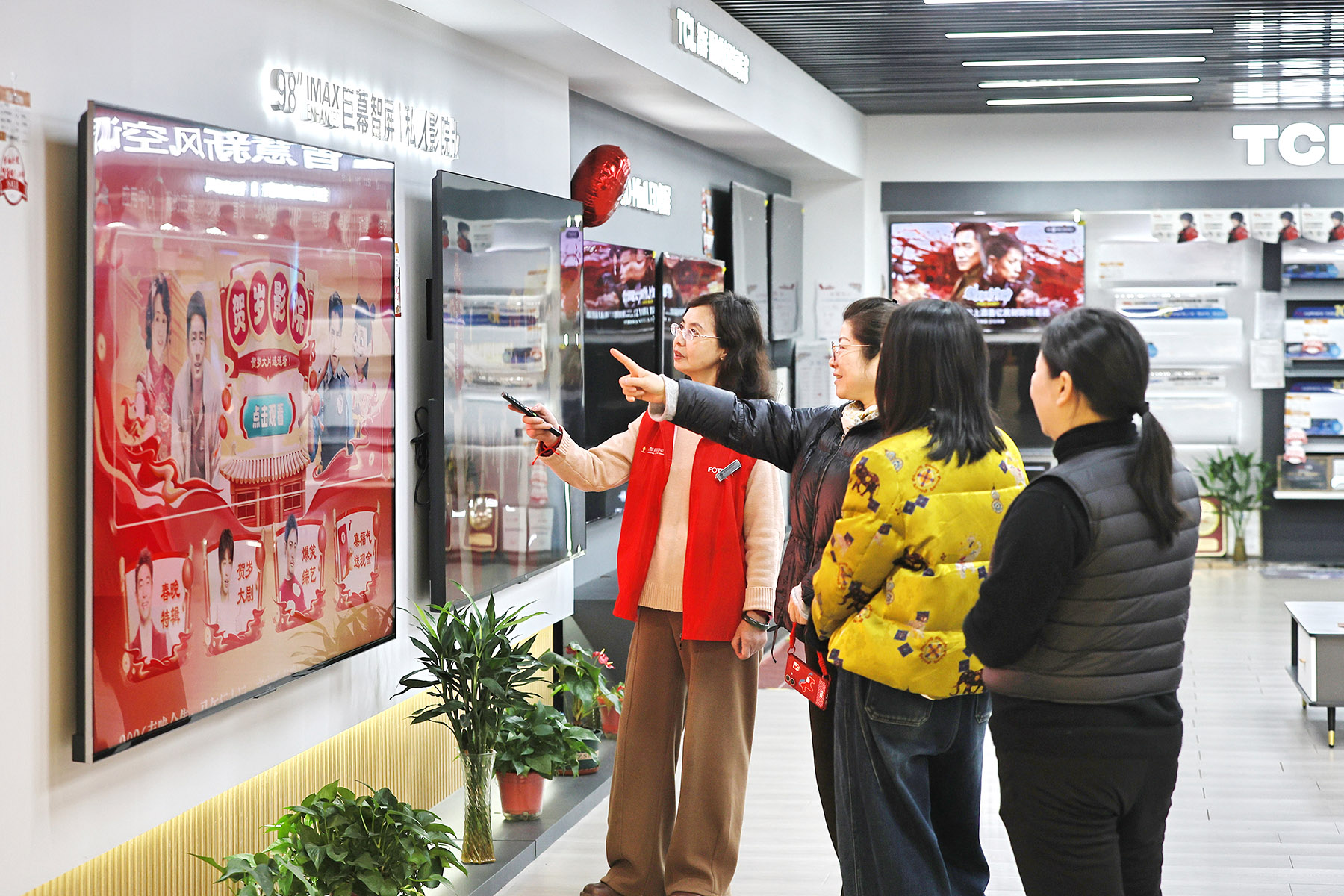
Against this backdrop, overseas markets have become a key growth engine. TCL's overseas TV revenue rose 15.7 percent to HK $47.5 billion in 2025, while Skyworth's overseas revenue increased 21.8 percent to 9.885 billion yuan. Hisense's overseas revenue reached 29.23 billion yuan, accounting for more than half of its total.
Behind the revenue growth is a shift toward higher average selling prices and improved product mix, industry experts said.
"As Chinese players increasingly expand their global footprint, future competition between Chinese and South Korean brands will focus on the mid-to-high-end segment, which South Korean brands have long dominated," said Wang Gang, a home appliances analyst at Sinolink Securities.
A report by Sinolink Securities noted that while Chinese brands' global shipment share rose from 10 percent in 2015 to nearly 30 percent in 2025, their average prices still lag behind South Korean competitors by $200 to $300.
This gap, however, is beginning to narrow. Data from global research firm Counterpoint Research show that the combined share of TCL and Hisense in the global premium TV market rose from 22 percent in the fourth quarter of 2023 to 39 percent in the first quarter of 2025, while South Korean brands have seen a continuous decline since 2024.
"Chinese brands have shown strong agility in their growth strategies over the past year," said Matthew Rubin, principal analyst of TV Set Research at Omdia.
Rubin noted that even though accessing the US market is more challenging now, major Chinese brands have adjusted supply chains to meet new requirements, mainly through positioning profitability as a bigger priority.
As premium models remain the main driver of profitability, Chinese manufacturers are increasingly focusing on high-end display product profiles. TCL said in its annual financial statements that the average selling price in North America rose more than 20 percent in 2025, driven by larger screen sizes and premium products such as Mini LED TVs.
Similarly, Hisense reported that shipments of its Mini LED TVs grew more than 26 percent year-on-year, and it ranked first globally in ultra-large TV segments of 98 inches and above, as well as 100 inches and above, with shares of 30.3 percent and 57.1 percent, respectively.
Skyworth also said its cooperation with Panasonic will focus on high-end technologies such as OLED,Mini LED, smart system integration and image processing algorithms.
ALSO READ: Skyworth aims for high-end international markets
According to Omdia, global Mini LED TV penetration rose from 3.1 percent in 2024 to 6.1 percent in 2025, with TCL ranking first globally with a 31.1 percent share after a 118 percent surge in shipments.
"Mini LED TVs have become a major focus of the industry over the past two years," said Wang Xianming, director of TV industry chain research at market intelligence firm Runto.
Wang noted that global Mini LED TV shipments reached 7.85 million units in 2024, surpassing OLED TV shipments of 6.12 million units for the first time. In 2025, that lead widened further and the trend is expected to continue in the coming years.
"The technology is likely to play a significant role in helping Chinese manufacturers compete in the high-end segment," Wang said.
Zhang Hong, deputy general manager of Sigmaintell's large-display division, said competition in the premium Mini LED segment has evolved into differentiated technology paths between Chinese and South Korean brands.
"Chinese manufacturers are pursuing multiple approaches, with Hisense focusing on RGB-Mini LED and TCL positioning its flagship products around SQD-Mini LED, while South Korean players such as Samsung and LG continue to adopt a dual-track strategy centered on both OLED and Mini LED technologies," Zhang said.
Contact the writers at lijiaying@chinadaily.com.cn
