

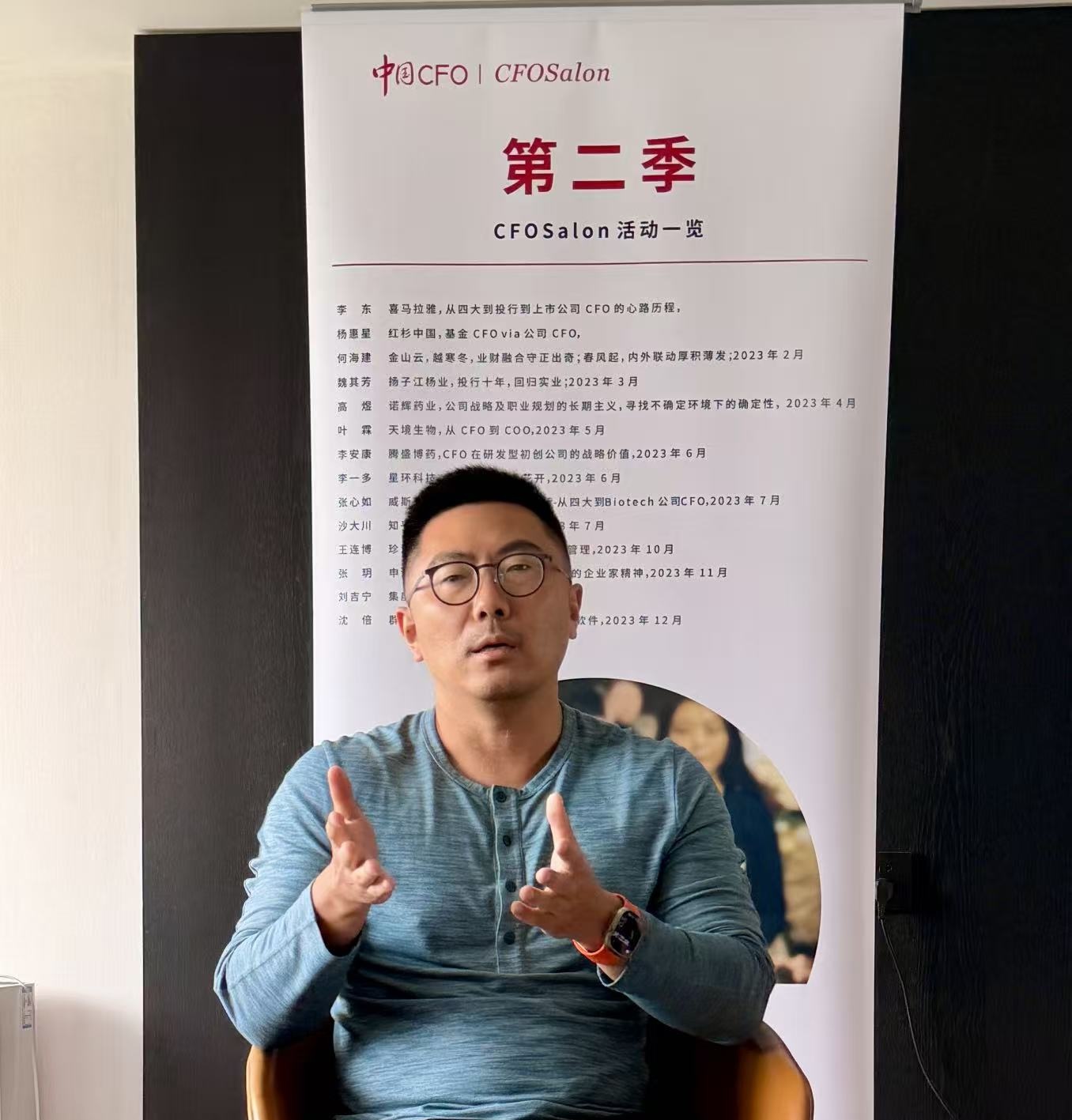
Zhihao Zhong, chief financial officer of Smardaten, recently drew upon his extensive background in investment banking, investment, and corporate financial management while sharing his insights into the evolution of the tech industry, along with the survival philosophy and essential traits of a startup CFO.
Zhong, who has spent years deeply engaged in top-tier consulting firms, globally renowned investment banks, and financial advisory for private equity, actively participating in the growth of numerous tech startups, shared his journey and insights while speaking as a keynote speaker at the CFO Salon sharing session in Beijing on April 26.
Witnessing evolution of tech wave
Two years ago, he transitioned from an angel investor to a full-time CFO, officially joining Smardaten – a company he had supported for a decade.
His extensive experience in finance and capital markets has enabled him to witness the step-by-step transformation of China’s tech industry: from early business-to-consumer (ToC) internet platforms and business-to-business (ToB) platform economies, to the recent boom in hard tech, and now the era of large AI models.
During the platform economy era, many underestimated the resistance to transforming traditional offline business models, he said.
Today, the hard tech and AI sectors demand exceptionally high cognitive capabilities from both investors and entrepreneurs, he said. The industry no longer relies on "brute force for miracles"; instead, deep insights are required to achieve commercial success, he added.
The making of a CFO
Based on years of observation, Zhong distilled several core competencies and traits required of a startup CFO.
According to him, a CFO's success largely depends on the capability and resilience of the "number one” – the CEO.
Citing Neolix, a smart autonomous vehicle company, he emphasized the critical role of the founder's resilience and resource integration in guiding the company through economic cycles during downturns marked by severe capital shortages and unclear industry prospects.
CFOs must possess highly forward-looking "era adaptability". As the primary market's investment ecosystem optimizes, corporate financing logic is shifting from merely pursuing scale growth to a new paradigm aligned with national strategies and the high-quality development of local industries, he said.
RELATED ARTICLES
- CFO Salon: Exploring the path of fitness technology
- Ma Jin discusses application of ai agents in marketing and sales
- CFO salon hosts media management expert Zhou Jingdong
He said CFOs must deeply understand this shift and integrate advantageous resources with a broader strategic vision. With increasingly diverse corporate governance structures – especially the introduction of state-owned shareholders – CFOs must fully embrace the philosophy of "compliance leading development", proactively anticipating needs and communicating effectively in daily operations to ensure steady corporate progress, he added.
Highlighting the value of "companionship", Zhong said that since CEOs are often solitary decision-makers and risk-takers, they must provide steadfast support during challenging times.
He also pointed out that CFOs need to cultivate psychological self-consistency, calmly navigating entrepreneurial uncertainties while strictly fulfilling their professional duties.
Deepening industry roots, forging deep alignments
Drawing on Smardaten’s business practices, Zhong introduced the company's deep strategic layout in no-code and AI programming (AI Agents).
In the face of the strong rise of overseas general large models, he pointed out the uniqueness of China's software and SaaS markets, noting that pure, standardized SaaS tools often struggle to achieve an ideal commercial closed loop.
To break this deadlock, Smardaten has chosen to dive deeply into vertical industries, he said, adding that the company currently focuses heavily on the industrial sector, which boasts relatively high IT expenditures.
By providing not just tool platforms but also specialized services, Smardaten deeply aligns with clients' internal processes.
Zhong believes that tightly integrating AI tools with clients' actual business needs is the key for AI application-layer companies to build moats and thrive in the current environment.
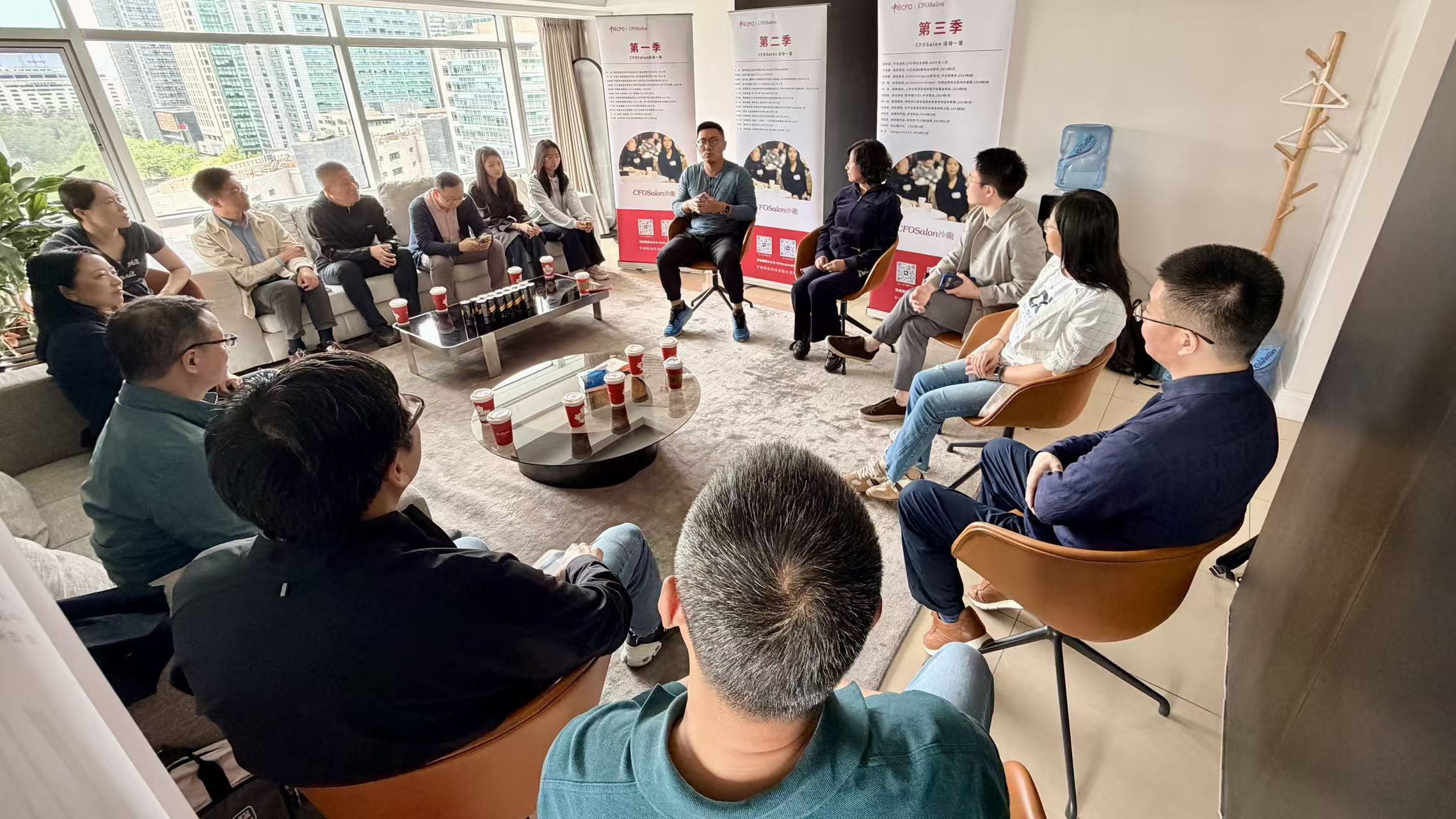
Q&A Session
Question 1: Amid the current boom in large AI models, how do you view the future commercial prospects for AI application-layer companies providing tools?
Zhihao Zhong: In China, it is quite challenging to operate purely on a subscription model-based on API calls or general software. A key technical and commercial obstacle is that most medium-to-large enterprises and government clients prefer localized deployment, keeping computing power and data on-site. This makes transplanting a cloud-based subscription model difficult. Therefore, our strategy is to dive deep and closely integrate our AI tools with the actual scenarios of large, paying clients. By helping them transform traditional IT habits and improve internal efficiency, we aim to build long-term partnerships within vertical industries.
Question 2: CEOs are rarely perfect. As a CFO or a member of management, how do you balance and complement the CEO's strengths and weaknesses?
Zhihao Zhong: I am quite fortunate; our core management team has known each other for over 20 years, building an incredibly strong foundation of trust. Generally, however, the CEO bears the greatest risk and makes the final decisions. As professionals, CFOs are often more adept at spotting risks and flaws but must remain optimistic. Most importantly, one must never forget the original intention, helping the actual controller establish compliant internal control mechanisms early on to avert fatal governance risks.
Question 3: After introducing state-owned shareholders, how should a CFO best communicate with them to balance professional philosophies with state-owned asset demands?
Zhihao Zhong: State-owned shareholders often carry a greater mission regarding standardized governance and public responsibility. Therefore, collaborating with them requires establishing a high-frequency, transparent, and normalized communication mechanism. CFOs should take greater initiative, blending professional financial language with the shareholders' compliance management systems to effectively manage expectations throughout the project lifecycle and resonate with the personnel in charge. Moreover, large state-owned enterprises typically comprise multiple departments – such as business, investment, post-investment, and risk control – each with vastly different interests and KPI demands. The CFO must conduct extensive identification and balancing work to transform these shareholders into the enterprise's most solid strategic backing.
