


BEIJING - China's value-added industrial output increased by 5.6 percent year-on-year in the first four months of 2026, official data showed on Monday.
In April alone, industrial output grew 4.1 percent year-on-year, and rose 0.05 percent compared to the previous month, according to data released by the National Bureau of Statistics.
The industrial output is used to measure the activity of large enterprises each with an annual main business turnover of at least 20 million yuan ($2.92 million).
In terms of sectors, the value added output of the mining sector increased by 5.5 percent year-on-year in the first four months of the year, while that of the manufacturing sector grew by 5.8 percent. The value-added output of the electricity, heat, gas and water production and supply sectors went up by 4.5 percent, the data showed.
The value-added output of equipment manufacturing increased by 8.7 percent year-on-year and that of high-tech manufacturing increased by 12.6 percent, the data showed.
In terms of ownership, the value-added output of state-owned and state-holding enterprises grew 4.4 percent year-on-year, and that of private enterprises rose 5.2 percent.
In terms of products, the production of 3D printing devices, lithium-ion batteries and industrial robots during the period grew by 50.9 percent, 36 percent and 25.7 percent year-on-year, respectively.

Retail sales
The retail sales of consumer goods, a major indicator of the country's consumption strength, expanded 1.9 percent year-on-year in the first four months, Monday's data showed.
During the period, the total retail sales of consumer goods reached about 16.49 trillion yuan. Excluding automobiles, retail sales grew by 3.1 percent to 15.2 trillion yuan, according to the data.
Urban retail sales totaled 14.29 trillion yuan in the January-April period, up 1.8 percent year-on-year, while rural retail sales posted faster growth of 2.8 percent, reaching 2.2 trillion yuan.
Retail sales of services grew by 5.6 percent year-on-year in the first four months, accelerating by 0.1 percentage points from the first quarter. Fast growth was recorded in telecommunications and information services, tourism and rental services, cultural and recreational services, as well as transportation and travel services, the data showed.
From January to April, total online retail sales of goods and services reached 6.53 trillion yuan, up 6.6 percent year-on-year. Online goods sales rose 5.7 percent to nearly 4.12 trillion yuan, accounting for 25 percent of total retail sales of consumer goods. Online services sales grew at an 8.3 percent rate, reaching 2.41 trillion yuan, according to the data.
In April alone, total retail sales edged up 0.2 percent year-on-year. On a monthly basis, the volume went down 0.48 percent from March.
Spokesperson for the bureau Fu Linghui attributed April's slowdown partly to a high base from the same period last year, stressing that the overall trend of steady consumption growth remains unchanged.
"Service retail sales picked up pace, some upgraded consumer goods continued to post relatively fast growth, and new forms of consumption further expanded," Fu noted.
Fixed-asset investment
Meanwhile, China's fixed-asset investment went down 1.6 percent year-on-year in the first four months.
The investment totaled 14.13 trillion yuan during the period, the bureau said.
Breakdown data showed infrastructure investment grew 4.3 percent year-on-year, while manufacturing investment increased 1.2 percent over the same period of last year.
Excluding the property sector, the country's fixed-asset investment rose 1.3 percent in the first four months. Meanwhile, investment in property development slumped 13.7 percent year-on-year.
In the first four months, investment in high-tech industries maintained robust growth, rising 6.1 percent year-on-year. By sector, investment in aerospace and spacecraft manufacturing surged 17.9 percent, computer and office equipment manufacturing climbed 13.9 percent, and information services jumped 18.1 percent.
Fu, the bureau's spokesperson, said driven by the innovation-driven development strategy, investment in intellectual property products maintained strong growth, creating favorable conditions for industrial expansion. During the period, such investment increased 8.9 percent year-on-year, 1 percentage point faster than the first quarter, and contributed 1.1 percentage points to overall investment growth.
Home prices in first-tier cities
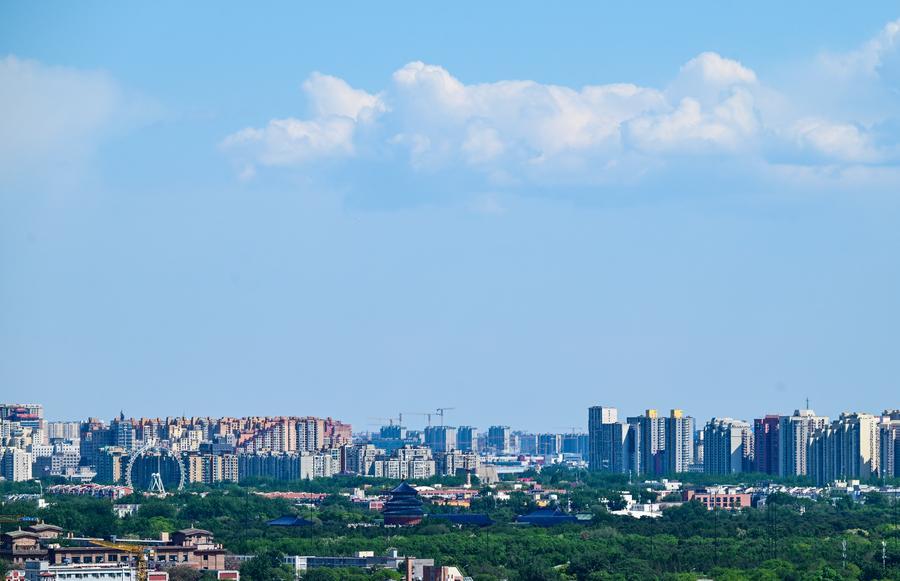
On the housing market, home prices in China's first-tier cities, namely Beijing, Shanghai, Guangzhou and Shenzhen, increased slightly in April from the previous month, while second- and third-tier cities reported narrowed or unchanged price declines.
New home prices in the four first-tier cities edged up 0.1 percent month-on-month in April, according to the bureau. Second-tier cities saw a smaller price decline of 0.1 percent, while prices in third-tier cities dropped 0.3 percent, the same with the previous month.
Similar trends were seen in the resale housing market, the data showed.
The bureau's monthly report tracks residential property prices in 70 major Chinese cities, comprising the four first-tier cities, 31 second-tier cities, and 35 third-tier cities.
Wang Zhonghua, a statistician at the bureau, said 21 of the 70 cities recorded month-on-month increases or unchanged prices in the new home market, five more than in March. The figure in the resale market was 16, down by one from the previous month.
On a yearly basis, sales prices across all city tiers generally declined. However, the first-tier cities saw a narrowing of price drops in both new and resale home markets. Most other major cities reported narrower or unchanged declines, although third-tier cities saw slightly faster declines in new home prices.
Urban unemployment
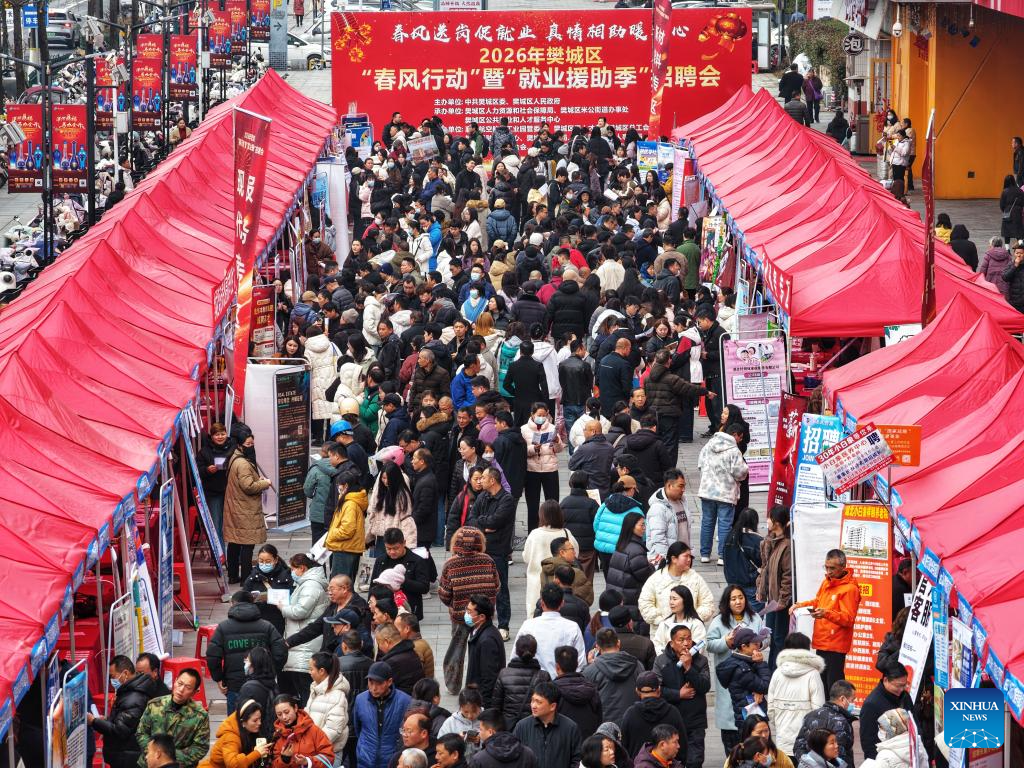
The official data also indicated that China's job market remained generally stable in April, with the surveyed urban unemployment rate at 5.2 percent, 0.2 percentage points lower than the previous month.
In the first four months, the surveyed urban unemployment rate averaged 5.3 percent, according to the bureau.
The jobless rate among locally registered urban workers was 5.3 percent, while the rate for migrant workers was lower at 5 percent.
In China's 31 major cities, the surveyed urban unemployment rate stood at 5.2 percent last month, 0.1 percentage points lower than in March.
China has set a target of a surveyed urban unemployment rate of around 5.5 percent in 2026 and aims to create over 12 million new urban jobs within the year.
