

Smart tech delivers expanded functions and enhanced user experience
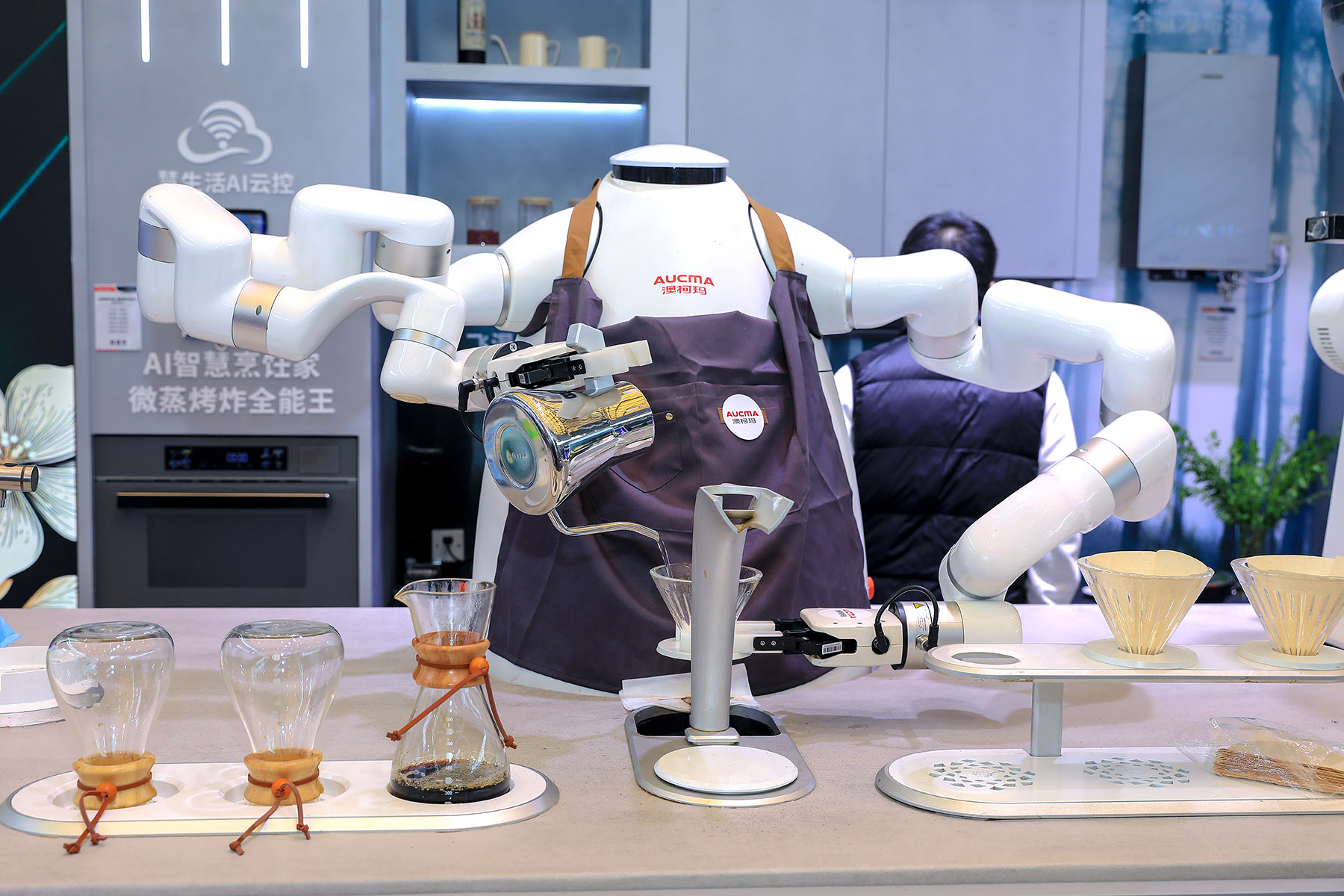
Chinese home appliance companies are teaming up with internet giants to rapidly advance the integration of artificial intelligence, benefiting more consumers.
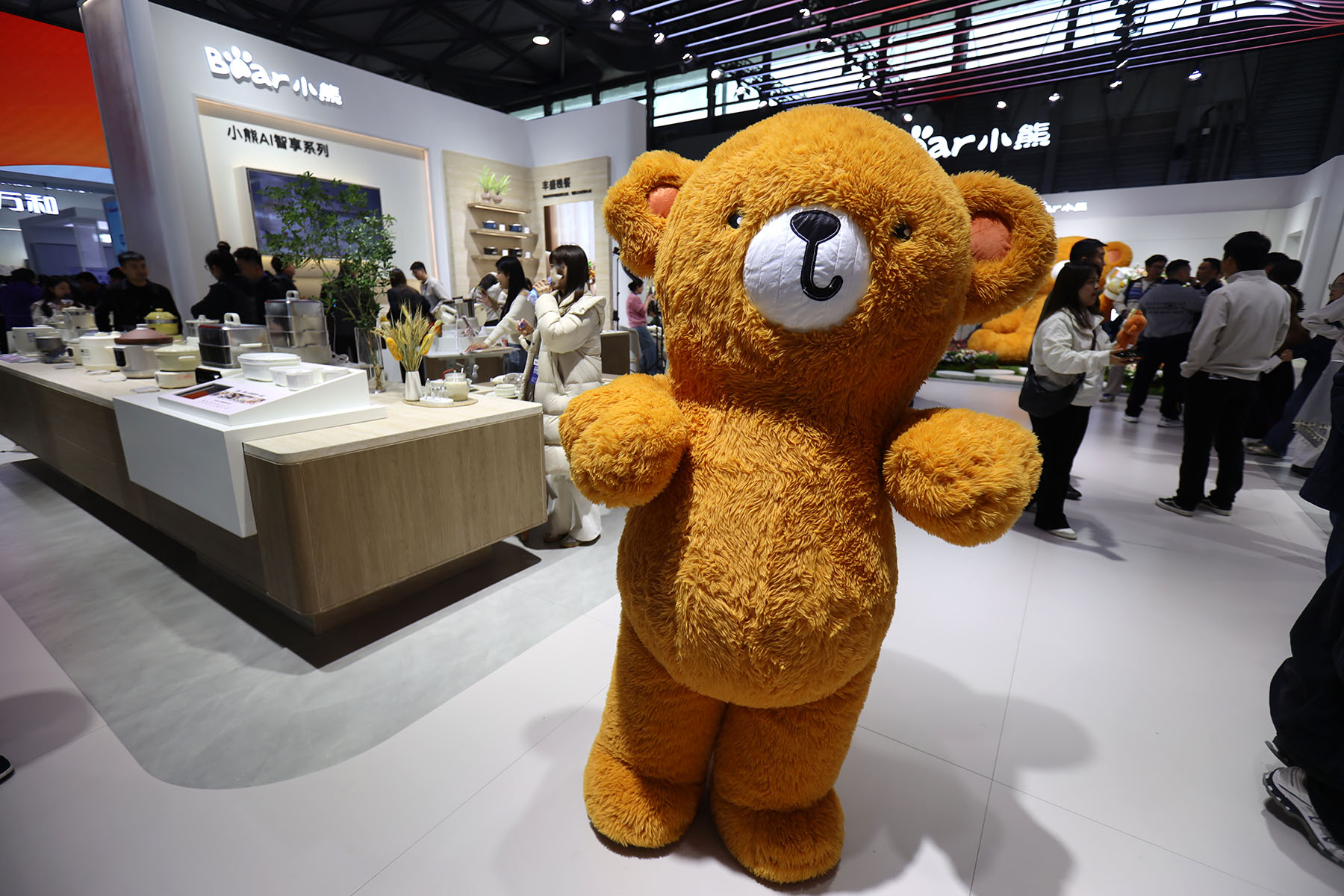
On March 12, which was the first day of the Appliance & Electronics World Expo 2026 in Shanghai. Baidu Smart Cloud inked a deal with Bear Electric Appliance Co Ltd, a maker of small home appliances based in Foshan, Guangdong province.
According to the agreement, the two parties announced that they will launch an AI strategic cooperation with a scale of 100 million yuan ($14.5 million) in the next three years. Relying on Baidu AI Cloud's big model 5.0 and Baidu Smart Cloud's AI technology capabilities, they will carry out in-depth cooperation around the AI big model and smart home appliance scenarios, and jointly promote the innovation and industrial upgrading of the new generation of AI small home appliances.
READ MORE: Smart living moving into mainstream use
As per the deal, both parties will establish a long-term strategic partnership around "AI+Home Appliances+Intelligent Life", fully empowering products and enterprise operation systems through AI technology, and accelerating the home appliance industry's move toward the AI native era.
At the product level, both sides will focus on upgrading AI capabilities around the core categories of Bear Electric Appliance, including small household appliances such as air fryers, health pots, and rice cookers. Based on the Wenxin Yiyan big model capability, the new generation of AI home appliances will have natural voice dialogue, intelligent services, and content ecology capabilities. Through end-to-end voice interaction, low-latency voice control, and natural human-machine interaction will be achieved.
Li Yifeng, general manager of Bear Electric Appliance, said: "We attach great importance to cooperation with Baidu in the field of AI. This is not only a technical cooperation, but also an important opportunity to promote the product upgrade of Bear Electric Appliance Co Ltd. We have a rich range of home appliance application scenarios, while Baidu has leading advantages in large models and AI technology. We hope to collaborate with both parties to truly implement AI capabilities in products and user experience, and jointly explore more innovative possibilities for AI home appliances."
Yuan Foyu, vice-president of Baidu, said: "The combination of AI and home appliances has significant value for both industries. AI cannot just stay at the conceptual level, it must enter real life scenarios to make consumers feel the changes brought by technology in their daily use. Bear Electric Appliance Co Ltd has a strong industrial foundation, and Baidu has leading AI technology capabilities in the fields of big models, AI and cloud computing. The cooperation between the two parties will jointly promote the large-scale implementation of AI in small household appliances."
In the future, both parties will use the Wenxin Yiyan big model as the core technology base, continuously promote the large-scale application of AI technology in the field of smart home appliances and create a new generation of AI small home appliances with understanding, decision-making, and service capabilities so that home appliances can evolve from functional devices to home intelligent life partners, and jointly promote the innovative development of the AI home appliance industry, the two parties said.
Baidu's cooperation with Bear Electric Appliance Co Ltd is not the first case of an internet company joining hands with home appliance companies.
On Feb 12, JD.com officially signed a strategic agreement with Midea, Haier, Hisense and TCL, announcing a sales goal of 180 billion yuan.
According to the agreement, all parties will adhere to the principle of putting customers first, and continue to focus on the four core directions of service experience upgrading, product co-construction and innovation, channel deepening and expansion, and marketing operation coordination, jointly promoting the sales growth of many product categories such as televisions, air conditioning, refrigerators, washing machines, range hoods, stoves, water heaters, and small appliances, and achieving mutual benefit and win-win through resource integration.
The cooperation is not simply about supply and marketing collaboration, but based on years of cooperation, further deepening the collaboration of the entire industry chain. Among them, JD relies on nearly 30,000 JD Malls, JD Electric City Flagship Stores, and Home Appliance Specialty Stores nationwide to provide full channel coverage support from first-tier cities to counties, towns, and rural areas for the four major brands, helping them reach a wider range of consumer groups.
Gree also teamed up with JD, signing an agreement in 2015. In 2024, they had a new partnership, launching AI energy-saving products, including air conditioners, refrigerators, washing machines, water purifiers, heaters, and other new home appliances.
Zhang Jing, air conditioner purchaser of JD, said: "The cooperation between Gree and JD this time is not only a simple business alliance, but also a deep integration of innovation and service between the two industry giants. In the future, both parties will further deepen cooperation and provide consumers with more personalized products and services through cutting-edge technologies such as big data analysis and intelligent logistics."
Lu Qun, sales director of Gree, said: "The series of Gree household appliances products are positioned as healthy, intelligent, and personalized, and are important achievements of Gree's core development strategy of 'good appliances made by Gree'. Gree will deeply cooperate with JD and is committed to providing consumers with a more convenient and reassuring consumption experience."
Guo Tao, individual angel investor and an expert in AI, said: "Internet giants choosing to cooperate with home appliance companies is essentially driven by the two-way demand for technology implementation and scenario monetization."
"From the perspective of internet giants, AI technology requires physical scenarios to realize commercial value. Home appliances, as a high-frequency entry point for households, are an ideal scenario for the implementation of AI big models and internet of things technology," he said.
ALSO READ: AI ushers in friendlier appliances
Furthermore, he said: "By equipping small appliances with 'intelligent brains', technologies such as voice interaction and personalized services can be transformed from concepts to daily experiences, which not only verifies the practicality of the technology, but also accumulates massive user behavior data to feed back model iteration."
At the same time, according to Guo, the home appliance market is large and close to the consumer end. Thus, "collaborating with home appliance companies can quickly transform technology into products, and seize the opportunity in the intelligent hardware ecosystem".
He also noted that traditional products are severely homogenized, and AI is the key to breaking through growth bottlenecks. The technological capabilities of large factories, Guo said, can help household appliance enterprises quickly achieve product upgrades, such as optimizing voice control accuracy through large models, automatically adjusting device parameters according to user habits, and enhancing product premiums and user stickiness.
"And the traffic and channel resources of large factories can also help home appliance companies connect production and sales links, reducing innovation costs," he added.
Contact the writers at zhengyiran@chinadaily.com.cn
