

Artificial intelligence is advancing at an unprecedented pace, reshaping economies and societies worldwide. The country’s 15th Five-Year Plan (2026-30) calls for full implementation of the “AI+” initiative, stressing the integration of AI with industry, culture, public services and governance, alongside coordinated development of education, technology and talent. Premier Li Qiang’s Government Work Report further underscored the goal of fostering new forms of the smart economy. Together, these national strategies provide clear direction for Hong Kong to align its own development, with AI+ serving as a key driver of digital and intelligent transformation.
 To seize this opportunity, Hong Kong should formulate an “AI+X” policy framework spanning industry, education, research, public services and governance. AI should not be treated merely as a productivity tool, but as a transformative force embedded within professional knowledge, workflows and institutional design. Through automation, precision and data-driven decision-making, AI can generate new business models, ecosystems and sources of value.
Advancing the AI+ agenda requires coordinated efforts across four dimensions — enhancing efficiency through AI tools; redesigning processes to improve overall effectiveness; establishing governance mechanisms to support human-AI collaboration with clear accountability and ethical standards; and adapting organizational and social systems to enable long-term transformation.
Education stands at the forefront of this transformation. The long-standing goal of teaching students according to their aptitude has been constrained by standardized, examination-oriented systems. While efficient, such models often fail to capture individual differences in ability, interest and potential. AI-enabled education offers a path forward. By tracking learning trajectories and analyzing performance data, AI can help educators better understand students’ needs, reduce administrative burdens, and enable more personalized teaching.
However, current applications in Hong Kong remain largely tool-based, with AI used mainly for lesson preparation or quick information retrieval. A deeper transformation is required. AI should be leveraged to reshape teaching, learning and assessment models fundamentally.
As AI increasingly handles knowledge transmission, teachers’ roles will evolve from information providers to learning designers and facilitators, guiding students in developing higher-order skills such as critical thinking, creativity, self-directed learning and communication. This shift recognizes that the true value of education lies not in memorizing facts but in cultivating capabilities that machines cannot easily replicate.
Learning will become more personalized and interactive, supported by human-AI collaboration. Students can explore areas of interest at their own pace, while real-time data generated throughout the process offers immediate feedback. Educators can leverage AI analytics to optimize both teaching strategies and learning outcomes, creating a more responsive educational experience.
AI is no longer a future prospect but a present force. For Hong Kong, advancing AI+ education is not simply a matter of adopting new technologies, but of rethinking the entire ecosystem of learning and talent development
Assessment will shift from one-off examinations to continuous, embedded evaluation. AI can provide real-time feedback, diagnose learning gaps and predict progress, enabling a more integrated approach. This creates a closed-loop system in which teaching, learning and assessment inform one another dynamically, rather than operating as separate, disconnected stages.
AI+ education will ultimately reshape not only classroom practices but also institutional structures and governance frameworks. New questions will arise: How should curricula be redesigned? What competencies should teachers develop? How can AI be deployed responsibly, transparently and inclusively? Addressing these questions requires coordinated policy development and stakeholder engagement.
The forthcoming Blueprint for Digital Education Development in Primary and Secondary Schools presents an important opportunity. It should set out a clear vision for systemic transformation and offer concrete measures to align education with the needs of the smart economy. This includes investing in teacher training, updating curricula to emphasize AI literacy and critical skills, and establishing governance frameworks to ensure ethical AI deployment.
By embedding AI into education, Hong Kong can cultivate a new generation equipped with the adaptability and resilience required in an AI-driven era. This is not simply about preparing students for future jobs, but about fostering a culture of innovation, continuous learning and human-machine collaboration that will define competitiveness in the 21st century.
AI is no longer a future prospect but a present force. For Hong Kong, advancing AI+ education is not simply a matter of adopting new technologies, but of rethinking the entire ecosystem of learning and talent development. By doing so, the city can strengthen its role as an international hub for innovation and talent, while contributing to the country’s broader development goals and securing its position in the emerging smart economy.
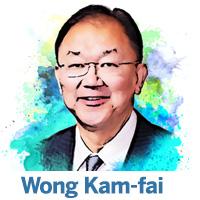
The author is a Legislative Council member of the Hong Kong Special Administrative Region.
The views do not necessarily reflect those of China Daily.
