

Visitors from far and wide seek out Shi Fangpo and her black rice rolls
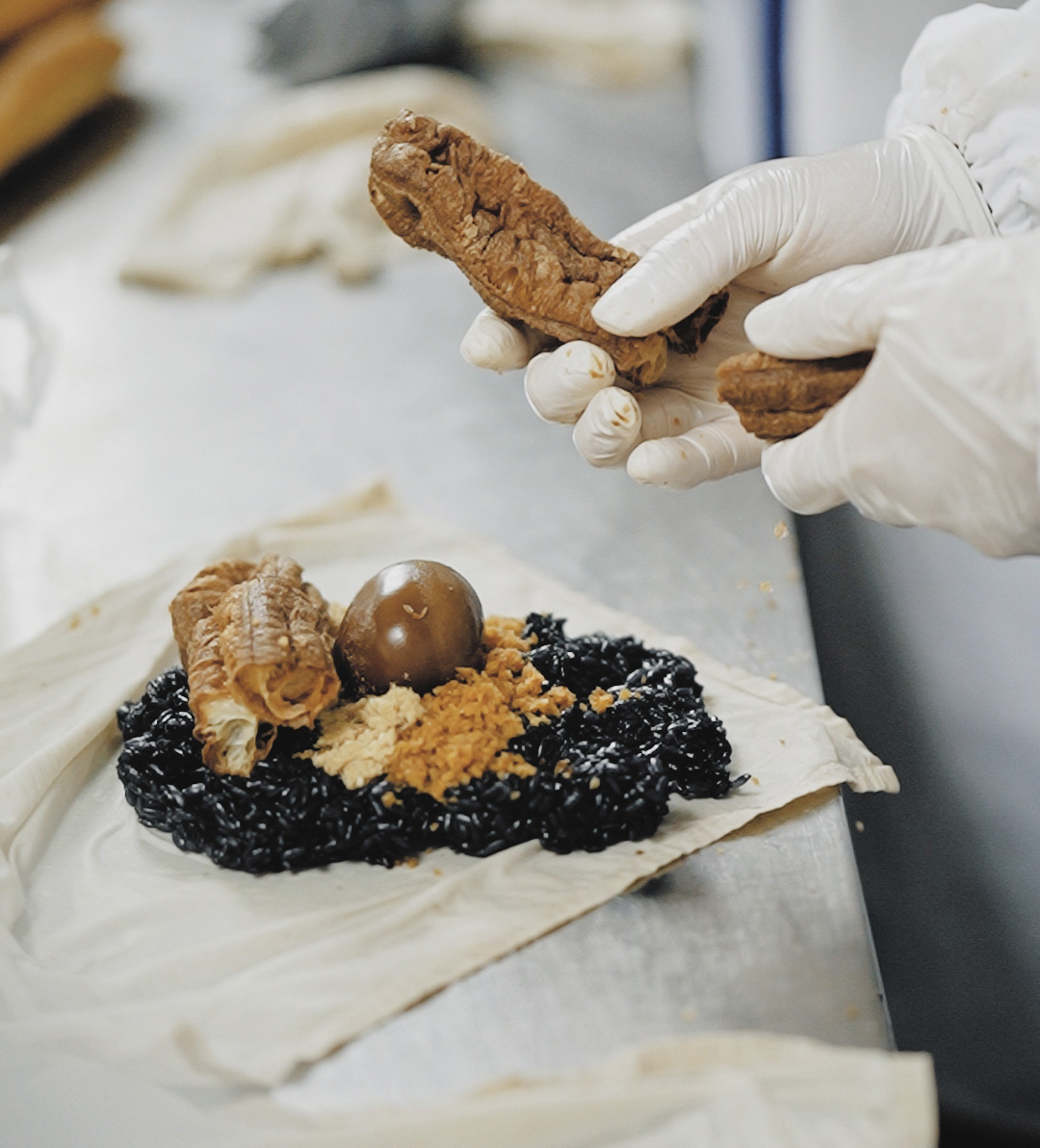
At six in the morning, the rhythm of Nanjing, the capital of Jiangsu province, is already in motion. Along Wangfu Street, steam rises into the cool air, mingling with the murmur of voices. Outside a modest 40-square-meter shop, a line has formed, with those at the front arriving long before sunrise.
Some in the line are longtime neighborhood regulars, cloth bags in hand after their morning exercise. Others are visitors from afar, suitcases at their feet, drawn by word of mouth and social media. They are all waiting for the same thing: a local specialty known as wufan, or black rice.
Inside, 73-year-old Shi Fangpo and her small team have been working since 2 am. By the time the first customers arrive, the day's earliest batches are nearly ready — steaming, fragrant and dark as polished lacquer. For many in this eastern Chinese city, it is more than breakfast — it marks the arrival of summer.
May 5 this year falls on li xia, the Start of Summer. In Nanjing, the occasion is closely tied to the custom of eating black rice, believed to nourish the body as the weather turns warm.
A folk saying goes: "Eat black rice at li xia, and you won't be troubled by mosquitoes all year." Behind it lies a traditional Chinese medicine principle: As temperatures rise and yang energy ascends, foods that help restore balance and calm the mind are preferred.
The key ingredient is nanzhu leaves (Vaccinium bracteatum Thunb.), also known as black rice herb. Harvested in early spring, the leaves are crushed to extract a green, slightly bitter juice. Glutinous rice is soaked in it, absorbing the natural pigments before being steamed.
What follows is a gradual transformation. The rice turns green, then blue under steam. Once exposed to air, it deepens into a glossy purplishblack, carrying a faint herbal aroma of the countryside.
"It's a craft that depends on experience," Shi said. "You have to adjust everything — the soaking time, the heat — based on the weather."
She has been making black rice for nearly four decades, handling more than 150 kilograms of glutinous rice each day.
At her shop, the rice is served in compact portions, paired with youtiao (fried dough sticks) and pickled vegetables. Customers can choose between a soft, traditional version or a crispier one, fried twice for texture.
"The crispy one is more popular with younger people," Shi said. "The softer one is what many older customers prefer."
Despite the variations, Shi prepares each serving with care. "It takes more effort," she said, "but what matters is that people leave satisfied."
In the past, black rice was limited by the short harvest season of nanzhu leaves, typically lasting only a few weeks around Qingming Festival and the Grain Rain solar term in April.
Today, improved logistics allow fresh leaves to be sourced from Jiangxi, Anhui and Guizhou, extending production into the colder months.
Even so, demand still peaks around li xia, when many residents line up for a freshly made portion.
For younger customers like Hu Zixuan, the rice offers a small remedy for modern fatigue. After finishing a late-night shift, she often returns for a portion of Shi's specialty.
"When we were kids, everyone in Nanjing would buy a steamed rice roll with youtiao right outside their homes," she recalled.
"At four in the morning, a bite from Fangpo feels like salvation," she said. "It's so good it brings tears to your eyes. I'll definitely be coming back for more."
As the city evolves, traditions like this preserve continuity.
For Shi, the shop is not only a livelihood, but a reflection of the city's warmth — shaped by neighbors, customers and the rhythm of daily life.
"I've been fortunate," she said." I've met good people along the way. My only goal now is to keep the quality high and the prices fair."
Contact the writers at liyingxue@chinadaily.com.cn
