


TEHRAN/WASHINGTON/LONDON/CAIRO/ISLAMABAD – Five civilians were killed in US attacks on cargo boats, Iran's semi-official Tasnim news agency reported Tuesday.
Following the claim by the US military that it had targeted six Iranian speedboats, and given that none of Iran's combat vessels were hit, local sources were consulted to verify the nature of the incident, said the report.
It was determined that US forces had attacked two small civilian cargo boats, which were traveling from Khasab along the Omani coast toward Iran, killing five civilian passengers onboard, it said.
US destroyers transit Strait of Hormuz after dodging Iranian attacks
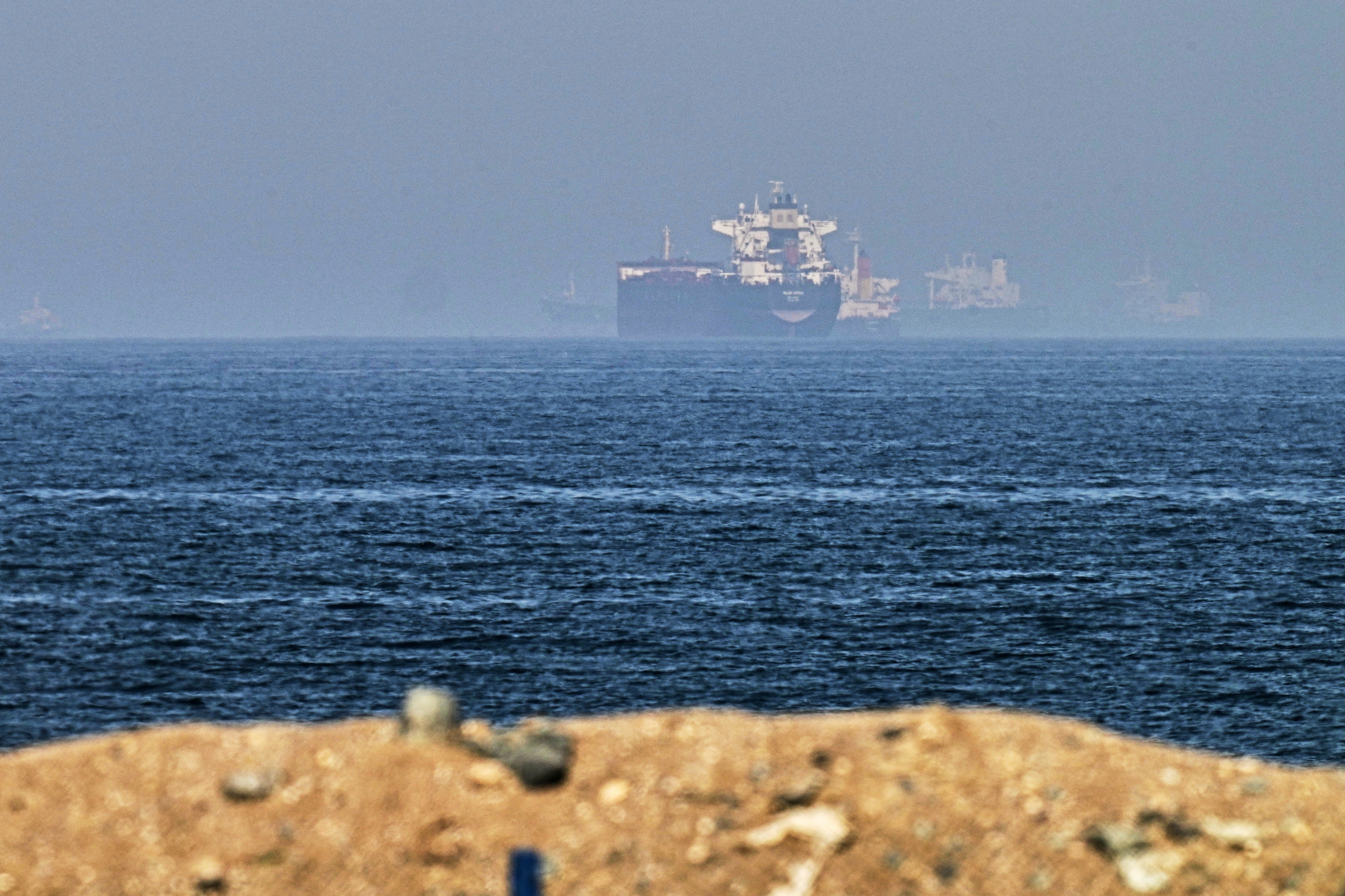
Meanwhile, two US Navy destroyers have passed through the Strait of Hormuz and entered the Gulf after navigating an Iranian barrage, US media outlet CBS News reported on Monday night.
The USS Truxtun and USS Mason, supported by Apache helicopters and other aircraft, faced a series of coordinated threats during the passage, said the report, citing Pentagon officials, who spoke under condition of anonymity.
No US warship was struck, though Iran launched small boats, missiles and drones against them as a sustained barrage, the officials were quoted as saying.
None of the projectiles launched by Iran reached the US vessels, they said, adding that the US military's assisting efforts, bolstered by air support, successfully intercepted or deterred each incoming threat.
‘US response to peace proposal difficult to accept’
Also on Monday, Iran's Foreign Ministry said the US response to Tehran's 14-point peace proposal is difficult to accept, citing Washington's history of "making unrealistic demands."
Ministry spokesman Esmaeil Baghaei, speaking at his weekly news conference in Tehran, confirmed Iran had received the US reply through Pakistan, which has been serving as a mediator, but declined to share specifics.
"The US message was received through Pakistan," Baghaei said. "Given the US practice of making excessive and unreasonable demands, it is not easy to review this response."
Baghaei said Iran is dealing with a party that "constantly changes its views", complicating any diplomatic progress. He stressed that Iran will only negotiate on ending the war and will not discuss other issues, including its nuclear program.
Responding to US President Donald Trump's description of allowing ships through the Strait of Hormuz as a "humanitarian gesture", Baghaei dismissed the characterization, saying the world does not accept "US claims of humanitarianism". He said the US cannot escape a "self-created quagmire" in the region by repeating past mistakes.
Baghaei also warned that threatening language would not work against Iran, and said the recent tensions in the strait were a direct result of US and Israeli military strikes on Iran. He said the waterway had been safe for international shipping before the attacks began.
ALSO READ: Iran taps allies, neighbors as tensions linger
On Feb 28, Israel and the United States launched joint strikes on Tehran and other Iranian cities, killing then-Supreme Leader Ali Khamenei, senior military commanders, and civilians. Iran responded with waves of missile and drone attacks on Israeli and US targets across the region and restricted passage through the Strait of Hormuz for vessels linked to Israel and the United States.
A ceasefire took effect on April 8, followed by talks between Iranian and US delegations in Islamabad that ended without a deal. On April 30, Iran delivered a 14-point proposal to the US side via Pakistan.
Trump stops short of saying ceasefire violated
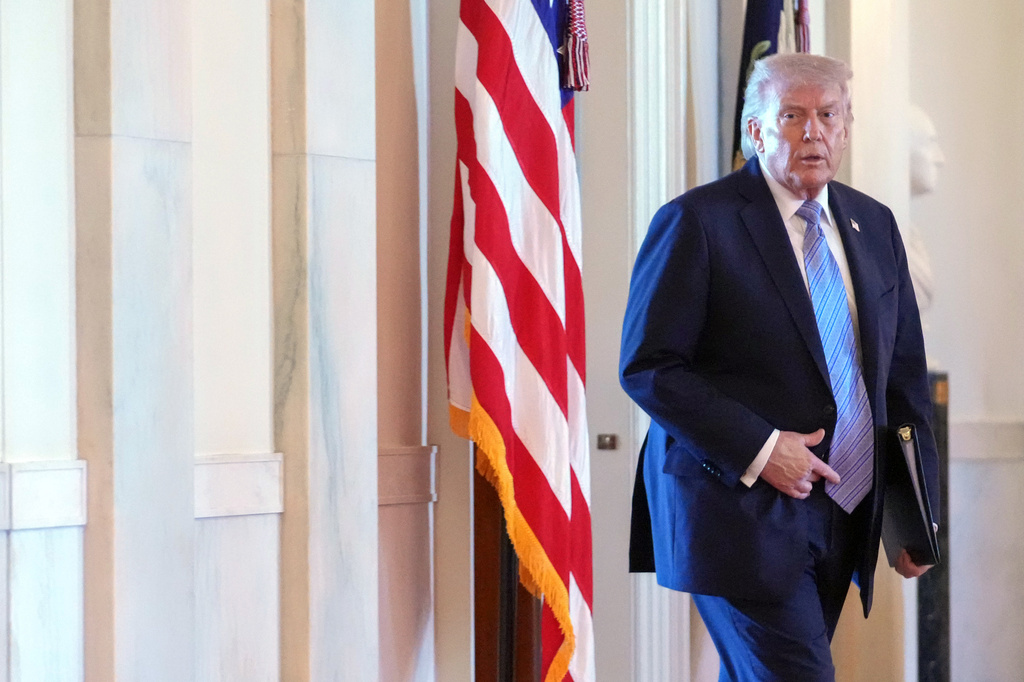
In a phone interview with ABC News on Monday, Trump stopped short of saying the US-Iran ceasefire has been violated, following reported Iranian attacks on commercial vessels near the Strait of Hormuz and on oil infrastructure in the United Arab Emirates (UAE).
"(It was) not heavy firing," Trump said of Iran's Monday attacks.
Asked if the ceasefire had been violated, Trump said: "We'll let you know. Ships are moving. You know, we moved quite a few last night -- big ones. There was no firing. I guess there has been some recently. I'm looking into it."
"I'll let you know, like I'll let everyone else know," Trump said when asked what would happen if the ceasefire is broken. "We just heard about this, and we'll find out about it. What should happen is South Korea should get involved. It was a South Korean ship that got hit. And I would think, if you have a ship that's hit, you should immediately send some people."
No military solution to political crisis
Writing in a post on the social media X on Tuesday, Iranian Foreign Minister Seyed Abbas Araghchi said events in the Strait of Hormuz make clear that there's no military solution to a political crisis.
Araghchi said as talks are making progress with Pakistan's effort, "the US should be wary of being dragged back into quagmire by ill-wishers. So should the UAE."
US military sinks six Iranian small boats
On Monday, Brad Cooper, chief of US Central Command, said the US military has sunk six Iranian small boats in the Strait of Hormuz.
The Iranian boats were struck by US Apache and MH-60 Seahawk helicopters, Cooper told a news conference.
ALSO READ: Iran warns US army against entering Strait of Hormuz
Meanwhile, Iran's naval forces, by observing and identifying US military destroyers in the Strait of Hormuz, fired warning shots of "cruise missiles, rockets, and combat drones" around them, Iran's Shargh Daily reported.
'Maximum caution'
Following reports of a US operation to "guide" stranded ships operating near the Strait of Hormuz, the International Maritime Organization (IMO) said vessels close to the area should continue to exercise "maximum caution".
In a written response to Xinhua, an IMO spokesperson said: "We are aware of the reports but do not have further details. We continue to urge ships to practice maximum caution in the area."
Trump said on Sunday that the United States would begin a transit facilitation operation on Monday to "guide" stranded ships through the Strait of Hormuz.
In response, the Iranian military command warned on Monday that any foreign armed forces, particularly the United States, would be attacked if they attempted to approach or enter the strait.
Fifteen crew members of US-seized vessel handed over to Iran
In another development, fifteen crew members of the Iranian vessel Touska seized by the United States were handed over to Iranian authorities at a border crossing point in Gwadar district of Pakistan's southwestern Balochistan province on Monday, officials told Xinhua.
The transfer was carried out at the Gabd-Rimdan crossing point in the coastal district bordering Iran, Deputy Commissioner of Gwadar Naqeebullah Kakar confirmed.
The crew members were formally handed over to Iranian officials after necessary arrangements and coordination between the two sides, Kakar told Xinhua.
The 15 crew members are part of a group of 22 Iranian nationals who were earlier evacuated to Pakistan after being held aboard a container vessel seized by the United States last month.
UAE accused of cooperating with 'aggressors'
At his weekly news conference, Baghaei, Iran's Foreign Ministry spokesman, accused the UAE of its "support for and cooperation with the aggressors against Iran".
The behaviors of the UAE "created many problems" not only for Iran, but also for the region's security and the solidarity among regional countries, according to Baghaei.
He added that Iran hopes "all regional countries have learned the necessary lessons from the developments that occurred during these 50 days."
'No plan to target UAE, Fujairah oil facilities'
Citing a senior military source, state-run IRIB news agency reported that Iran has no plan to target the UAE.
The source's remarks came as the UAE's Foreign Ministry said in a statement on Monday that Iranian missiles and drones struck civilian sites. Later, the UAE's Fujairah Media Office said that a fire erupted at the Fujairah Oil Industrial Zone following an Iranian attack, injuring three people.
Citing another military source, the IRIB said Iran had no pre-designed plan to attack the oil facilities, blaming instead "US military adventurism" for creating "a passage for ships to illegally pass through the forbidden passages of the Strait of Hormuz."
ALSO READ: US May Day protesters rally against Iran war, immigrant crackdown
Meanwhile, countries in the Middle East and regional organizations on Monday condemned Iran's attacks on the UAE.
Saudi Crown Prince and Prime Minister Mohammed bin Salman spoke by phone with UAE President Sheikh Mohamed bin Zayed Al Nahyan, expressing the kingdom's strong condemnation and denunciation of "the unjustified Iranian attacks" targeting the UAE, according to the Saudi Press Agency (SPA).
On Monday, Jordanian Deputy Prime Minister and Foreign Minister Ayman Safadi called his UAE counterpart, Sheikh Abdullah bin Zayed Al Nahyan, to reiterate Jordan's unwavering solidarity with the UAE and its full support for the UAE's efforts to protect its sovereignty and security.
Qatar's Ministry of Foreign Affairs also condemned an Iranian attack targeting an Emirati oil tanker operated by Abu Dhabi National Oil Company while transiting the Strait of Hormuz, describing the incident as a "blatant violation of international law and the principle of freedom of maritime navigation" and a "flagrant breach" of United Nations Security Council Resolution 2817.
Ahmed Aboul Gheit, secretary-general of the League of Arab States, condemned in the strongest terms the renewed Iranian attacks against the UAE, while Jasem Mohamed Albudaiwi, secretary-general of the Cooperation Council for the Arab States of the Gulf (GCC), emphasized that this act of aggression represents a flagrant violation of the sovereignty of a GCC member state and a dangerous escalation threatening regional security and stability.
