

Experts: Cross-boundary governance, ‘soft connectivity’ key to integration
The alignment of Guangdong province’s five-year development plan with Hong Kong’s Northern Metropolis will pave the way for high-quality development in the Guangdong-Hong Kong-Macao Greater Bay Area, experts said, while emphasizing the importance of “soft connectivity” and cross-boundary governance for more integrated progress.
Guangdong unveiled its 15th Five-Year Plan (2026-30) on Tuesday. For the first time, the province proposed synchronizing its development with the ongoing mega project in the Hong Kong Special Administrative Region.
The plan states that the province will “proactively connect with the Northern Metropolis Development Strategy and carry out cooperation in areas including park development, industrial introduction, project layout, facility construction, talent attraction, and ecological and environmental protection”.
Guo Wanda, executive vice-president of China Development Institute, a think tank based in Shenzhen, said the inclusion of the Northern Metropolis in Guangdong’s provincial plan underscores that the initiative is beyond a local undertaking, but represents a key project with national support and a pivotal vehicle for the SAR’s deeper integration into the Greater Bay Area.
Innovative technology, high-end professional services and logistics, and border commerce — highlighted in the Northern Metropolis’ development blueprint — all require close connection with Shenzhen and are highly synergistic with the development of the Greater Bay Area, he said.
“The proactive policy alignment of Guangdong with the Northern Metropolis will fuel the Greater Bay Area’s drive to evolve into an international innovation and technology hub as well as a global talent magnet,” Guo said.
ALSO READ: Northern Metropolis key to Hong Kong’s future growth, official says
Zhong Yun, vice-dean of the College of Economics at Jinan University, said this inclusion signifies another step forward in the integrated development of the Greater Bay Area. She added that it elevates the Northern Metropolis from a local development strategy to a “national strategy” for Greater Bay Area construction.
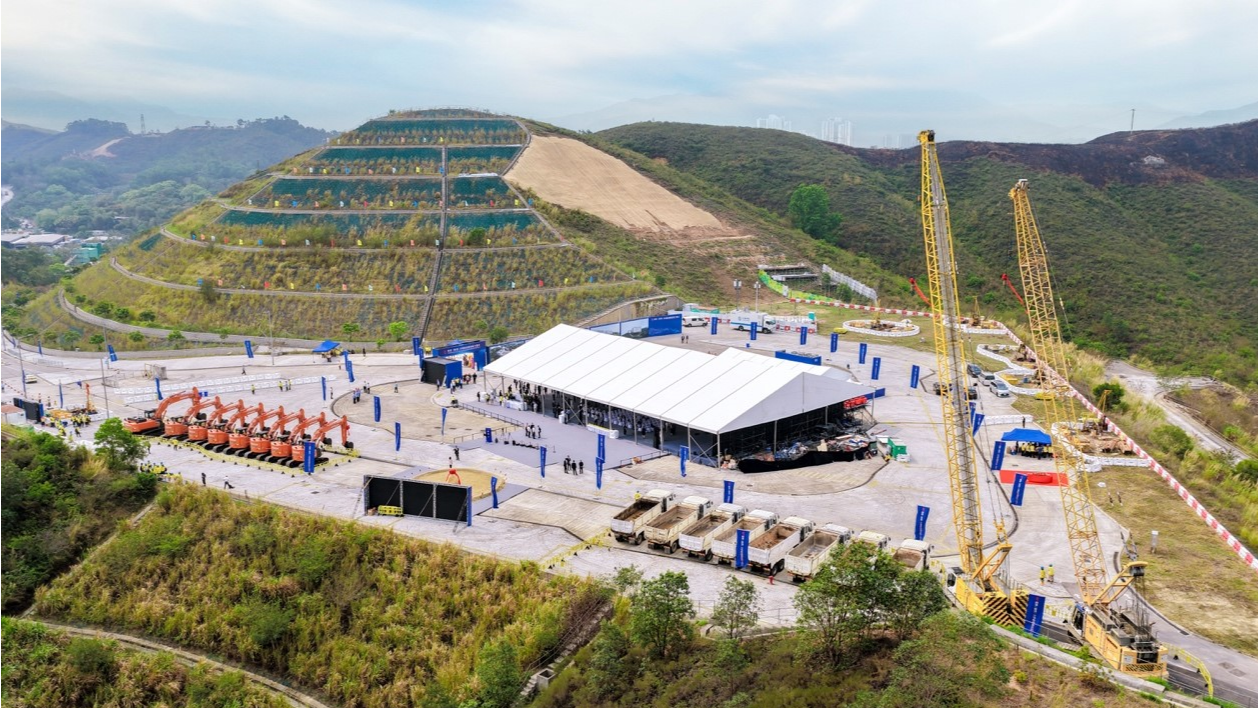
Proposed in 2021, the Northern Metropolis aims to turn 300 square kilometers in the New Territories into an innovation, technology and economic hub capable of accommodating 2.5 million residents and providing 650,000 jobs, including 150,000 I&T positions, over the coming 20 years.
The Hong Kong SAR government submitted proposals to fast-track its development to the Legislative Council in March. A two-month public consultation is underway and will close on May 22.
Guo said that inadequate “soft connectivity” — caused by differences in legal systems and standards — remains the biggest impediment to the coordinated development between Guangdong and Hong Kong.
Under the “one country, two systems” framework, Hong Kong adopts common law while the Chinese mainland practices continental law. Divergences in regulatory regimes and technical standards have long been bottlenecks to cross-boundary cooperation and connectivity.
To break through the barriers, he suggested prioritizing collaborative development in mutually pivotal sectors such as artificial intelligence, the low-altitude economy and biotechnology.
READ MORE: Northern Metropolis at core of HK’s first five-year plan
Cross-boundary flows of goods, people and capital should be promoted first on a “point-to-point” basis, such as within the Hetao Shenzhen-Hong Kong Science and Technology Innovation Cooperation Zone, and then expanded to wider areas, he added.
Zhong said that unlike major cooperation platforms such as the Shenzhen Park of Hetao, the Northern Metropolis is geographically within Hong Kong. There is no clear and definite path for coordinating development in such a special cross-boundary zone, she said.
“Establishing and refining a mechanism for cross-boundary collaborative governance and benefit sharing is imperative for breaking the existing development bottlenecks,” Zhong said.
Contact the writer at sally@chinadailyhk.com
