

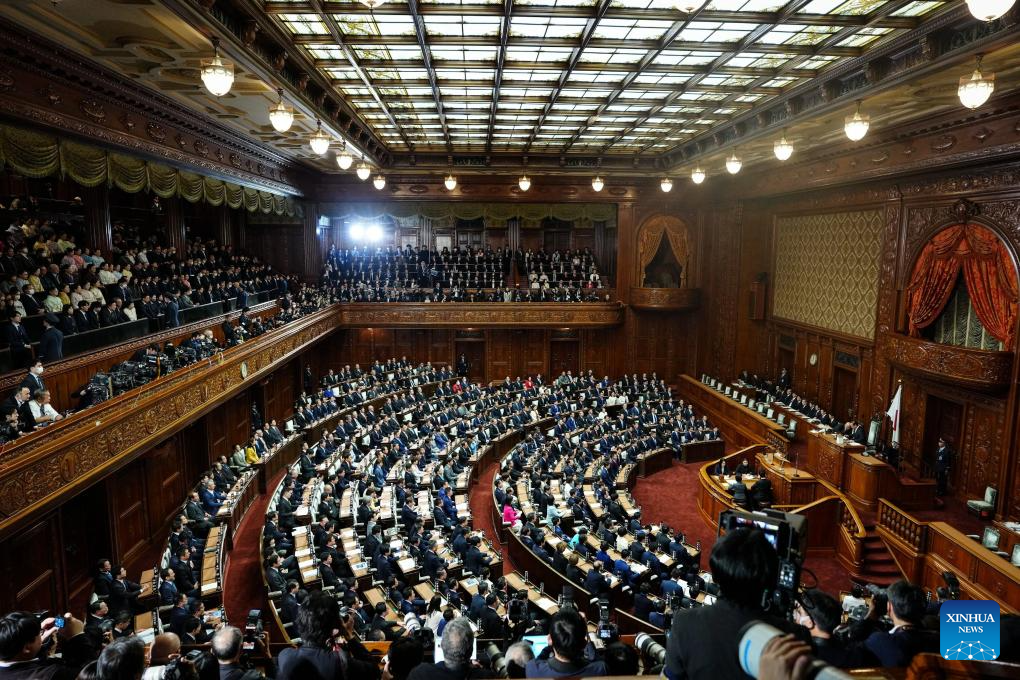
TOKYO – Japan's House of Representatives on Thursday passed a bill to establish a national intelligence committee, local media reported. The move has drawn questions and concerns from the public.
The legislation came as Prime Minister Sanae Takaichi aims to centralize the country's intelligence capabilities under one council, Kyodo News reported.
According to the bill, the new committee will be tasked with coordinating "important intelligence activities" in areas such as national security and counter-terrorism, as well as "overseas intelligence activities" involving foreign espionage.
ALSO READ: Japanese protest over deployment of long-range missiles
The bill also states that the committee's secretariat will "comprehensively coordinate" intelligence work across government ministries and agencies, with the authority to request that they share information.
During parliamentary debate on the bill, opposition parties voiced concerns about the new body's potential privacy threats and ability to remain politically neutral, Kyodo News reported.
Before the bill's passage, protests were staged in Japan, with demonstrators opposing the government's use of "striking espionage" as a pretext to expand social surveillance, and calling for the protection of personal privacy and the fundamental rights guaranteed by the constitution, including freedom of expression.
READ MORE: 36,000 protesters rally in Tokyo against Japan PM Takaichi's push to revise constitution
Mizuho Fukushima, leader of the Social Democratic Party, said in a media interview that although the government claims it will not arbitrarily investigate "ordinary citizens," the boundary between "ordinary" and "non-ordinary" citizens remains unclear. This, she noted, is highly concerning and points to inherent flaws in the bill.
Japanese media have also raised questions, arguing that the government must fully explain the necessity of strengthening its intelligence functions and address the potential risks to democratic institutions.
The legislation is expected to be enacted after passing the House of Councillors, where approval is highly likely. Following its enactment, the Takaichi administration aims to launch the committee by summer, according to Kyodo News.
