

TEHRAN/WASHINGTON/JERUSALEM/ISLAMABAD - Iran partially reopened its airspace and some airports on Saturday, said its Civil Aviation Authority.
Air routes in Iran's eastern airspace have been opened to international flights, the authority said in a statement, adding that some airports have also reopened at 7 am local time (0330 GMT).
Flight operations at Iranian airports will gradually return to normal once technical and operational preparations are completed by the country's military and civilian authorities, it said.
Iran had closed its airspace following the joint attacks by the United States and Israel on Feb 28.
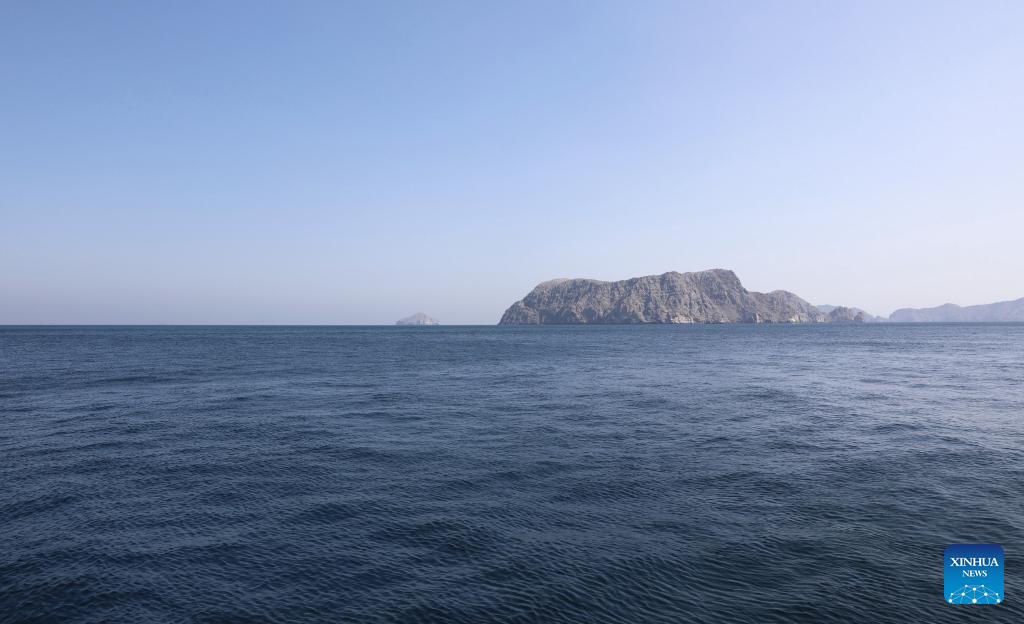
Meanwhile, cited a military spokesperson as saying on Saturday, Iran's Fars News Agency said control of the Strait of Hormuz has returned to its previous state, with the strategic waterway now under the firm management of Iran's armed forces.
On Friday, Iran's Foreign Minister Seyed Abbas Araghchi said on social media platform X that in line with the truce in Lebanon, the passage for all commercial vessels through the Strait of Hormuz is declared "completely open" for the remaining period of the ceasefire between Tehran and Washington.
He made the remarks hours after a 10-day ceasefire between Israel and Lebanon took effect following more than a month of deadly escalation between Israel and Hezbollah, which has claimed over 2,000 lives.
Araghchi stressed that vessels can cross the strait via the previously announced coordinated route announced by Iran's Ports and Maritime Organization.
Deal to be signed 'in the next day or two'
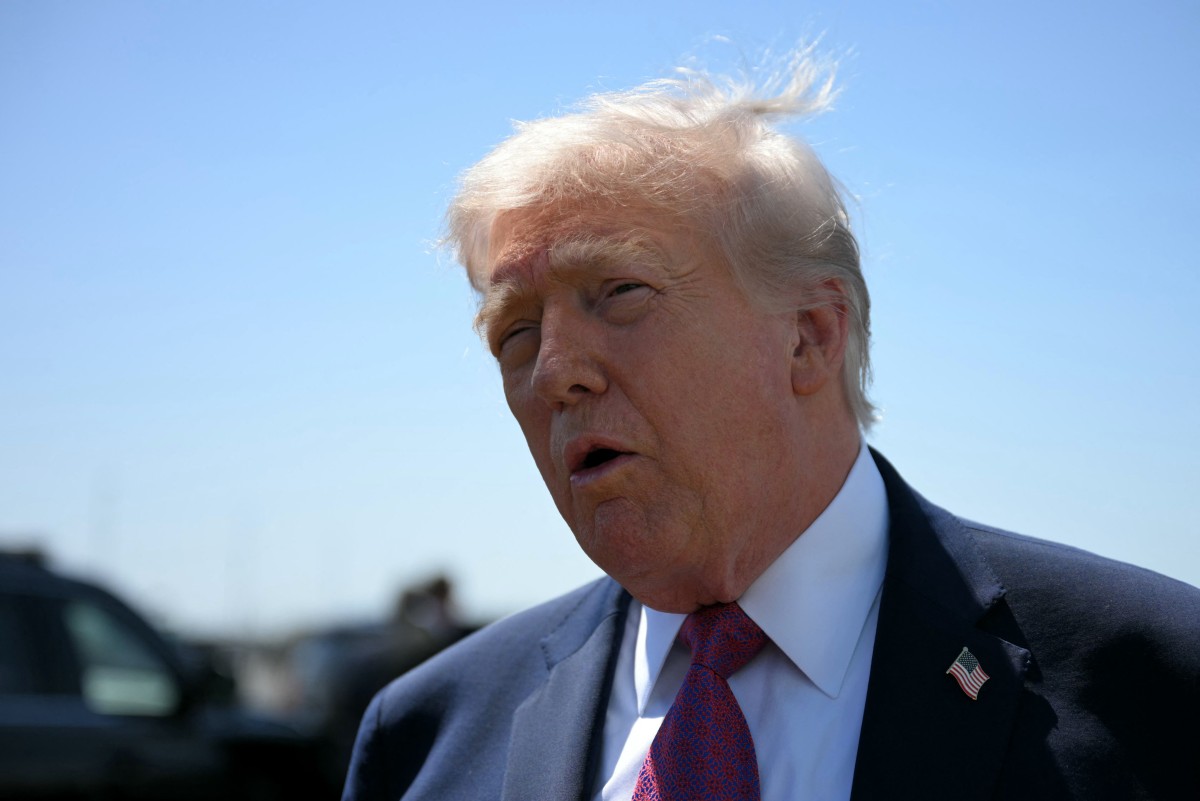
Meanwhile, US President Donald Trump said in an interview with Israel's Channel 12 News that he estimates a deal with Iran will be signed "in the next day or two".
Trump pointed out that the United States and Iran will probably meet over the weekend to finalize a deal to end the conflict. "The Iranians want to meet and make a deal," he said.
He said "the naval blockade on Iran is helping to make a deal. I will not lift it until we make a deal," adding that "the biggest part of this deal is that it will make Israel safer. This deal is good for Israel."
According to the channel, one component of the deal under discussion is that the United States will release $20 billion in frozen Iranian funds.
In exchange, Iran would give up its stockpile of enriched uranium, and would be only allowed to have nuclear research reactors to produce medical isotopes, all above ground.
In a phone interview with Bloomberg, Trump said a deal to end the conflict with Iran is mostly complete.
Trump said that Iran agreed to suspend its nuclear program indefinitely, and will not receive any frozen funds from the United States.
ALSO READ: Trump says Iran conflict could end 'pretty soon'
"Most of the main points are finalized. It'll go pretty quickly," Trump said.
Citing anonymous Iranian sources, CNN reported on Friday that a new round of US-Iran talks will be held on Monday in Pakistan.
US and Iranian delegations are expected to arrive in Pakistan this weekend, said the report, noting that the US side hasn't confirmed talks are scheduled.
Asked if he would travel to Pakistan to sign the potential deal, Trump said: "I may." He added that he hasn't decided who would lead a US delegation for talks with Iranian officials to sign an agreement.
Trump again denied that the moratorium on Iran's nuclear program would expire after 20 years.
"No years, unlimited," Trump said.
The United States will get all of Iran's nuclear "dust" with no money having exchanged hands "in any way, shape, or form", Trump wrote on social media earlier on Friday.
"The Strait of Hormuz is completely open and ready for business and full passage, but the naval blockade will remain in full force and effect as it pertains to iran, only, until such time as our transaction with iran is 100 percent complete," Trump wrote in another post.
Iran has yet to comment on any deal beyond the reopening of the Strait of Hormuz, nor on claims made by Trump that Tehran had offered concessions, including over the key issue of its nuclear program.
If the United States continues its naval blockade of the Strait of Hormuz, Iran will consider it a violation of the ceasefire between the two countries and will close the waterway, the semi-official Tasnim news agency reported Friday, citing an informed source close to the Supreme National Security Council.
Iran has 'agreed to everything'
In another phone interview, Trump claimed that Iran has "agreed to everything" for a peace deal including working with Washington to remove its enriched uranium without the involvement of US ground troops.
"No. No troops," he told CBS News.
However, when asked who would retrieve Iran's uranium, Trump said "our people".
"We'll go down and get it with them, and then we'll take it," Trump said.
"We'll be getting it together because by that time, we'll have an agreement and there's no need for fighting when there's an agreement. Nice right? That's better. We would have done it the other way if we had to," he said.
Trump also said Iran has agreed to stop backing groups like Hezbollah and Hamas.
'Transferring enriched uranium to US never an option'
Speaking on state-run IRIB television, Iranian Foreign Ministry spokesman Esmaeil Baghaei said Iran will not transfer its enriched uranium to a foreign country, and sending it to the United States has never been under consideration.
Baghaei said that recent public statements by Foreign Minister Seyed Abbas Araghchi were made within the framework of the ceasefire between Iran and the United States announced on April 8, not as signals of a new diplomatic opening.
ALSO READ: Mediators push diplomacy as Iran port blockade continues
Earlier Friday, Araghchi said the Strait of Hormuz would remain "completely open" to commercial shipping for the duration of the current truce between Iran and the United States.
Baghaei moved to clarify the foreign minister's position, saying that following a ceasefire in Lebanon on Friday, Tehran chose to apply safe-passage conditions outlined in its agreement with Washington to vessels transiting the strait.
'Ground paved for permanent peace efforts'
Citing intense Pakistani diplomacy efforts, Iran's Ambassador to Pakistan Reza Amiri Moghadam said in a social media post that the ground, more or less, has been paved for comprehensive, unified and united efforts to establish permanent peace and collective security, sustainable development, progress and prosperity for all in the Middle East and beyond.
Noting the progress made in the Israel-Lebanon ceasefire and the opening of the Strait of Hormuz, he said that trust, goodwill, avoiding redundancy in action and words, respect, as well as particularly synergy among the countries of the region, can bridge the existing gaps to achieve the significant goals.
The intelligentsia, politicians, scholars and media can play a significant role in helping bridge the current chasm towards convergence, he added.
