

Artist's solo exhibition uses various media to allow viewers to confront personal and philosophical questions through the theme of walking, Li Yingxue reports.
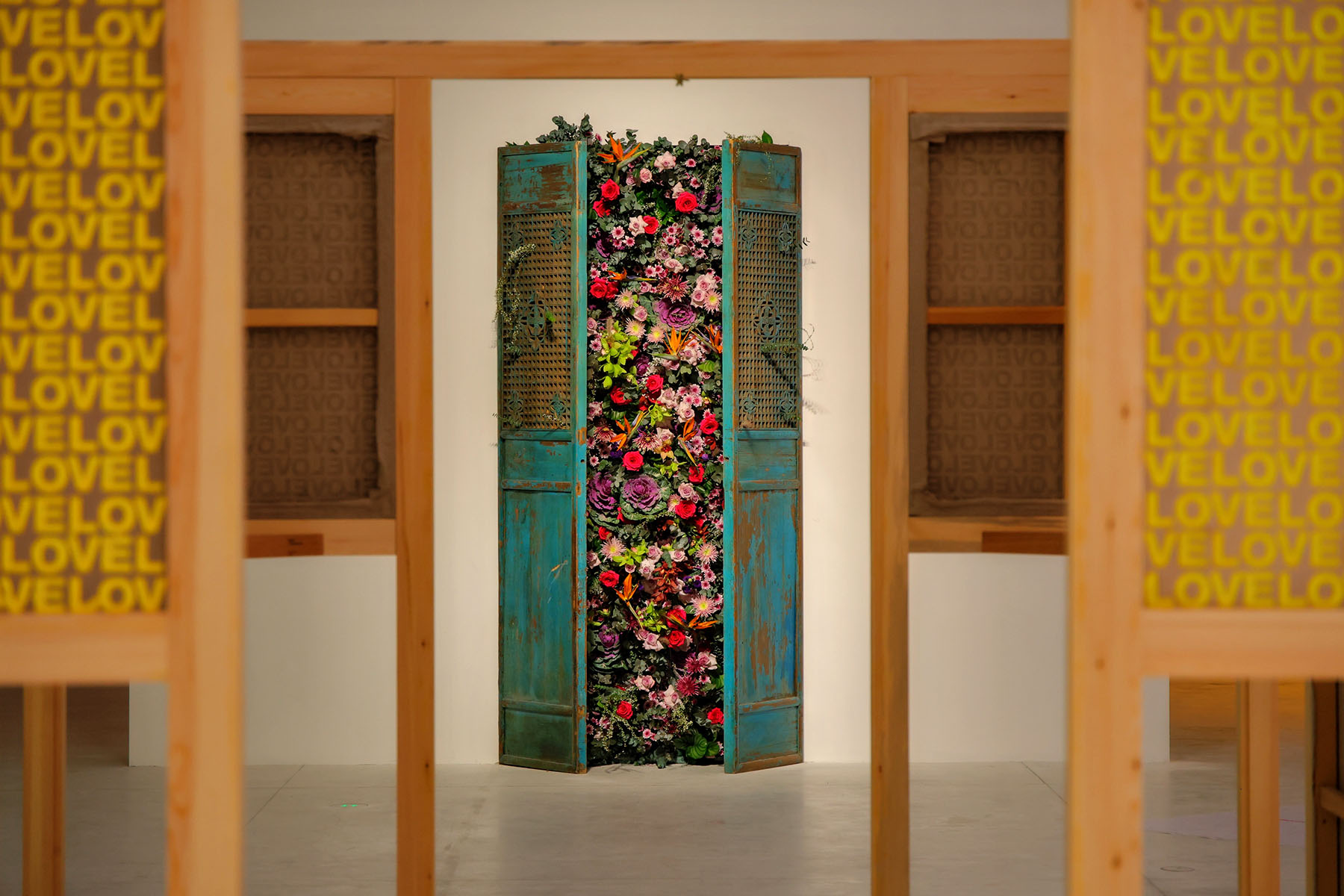
At the foot of Lianhua Mountain, where Shenzhen's dense urban fabric softens into greenery, the Shenzhen Museum of Contemporary Art and Urban Planning in Guangdong province rises in fluid white lines, poised between city and nature.
This spring, the space becomes a site of reflection and movement, hosting Walking in the Sun — Ai Jing Art Exhibition 2026, a major solo exhibition that traces artist Ai Jing's evolving creative and philosophical journey.
Running through June 21, the exhibition is among the most significant contemporary art presentations in the Guangdong-Hong Kong-Macao Greater Bay Area this year. It brings together Ai's multidisciplinary practice, spanning music, painting, installation, sculpture, and video, into a cohesive narrative structured around a single, enduring theme: walking.
READ MORE: Threading the past forward
Curated by He Guiyan, a professor at the Sichuan Fine Arts Institute, the exhibition unfolds across three interlinked sections that move from the intimate to the universal. Rather than following a linear chronology, the show constructs what He describes as a "chain of questions", inviting viewers to confront life, reality and modernity through shifting emotional and spatial experiences.
"The core of the exhibition lies in 'facing directly'," He explains. "Facing the essence of life, confronting suffering, and engaging with the dilemmas of modernity. These questions unfold progressively across the three sections."
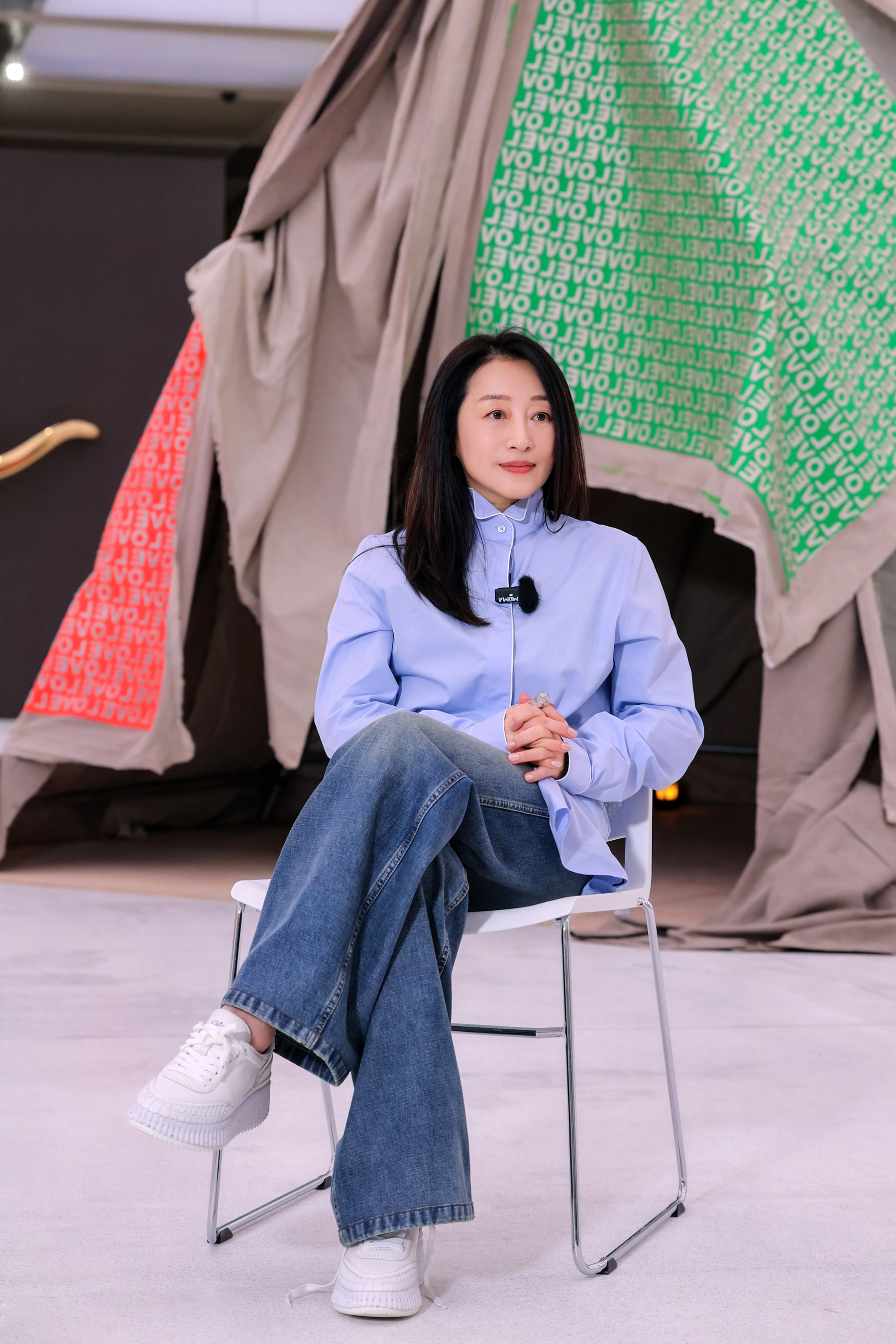
The journey begins with My Mom and My Hometown, where Ai returns to her origins, both materially and emotionally. In a gesture that is at once literal and symbolic, she transported 150 bags of black soil from her hometown of Shenyang, Liaoning province, to Shenzhen, spreading them across the gallery floor. The installation anchors the exhibition in memory, grounding it in the textures of childhood and the weight of belonging.
"The works here begin with a personal narrative," Ai reflects. "My mother, my hometown, childhood memories: the open fields where I played, chasing dragonflies, the closeness to nature, and those impressions of color and light."
As viewers move forward, the exhibition opens into The Power of Flowers, where private emotion is transformed into a broader symbolic language. Flowers, fragile yet resilient, become vessels for expressing kindness, hope, and resistance.
"This section expands from an individual feeling to a broader life perspective," He notes. "Flowers embody both vulnerability and strength."
For Ai, this shift marks a natural evolution. "From a personal narrative, I have entered a global narrative," she says. "It is an inevitable result of the times we live in."
That global perspective comes fully into focus in the final section, Walking in the Sun. Here, the tone deepens, and the works engage with themes of war, displacement, refugees, and human dignity. The emotional register shifts from warmth to introspection, from memory to responsibility.
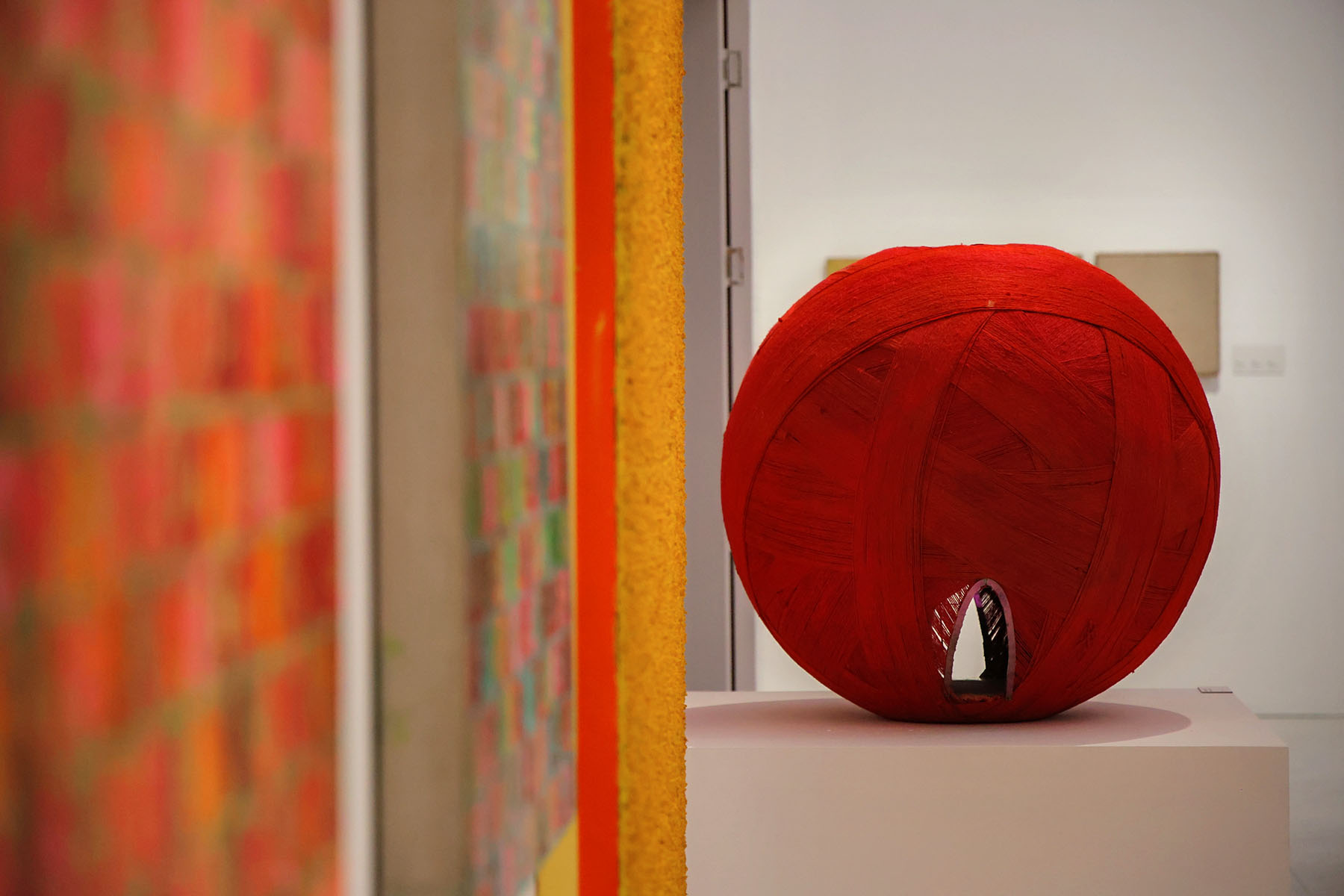
A central work, The Stones, is composed of fragments from a disused stone bridge in an ancient town — remnants of a structure once worn smooth by generations of passersby. Arranged in a circular formation, the installation creates a contemplative field in which meaning is not imposed but left open.
"Many people once walked across these stones, experiencing countless changes," Ai says. "Today, I enter this space to fulfill a wish. I leave the space to the viewers, in hopes that they can turn their attention inward."
Walking, in Ai's practice, is not merely a metaphor but a methodology. From Shenyang to Beijing, Shanghai, Guangzhou, Guangdong province, Shenzhen, and Hong Kong, and onward to Tokyo, New York, London, and Milan, her physical journeys mirror an ongoing inner search.
"I express, communicate, and share what I feel through music and visual art during this process," she says. "We are all still walking. No one has definitive answers."
This idea is echoed in the exhibition's design. Through shifts in light, openness and spatial rhythm, from intimacy and expansiveness to gravity, the show guides viewers through an emotional landscape that parallels Ai's own trajectory.
Museum director Yan Weixin describes "walking" as the methodological core of Ai's art. "If walking forms the horizontal axis of space, then love and strength form the vertical axis of emotion," he says. "Together, they structure the exhibition."
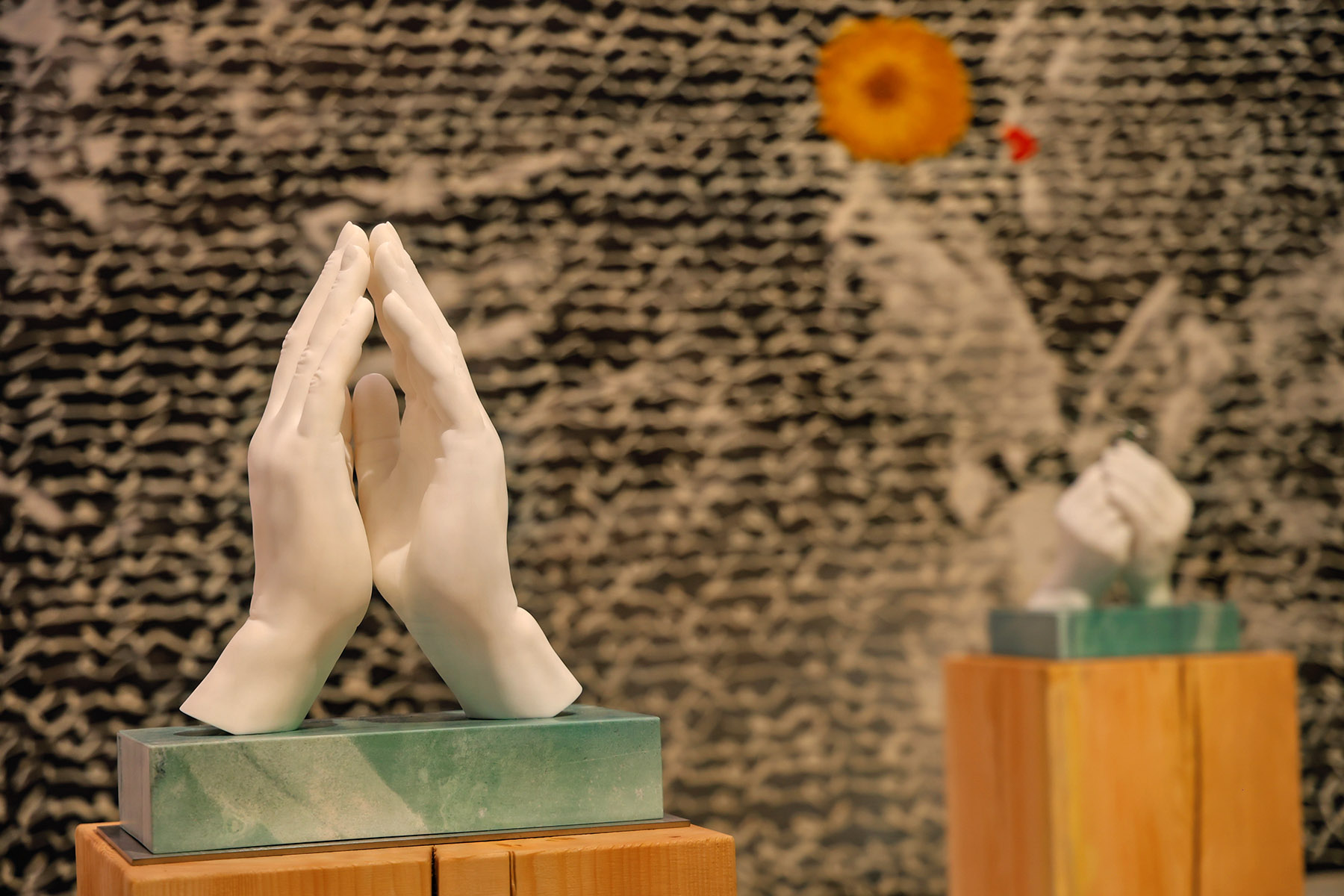
For Yan, the significance of the show also lies in Ai's interdisciplinary language. Having transitioned from a celebrated music career to visual art, she integrates multiple media into a multisensory form of expression that resists categorization.
This transformation is central to understanding her work. Born in 1969 in Shenyang, Ai rose to fame in the early 1990s with her song My 1997, becoming one of China's most recognizable musical voices. Yet, at the height of her success, she chose to step away, turning instead to painting and relocating to New York to study contemporary art.
"In my musical years, I expressed outwardly," she reflects."Through years of visual art practice, I have become a simpler, quieter practitioner."
Since 2007, she has exhibited widely, including at the National Museum of China and the Ambrosiana Art Gallery in Milan. Over time, her work has shifted from expression to inquiry, from performance to contemplation.
ALSO READ: Adaptation of play gives love a revival
Art critic Yin Jinan sees this duality as central to her practice. "There is both rational calmness and emotional intensity," he observes. "She approaches the theme of love with warmth, yet maintains a structural and conceptual clarity."
In Shenzhen, a city built on movement, migration, and reinvention, Ai's personal trajectory resonates naturally. She notes that when she first exhibited here eight years ago, her focus was largely inward.
"Today, I find that I care more about others," she says.
As the city's skyline continues to rise and Lianhua Mountain remains a constant presence, Walking in the Sun positions art not as an object to be viewed but as a field to be entered. It invites viewers to pause, look back, and ultimately, continue forward.
Under the blazing sun, Ai suggests, the act of walking may be the only answer we have.
Contact the writer at liyingxue@chinadaily.com.cn
