

After nearly four decades of dedicated work, liuli artist shares handmade warmth through her technically demanding pieces, Zhao Ruixue reports in Zibo, Shandong.
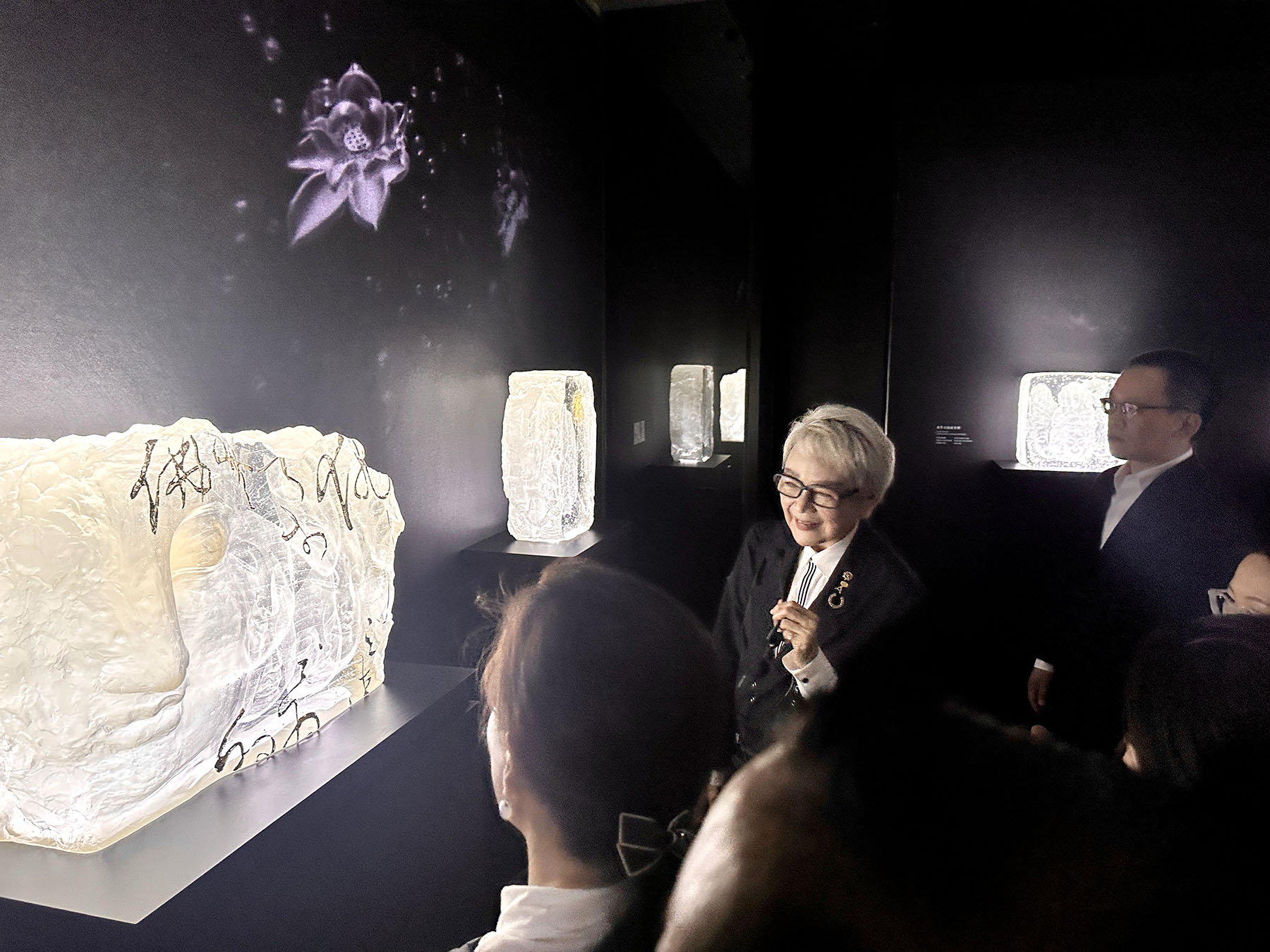
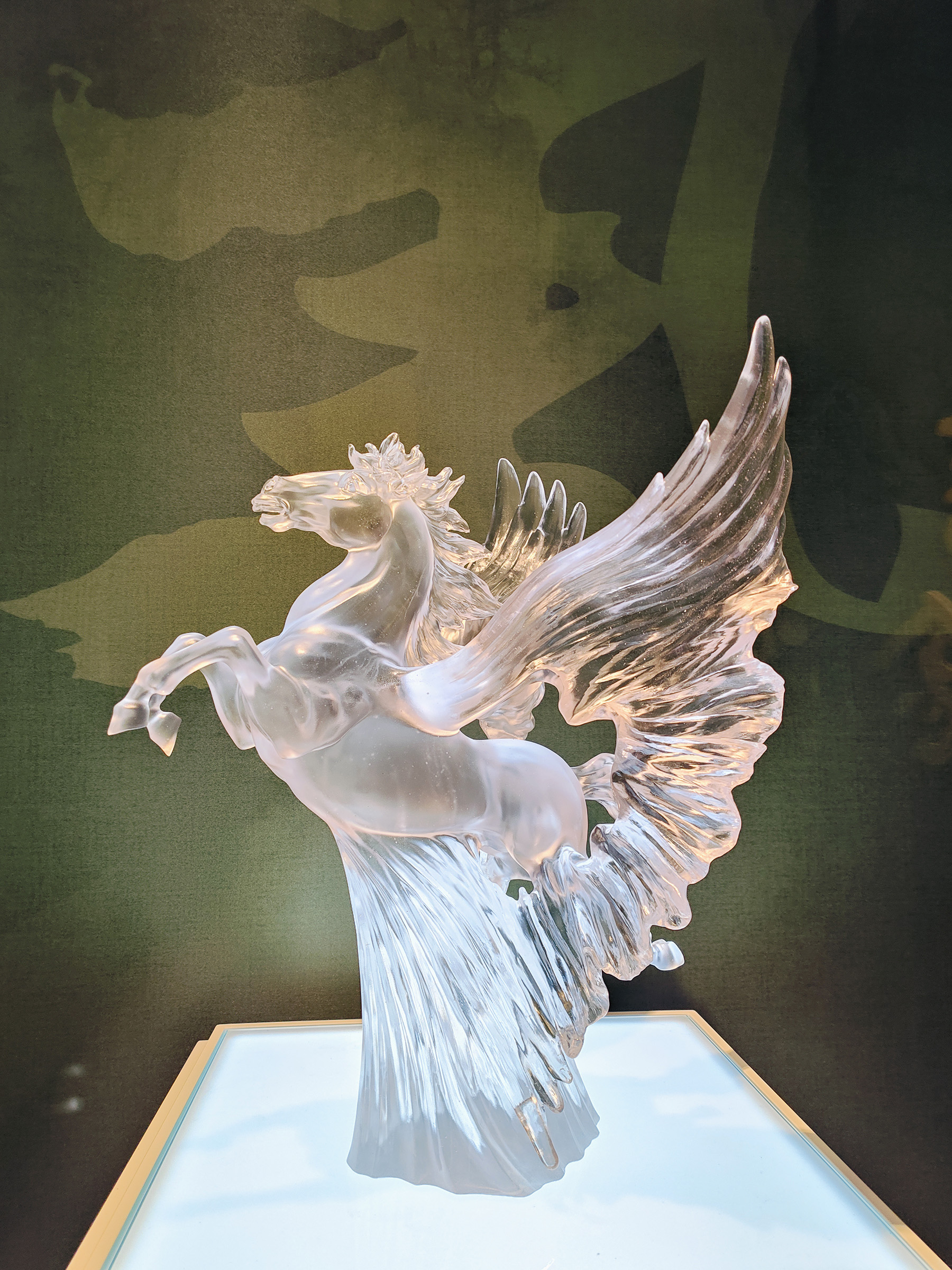
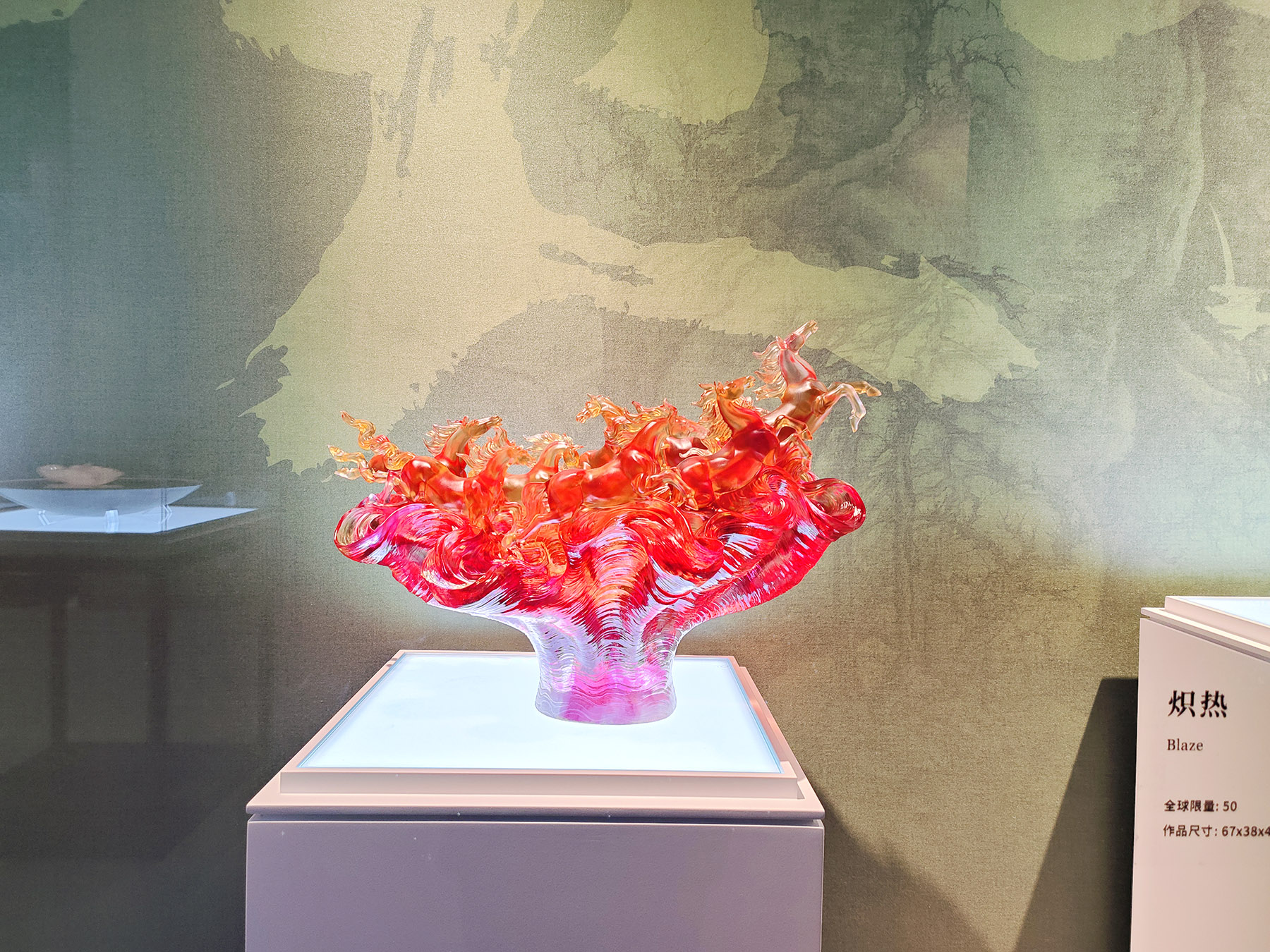
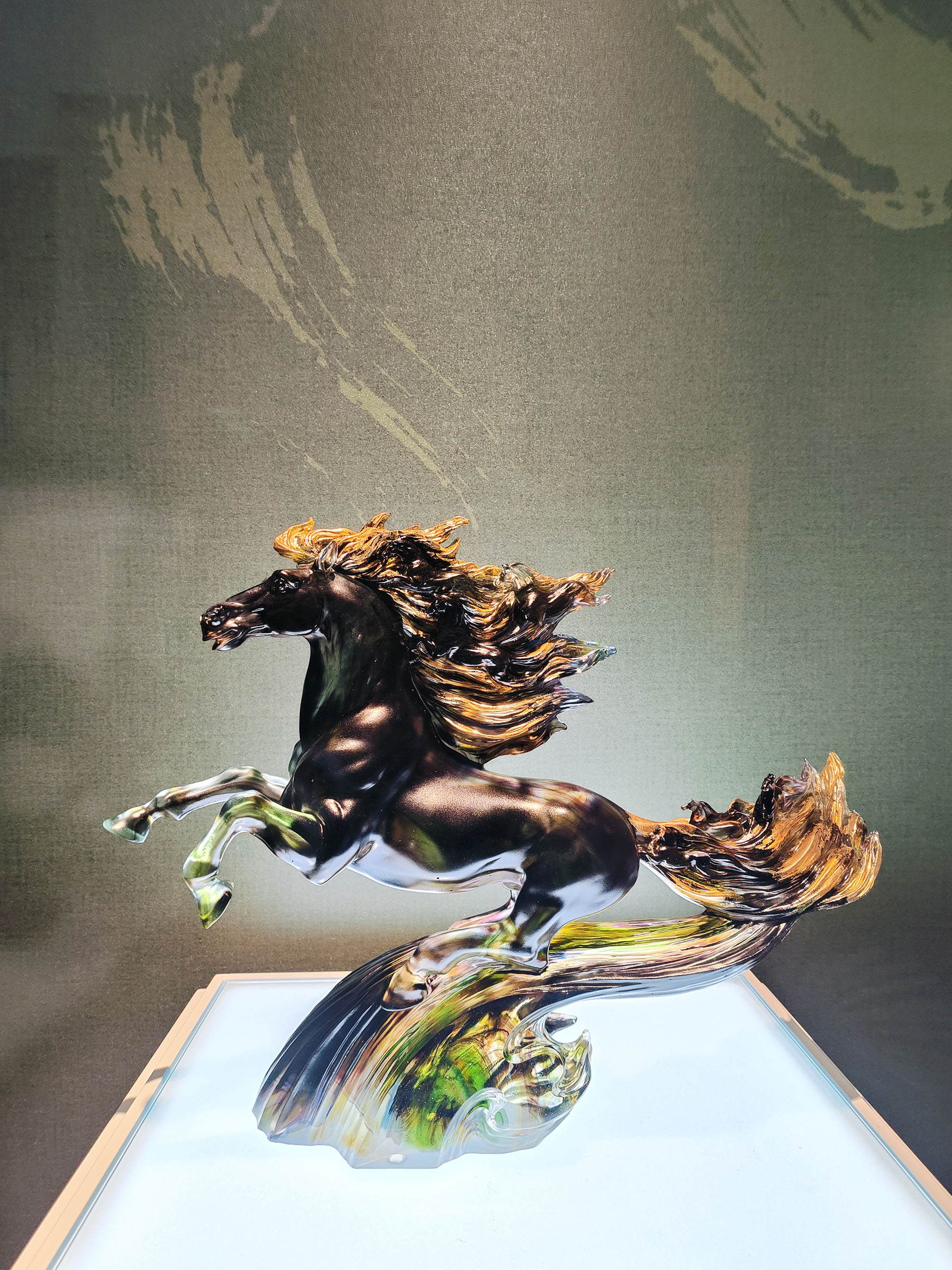
Before the display cases of glass sculptures, or liuli (colored glaze) in Chinese, visitors pause, their eyes tracing the crystalline forms of several horses. One horse shifts in gradient hues, fading from deep purple to translucent violet, while another hides a mystery within its mane, where eight tiny horses can be seen.
Each posture speaks of extraordinary grace, prompting visitors to wonder how glass, so brittle and unforgiving, could be shaped into such technically demanding and exquisitely detailed forms.
READ MORE: Glassblowing prodigy shines in the spotlight
"These works demand both artistic vision and technical mastery; neither can be lacking," says Loretta Hui-shan Yang, who made the glass works.
These glass horse sculptures, part of the Formation of Contemporary Chinese Liuli Art Language exhibition, are currently on display in Zibo, Shandong province. The exhibition runs through Aug 30.
"Each piece crystallizes her understanding of light, her sensitivity to color, and irreplaceable warmth toward the handmade," says Sun Yunyi, a local master in producing colored glass.
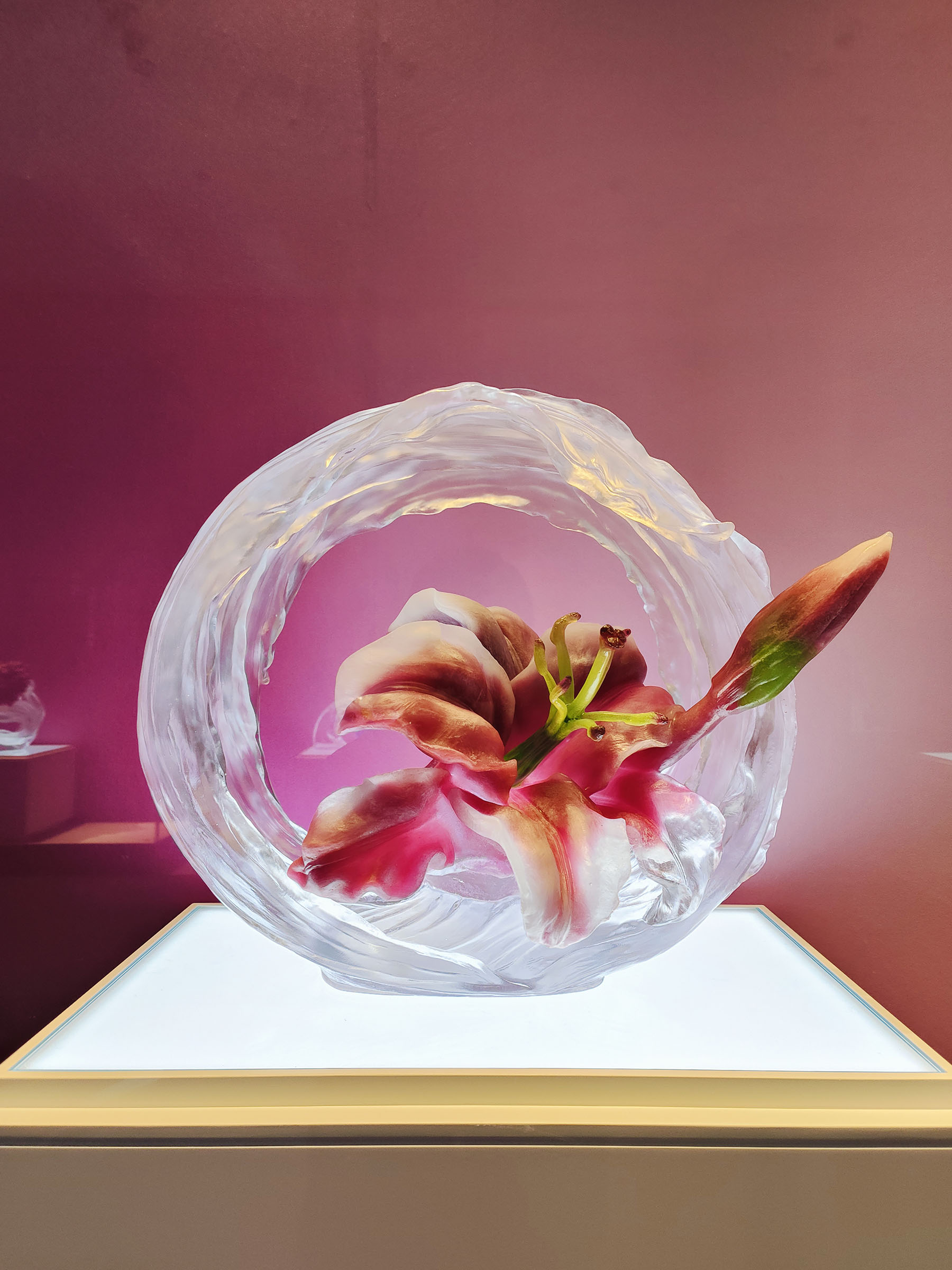
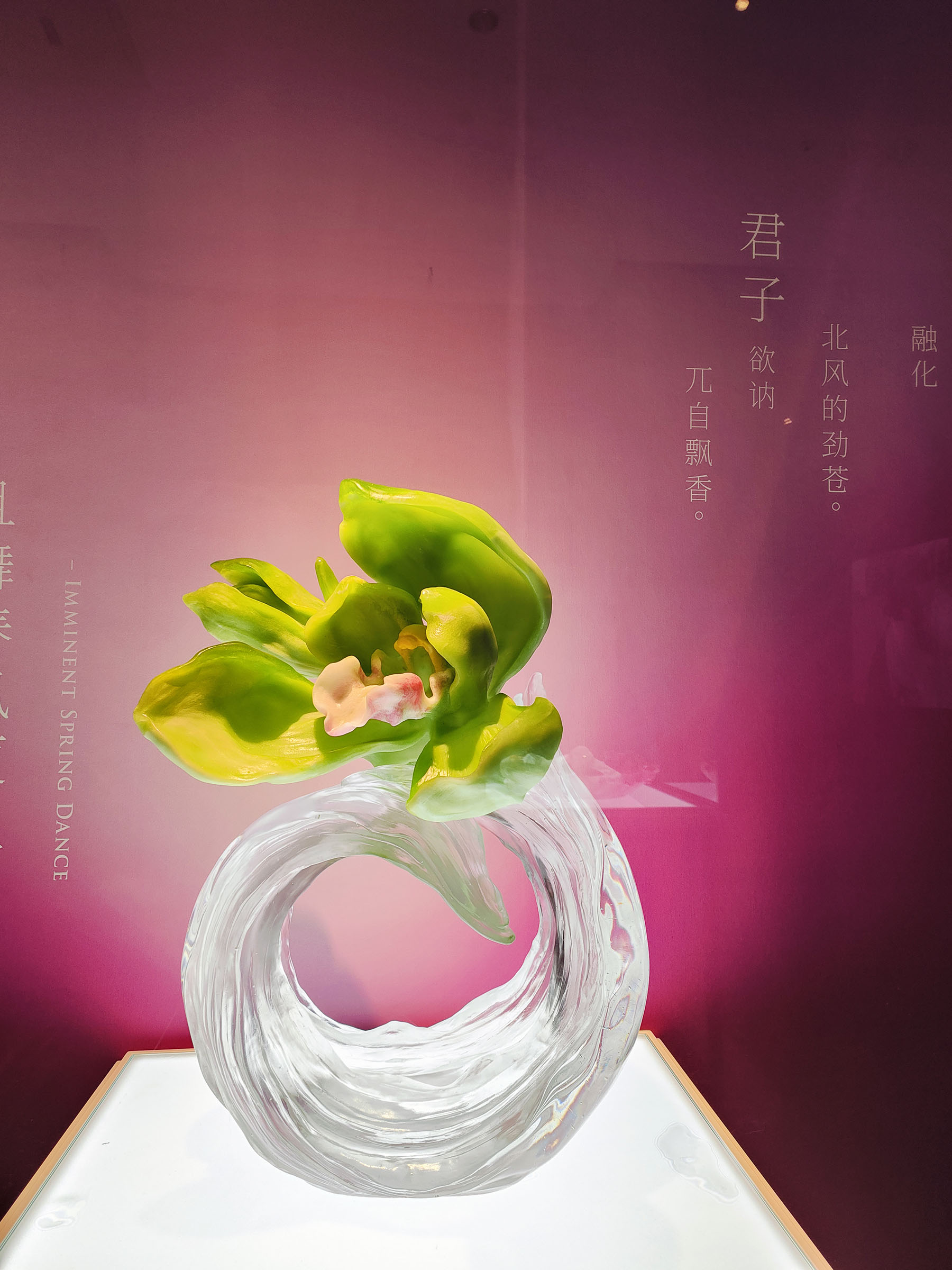
The exhibition presents nearly four decades of glass art created by Yang and her late husband Chang Yi, and explores how glass, once regarded as a traditional craft medium, has gradually transformed into a contemporary artistic language rich in philosophical depth and cultural significance.
The origin of this transformation lies in the lost-wax casting method, a thousand-year-old technique.
In the 1980s, Yang and Chang, both from Taiwan, were major figures in Chinese-language cinema. Yang won the Golden Horse Award for Best Actress twice, while Chang took home the Golden Horse for Best Director.
In 1987, at the height of their careers, the two made a resolute decision to leave filmmaking behind and devote themselves to glass art.
"After 12 years and more than 120 films, a question lingered at the back of our minds: would any of this effort endure?" she says.
That question became the starting point for their journey into glass.
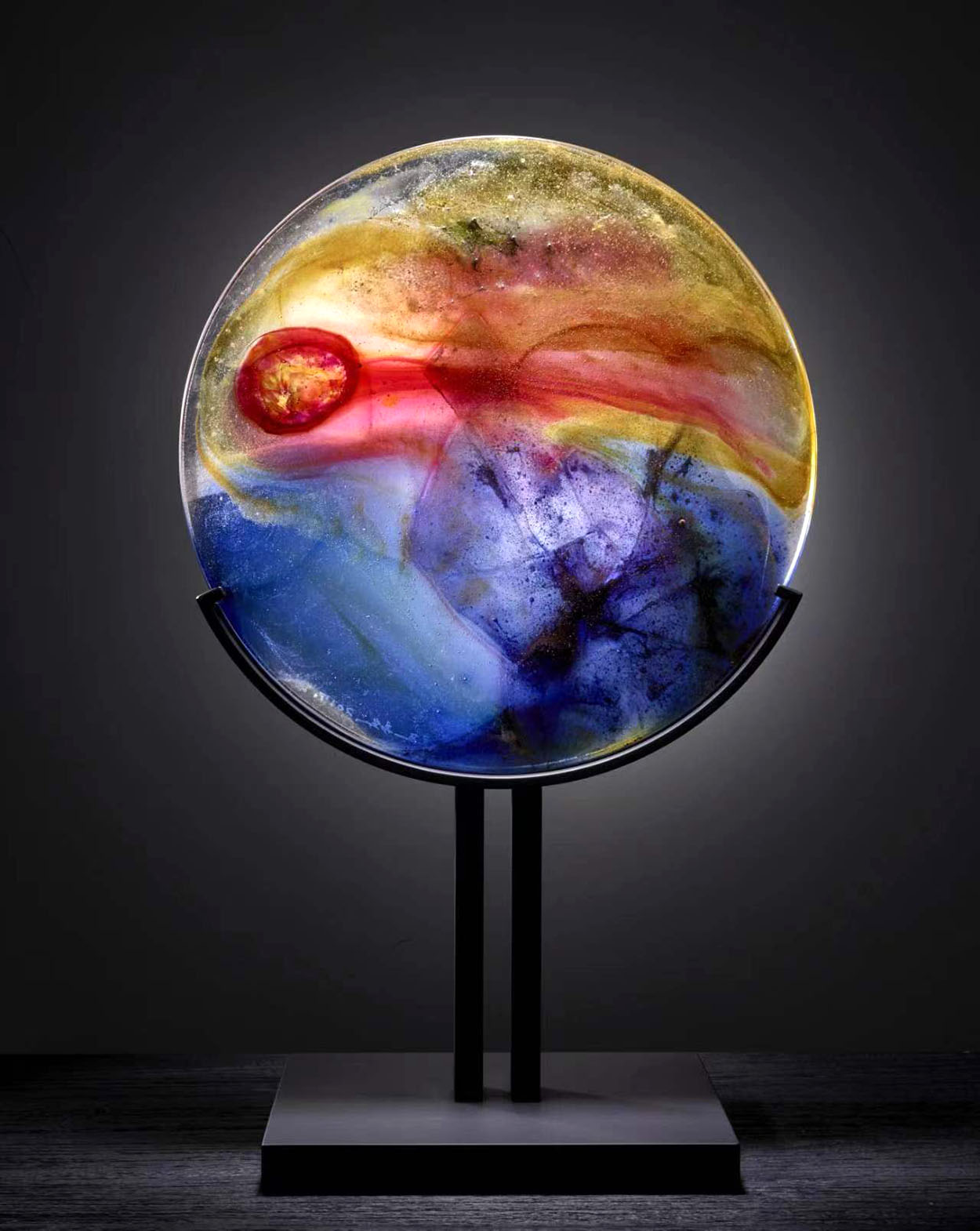
In the early years, they identified the lost-wax casting method as their core technique. At first, they believed it was a French specialty. Then, through exchanges with foreign scholars, they learned with astonishment that this very technique had been mastered by Chinese artisans over 2,000 years ago during the Han Dynasty (206 BC-AD 220).
"An ear cup made of liuli unearthed from a Western Han Dynasty (206 BC-AD 24) tomb is the earliest known example of the lost-wax casting method in China. Unfortunately, few records on the ancient technique exist," she says.
"The process involves more than 10 stages. Any mistake at any stage will cause the piece to crack or develop irregular bubbles and impurities," Yang says.
Yang and her team started without any technical manuals or process documentation. Every step, from raw material ratios and temperature control to mold-making, required trial and error.
"Fail, come back, experiment again," she says.
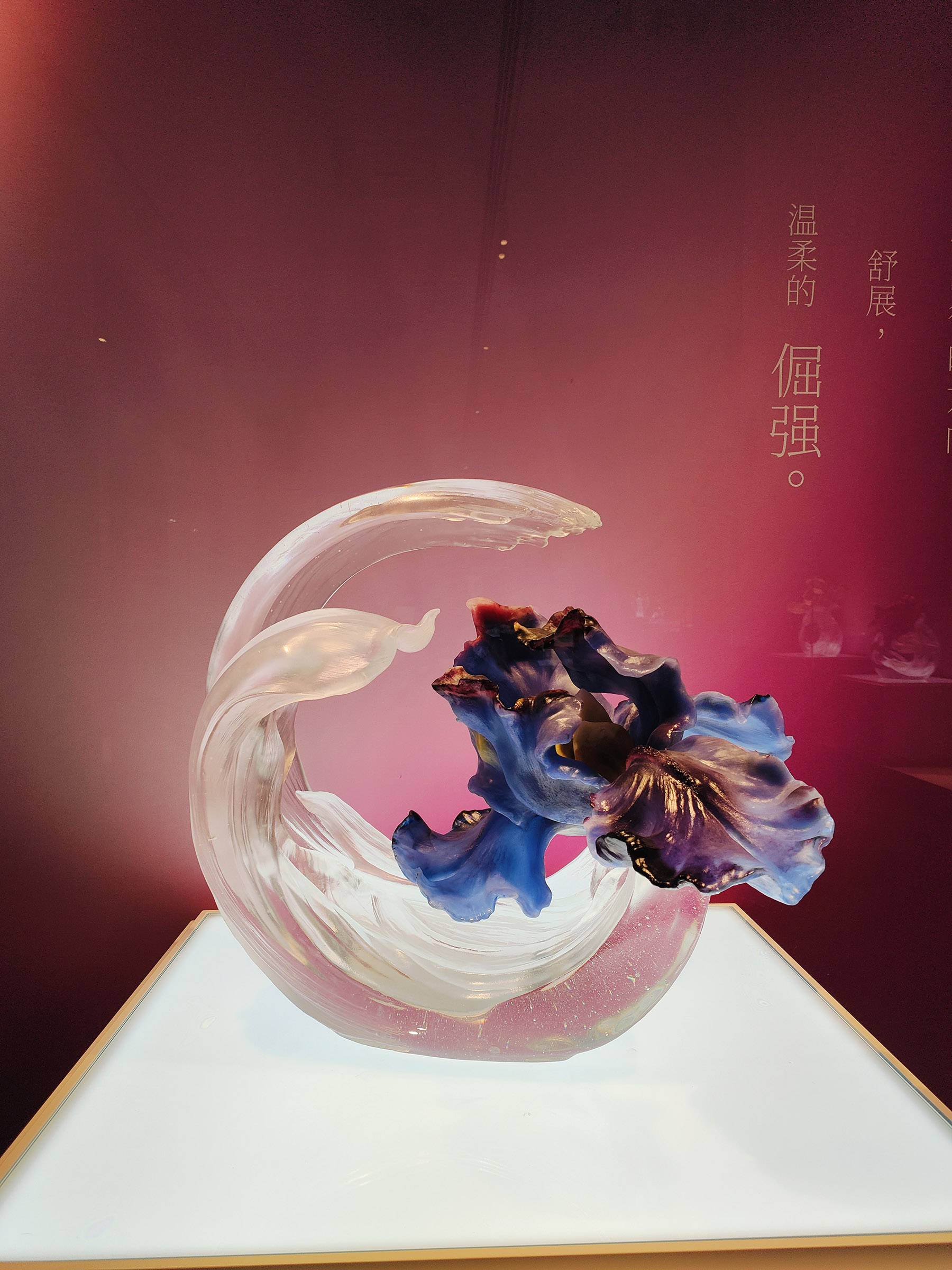
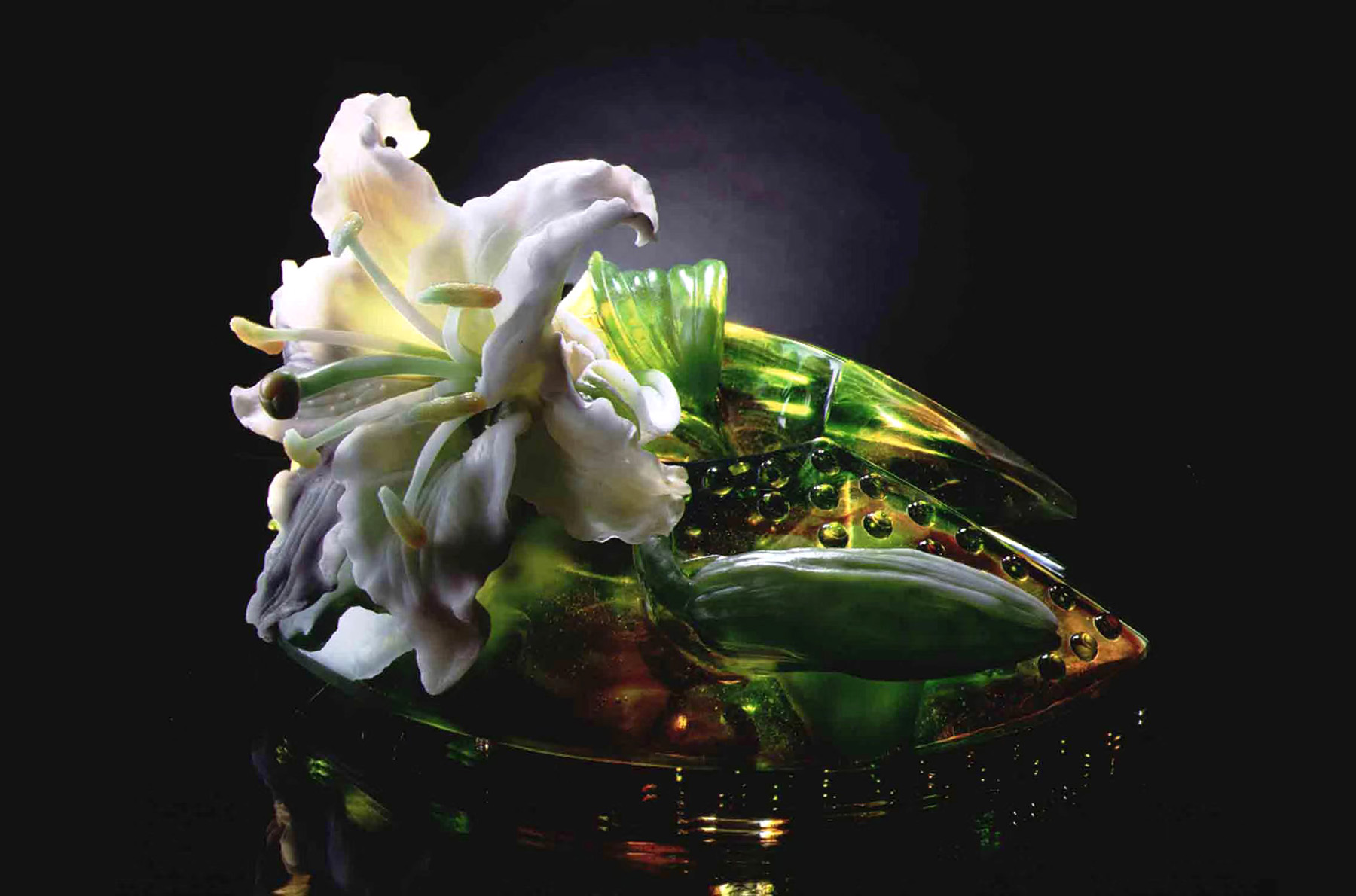
Yang burned through $2.36 million with thousands of failed pieces piling up. "The technology was completely new to us. Of course, there would be difficulties," Yang says. "But if people elsewhere in the world could do it, if our own ancestors once mastered it, then it wasn't impossible. I just hadn't found the way yet."
Three and a half years later, they uncovered the lost-wax casting technique. "It was not merely a technical revival but an opening for new possibilities for Chinese liuli art within the contemporary art landscape," says Yang.
"The ancient technique is like we have found the cultural root. Everything starts from here," she says.
Recovering the technique paved the way for the first step.
"What do we use this craft for? What do we want to express? That's the real question," she says.
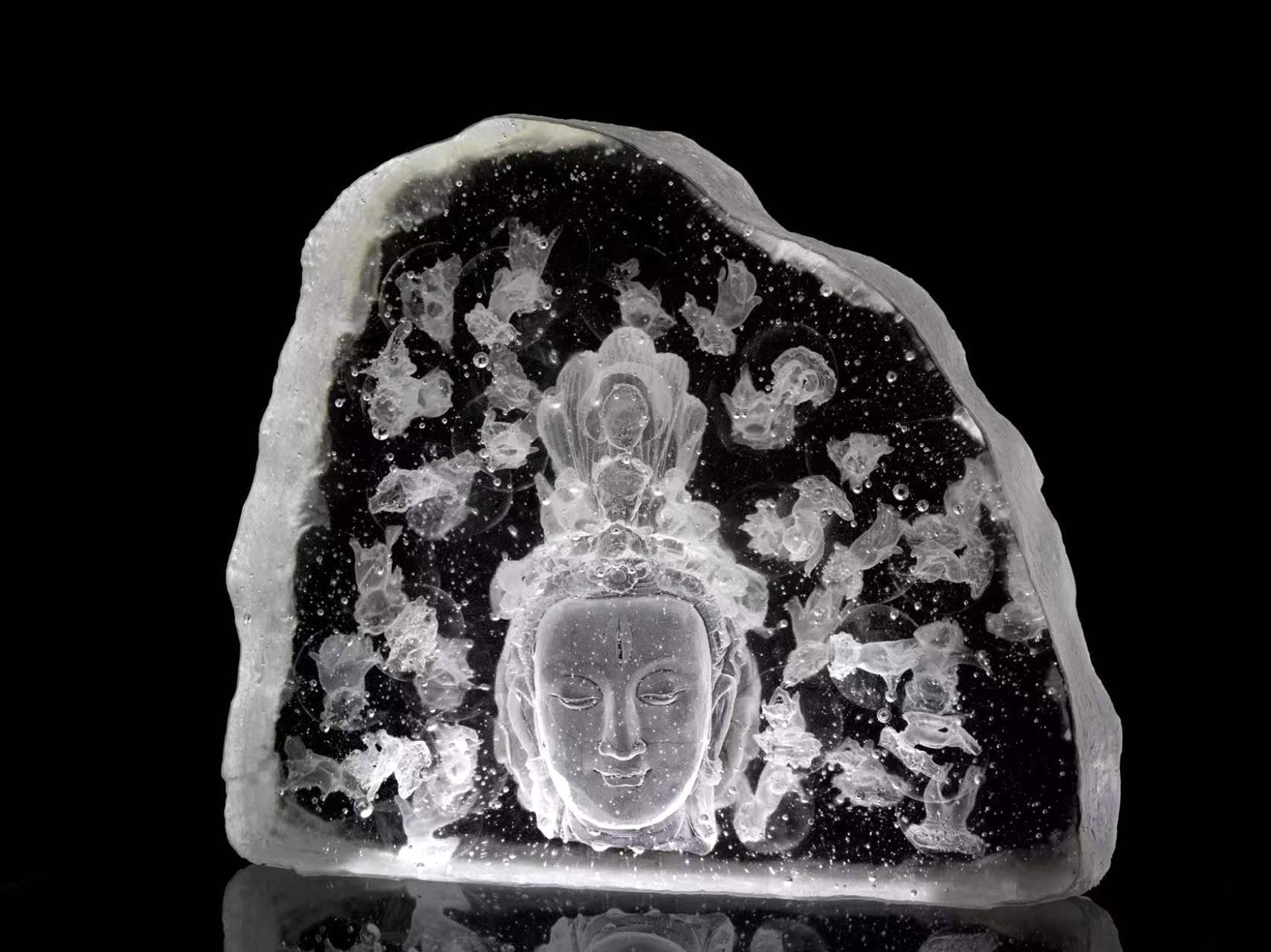
Over the next three decades, she and Chang continued to create glassworks and exhibited in countries including France, the United States and the United Kingdom.
"Every time I'm abroad, seeing people accept my work, pay attention to it, or care about it, I feel such joy because that means I've shared our culture once more," Yang says.
Her works often contain bubbles, which some critics have questioned. But Yang sees bubbles not as flaws, but as the very language of glass' life.
"Bubbles are life's breath," she says. "The Diamond Sutra says that all conditioned phenomena are like dreams, illusions, bubbles, and shadows. Aren't those bubbles exactly that?"
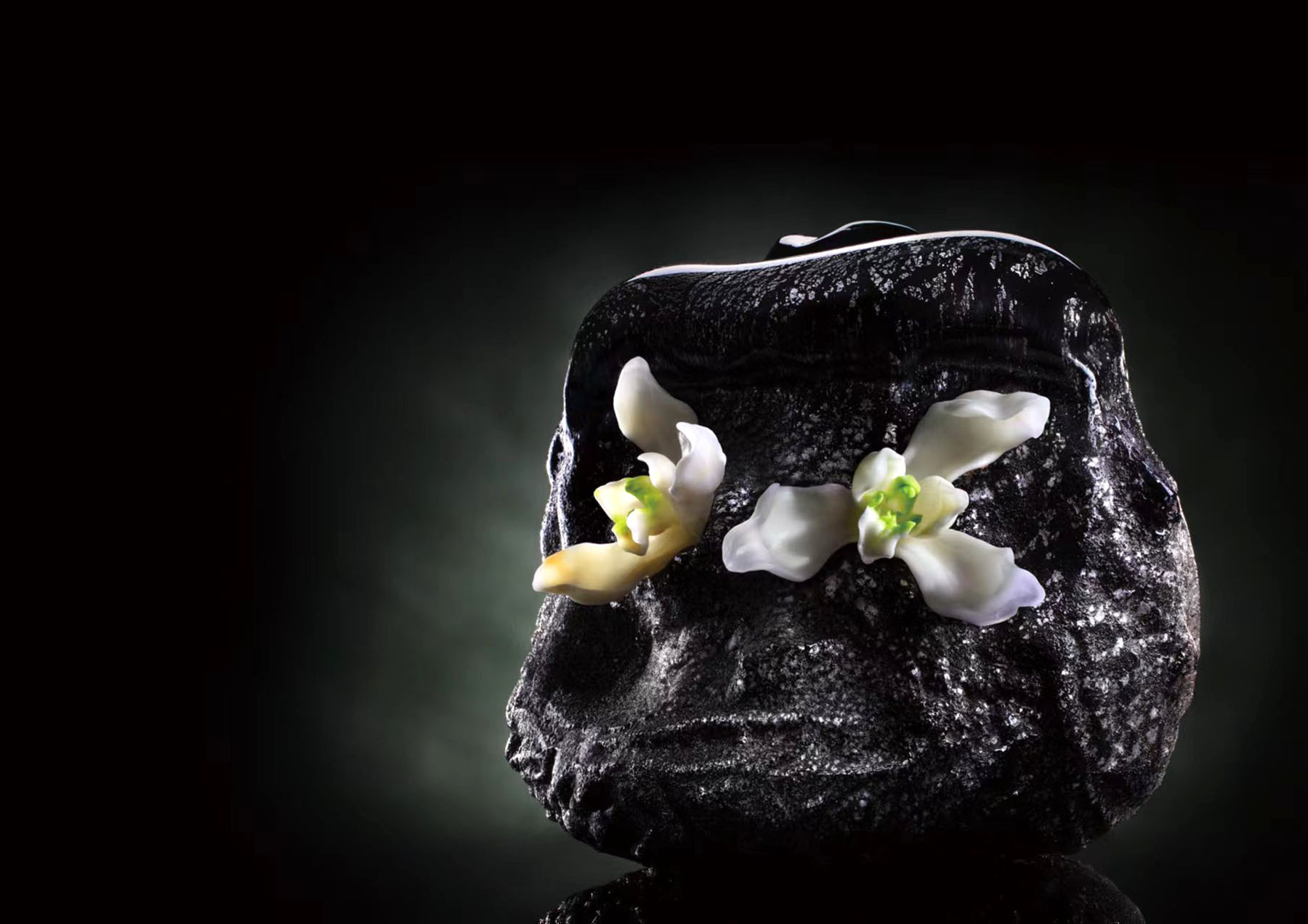
This very quality, she believes, makes glass the most fitting medium for expressing Eastern philosophy.
"Liuli is not a tech product where if it's good quality, cheap and functional, the job is done. Culture doesn't work that way. Culture requires others to understand it, to like it, and to respect it," she says.
ALSO READ: The art of blowing beautiful bubbles
"If international audiences see these works, understand them, and love them, then that means your culture has been transmitted."
Yang has visited several glass producers in Zibo, one of the most important historical centers for Chinese ceramics and glassworks, expecting to find new inspirations for her own works.
"Holding this exhibition in Zibo with such a deep craft tradition symbolizes contemporary liuli art's reunion with history and culture," she says.
"Here, people look at liuli not just with appreciation, but with understanding. It feels like coming home."
Sun Qi contributed to this story.
Contact the writer at zhaoruixue@chinadaily.com.cn
