

Nation's leading development of electric vehicles proves crucial to foreign marques
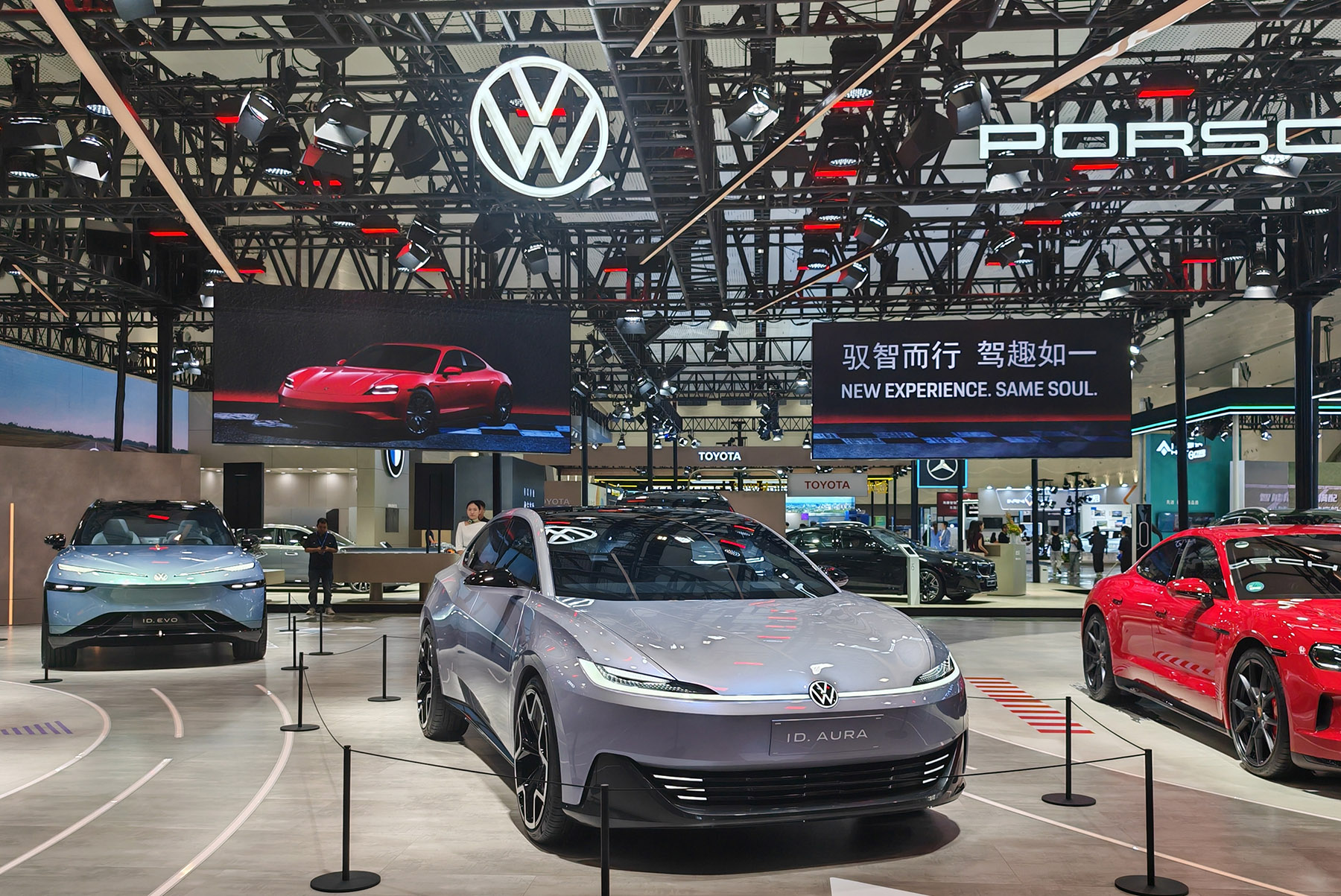
Foreign carmakers are shifting more vehicle development, technology cooperation and product planning to China as competition in the country's auto market centers on electrification, driving assistance and faster product cycles.
Oliver Zipse, chairman of the board of management at BMW, said in February that China and its innovation potential cannot be ignored, reflecting how important the country has become to global automakers' future growth.
The pressure behind that shift is becoming more visible. Data from the China Passenger Car Association showed that Volkswagen Group's joint ventures with FAW Group and SAIC Motor held a combined 10.9 percent share of China's retail passenger vehicle market in 2025, down from 12.2 percent in 2024. Meanwhile, Geely's share rose to 11 percent and BYD led with 14.7 percent. In the first two months of 2026, Volkswagen's share recovered to 13.9 percent, narrowly ahead of Geely's 13.8 percent.
READ MORE: German firms keen on expanding in China
Product rollout is also accelerating. Global carmakers typically need five to seven years to develop a new vehicle, while China's leading domestic new energy vehicle makers can bring a new car to market in as little as a year or 18 months. Software updates are also rolled out far more frequently.
Oliver Blume, chairman of the board of management at Volkswagen Group, said China's car market is characterized by more than 150 competitors and strong innovation dynamics, and that German carmakers can learn from the country's disciplined planning and willingness to execute.
One result is that foreign brands are moving research and development closer to the Chinese market. Volkswagen plans to have most of the vehicles it offers in China built on its China Electronic Architecture by 2030. The company said the locally developed electric architecture can improve development efficiency by 30 percent and reduce costs by 40 percent compared with the MEB, Volkswagen's modular electric vehicle platform.
At its hub in Hefei, Anhui province, the program involves about 850 engineers, most of them Chinese. Volkswagen has said the initiative is part of its "In China, for China" strategy and is intended to shorten both development and decision-making cycles.
Audi has made a similar point. Audi CEO Gernot Doellner said the traditional model of engineering cars in Germany and then selling them in China no longer works, and that future development must be centered on Chinese consumers and the nation's ecosystem.
Foreign carmakers are also deepening cooperation with Chinese technology companies and suppliers. Mercedes-Benz said a driver assistance system co-developed with Momenta will be fitted to nine upcoming models in 2026.
The company said it is using its China research and development operations to support global innovation and plans to expand cooperation with Chinese technology firms.
Ola Kaellenius, chairman of the board of management of Mercedes-Benz, said at the China Development Forum in Beijing in March that China's innovation landscape is highly dynamic and Mercedes-Benz will continue increasing investment in new products while deepening partnerships with technology companies.
Audi is also working with CATL and Huawei as it seeks to combine German expertise in chassis, safety and body engineering with China's advantages in batteries, connectivity and digital ecosystems.
BMW is following a similar path. For the China-made Neue Klasse iX3 SUV, battery cells are supplied by CATL, the driver-assistance system is being co-developed with Momenta, and the large language model used in the BMW Intelligent Personal Assistant is based on a long-standing partnership with Alibaba.
Japanese brands are making similar adjustments. Dongfeng Nissan launched the N7 sedan in 2025. It is the first China-developed electric vehicle, as part of a broader push to accelerate research and development and electrification in the country.
Nissan said Chinese teams had been empowered and had reduced product development cycles to within 24 months while maintaining the brand's safety and quality standards. The company added that future models developed and produced in China would be designed for both domestic and overseas markets.
ALSO READ: Chinese carmakers go local to grow globally
The strategy is now being reflected in product plans. Volkswagen has said it will launch more than 20 battery electric and plug-in hybrid vehicles in China in 2026 and bring a total of 50 new energy vehicles to the market there by 2030. BMW, meanwhile, is banking on its Neue Klasse vehicles to stabilize its China business and return to growth after sales in the market fell 12.5 percent in 2025.
BMW has said the China-made Neue Klasse iX3 will make its global debut at the Beijing auto show in April 2026. It will go on sale this year, with a China-specific version of the i3 sedan to follow in early 2027.
Mercedes-Benz has said it plans to launch more than two dozen new energy vehicles over the next 24 to 30 months while continuing to invest in research and development, new models, its production network and partnerships in China.
Contact the writers at wangyuchen@chinadaily.com.cn
