

Upgrade to help convert inbound tourism boom into retail growth
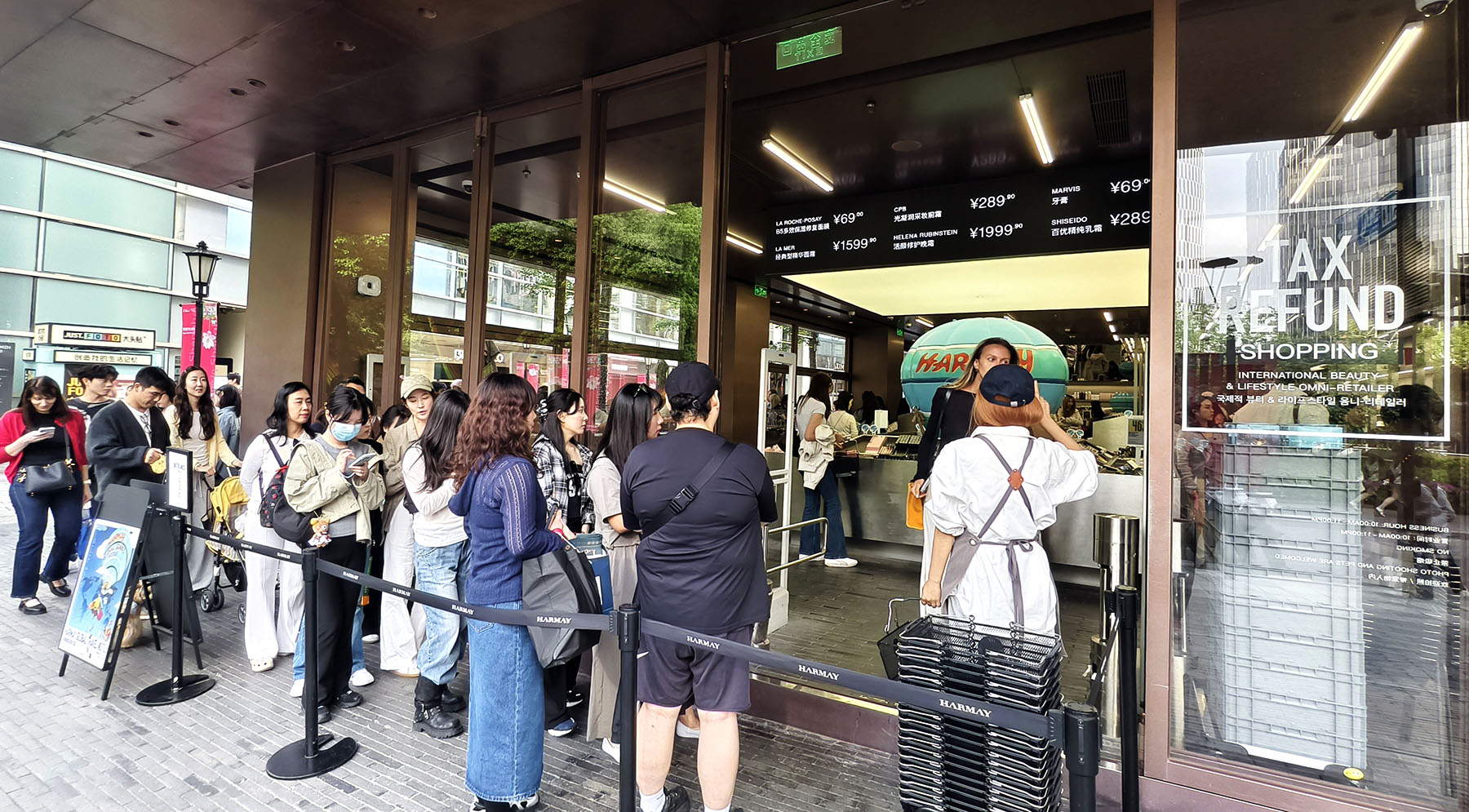
China has rolled out an upgraded nationwide departure tax refund policy aimed at making shopping easier for foreign visitors and converting rising inbound tourism into a new driver of domestic consumption.
The measures, jointly issued by the Ministry of Commerce, the Ministry of Finance and the State Taxation Administration of China — alongside three other department bodies — represent a "2.0 version" of reforms first introduced in 2025 to improve China's departure tax refund system.
Officials say the latest upgrade focuses on expanding refund store coverage, reducing processing times and digitalizing procedures to improve the shopping experience for foreign visitors.
READ MORE: China makes tax refunds easier for foreign visitors
China's earlier reform package, released in April 2025, had already driven rapid growth in the program. National tax-refund sales nearly doubled in 2025 from a year earlier, while the number of foreign travelers claiming refunds rose to about 270,000, roughly three times the 2024 level.
"The departure tax refund system has entered a fast track," said Sheng Qiuping, vice-minister of commerce, at a conference on Monday.
Sheng said that the earlier measures, which lowered the minimum purchase threshold for refunds, raised the cash refund ceiling and expanded the number of participating retailers, combined with visa-free entry policies and improved payment services to boost inbound consumption.
The number of tax-refund stores nationwide has reached about 14,000, roughly four times the level at end-2024, Sheng added.
A major highlight of the upgraded policy is further optimization of the "buy and refund immediately" service, which allows overseas shoppers to receive their tax rebates directly at participating stores instead of waiting until departure.
Authorities plan to enable cross-regional recognition of the service, allowing travelers who obtain instant refunds at the point of purchase to complete verifications at a different departure port. The allowable departure period will also be standardized nationwide at 28 days.
Xie Wen, director-general of the goods and services tax department at the State Taxation Administration, said the program has already significantly boosted spending.
"After tourists receive tax refunds on the spot, it often stimulates further purchases," Xie said, adding that the number of users of the instant refund service surged 12.9-fold over the past year, while related sales and refund amounts rose more than ninefold.
The upgraded policy will also introduce a random inspection system for smaller claims. Starting July 1, purchases below 10,000 yuan ($1,380) will undergo spot checks instead of mandatory physical verifications — a move expected to shorten waiting times at departure ports.
Authorities will also push forward paperless processing so that customs and refund agencies can verify refund applications and invoices online.
Experts say the policy marks a shift from merely simplifying procedures to strengthening the broader role of inbound consumption in China's economy.
"The core of the 2.0 reform is to move from 'process simplification' to 'value creation'," said Tian Lihui, a finance professor at Nankai University.
The reforms can reduce administrative friction while turning the tax-refund system into a platform for showcasing Chinese brands and culture to overseas consumers, Tian said.
The policy comes as inbound tourism to China continues to recover following a series of visa facilitation measures.
China has introduced unilateral visa-free policies for 50 countries and a 240-hour transit visa-free arrangement covering 55 countries in recent years.
ALSO READ: 'Shopping in China' creating opportunities for multinational firms
In the first quarter, foreign nationals made roughly 8.32 million visa-free entries into China, making up 77.9 percent of all inbound foreign trips and representing an increase of 29.3 percent year-on-year, official data revealed.
Yang Mu, head of the department of market operation and consumption promotion at the Ministry of Commerce, said the surge in visitor numbers is changing consumption patterns.
"More foreign visitors now come to China not only for sightseeing, but also to experience local lifestyles," Yang said, adding that deeper cultural experiences and diversified consumption scenarios are becoming a growing part of inbound travel.
Officials say the upgraded tax-refund policy — together with improved payment services and expanded international flight connections — is expected to help convert the rising flow of visitors into sustained retail growth and strengthen the country's "Shopping in China" campaign aimed at attracting foreign consumers.
Contact the writers at lijing2009@chinadaily.com.cn
