

From mollusk project to innovative modular reactor, island province strides into the future
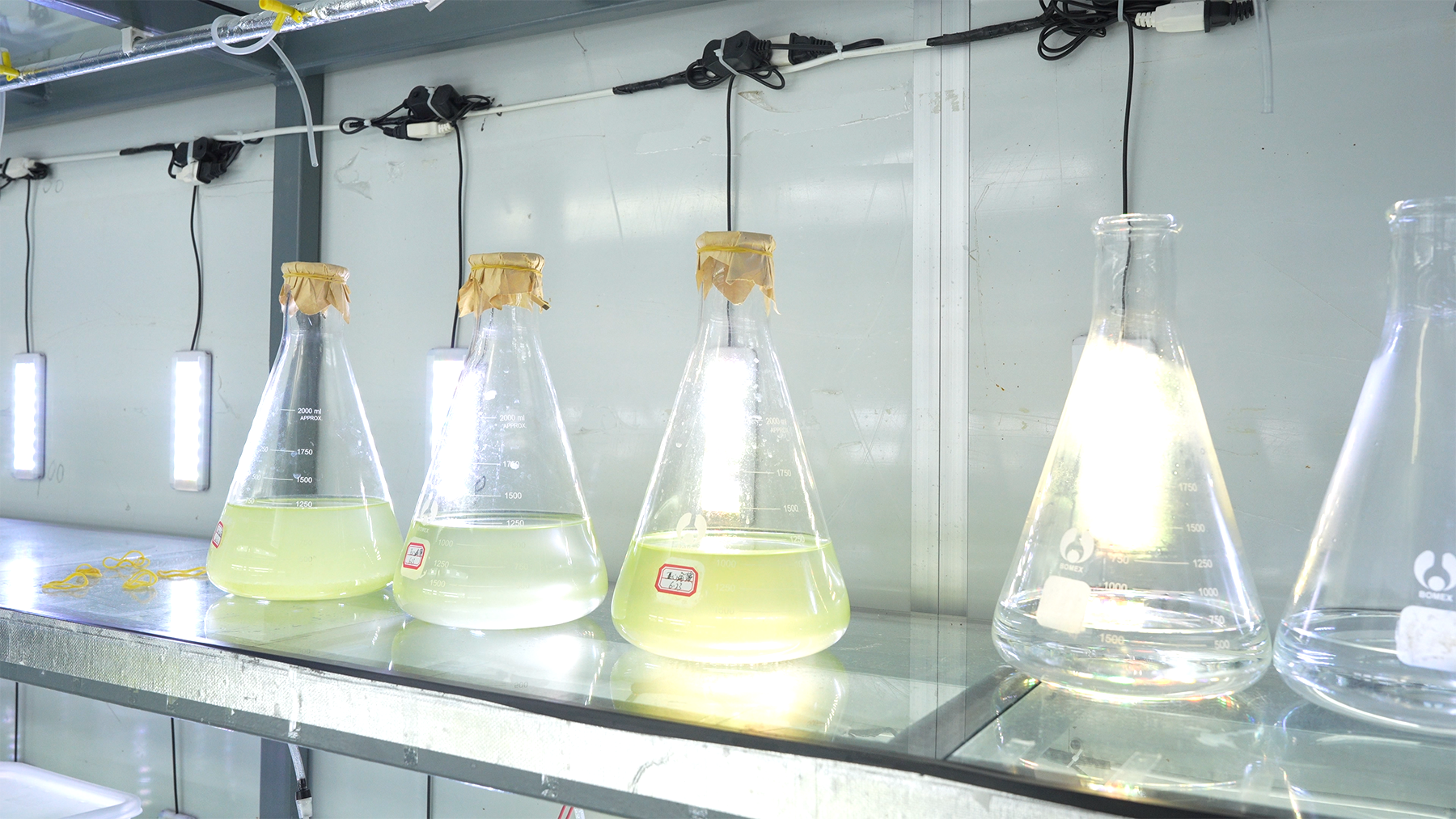
On a bright winter morning, veteran pearl farmer He Hanyong gently pried open a silver-lipped oyster. Inside, nestled against the iridescent mother-of-pearl, lay something extraordinary — not just an organic gem, but a symbol of an unlikely marriage between ecology and industry.
"Look," he whispered, carefully extracting a perfectly formed pearl that glistened under the tropical sun on a shoreline of Hainan province. "Eighteen millimeters. The water here gives them exceptional luster," He said of the pearl's size and shine.
The location of this cluster of pearl shells is anything but ordinary. It is near the discharge outlet of the Hainan Changjiang Nuclear Power Base — China's southernmost nuclear facility — where nationally protected silver-lipped pearl oysters are now thriving in waters warmed by the plant's cooling systems.
It is an unexpected sight: one of the nation's most advanced technological installations playing host to one of its most delicate traditional maritime industries.
"This area is rich in algae," said He, who is also head of the Hainan Qianzumeiji Pearl project in the Changjiang Li autonomous county, Hainan, gesturing at the clear waters.
"Silver-lipped pearl oysters need clean water with abundant nutrition. The thermal discharge zone creates perfect conditions — stable temperature, clean water, plenty of food. Just like people, they need the right environment to thrive," He added.
Pleasant surprise
As warm water is emitted from the nuclear facility, it nourishes a thriving ecosystem. Against all expectations, the waters near the plant became a sanctuary for a pearl species that had nearly vanished from the Chinese mainland's coastal waters due to industrial and aquaculture development.
"It started almost by accident," said Xu Chunsong, director of the environmental emergency department at the Hainan Nuclear Power Co. "We wanted to introduce species that could help purify water by reducing algae. We chose the silver-lipped pearl oyster. The results have been a pleasant surprise."
That understatement masks a remarkable achievement.
After more than two years of experimental cultivation, scientists and pearl farmers have not only mastered the technology of raising these sensitive mollusks in a nuclear facility's outflow waters but have created what might be a model for industrial-ecological coexistence nationwide.
The pearls themselves testify to the success of the experiment. The largest from the first phase reaches 18 millimeters in diameter, with nacre, or mother-of-pearl, so thick and the luster so brilliant that it rivals anything produced in traditional pearl farms.
"The water here nourishes them exceptionally well," said senior technical worker Chen Xian.
For the technicians who carefully extract the pearls from living oysters, the process is both science and art.
Chen demonstrated the procedure with practiced gentleness: allowing the oysters to awaken slowly in water and open naturally. "Patience is everything," he said, carefully probing for the pearl within. "We must respect the life that created this."
Yet inevitably, a question arises: Do pearls grown near a nuclear plant have radiation?
"The answer is definitely no," said Xu from the Hainan Nuclear Power Co.
"Our environmental monitoring team continuously tracks conditions around the plant, sampling both land and marine organisms for analysis. Radiation levels remain exactly the same as before the plant was built."
World-leading tech
This innovative project represents just one example of a broader transformation unfolding on the island.
After Hainan launched an island-wide special customs operation in December to position itself as a new frontier in China's further opening-up, projects like the nearby Linglong One nuclear reactor are capturing global attention.
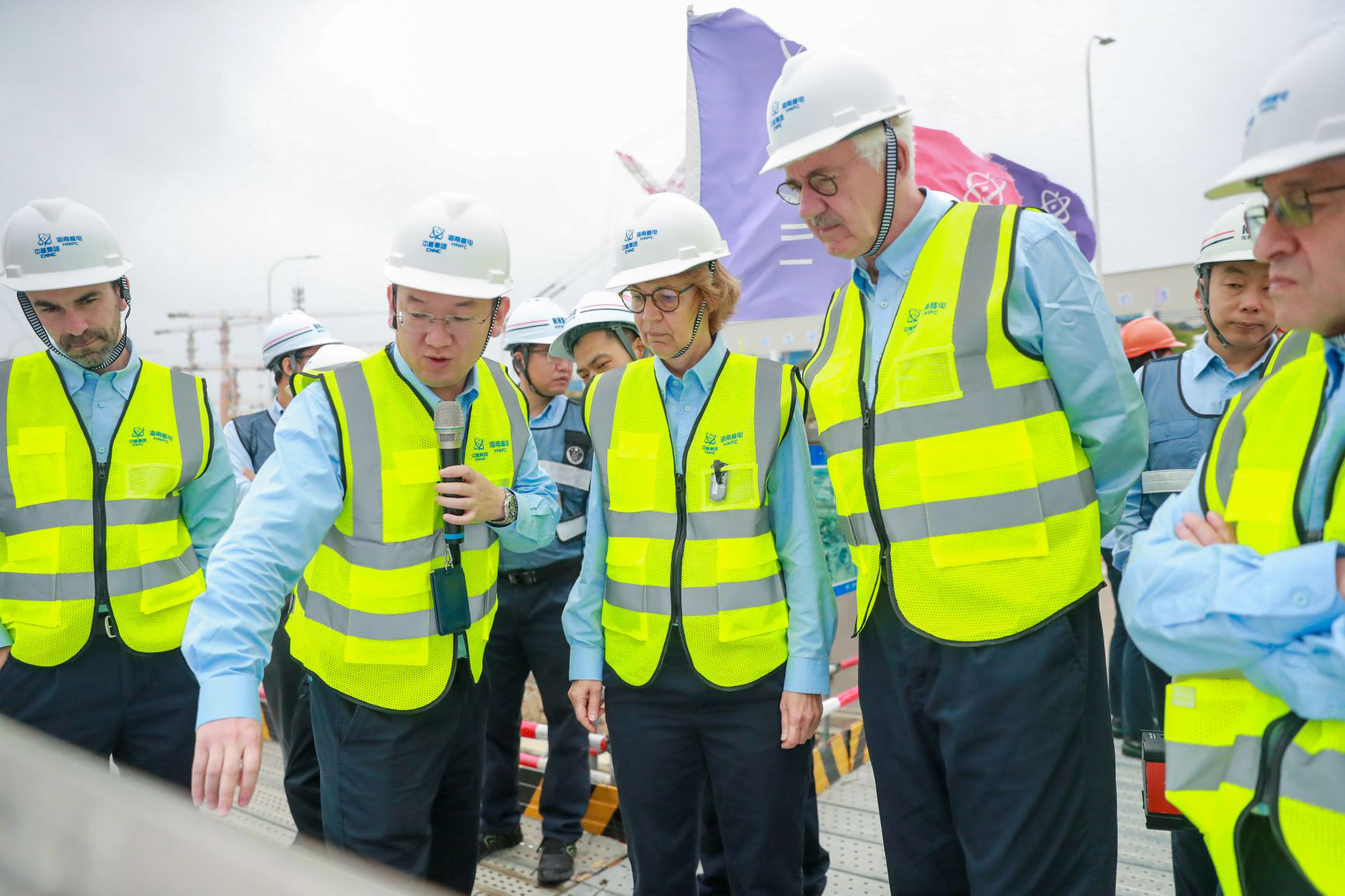
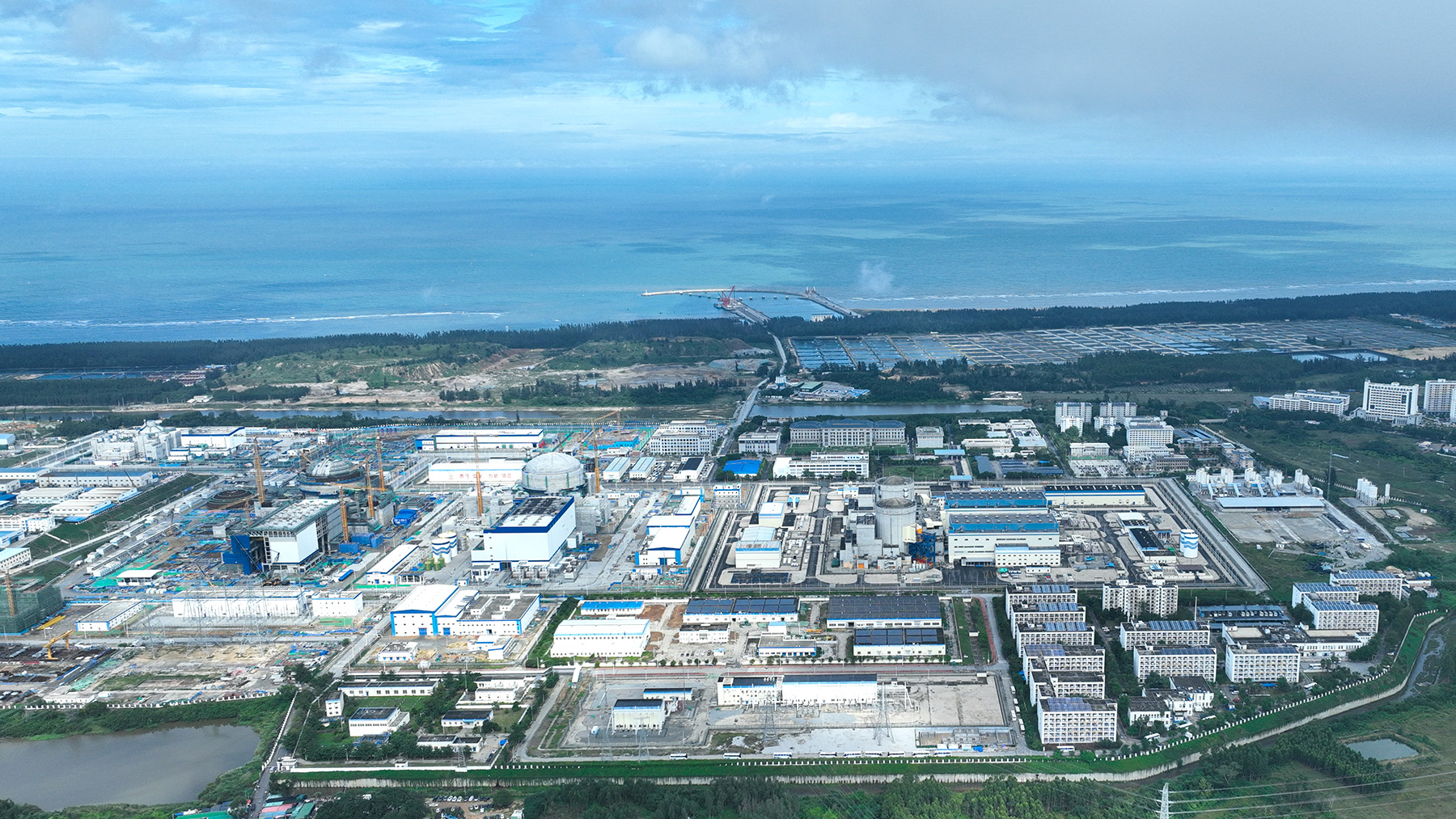
Just several kilometers from where the pearl farmers tend their oysters, the world's first onshore commercial small modular reactor, or SMR, rises against the tropical sky. Linglong One is nearing completion, with installation 90 percent complete and core equipment undergoing adjustments.
"We are in the final stage," said Wei Zhigang, chairman of the Hainan Nuclear Power Co. "To be a pioneer, you have to innovate — and that's never easy. Linglong One took more than a decade of development."
The numbers tell part of the story: upon completion, the reactor will generate 1 billion kilowatt-hours annually, sufficient to power 526,000 households while reducing carbon dioxide emissions by 880,000 metric tons — equivalent to planting 7.5 million trees.
But the true significance lies in what Linglong One represents. Designed by China National Nuclear Corp, or CNNC, with self-developed intellectual property, Linglong One is the first onshore commercial SMR to pass a safety review by the International Atomic Energy Agency.
"It's like the evolution from desktop computers to laptops," Wei said. "Traditional large reactors are like desktop computers with separate components. Linglong One is an all-in-one laptop — compact, convenient and safe. Achieving this integration required overcoming significant technical bottlenecks."
The reactor also represents China's transition from a nuclear technology follower to a leading innovator, a change in status that has drawn global attention.
More than 1,000 visitors from almost 90 countries and regions have traveled to Hainan to inspect the reactor.
They include Rafael Mariano Grossi, director general of the IAEA, and delegations from the French Nuclear Safety and Radiation Protection Authority and the Ghana Energy Commission. Each came seeking insight into the technology that may help shape the future of global energy.
"We believe Linglong One will create miracles — whether in construction or investment," Wei said.
CNNC's Song Danrong, chief designer of Linglong One, sees the reactor as the product of the long-term development and growth of China's nuclear industry.
"Built on more than 30 years of nuclear research, design, construction, and operational experience, Linglong One represents the maturation of China's nuclear capabilities," Song said.
"When operational, it will help the Hainan Changjiang Nuclear Power Base form a pattern we call 'two dragons soaring together' — with second-generation improved reactors, third-generation Hualong One units, and the small modular reactor Linglong One all operating side by side."
Linglong One plans to commence commercial operation this year.
Powering AI
By next year, nuclear energy is expected to account for more than 50 percent of Hainan's power mix, one of the highest proportions among regions in the world.
Just as important is the vision emerging for nuclear energy's role in powering the digital future. As artificial intelligence triggers unprecedented global demand for computing power, the ultimate constraint has become clear: the need for vast, stable electricity supplies.
Tech giants like Microsoft and Google are actively exploring small modular reactors to power AI data centers.
"We are seeing strong demand from major power users like computing centers," Wei said.
"One of the key advantages of SMRs is their flexible placement. We can deploy them right where computing power is needed, enabling close load-matching. The international focus on SMRs is precisely because they are seen as a crucial power source for future computing needs. The endpoint of computing power is electricity."
China is positioning itself at the forefront of this convergence. Wei's company is exploring building a nuclear-powered zero-carbon industrial park in Hainan's Changjiang, with the aim of creating a "nuclear energy plus computing power" pilot zone to help solve one of the most pressing challenges the world faces in applying AI.
The vision extends even further.
"SMRs can also be installed on ships in the future, creating movable power plants — true mobile power banks," Wei said. "They can go wherever needed, maximizing our ability to meet diverse client demands."

Future being written
The pearl cultivation project near a nuclear plant is just a glimpse of China's broader innovation landscape in ecological economy. It is not an isolated curiosity, but evidence that technology and nature — when properly integrated — can achieve more together than apart, experts said.
Innovations such as growing rubber on saline land, raising crabs in deserts and herding sheep under solar panels are increasingly common in places such as the Xinjiang Uygur and Ningxia Hui autonomous regions and Gansu and Qinghai provinces.
Wang Shancheng, head of the department of resource conservation and environmental protection at the National Development and Reform Commission, said China's green development has achieved remarkable milestones that have captured global attention. The country has vigorously fostered green industries while driving the green and low-carbon transformation of traditional industries.
ALSO READ: Hainan FTP stimulates investment and tourism
"The 15th Five-Year Plan (2026-30) period marks a critical phase in advancing high-quality economic and social development," Wang said.
"Facing new circumstances and tasks, it is essential to focus on achieving breakthroughs in four key areas: facilitating the green transformation of development models, advancing green technological innovation, strengthening policy mechanisms for low-carbon development, and enhancing international cooperation in green development."
Standing at the discharge outlet, and watching technicians carefully return oysters to the water after pearl extraction, one can witness the importance of the ecological initiatives. These mollusks, which nearly disappeared from Chinese mainland coastal waters, have found refuge in the most unexpected place. The nuclear plant that might have been their enemy became their savior.
For those familiar with China's ecological experiments, the future is already being written, with technology and nature working together.
Contact the writers at masi@chinadaily.com.cn
