

Global investors are returning to Chinese assets — increasingly through exchange-traded funds (ETFs) — in a shift that is reshaping the country’s capital markets and giving fresh momentum to Hong Kong’s entrenched status as a financial bridge.
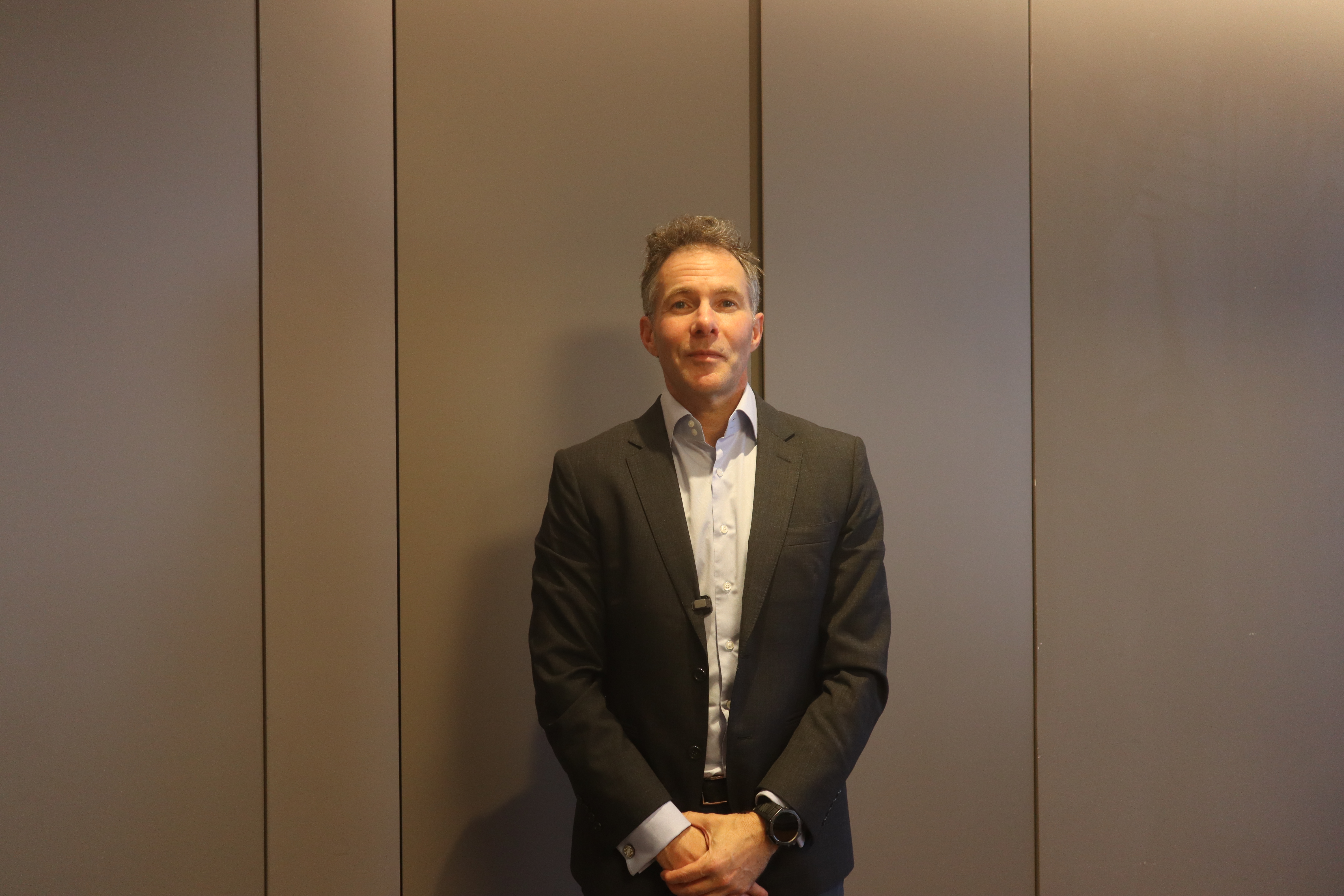
In an exclusive interview with China Daily on Friday, Nico Boulay, Hong Kong-based APAC head of sales at FTSE Russell, said he sees sustained macroeconomic uncertainty as prompting a broader rethink of portfolio strategy, bringing gold into renewed focus.
 In what Boulay described as “the most notable change seen in 2025”, China’s ETF market surged to about $850 billion in assets under management (AUM) last year, overtaking peers to become the largest in the Asia-Pacific region, driven by strong inflows of more than $150 billion.
ALSO READ: First gold ETF allowing physical gold redemption makes debut in HK
Such a “massive growth” also echoes the doubling of Hong Kong’s ETF market in assets last year. Central to that expansion is the ETF Connect mechanism, which integrates eligible ETFs listed on Chinese mainland and Hong Kong exchanges into the existing Stock Connect framework.
While southbound flows from mainland investors are a clearly visible driver of the surge in AUM and trading volumes, Boulay said the northbound side is “equally important”. Nearly 100 mainland ETFs were added to the program last year, expanding access for offshore investors seeking exposure to China’s domestic market, according to Boulay.
“There has been a lot more interest towards China’s markets from the international investment community, with investors looking at various ways to reallocate into the markets,” said Boulay. He highlighted strong investor appetite for technology - particularly artificial intelligence-related areas - in 2025, where the world’s second-largest economy has been at the forefront of evolution with several defining moments.
As the cross-border investment universe broadens, Boulay said Hong Kong’s role as a super-connector and major financial hub is being further reinforced.
READ MORE: SFC: Nation’s market supporting measures to be launched this year
The Chinese mainland and Hong Kong launched their mutual market access program over 10 years ago to allow investors on both sides to trade designated stocks in each other’s markets. The scope of cross-border investment channels has gradually broadened over the years. It started off with the Shanghai-Hong Kong Stock Connect in 2014, which was followed two years later by the Shenzhen leg of the mechanism. Bond Connect arrived in 2017 and the Wealth Management Connect scheme in 2021.
ETFs were added as eligible securities under the Stock Connect mechanism in 2022, with further expansion - including to real estate investment trusts (REITs) - under discussion.
Beside the ETF Connect, Boulay pointed to another contributing factor to the city’s growing ETF market – the transition to more passive investment within Hong Kong’s Mandatory Provident Fund (MPF) retirement scheme, as lower costs are encouraging more capital allocation to index-tracking products.
A revival in the initial public offering market, where Hong Kong regained its coveted crown as the world’s top fundraising venue in 2025 and could be on track for another bumper year of listings this year, also helps boost the local ETF market, he said.
Amid global uncertainties, gold exchange-traded funds listed in Asia attracted $7.1 billion in net inflows in January. According to Boulay, there are clear reasons why the precious metal has come under a growing spotlight.
For much of the past decade, geopolitical shocks have only had a fleeting impact on markets. Selloffs triggered by crises have tended to be sharper in emerging markets than in the United States, but often fade within weeks, limiting their influence on how investors allocate long-term capital, he said.
That pattern begins to break down when uncertainty lingers. In a world where risks appear persistent rather than episodic, the traditional balance between equities and bonds is proving less reliable, and investors are rethinking the foundations of portfolio construction, he added.
“Gold is emerging as a strong thematic narrative, both as a diversifier and for its role in multi-asset portfolios outcomes,” Boulay said. “Actions by central banks, including the People’s Bank of China, have supported the actual demand for physical gold.”
Unlike oil, which often reacts sharply to geopolitical headlines, gold has demonstrated more stable performance characteristics, making it a preferred hedge for investors navigating prolonged instability, he added.
Contact the writer at sophialuo@chinadailyhk.com
