

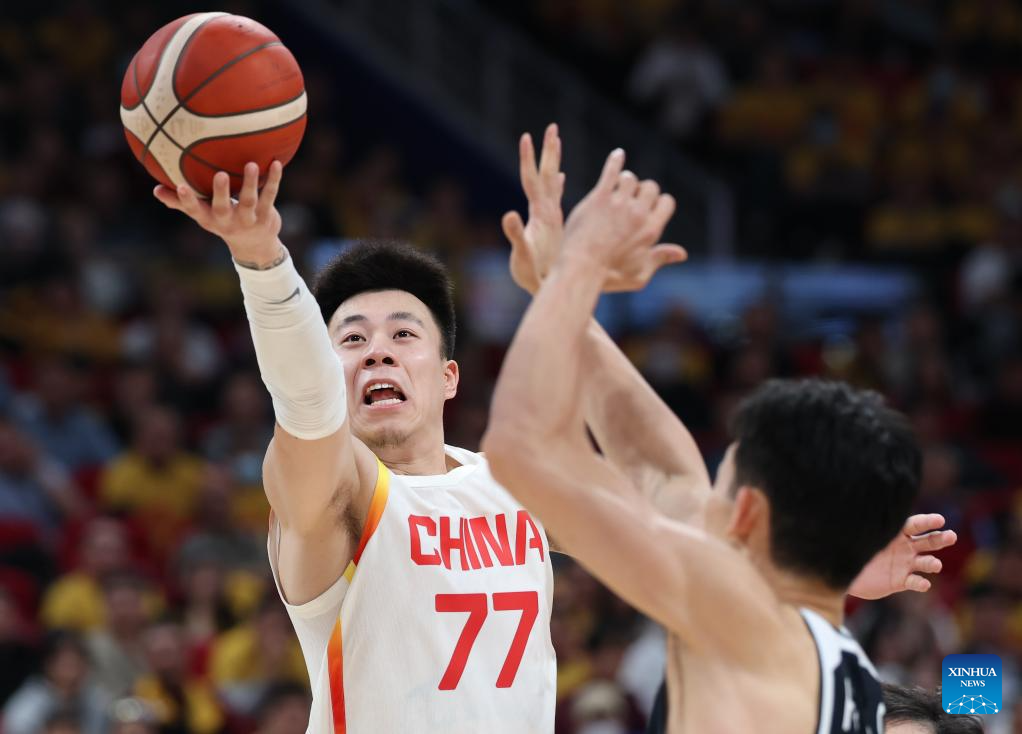
With the Spring Festival holiday barely over, the Chinese national men's basketball team has already embarked on a decisive road trip that could shape its World Cup destiny.
China arrived in Okinawa this week, ready to face Japan on Thursday night, before traveling on to Manila for a March 1 clash with Chinese Taipei.
After opening the FIBA Basketball World Cup 2027 Asian Qualifiers with two defeats, China finds itself in an unexpectedly vulnerable position. Qualification, once considered a likelihood, has tightened into a high-stakes battle.
At a recent team meeting, Chinese Basketball Association president Guo Zhenming delivered a stark assessment, warning that the national team has reached "its most dangerous moment". The numbers underscore the urgency: China currently sits third in its group and has slipped to 11th out 12 places in FIBA's latest Asian Qualifiers power rankings. Another setback could leave its qualification hopes hanging by a thread.
The response has been an uncompromising one.
Beginning Feb 5, the CBA organized a 19-day closed-door training camp at the General Administration of Sport of China's training center. The camp spanned the Chinese New Year holiday, with players granted only half a day off on Chinese New Year's Eve.
Head coach Guo Shiqiang embedded himself fully in the process, living alongside his players and maintaining a demanding daily rhythm. Sessions emphasized physical recovery after a grueling domestic league stretch, targeted strength work and repeated tactical rehearsals designed to correct the breakdowns exposed in the first window.
"This camp and the upcoming games come during the league break," Guo said. "After a tightly packed club schedule, the players must immediately transition to national team duties. Integrating the squad and bringing everyone to peak condition has been our primary focus."
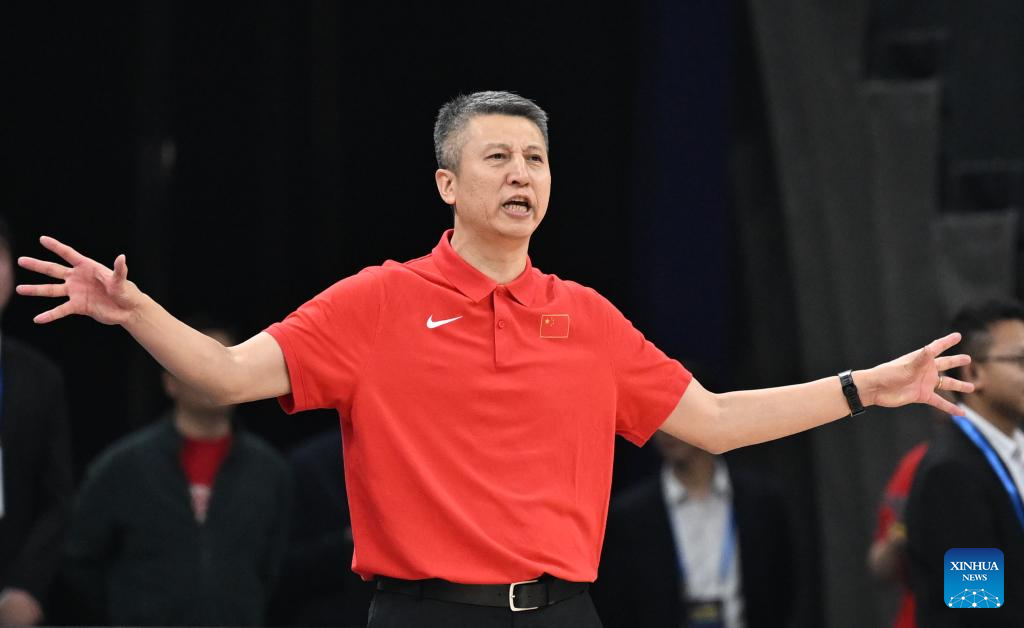
He was equally clear about the broader mission: qualification for the 2027 World Cup and laying the foundation for the 2028 Olympic Games. "Preparation cannot relax," he stressed. "We must give everything."
Reflection was as central to the camp as conditioning. The nine players who featured in the two opening losses each delivered personal reviews, confronting issues ranging from emotional swings and failures in execution, to waning focus and insufficient on-court communication. The tone, by all accounts, was candid.
ALSO READ: All paint, no gains
Guo did not shy away from the technical shortcomings. Defensive intensity dipped. Rebounding control faltered. Perimeter shooting misfired. Tactical discipline wavered — a stark contrast, he noted, to the cohesion displayed during the Asian Cup.
"Defense is our foundation and must never be loosened," he said. "Offensively, we have to increase tempo, improve transition efficiency and shoot with conviction."
The 14-man roster selected for this trip reflects both immediate necessity and longer-term planning.
Injuries complicate the picture: guard Xu Jie, forward Zeng Fanbo and young center Xu Xin are ruled out, while Zhou Qi continues to manage a recurring eye issue. Yang Hansen, currently competing in the NBA, is unavailable due to scheduling conflicts.
Still, the team's backbone remains intact. In the backcourt, Zhao Rui and Zhao Jiwei anchor the rotation, with Hu Mingxuan and Gao Shiyan providing additional playmaking and scoring punch. He Xining's inclusion adds perimeter range. On the wings, Zhang Zhenlin and Zhu Junlong supply defensive reliability, complemented by the youthful energy of Wang Haoran.
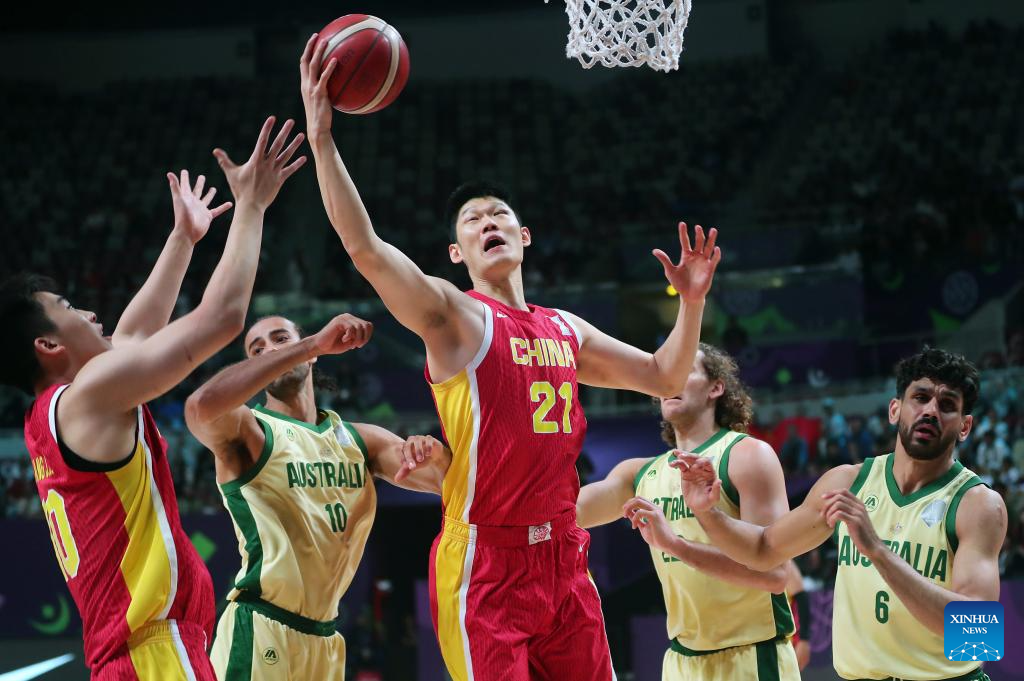
The interior rotation is thinner, placing significant responsibility on Hu Jinqiu, Yu Jiahao and Jiao Boqiao. Hu's consistency around the rim offers stability, while Yu — currently playing in Spain's Primera FEB, the country's second-tier professional league — brings size and rim protection. Jiao adds depth in a frontline that will need to withstand sustained pressure.
Yu's commitment has already drawn attention. To reach Okinawa, he traveled more than 14,000 kilometers, passing through Melilla, Malaga, Barcelona, Beijing and Tokyo in a five-leg journey. The physical toll is undeniable, and his ability to adjust quickly could prove pivotal.
Japan presents a formidable test. Even without NBA forward Rui Hachimura and dynamic guard Yuki Kawamura, the host remains dangerous. Japan plays at pace, prioritizes quick transitions and relies heavily on perimeter shooting to stretch defenses and dictate tempo.
For China, this window leaves no margin for experimentation. Execution and discipline must override pressure and hesitation.
Two road games now stand between renewed qualification momentum and a competitive abyss. How China responds — under scrutiny, in hostile arenas, with the stakes higher than ever — will reveal not only its technical abilities, but its competitive character.
