

Elegance, aesthetics attract new generation of adults to try 'ballet on ice'
Two months ago, barista Ye Hong and her friend Wang Zheng, both 25, were on their way to dinner when they were captivated by the graceful movements of a young female figure skater at an ice rink.
"We should be able to do this at our age," Wang said to Ye.
The very next day, the two signed up for figure skating lessons at the same rink in Chengdu, Sichuan province.
Ye, who rarely engaged in physical exercise before, found herself obsessed with figure skating. Almost every day after work she headed straight to the rink.
READ MORE: Skating with time: Sui and Han's final Olympic chapter
"Although my work is not tiring, I sometimes encounter customers who ruin my mood," Ye said. "Here on the ice, I can fully immerse myself in my own world and stop thinking about anything else."
Wang, a fashion photographer, shares this passion, prioritizing skating even if it means working late afterward.
"I used to stay at home alone after work. A month after I started skating, I made many new friends and became much more outgoing," she said.
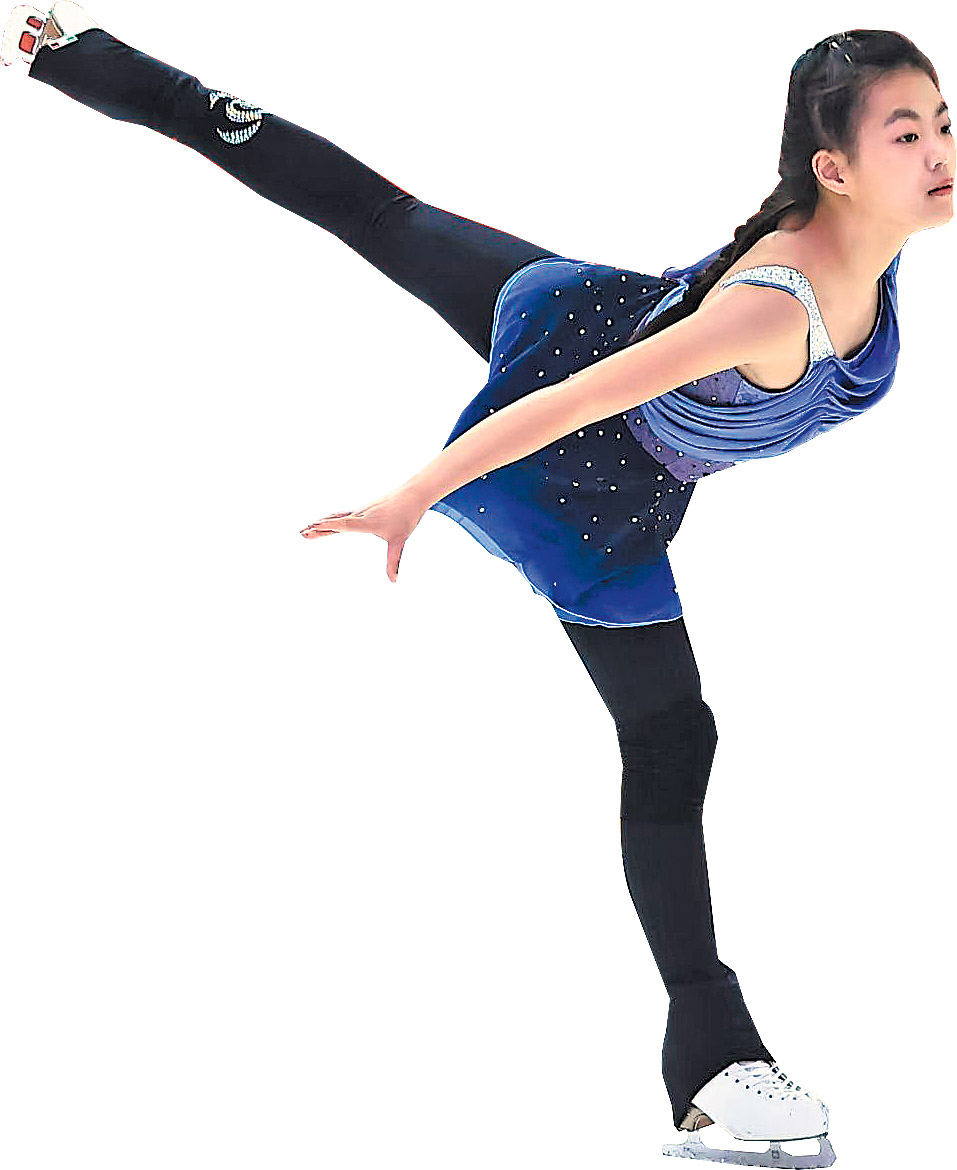
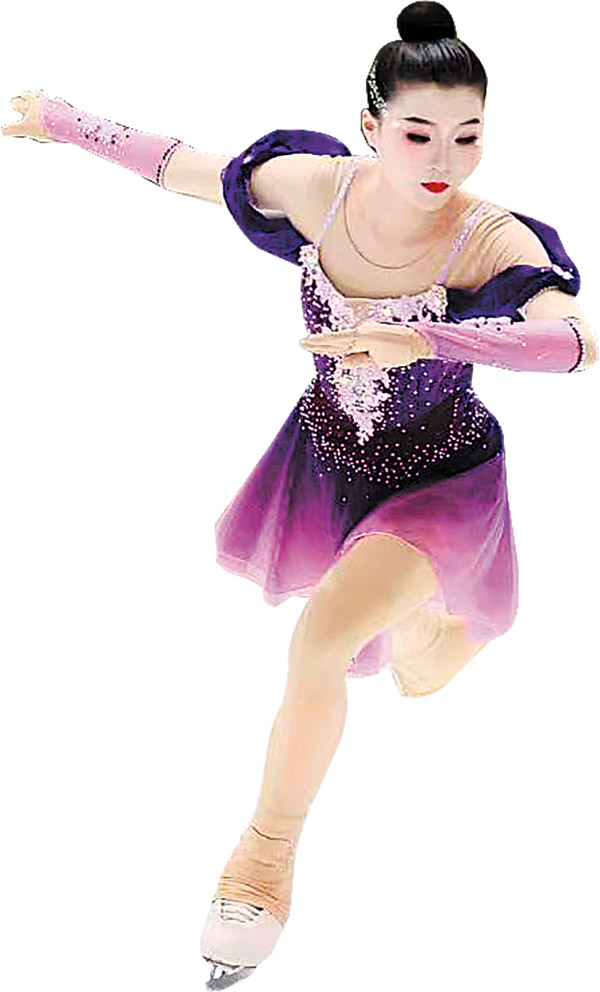
The pair are not alone. Since the 2022 Beijing Winter Olympics, the growing popularity of winter sports has drawn an increasing number of adults to ice rinks. Figure skating — often described as "ballet on ice" and once a niche competitive sport — is now being taken up by a growing number of young urban adults, especially women.
The latest data from online services giant Meituan reveals a surge in young consumers' interest in figure skating since the beginning of last year. Searches for "figure skating training" have increased 187 percent year-on-year, while those for "adult figure skating" have jumped by 207 percent.
Over half of the searchers are between the ages of 20 and 35. They are primarily from major cities, including Beijing, Shanghai, Chengdu, Guangzhou in Guangdong province, and Wuhan in Hubei province.
Adult skaters now account for roughly 10 percent of students at the Century Star Ice Rink — where Ye and Wang train — a significant shift from almost none just a few years ago, according to Fan Ya, the rink's manager.
Liu Jiacheng, manager of the Fanhai store of Dragons International Ice Hockey Club, a major ice sports center in Wuhan, said there was 30 to 45 percent growth in adult learners last year. Currently, the store has 150 to 200 adults enrolled in courses, and an even larger pool of casual visitors.
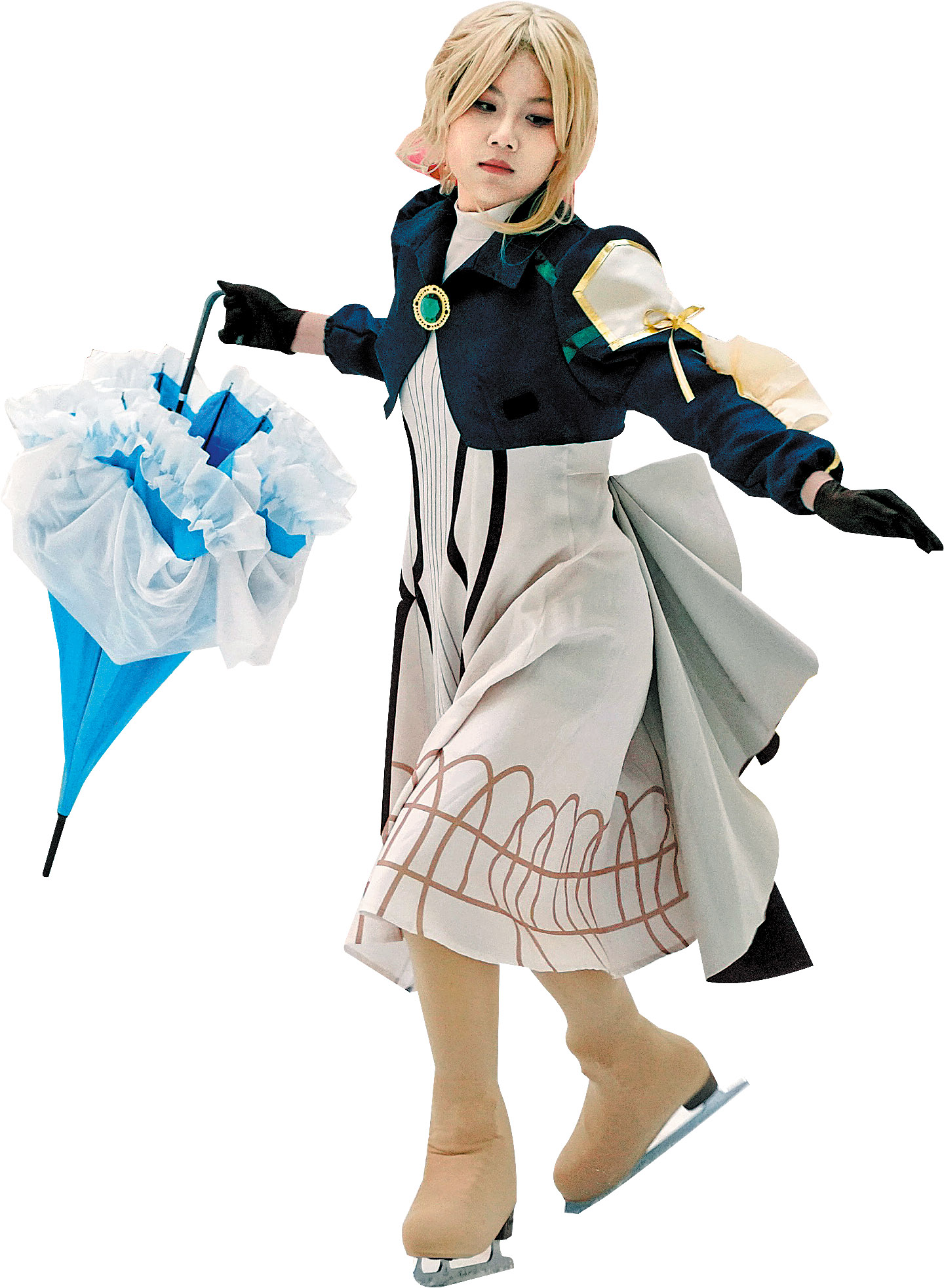
Irresistible beauty
Ye's interest in figure skating stems from the Japanese anime Yuri!!! on Ice and the famous Japanese figure skater Yuzuru Hanyu, who has gained countless fans in China with his amazing skills, good looks and resilient character.
However, it was not until she witnessed the graceful skater at the Chengdu ice rink that she finally made up her mind to try figure skating. "It's so beautiful! I just can't resist trying it myself," she said.
Ye and Wang both describe themselves as introverted young women. But that evening, they waited outside the rink for half an hour until closing time before summoning the courage to approach the elegant skater to ask for a WeChat contact and any advice she could offer a beginner.
Wang said learning figure skating was a childhood dream.
"Around sixth grade, I saw people skating in a mall and really wanted to learn," she recalled. However, due to the scarcity of ice rinks in Chengdu at that time, and the nearest one being far away from her home — coupled with mounting academic pressure — her mother refused her wishes.
Now, with a skating rink that is open until 9:30 pm and just a 15-minute walk from her home, that childhood dream is finally within reach.
"The good thing is, it's still not too late. Even if I hadn't started at 25, I would probably have taken it up at 35," she said.
Both have invested a lot in their passion: a pair of ice skates costs about 4,500 yuan ($650), with blades and a full set of protective gear pushing the total to over 5,000 yuan — roughly equivalent to one month's salary for each of them. A package of 18 lessons and six months of rink access costs an additional 3,999 yuan.
"The money is well spent," Wang said. "I live paycheck to paycheck. If I didn't spend the money on figure skating, it would be spent elsewhere anyway."
Yi Xianglin, 33, the woman who caught Ye and Wang's eye on the ice, has been figure skating for more than two years. As there is no rink in her home city of Leshan, Sichuan — which is 140 kilometers from Chengdu — the healthcare professional has to take a bullet train to the provincial capital every time she wants to practice.
"I love sports, so I tried figure skating after watching the Beijing Winter Olympics, and soon got completely hooked," Yi said.
On weekdays, she used to head straight from work to the railway station. A one-way trip to the rink takes two hours.
If work runs late, she barely has an hour on the ice before heading home. When she misses the last train, a hotel near the railway station is her only option. But she is able to get to work on time the next morning.
Yi said nothing brings her a greater sense of accomplishment than figure skating.
"I think I look really beautiful on the ice, so I take lots of videos to capture those moments," she said. Figure skating has now become her favorite sport, and she travels to Chengdu every Saturday and Sunday to practice.
"I don't pressure myself to master difficult moves. What matters more is enjoying the process," she said. "I love skating alone with my earphones on, moving to the beat of the music and losing myself in the moment."
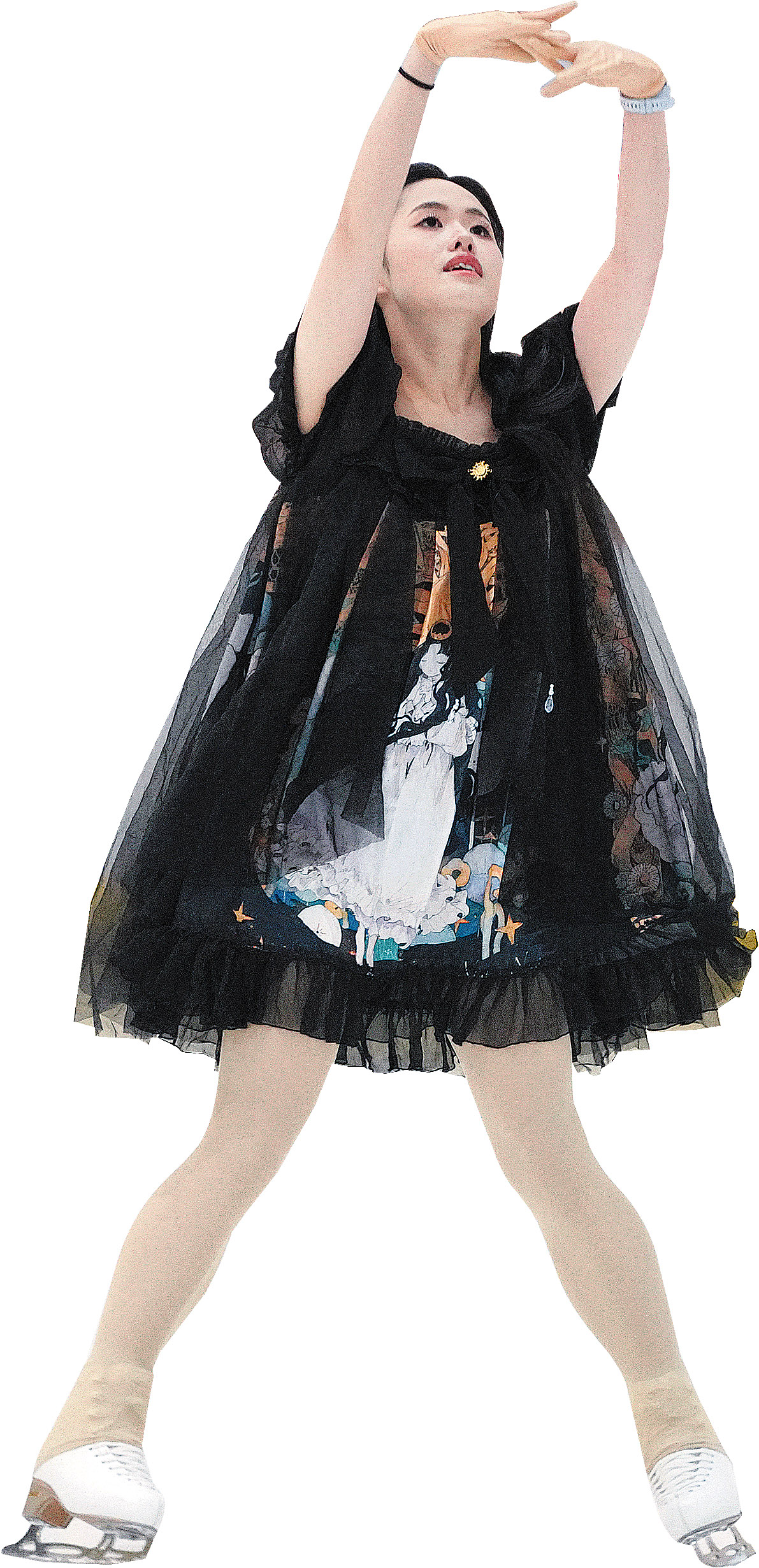
Healing moment
He Zhijia, a figure skating coach at a skating rink in Guangzhou, said while young skaters are often driven by external factors like parents' wishes for skill development, physical exercise, or academic advantages, adults are mainly more self-motivated.
"Their motivations typically include cultivating a lifelong hobby, relieving stress, shaping their bodies, socializing, and fulfilling childhood dreams," He said.
Liu, the store manager in Wuhan, said women make up a high proportion of adult learners, with many drawn by the sport's aesthetic appeal.
"Compared with monotonous gym workouts, figure skating offers both physical exercise and personal enjoyment, making it highly appealing to stressed-out modern young people," Liu said.
Li Xinqi, a second-year PhD student in religious aesthetics attending King's College London, resumed figure skating, which she learned in high school, as a way to relieve academic pressure during her return to China for fieldwork.
"Skating allows me to temporarily withdraw from academic research and be myself," said the 24-year-old. "Before skating, I sometimes feel a bit sluggish and low in spirits. But as soon as I step on the ice, I feel like I'm energized."
Li said figure skating is a profoundly rewarding pursuit, as it not only shapes an elegant figure and enhances physical coordination and flexibility, but also fosters an inner resilience.
"I view figure skating as a lifelong activity, not a race. I am not rushing to take tests or perfect difficult moves, but valuing the little progress I make each time," she said.
Wang Zhixuan, a 21-year-old student at the Capital University of Economics and Business in Beijing, who has been practicing figure skating for a year, said it has made her more confident. "On the ice, I feel unique and beautiful, like a swan," she said.
Despite her social anxiety, Wang was encouraged by her coach to participate in an Ice Skating Institute Asia competition.
"My legs were trembling when I took to the ice," she said. "But when I finished, the audience threw plush toys to me to show their appreciation."
The sport also introduced Wang to a diverse range of friends, from seasoned coaches offering advice to joyful younger skaters.
Wang said she is committed to advancing her skills and spreading the joy of figure skating. "I want to challenge the perception that it's a high-barrier sport and share its beauty with everyone," she said.
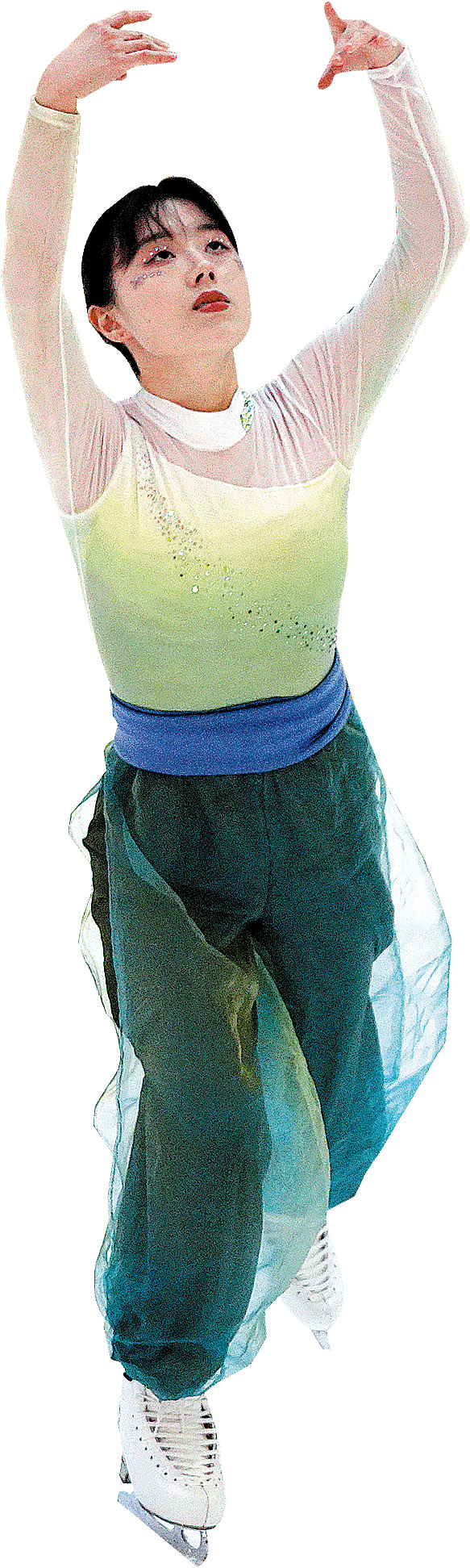
Challenges and risks
Even with childhood roller-skating experience, Ye clung to the railing for several laps during her first time on an ice rink.
"The hardest part was overcoming the instinctive fear of falling," she said. "As an adult, there's also the practical concern that an injury could affect my work."
Thanks to her cautious approach and protective gear, Ye has had only collision bruises.
Wang Zheng, however, has had patellar tendinitis and one time a skate blade cut her leg. Yi once fell and landed on her chin, scraping off a large patch of skin and bleeding profusely.
Xu Delong, an orthopedic doctor in the winter sports injury clinic at Wuhan No 4 Hospital, said figure skating has a higher rate of injuries compared with recreational skating due to the frequent jumps and spins involved.
Common injuries include ankle and knee sprains, cuts from blades, contusions or even fractures to the shoulder, elbow and wrist joints, concussions, chronic lower back muscle strains, and tendinitis, Xu said.
"Adolescents have a lighter body weight, and better physical flexibility, allowing them to adapt more easily," he said. "In contrast, adults often have poorer flexibility, and unbalanced muscle strength. This makes it harder for them to adapt to skating movements."
Adults without a strong physical foundation should incorporate balance training in addition to regular strength, core, and flexibility exercises, before starting figure skating, Xu said.
"Full protective gear, a thorough warm-up, and avoiding technical moves beyond one's ability can effectively reduce the risk of injury," he added.
Li Wei, head coach of the Sichuan provincial figure skating team, said adults face greater safety risks due to a higher center of gravity. They learn slower than children, but have better comprehension and are self-motivated to study on their own.
The core challenge for adults, he noted, is the lack of a fixed schedule due to work.
"Most of them can stick with it, but over a longer timeline," he said. "Take a five-lesson course for example, someone might disappear after three lessons because of a business trip, and then pick it up again a month or two later."
According to his observation, the majority of adult learners are in their 20s and early 30s, typically college students or young professionals. Those in their 40s are far less common.
Xu Maosen, a 47-year-old Chengdu resident, has been taking his 10-year-old only daughter, Xu Ziya, to figure skating lessons for over six years. Her health, happiness, focus and perseverance have all improved. She has also formed a circle of friends through the sport, he said.
However, he believes that middle-aged people are physically unable to take up such a risky sport. "Besides, since the rinks are full of children, middle-aged adults like myself would feel awkward joining in," he said.
Emerging trend
Despite these challenges and risks, coach He believes that the increase in adult figure skating beginners is not a short-term surge but a long-term trend.
"Public attitudes toward sports consumption are shifting from watching competitions to personal participation, and from short-term weight loss to developing lifelong skills and hobbies," he said. "Figure skating aligns perfectly with this trend."
Mature adult figure skating communities, online forums, and grading and competition systems are taking shape, he added.
Liu, the store manager in Wuhan, said generations born in the 1990s and afterward are more willing to spend money on their hobbies. "Coupled with the national push for winter sports, public enthusiasm for figure skating is set to keep rising," Liu said.
Zhu Zhibin, secretary-general of the Chengdu Figure Skating Association, said that as winter sports continue to gain popularity in southern cities like Chengdu, rising adult participation in the sport is a natural trend.
ALSO READ: Chinese gear manufacturers shine on global stage with tech prowess
The city currently has 14 ice rinks, most of which were put into use after 2015. The number of people participating in winter sports in the city has exceeded 2 million, Zhu said.
"It is undeniable that at present, teenagers still make up the majority of figure skating participants in Chengdu. However, it is noteworthy that the sport's increasingly refined training system now offers strong support for adult participation," he said.
Zhu emphasized the need to further promote the sport among adults in communities, enterprises, and social groups. Competitions should also be made more accessible to amateur and adult participants, to encourage more adults to embrace the sport.
Sun Ping, general manager of Sichuan Sino-Canada Sporting Co, said social media could play a vital role in attracting potential skaters.
She noted that in previous years, the ice rink had only about 100 adult learners annually, but the number has doubled this year thanks to promotions on social media.
To draw more adults, she said the rink will keep offering discounted trial classes and public activities with the ice rink open for free at specific times.
Chen Lingyi contributed to this story.
Contact the writers at pengchao@chinadaily.com.cn
