

The annual public consultation for the new Budget of the Hong Kong Special Administrative Region is now underway. Looking back at the past fiscal year, Hong Kong’s overall financial situation has shown a positive trend. In 2025, exports performed strongly, achieving approximately 13 percent growth on a high base. The stock market also delivered impressive results, with the Hang Seng Index rising by about 30 percent cumulatively. The IPO market remained active, with total fundraising exceeding HK$285.8 billion ($36.57 billion). However, the benefits of economic development have yet to be widely felt. Ordinary residents, small and medium-sized enterprises, and shops have seen limited gains, and the outlook for their economic prospects remains moderate. Therefore, I suggest the government must adhere to prudent financial management, uphold the principles of living within its means and balancing revenue with expenditure, and ensure that the fruits of economic development are more broadly shared across society.
 Reflecting on last year, I previously put forward suggestions on related issues, which were not adopted, and the problems raised were not substantially addressed. For this reason, I once again propose that the government continue to focus on the following areas. First, continue to advance the streamlining of the civil service establishment. Although the government has gradually reduced the civil service establishment in recent years, the results have not been significant. As of September 2025, Hong Kong still had approximately 170,000 civil servants, a reduction of about 2,000 compared to 2024. The overall establishment also decreased by around 1,000 compared to 2024. Therefore, the government still needs to assess whether the size of the civil service is proportional to its efficiency and consider further streamlining to reasonably control government expenditure.
Second, as of last March, over 14,500 nonrefoulement claimants remain in Hong Kong for various reasons. The budget for handling nonrefoulement claims and related work in the 2025-26 fiscal year still exceeds HK$1 billion ($128 million). The government should consider withdrawing from the United Nations Convention Against Torture and immediately repatriate all nonrefoulement claimants, thereby saving this money for better use.

Third, Hong Kong’s current tax base is narrow, and consideration could be given to broadening it to increase government revenue, such as by levying a sugar tax to reduce public sugar consumption and promote healthier eating habits. Additionally, I remain firmly opposed to the government lowering the duty on spirits. Alcohol poses significant harm to human health, and reducing the duty on spirits could encourage increased consumption, harming public health. The government should instead increase the duty on spirits, guiding the public toward healthier lifestyle habits through a “prohibitive taxation” approach.
Fourth, in recent years the government has tightened regulations on activities such as backdoor listings, resulting in as many as 80 percent of listed “zombie stocks” with insufficient trading. To enhance market vitality, the government could relax the regulations on backdoor listings, thereby improving the overall quality of listed companies and driving sustained positive performance in the stock market.
I am confident about Hong Kong’s economic development in the coming year. However, the government must still live within its means and balance revenue with expenditures. It could consider auditing the efficiency of the civil service, exploring possibilities for reducing expenditures and improving efficiency, further developing the financial industry, promoting cross-border financial activities, broadening sources of government revenue, and expanding the education industry
Looking ahead, to promote the long-term and steady development of Hong Kong’s economy, the government should adopt measures to broaden revenue sources, stimulate market vitality from multiple fronts, and expand the foundations for fiscal and economic growth. Over the past few years, the government has actively promoted the development of the halal economy. More policies should be introduced to further develop Muslim tourism and the halal market. This would not only help tap into Muslim and Middle Eastern consumer markets but also strengthen economic and trade exchanges between the regions, promote cross-border financial activities, further consolidate Hong Kong’s competitiveness and influence in the international Muslim market, and achieve the goal of diversified economic development.
Hong Kong possesses one of the world’s largest foreign currency reserves, providing ample capacity to continuously issue bonds in the market. I suggest that the government further expand the scale of bond issuance, particularly for green bonds and ultralong-term bonds, to enrich the product hierarchy of Hong Kong’s bond market. Additionally, as the world’s largest offshore renminbi center, Hong Kong should not only issue Hong Kong dollar bonds but also actively consider expanding the issuance of RMB bonds to broaden the sources of government revenue.
Education and its associated business opportunities constitute a highly profitable industry. To further enhance the international competitiveness and influence of Hong Kong’s higher education, I recommend optimizing admissions policies, relaxing the ratio of nonlocal to local students, to attract more outstanding talent from around the world. Reflecting on history, when the University of Hong Kong was established, then-governor Sir Frederick Lugard explicitly stated that it was founded “for China”, highlighting the profound connection between Hong Kong’s higher education and national development. Therefore, I suggest further relaxing the proportion of Chinese mainland students to promote academic exchanges and mutual understanding between young people from both regions, as well as to strengthen cooperation and support between Hong Kong and the mainland in education and talent cultivation.
Another measure that could increase student intake would be to lower the professor-to-student ratio without compromising educational quality. The lack of accommodation for students is another factor deterring international students. Currently, universities in Hong Kong face a shortage of dormitory supply, with many institutions unable to guarantee students “one dormitory place throughout their four-year study”. This further deprives them of valuable opportunities to engage deeply in campus life. Given the limited land resources in urban areas, I suggest building university dormitory zones in the Northern Metropolis to alleviate the dormitory shortages.
In addition to broadening revenue sources, controlling expenditures is also a crucial aspect of economic development. Healthcare is one of the government’s largest expenditures. Although reducing spending in this area is challenging, it is still necessary to explore how to reasonably control it. First, I suggest streamlining administrative personnel. The Hospital Authority, as the largest spender on healthcare, had over 90,000 employees as of last March, with doctors accounting for less than 10 percent. The government should assess whether there is room for optimization in the staffing structure to lower operational costs. Second, the government should review the positioning of the Hospital Authority, focusing on four key areas, “the four pillars” — acute and emergency care, serving low-income and underprivileged groups, treating high-cost and complex diseases, and training healthcare professionals. This would enable more effective use of resources and alleviate the burden on the public healthcare system.
To effectively encourage middle- and high-income individuals to reduce their use of public healthcare services, the government could actively promote public-private collaboration. By guiding private hospitals and doctors to participate in public healthcare services — for example, arranging for eligible patients to receive management in private medical institutions — patients can enjoy more flexible medical services. This would also allow public healthcare resources to focus on emergency or complex cases, improving service efficiency and reducing operational pressure. Regarding concerns that public-private collaboration might exacerbate the flow of public doctors to private institutions, surveys indicate that doctors choose private healthcare due to heavy workload pressures under the Hospital Authority, limited promotion opportunities, and uncertain career prospects. Public-private collaboration could alleviate the excessive burden on public healthcare institutions, reduce the workload pressure on medical staff, improve their working environment and development conditions, and achieve complementarity between public and private healthcare resources.
The government should also continue to promote the development and popularization of medical insurance. It should communicate and collaborate with the insurance industry to encourage the introduction of more flexible and attractive medical insurance products, further incentivizing middle- and high-income individuals to purchase private medical insurance. This would divert some healthcare demand to private institutions, enhancing the overall efficiency and sustainability of healthcare services.
Furthermore, the government should strengthen the primary healthcare system and increase resource allocation, enabling residents to access convenient and continuous medical services within their communities. In the long run, this would help manage common illnesses at the primary level, significantly diverting pressure from public hospitals. Improved basic health among residents would also reduce demand for secondary and tertiary healthcare. The Chinese Medicine Hospital of Hong Kong has officially commenced operations. Currently, it is estimated that Chinese medicine shares only about 10 percent of the healthcare workload. I hope that in the future, the Chinese Medicine Hospital will play a more significant role in the public healthcare system, sharing more of the workload, thereby contributing to a more efficient public healthcare system.
In summary, I am confident about Hong Kong’s economic development in the coming year. However, the government must still live within its means and balance revenue with expenditures. It could consider auditing the efficiency of the civil service, exploring possibilities for reducing expenditures and improving efficiency, further developing the financial industry, promoting cross-border financial activities, broadening sources of government revenue, and expanding the education industry. At the same time, the government should minimize healthcare expenditure, adhere to the “four pillars” of the Hospital Authority, alleviate pressure on public healthcare institutions, and increase the role of Chinese medicine, thereby achieving a more rational allocation of overall healthcare resources and improving service efficiency.
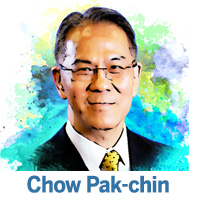
The author is a member of the Hong Kong Chief Executive Policy Unit and the Hong Kong Election Committee.
The views do not necessarily reflect those of China Daily.
