

Financial Secretary Paul Chan Mo-po delivered a lot of good news in his latest Budget speech on Wednesday. In an earlier article, I described the Northern Metropolis development as transformative (Comprehensive, Longest Blueprint Bang on Target, Sept 18, 2025). I did come across an article some time ago that doubted the strategy. The author argued that Hong Kong, being a city and not a country, should continue to serve as a global financial center and should not attempt to bring back manufacturing. While Hong Kong’s financial services sector has grown steadily and now accounts for roughly a quarter of the GDP, following the logic of new structural economics expounded by Professor Justin Yifu Lin of Peking University, comparative advantage evolves and is not static. Blessed with great infrastructure and great research universities, plus many attractions, including low tax rates, social stability and safety, and a great location within the Guangdong-Hong Kong-Macao Greater Bay Area, Hong Kong is a magnet for talent from around the world. The city is now in the position to capitalize on its newfound comparative advantage in high-end manufacturing while continuing its role as a top global financial center. I am positive that the idea of “innovative industries in the north and financial center in the south” is a great strategic positioning for Hong Kong. The new Budget firmly aligns with this vision.
 In line with this vision, Hong Kong has come up with its own first five-year plan starting this year, one that aligns with the national 15th Five-Year Plan (2026-30). Although called a “five-year plan”, this will not affect Hong Kong’s status as one of the world’s freest economies. Neither the central nor the Hong Kong Special Administrative Region government will tell its enterprises what to do specifically. Hong Kong’s five-year plan merely serves to inform local enterprises, government officials, and all residents which direction the nation and the SAR is heading, so all stakeholders understand that both the central and SAR governments will give policy support whenever appropriate to realize the visions. All stakeholders are encouraged to propose new initiatives as they see fit, and different levels of government will see what they can do to help. Interested readers may read the China Daily article published in September, titled Nansha Plan’s 3-year Achievements Showcased, for an example of such collaboration.

As explained by Chan, over the next few years, Hong Kong will continue to invest heavily in capital works, especially in the Northern Metropolis. To support development of the Northern Metropolis and to refinance earlier short-term debts, the SAR government will issue bonds worth HK$160 billion ($20.5 billion) to HK$220 billion every year from 2026-27 to 2030-31. While bond issues represent borrowings, no borrowing will be used to finance recurrent expenditures. The borrowings instead will be used to build a better future for Hong Kong and will bring good social and economic returns. Although the returns may not all go into the public purse directly, we can expect the creation of many high-paying jobs, higher tax base and therefore higher tax revenues down the road because the development of the Northern Metropolis will attract many top enterprises, which will invest in such areas as AI+ development, life and health technology, etc.
Chan promised, “We will integrate more actively into and serve the overall national development.” I recall that years ago, some Hong Kong residents worried that integrating with the national development could undermine Hong Kong’s interests. I am sure they now see that integrating into the Greater Bay Area has greatly improved Hong Kong people’s livelihoods. Although retailers and eateries may still face challenges, most people enjoy a lower cost of living and easy access to spend their weekends and holidays on the mainland. Some can get lower-cost drugs by filling prescriptions on the mainland. Data show that today, Hong Kong retail sales are improving. Even eateries are showing some signs of recovery, and some are doing quite well.
I recall that years ago, some Hong Kong residents worried that integrating with the national development could undermine Hong Kong’s interests. I am sure they now see that integrating into the Greater Bay Area has greatly improved Hong Kong people’s livelihoods
Just as Hong Kong is undergoing a dramatic transformation in its industrialization development in the north part, Hong Kong is also undergoing a dramatic transformation in financial services in the south. Through the initiative called "Finance+", the financial secretary has shown us how Hong Kong is evolving into a key partner in the renminbi’s internationalization process. New products will be launched, including mainland government bond futures, deepening of RMB bond markets through attracting more RMB-denominated bond issuances in Hong Kong, and lower transaction costs for RMB and other currency conversions. Other initiatives will enhance Hong Kong as a wealth and asset management hub and a major destination for family offices.
From the perspective of Hong Kong’s taxpayers and the disadvantaged, the good news is that with a notable improvement in the government’s fiscal position, the SAR government is able to continue to offer various tax concessions, including, in particular, an increase in the basic allowance and single-parent allowance from HK$132,000 to HK$145,000, and the married person’s allowance from HK$264,000 to HK$290,000. The proposed increase in the child allowance and additional child allowance from HK$130,000 to HK$140,000 is also much welcomed. For eligible social security recipients, the good news is an allowance equal to one month of the standard-rate Comprehensive Social Security Assistance payments. Recipients of Old Age Allowance, Old Age Living Allowance or Disability Allowance, and the Working Family Allowance will also get a similar additional allowance. All this is in addition to the concession on rates in two quarters of the fiscal year and cuts in the salaries tax and tax under personal assessment subject to a ceiling of HK$3,000. All this is made possible because Hong Kong’s economy is showing resilience and because we can expect continued steady economic growth.
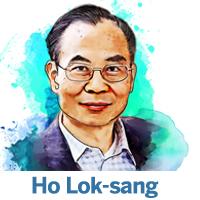
The author is an honorary research fellow at the Pan Sutong Shanghai-Hong Kong Economic Policy Research Institute, Lingnan University, and an adjunct professor at the Academy for Applied Policy Studies and Education Futures, the Education University of Hong Kong.
The views do not necessarily reflect those of China Daily.
