

Political and professional heavyweights have hailed Hong Kong’s 2026–27 Budget as forward-looking, praising the careful balance it strikes between fiscal responsibility and long-term investment in innovation — a reflection, they said, of the city’s steady fiscal recovery and renewed business confidence.
In their exclusive interviews with China Daily, Executive Council convener Regina Ip Lau Suk-yee and Stephen Law, president of the Hong Kong Institute of Certified Public Accountants, both commended Financial Secretary Paul Chan Mo-po’s strategy to strengthen revenue sources while laying the groundwork for economic transformation and a broader tax base — goals the jurisdiction has pursued for more than a decade.

The special administrative region government has projected a consolidated surplus of HK$2.9 billion ($371 million), a strong rebound from last year’s HK$67 billion deficit, driven by higher profits tax revenue and stable financial reserves. Revenue from stamp duties is now estimated at HK$99.5 billion, about HK$31.9 billion above the original forecast, while profits tax receipts have risen by HK$16.8 billion — signs of a buoyant equity market and improving corporate performance.
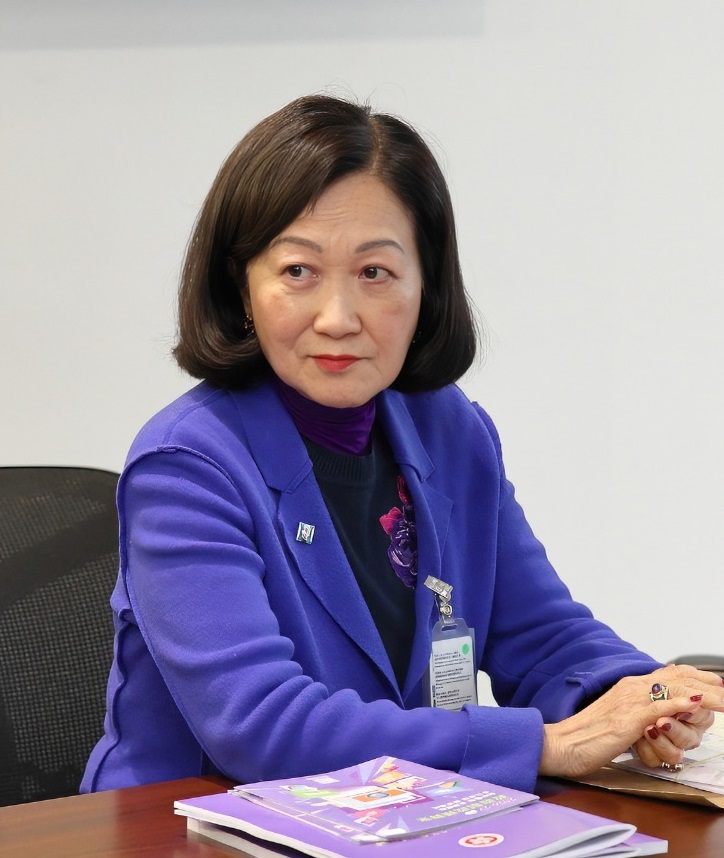
Ip, a veteran politician who has served the city for more than 50 years, attributed the increase in profits tax to new enterprises attracted by InvestHK and the Office for Attracting Strategic Enterprises. “These companies, including insurance and financial firms that have re-domiciled to Hong Kong, are already contributing tangible benefits to government revenue,” said Ip, who appeared in a purple outfit, signaling support for the Budget that was presented in a purple cover.
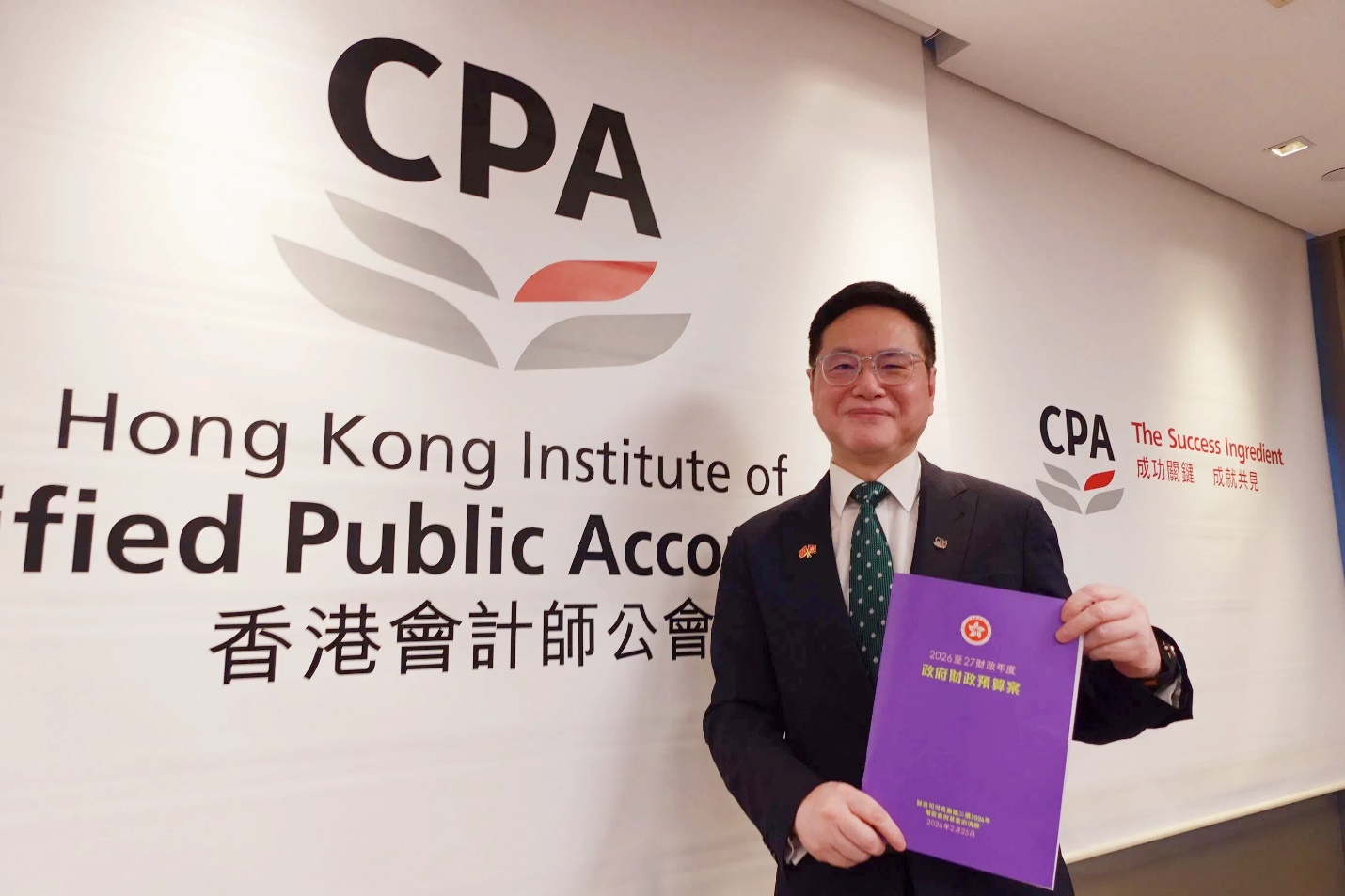
Law, elected HKICPA president three months ago, praised the SAR government for adopting proposals from the financial sector to maintain a low and competitive tax regime while introducing targeted incentives for family offices and regional headquarters. “We must continue to be Asia’s leading wealth management hub,” he said.
He also welcomed greater investment in technology, artificial intelligence, and strategic sectors under the 15th Five-Year Plan (2026-30), aligning Hong Kong’s growth with national development priorities. “Hong Kong is on the right path,” he said.
“The Budget is designed to benefit both Hong Kong and the nation,” added Law, who also serves as a consultant to the Ministry of Finance in Beijing. “Many of the measures reflect recommendations from the accounting profession and will enhance Hong Kong’s long-term competitiveness. We’re encouraged by the improving public finance outlook and hope the government continues balancing prudence with progress — ensuring steady growth that lets everyone share in the city’s success.”
“It’s expected to be a case of ‘a rising tide lifting all boats’,” Ip said.
Major enterprises moving into the Northern Metropolis will “significantly boost Hong Kong’s technology development,” she added.
Bond financing carries strategic value beyond short-term needs, Ip said, adding, “Issuing long-term bonds strengthens our capital market, helps establish a Hong Kong dollar yield curve, and supports the internationalization of the renminbi.”
Both Ip and Law view the Budget as a step toward economic diversification. Ip highlighted support for emerging industries such as aerospace and life sciences, noting the establishment of an Intellectual Property Academy and increased funding for research and innovation.
“This is how we invest for the future — broadening our revenue base through innovation, AI, intellectual property, and arbitration,” Law said.
Ip added, “Hong Kong has an edge, particularly in satellite data analysis, finance, and arbitration.”
While acknowledging the improvement in Hong Kong’s fiscal position, Ip said that the Budget still depends partly on transfers from government funds and bond issuances. “We have not yet returned to a state of structural balance,” she said, noting that the city’s debt level — well below 20 percent of GDP — remains prudent by international standards.
Law shares Ip’s optimism, describing the Budget as proof of Hong Kong’s resilience and competitiveness. He noted that fiscal reserves remain “very healthy”, with the debt-to-GDP ratio projected to peak at 19 percent, “well within international norms.”
