

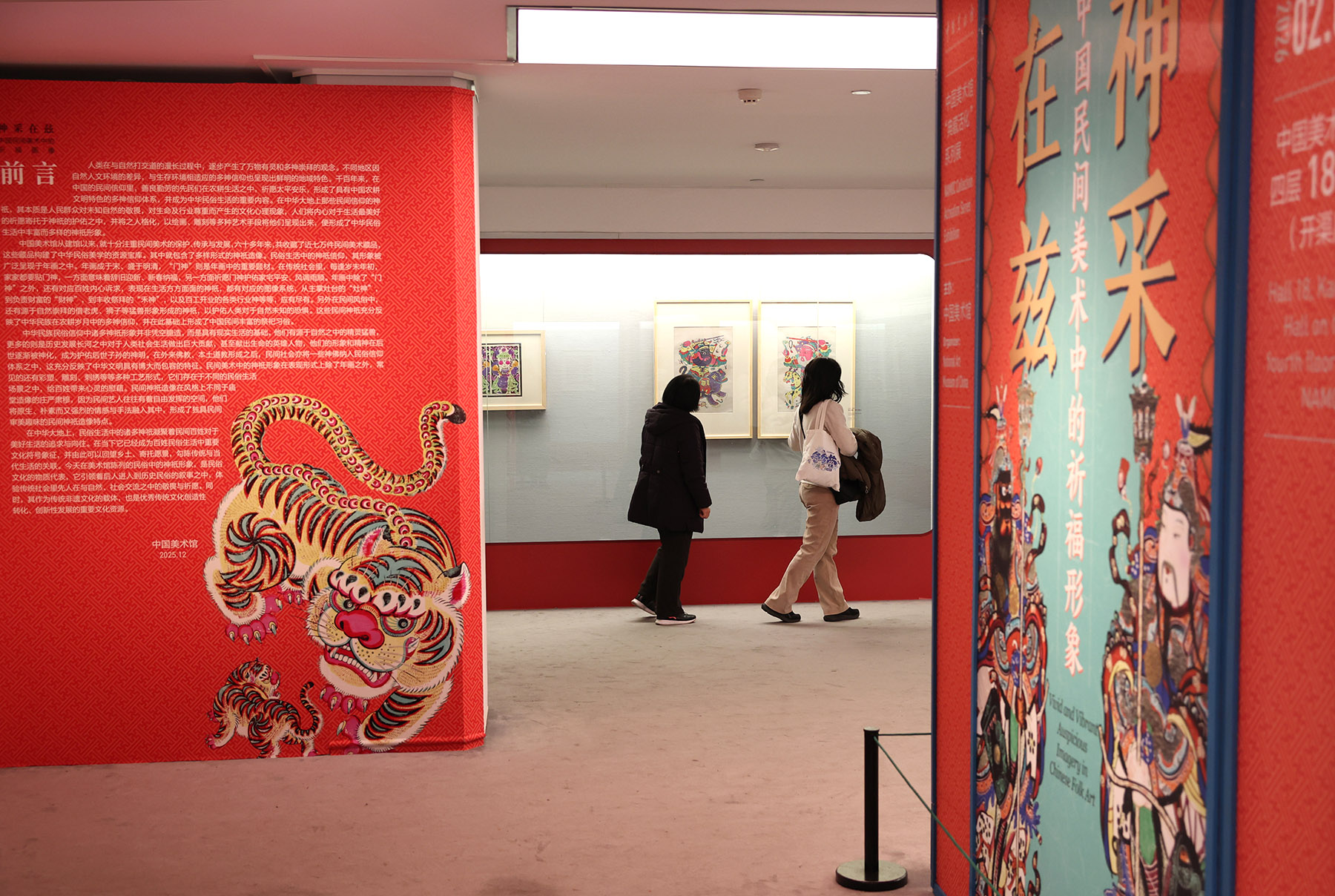
People typically seek help from doctors when they experience trouble sleeping and have an unsettled mind.
But when the same problem occurred to Li Shimin, Emperor Taizong of the Tang Dynasty (618-907), the powerful, proud monarch ordered his two most loyal generals, Qin Qiong and Yuchi Jingde, to keep guard outside his palace every night. Sympathizing with their laborious duties, Li later had their painted portraits permanently posted on the palace gates.
Although no one can be sure that this folk tale began the Door Gods custom, it somehow became a New Year tradition: having the paintings of the two standing generals — indeed, real historical figures — on doors, which people believed would protect them from evil spirits and usher in a blessed year.
Other figures, both real and fictional, who represent strength, bravery, or integrity, such as Guan Yu and Zhang Fei, two generals who fought side by side in the Three Kingdoms (220-280), were also favored candidates for hanging Door Gods at Chinese New Year.
The unique Door Gods tradition is one of many diverse, radiant folk arts that feature vivid, auspicious motifs still popular today, such as animals, historical figures and patterns.
READ MORE: Connecting ancient art with modern values
More than 40 selected examples of this customary variety are on show until Sunday in the Vivid and Vibrant: Auspicious Imagery in Chinese Folk Art exhibition at the National Art Museum of China in Beijing. While it offers glimpses into the museum's rich collection of folk handicrafts, it unfolds a vigorous panorama of creative grassroots aesthetics — people farming in the fields or chatting after work — that have been passed down through the centuries.
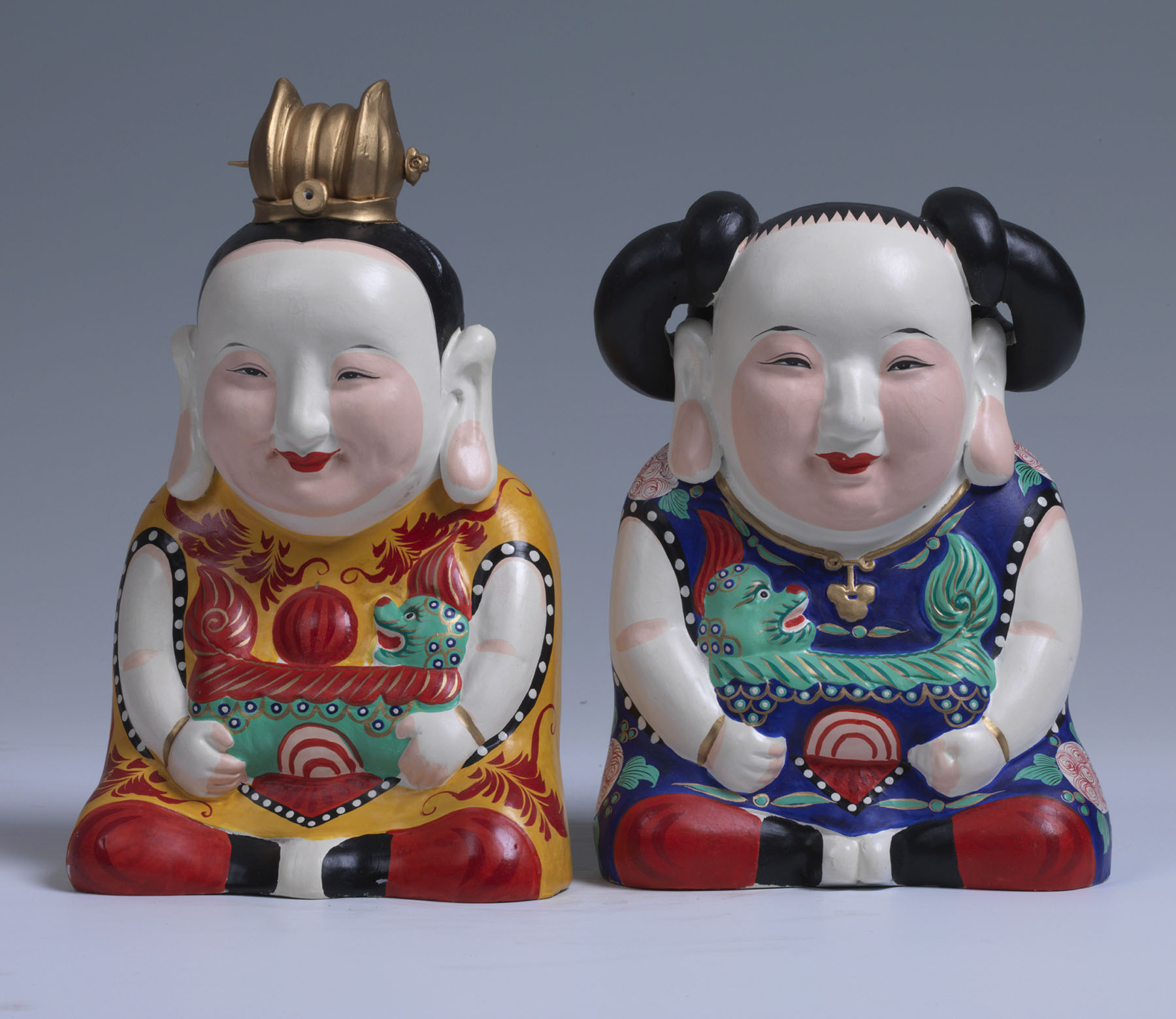
These folk images embody people's aspirations for happiness, respect for hard work, and wisdom in maintaining harmony with nature, serving as a vehicle for promoting innovative development in outstanding traditional culture, according to Pan Yikui, director of the National Art Museum of China.
The display reflects the wide spectrum of folk art housed at the museum — there are nearly 70,000 such objects — and the country's long, epic history in various forms that range from region to region, including New Year paintings, colored clay figurines, embroidery, puppetry, and masks, with symbols of home safety, fortune-making, and family prosperity.
The rabbit is another longstanding, well-received motif with wishes for fertility and longevity. China's first lunar rover was even named Yutu (Jade Rabbit) after ancient myths and folktales of a celestial rabbit grinding out elixirs on the moon.
ALSO READ: Chinese folk painter gives murals new life on paper
This imagery has a variant in Beijing and Tianjin, where people buy and worship a clay figurine called the Rabbit God (Tu'er Ye) during the Mid-Autumn Festival. These days, the Rabbit God is also popular as a tourism gift and has been manifested in creative products.
The rabbit, small and quiet in reality, is "endowed with supernatural powers to be revered as a god by people, and has become a renowned tourism specialty. It clearly reflects people's special fondness for it", says Liu Ying, a member of the National Art Museum of China.
Pan says the museum has long been committed to protecting, preserving, and exhibiting folk art as a treasure of Chinese aesthetics. He says these folk symbols are mostly derived from real life and have been visualized and artistically refined through creative works. These works, with emotional sincerity and unadorned beauty, preserve the national memory and cultural identity well, he adds.
Contact the writers at linqi@chinadaily.com.cn
