

Performing across six countries, two leading orchestras will present traditional and modern compositions, sharing culture and heritage with new audiences, Chen Nan reports.
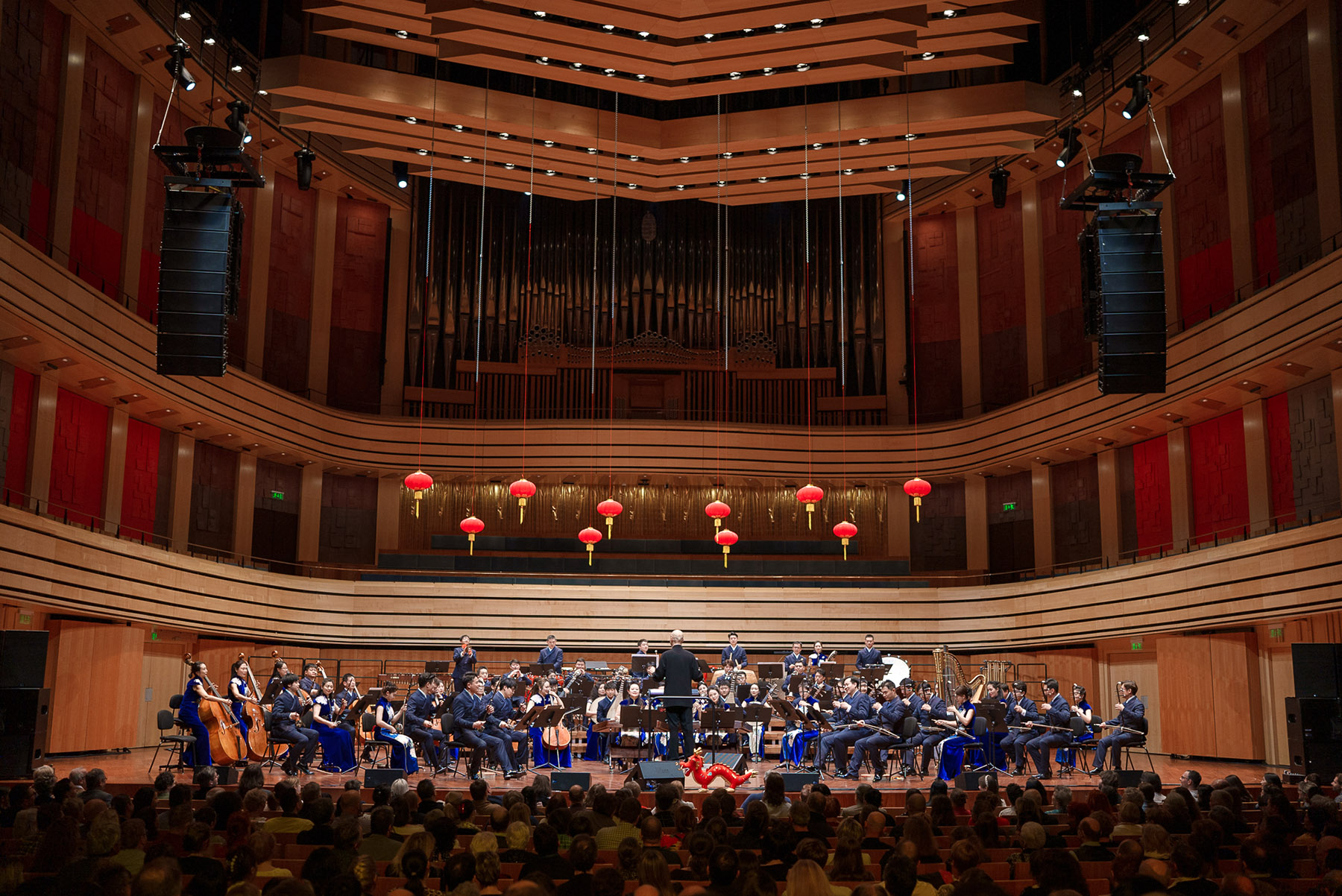
In a remarkable cultural exchange that showcases China's rich musical heritage, the China National Traditional Orchestra and the Wuxi Chinese Orchestra are embarking on a European tour from Feb 10 to 27.
Performing in 10 iconic cities across six countries, including Montpellier in France, Geneva in Switzerland, the Belgian capital Brussels, and Hamburg in Germany, this tour is not only a celebration of Chinese music but also an important milestone in international cultural diplomacy. The two orchestras will present the unique sounds of China to a global audience, blending tradition with modernity in a compelling fusion of styles.
The two ensembles share a common mission: to bridge cultural gaps and share the emotional depth of Chinese music with the world. Both orchestras have meticulously designed their repertoires to offer European audiences an authentic yet innovative experience.
READ MORE: Mapping a palatial soundscape
For the China National Traditional Orchestra, which will perform in Montpellier on Feb 10,Geneva on Feb 13, and Paris on Feb 15, the program includes a variety of styles, from traditional pieces like Dance of the Awakening Lion, a vibrant Guangdong-style work, and Yearning for Lovers in the Embroidery Building, a delicate, lyrical piece, to contemporary compositions, such as Snow over the Vermilion Palace and Bell of the Dragon Vein. With conductors Liu Sha and Tang Muhai, the orchestra is composed of nearly 70 musicians.
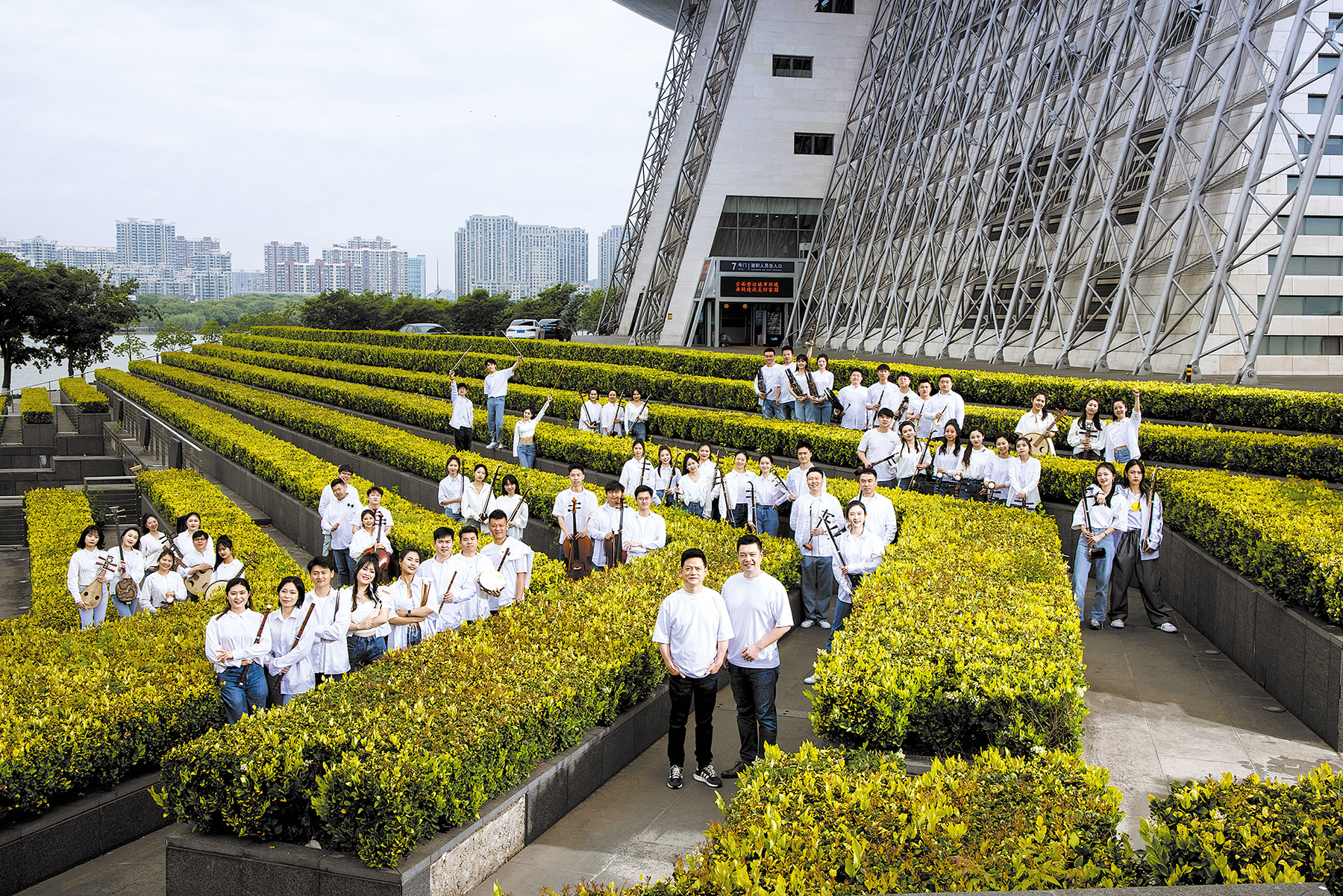
Notably, the orchestra also embraces innovative performance techniques, such as the 360-degree surround sound in Little Bird, a wind instrument concerto, where musicians interact directly with the audience, bringing an immersive aspect to the experience.
Tang Feng, president of the China National Traditional Orchestra, says the repertoire showcases the diversity of Chinese folk music through various styles and eras.
Some of the pieces are rarely performed, such as Awa Mountain by composer Guo Wenjing, who takes musical inspiration from the Va people and other ethnic groups living in Yunnan province to symbolically paint a picture of the place, expressing the eternal power of the unity between humanity and nature.
"These pieces are deeply rooted in the diverse cultures of China's ethnic groups, and offer a rich palette of sounds and styles that reflect the country's vast musical heritage. We not only want to present a showcase of traditional Chinese music but also send an invitation to European audiences to experience the depth and richness of Chinese culture from various regions," Tang Feng says, adding that the orchestra has toured Europe since 1998.
The orchestra will also perform three movements from the piece Harmony of Seven Colors by composer Zhang Zhao, who was inspired by the sun's spectrum, deeply embodying the concept of harmonious coexistence and multicultural symbiosis. Through the delicate arrangement of seven movements, this piece showcases the cultural charm and emotional landscape of seven different ethnic groups of China, constructing a vibrant and harmonious musical world.
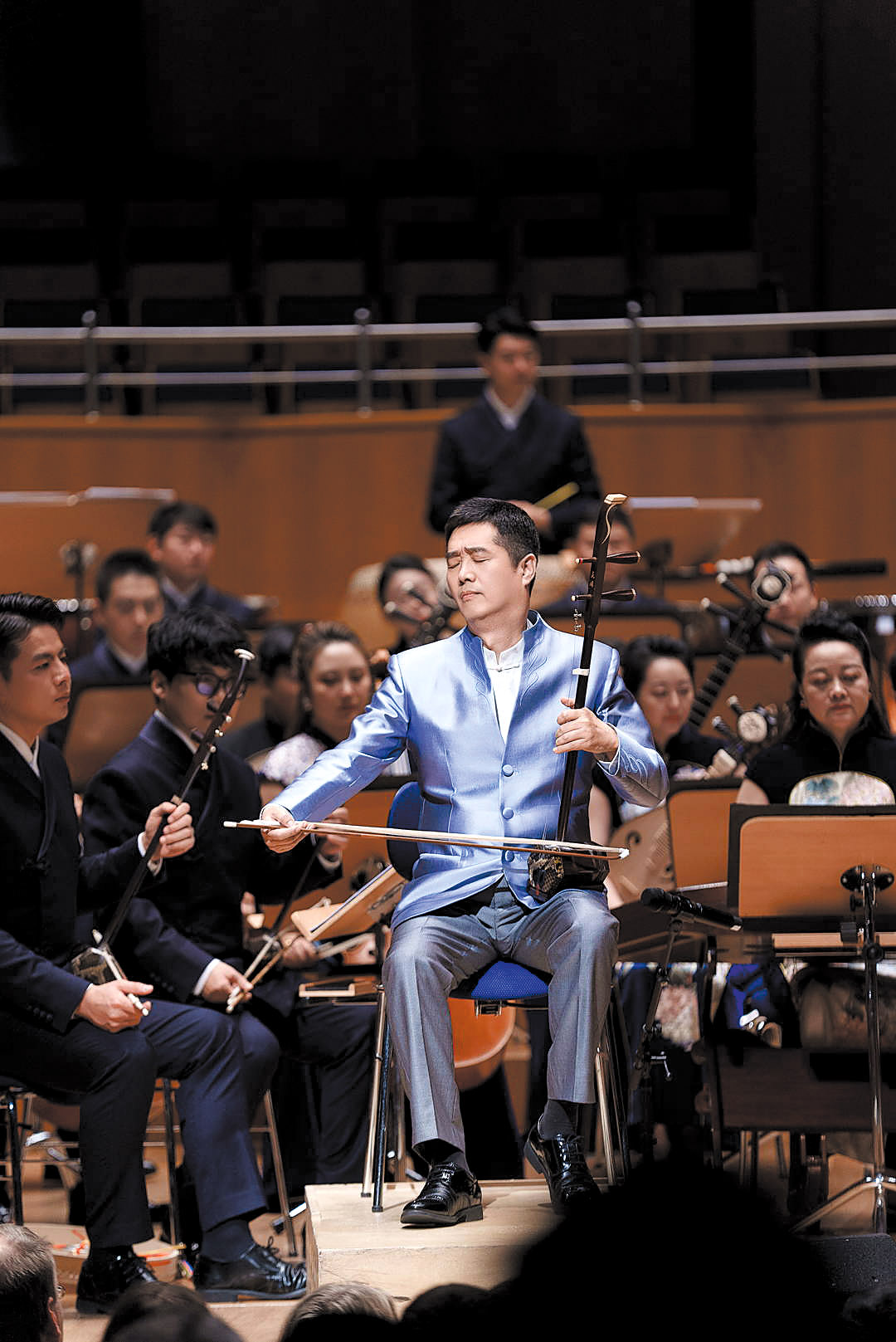
Tang Feng, also a veteran erhu (Chinese fiddle) player, will perform A Pleasant Night, a classic erhu concerto by Liu Tianhua (1895-1932).
For the Wuxi Chinese Orchestra, which will perform in seven cities, including Brussels on Feb 14, Stuhr in Germany on Feb 20, and Tyrol, Austria, on Feb 24, led by conductor Sun Peng, the program is a reflection of their local roots in Jiangnan culture. This culture refers to the heritage, traditions, arts, and lifestyle associated with the region south of the Yangtze River in China. Known for its natural beauty, economic prosperity and rich heritage, Jiangnan culture is often considered one of the most refined and influential in China.
Their tour repertoire includes timeless classics like Spring Festival Overture, as well as original works like A Dream of Taihu, which weaves together the rich cultural tapestry of Wuxi, Jiangsu province, with the landscapes of the Jiangnan region. The orchestra also features The Silk Road and Guo Feng: National Spirit, showcasing the fusion of traditional Chinese sounds with global musical influences.
ALSO READ: International exchanges aim to enhance global vision
"The key to our repertoire is to provide a balance between the familiar and the new," says Huang Yang, president of the Wuxi Chinese Orchestra. "We want the audience to experience not just the music of Wuxi but also the emotional depth and beauty of Chinese music in a modern context."
As Huang puts it, Wuxi's musical language is shaped by its environment: "The waters of Taihu Lake, the hills, and the people — all these elements shape our music. Our identity is deeply connected to the land and its history, and we carry this with us onto the international stage."
Both orchestras share a vision of using music as a tool for global understanding and cultural exchange. "It's not just about performing; it's about creating a genuine connection," he notes.
The European tour will take place around the Chinese New Year, or Spring Festival. "Performing during this special occasion is especially significant," Huang notes. "It represents reunion, renewal, and hope."
Contact the writer at chennan@chinadaily.com.cn
