

Japan’s largest opposition party and a former ruling coalition partner are in discussions to cooperate more deeply in an upcoming election, with an eye on a potential merger, according to local media.
The development complicates Prime Minister Sanae Takaichi’s bet that she’ll be able to significantly build on her razor-thin majority in the more powerful lower house. Takaichi is expected to dissolve parliament on Jan 23, kicking off what’s likely to be a roughly two-week campaign period with reports suggesting a national election on Feb 8.
The leaders of the Constitutional Democratic Party of Japan, the largest opposition group, and Komeito, a smaller party that exited a long-time coalition with the ruling Liberal Democratic Party just months ago, are set to meet on Thursday to discuss collaboration in the expected snap election, according to the Asahi newspaper.
ALSO READ: Japanese PM to detail plans to dissolve lower house for snap election on Jan 19
“I’d like to propose how we can bring together centrist forces to protect the livelihoods of the Japanese people,” Komeito leader Tetsuo Saito said at a gathering of the party’s senior officials on Thursday morning. “I hope to gain your understanding on this matter.”
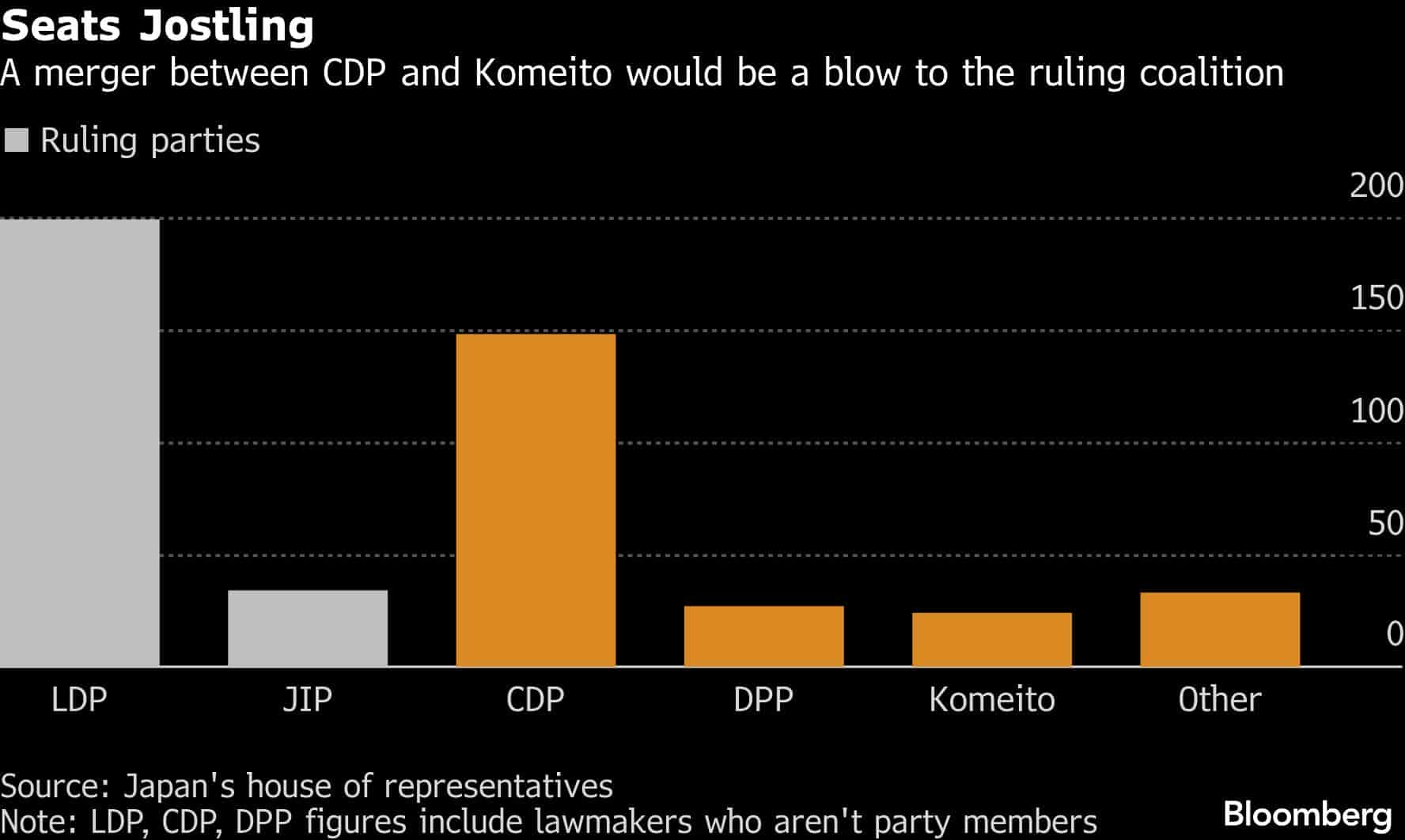
A new party formed under a merger of the CDP and Komeito could prove to be a formidable opposition force against Takaichi, who is staking a greater public mandate on her own popularity by calling an early election. She’s likely wagered that her personal popularity in opinion polls will translate into electoral success, giving her greater political capital to push through her fiscal and defense policy agendas.
A lack of unity among opposition parties may have factored into those calculations, but a united front among key opposition parties could also thwart Takaichi’s ambitions, should it materialize.
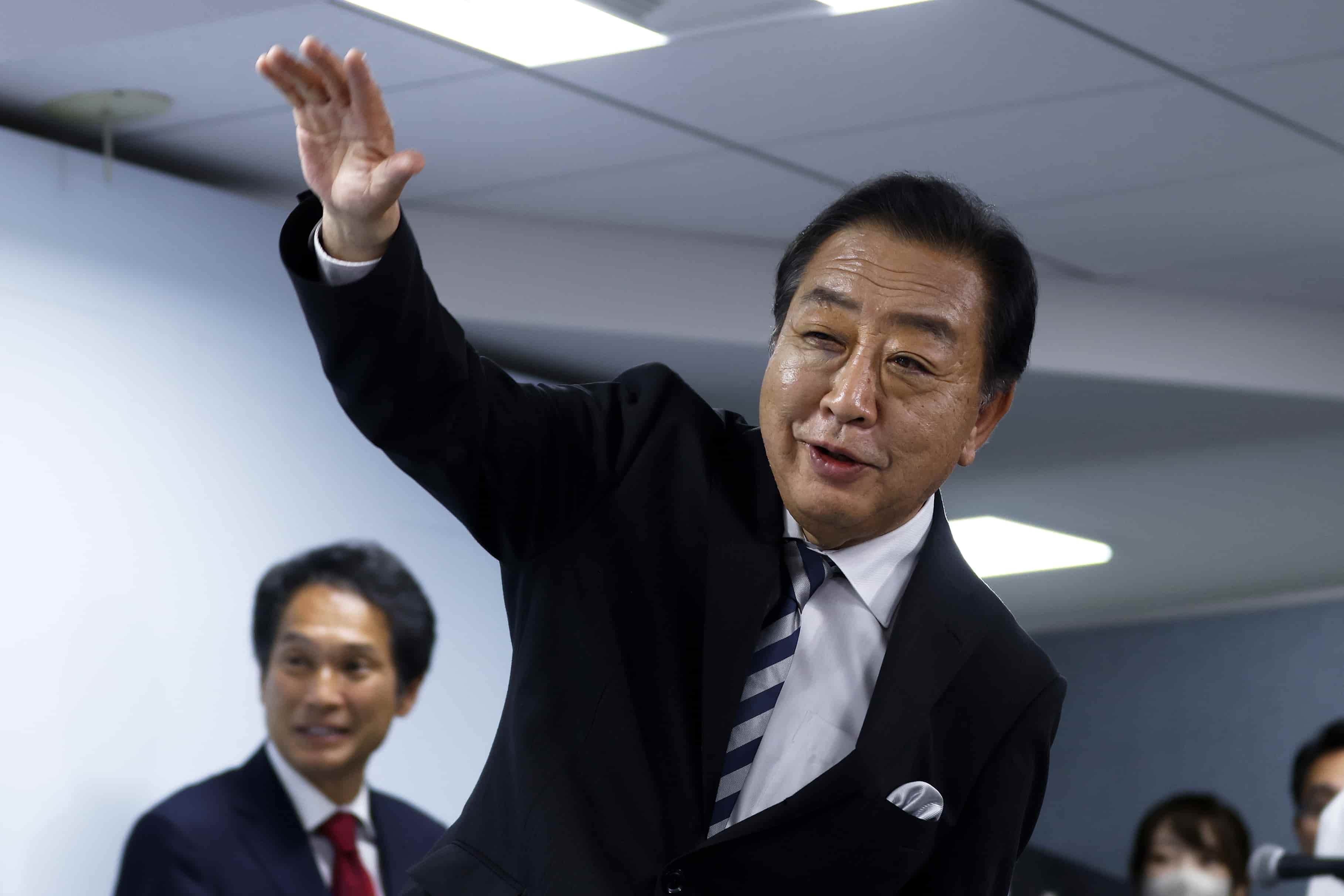
“We’ve agreed with Komeito that the upcoming dissolution of parliament doesn’t have a legitimate rationale,” said Yoshihiko Noda, the leader of the CDP, in a post on X on Tuesday. “We’ve shared our intentions to bring together centrist forces that have the ability to form a government, and confirmed that we’ll cooperate at a high level.”
Komeito provided key votes to the LDP during its partnership by mobilizing votes through its backing organization, the Buddhist group Soka Gakkai. The combined forces of the CDP and Komeito may tip the scales against the ruling bloc in some constituencies in the upcoming election.
Saito denounced Takaichi’s move to call the election, which could delay passage of the budget for the fiscal year starting in April and the implementation of fresh price relief measures.
“Politics must act swiftly,” he said on Thursday. “I can’t understand why the lower house needs to be dissolved now, creating a political vacuum.”
The yen’s weakness continues, driving up inflation, and concerns over Japan’s finances are pushing up interest rates, worsening the situation for home-buyers and smaller companies, Saito added.
Those market moves have come on the back of investors so far taking bets that Takaichi will prevail. If she sees success in polls next month, her pro-stimulus policies will likely continue to ramp up public spending to goose the economy, while keeping the Bank of Japan in the slow lane on rate hikes.
As Japan’s political parties appear to gear up for an election, Komeito is considering forgoing fielding candidates in single-seat districts and urging supporters to vote for CDP runners instead, according to the Sankei newspaper. The party will focus instead on winning more proportional representation votes, the report said.
Japan’s lower house seats are a mix of seats won through single-seat districts and proportional representation seats allocated to parties. Although it is small as a political force, the votes of Komeito supporters were enough to push some LDP candidates over the winning line in some single-seat districts, according to local media estimates.
Such estimates put the number of seats the LDP could have lost in the previous 2024 lower house election without Komeito’s help at anywhere between 20 percent and 40 percent of the 132 seats it ultimately won. The Nikkei newspaper estimated that the LDP would have lost about 25 seats, while broadcaster JNN said the LDP could have lost up to 32.
“Komeito has consistently said that it will draw a clear line against populism, and that it will advance responsible reforms that put people’s lives first—what we call ‘centrist reform’,” Saito said in a post on X Wednesday.
