

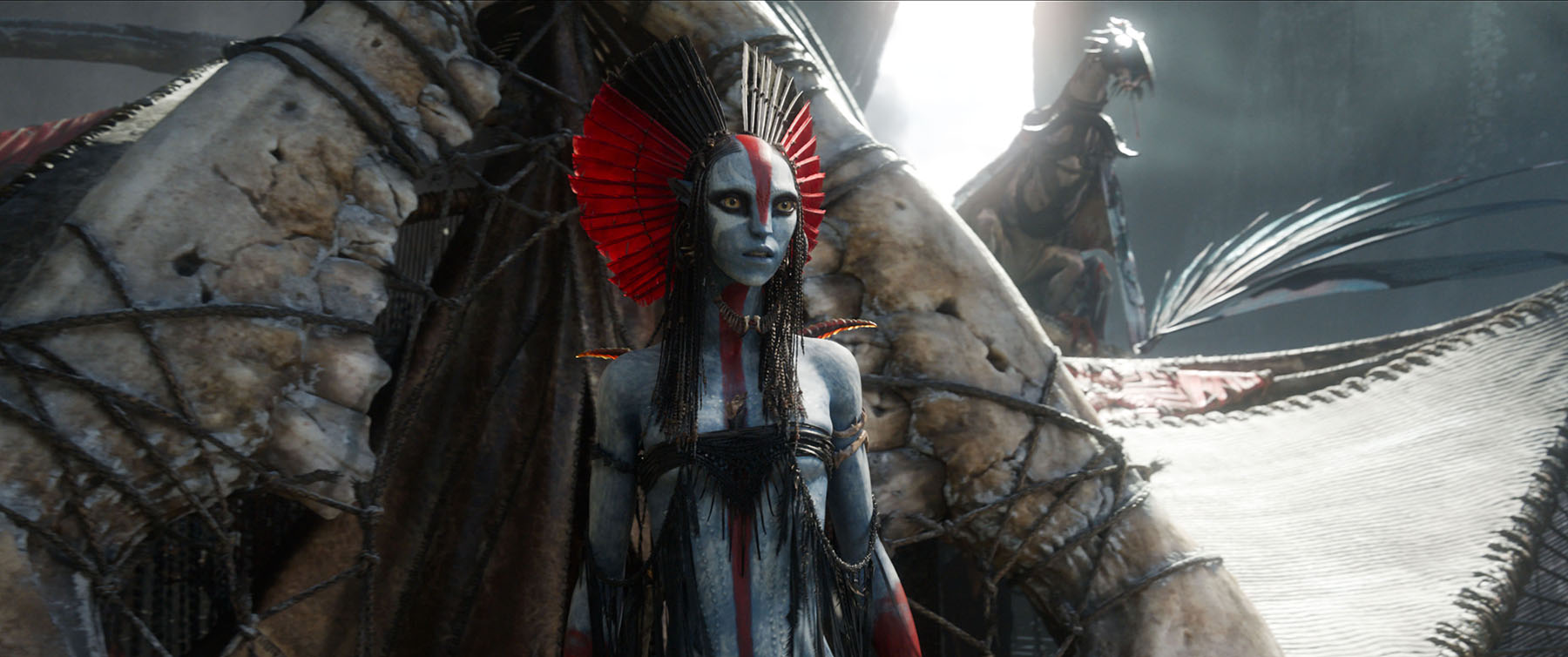
The biggest problem with Avatar: Fire and Ash is that James Cameron hasn’t truly pushed the envelope in this third trip to Pandora — the incredibly imagined world at the heart of the director’s ambitious science-fiction franchise. One has to give it to Cameron that he has consistently backed up his bluster with cutting-edge filmmaking, creative storytelling and, most importantly for his producers, billions of dollars in ticket sales. Many industry professionals and casual viewers giggled at the time he was investing quite literally into creating technologies for Avatar in 2009 — until the box-office receipts and grudging critical accolades started rolling in. The thinking was that there was no chance lightning would strike twice with 2022’s Avatar: The Way of Water, but Cameron proved everyone wrong again, precisely the way he did with Terminator 2: Judgment Day in 1991 and Titanic in 1997. Unfortunately, the well may finally be drying up.
In fairness, Avatar: Fire and Ash was shot concurrently with The Way of Water, so that feeling of sameness no one is used to from Cameron could simply be a side effect of the production process; the films are essentially twins. That hasn’t seemed to quash curiosity re Avatar No 3. With a runtime that won’t allow for a fifth showing per day and a pedigree that demands a big screen, Fire and Ash has already racked up $760 million. Clearly, audiences still have faith in the Cameron brand.
And rightly so. Fire and Ash picks up in the wake of the resistance against the off-world (as in Earth) Resources Development Administration’s (RDA’s) attempts to colonize Pandora. The fight has left one-time marine Jake Sully (Sam Worthington) and his Na’vi wife Neytiri (Zoe Saldaña) mourning the loss of their eldest son. They’re still living in exile from their forest home with the ocean-dwelling Metkayina, welcomed in by Tonowari (Cliff Curtis) and his pregnant wife, Ronal (Kate Winslet).
Things are tense with the Sullys: Neytiri is embittered and angry with humanity and the other kids are feeling neglected. Adoptees Kiri (Sigourney Weaver) and Spider (Jack Champion) are alienated by their connections — in her case to emerging divinity, in his to the RDA.
Into this mix comes a new corporate threat, aided by Spider’s vicious military father Colonel Quaritch (Stephen Lang), and his recently discovered ally Varang (Charlie Chaplin’s granddaughter Oona), the leader of the aggressive Mangkwan tribe.
ALSO READ: Disney, James Cameron sued for copyright infringement over 'Avatar'
With the pieces in place, Avatar: Fire and Ash settles into the same patterns and hits the same beats the narrative did in part two, complete with whale-like Tulkun rescues, swooping bow-and-arrow battles from the backs of Toruks, cartoon villainy from exploitative business shills, and a final showdown on one of the RDA’s heavy-duty freighters.
To his credit, Cameron has never been afraid of giving women agency. Hence perhaps unsurprisingly, the women of Pandora give Fire and Ash its emotional backbone as well as provide the bulk of its most compelling narrative elements, with Chaplin’s Varang by far the most welcome addition to the sprawling cast. The series’ story has improved incrementally since 2009, and the latest installment has the most nuance. Saldaña and Winslet are genuinely empathetic in strong performance capture —Cameron’s words — as supportive mothers who overcame mutual suspicion to form a bond valued by both. And where many filmmakers would reduce Neytiri and Varang to petty catfighting, Saldaña and Chaplin are allowed free rein with a tribal protectiveness that makes both characters flesh and blood. Avatar: Fire and Ash has the same immersive visuals and jaw-dropping special effects that made us want to go to the cinema in 2009 and 2022. But the operative word in this case is “same”, at least when it comes to the rest of the film.
