

Faye Bradley visits a Hong Kong Heritage Museum exhibition that celebrates the city’s intangible cultural heritage by revisiting some of these through the lens of contemporary artistic practices.
Hong Kong’s image as a leading financial hub can sometimes overshadow its intangible cultural heritage wealth — the sort that may be found in the city’s traditional tailoring shops, printing presses and porcelain workshops. Currently on show at the Hong Kong Heritage Museum (HKHM), the HK Snapshots · City Walks: Fresh Takes on Hong Kong’s Art and Cultural Heritage encourages visitors to slow down and look for these gems that are often hiding in plain sight.
The exhibition brings together ceramic artist Rebecca Lo, as well as makers from the Hong Kong Cheongsam Association (HKCA), printing studio Ditto Ditto, and design collective Key-Point Productions. All of them have approached a living Hong Kong tradition via a contemporary lens. The show was a part of the Hong Kong-Macao Visual Art Biennale 2024, and after a tour of five cities on the Chinese mainland, returns to the source in an enhanced form.
ALSO READ: Operatic ambition
Hong Kong currently lists more than 500 items on its Intangible Cultural Heritage Inventory. These include festivals, craft techniques, performance traditions and social practices.
HKHM art curator Maria Lam says that the exhibition aims to “connect the audience with Hong Kong’s cultural roots and heritage through contemporary art”.
“By examining our intangible cultural heritage and presenting them against the backdrop of Hong Kong’s vibrant cityscape, we can better navigate the boundless possibilities of visual art,” she says.
Experimenting with tradition
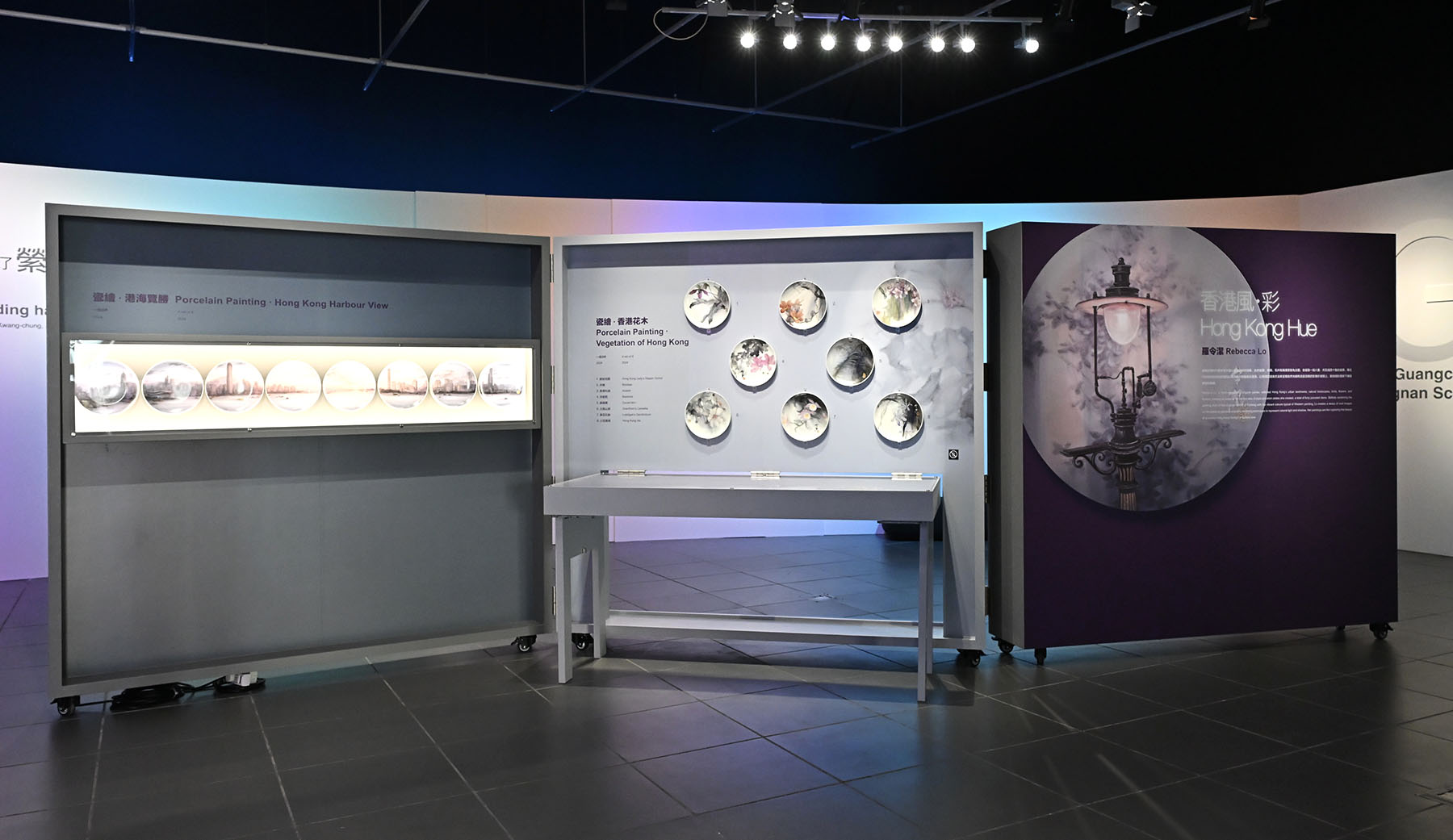
Lo, a fourth-generation practitioner of Lingnan-style art — which originated in the early 20th century and is still actively practiced in Hong Kong — has introduced Hong Kong landscapes, alongside the generic birds and flowers, in her paintings on Jingdezhen porcelain plates.
“We must gather the essence of Chinese and Western art, both ancient and modern, observe a contemporary landscape from a contemporary perspective, and continuously explore and innovate in terms of techniques and themes,” she says.
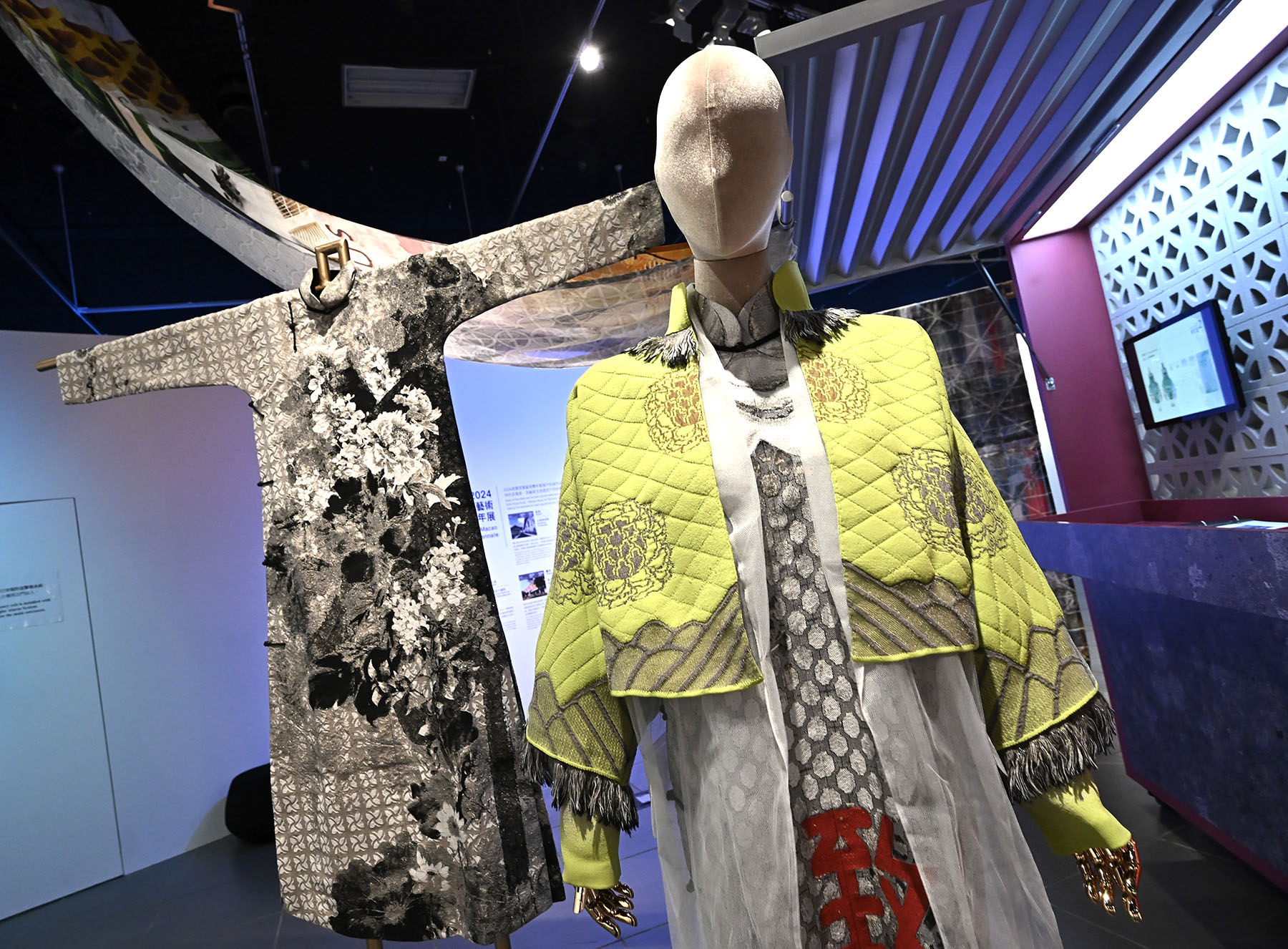
Digital Jacquard weaving is combined with 3D-printing technology in the HKCA-produced exhibits — four sets of men’s and women’s cheongsams. “Men’s cheongsam is the original form from which other styles evolved,” explains HKCA committee member Haze Ng, adding that the prototypal design is still worn at ceremonies and festivals.
The idea is not to replace traditional craftsmanship, but to extend it, she says, adding that the application of new technology allows for precision, and reduces material waste while preserving the garment’s core structures and traditional cutting styles — a balance authenticated by registered ICH adjudicators in the HKCA.
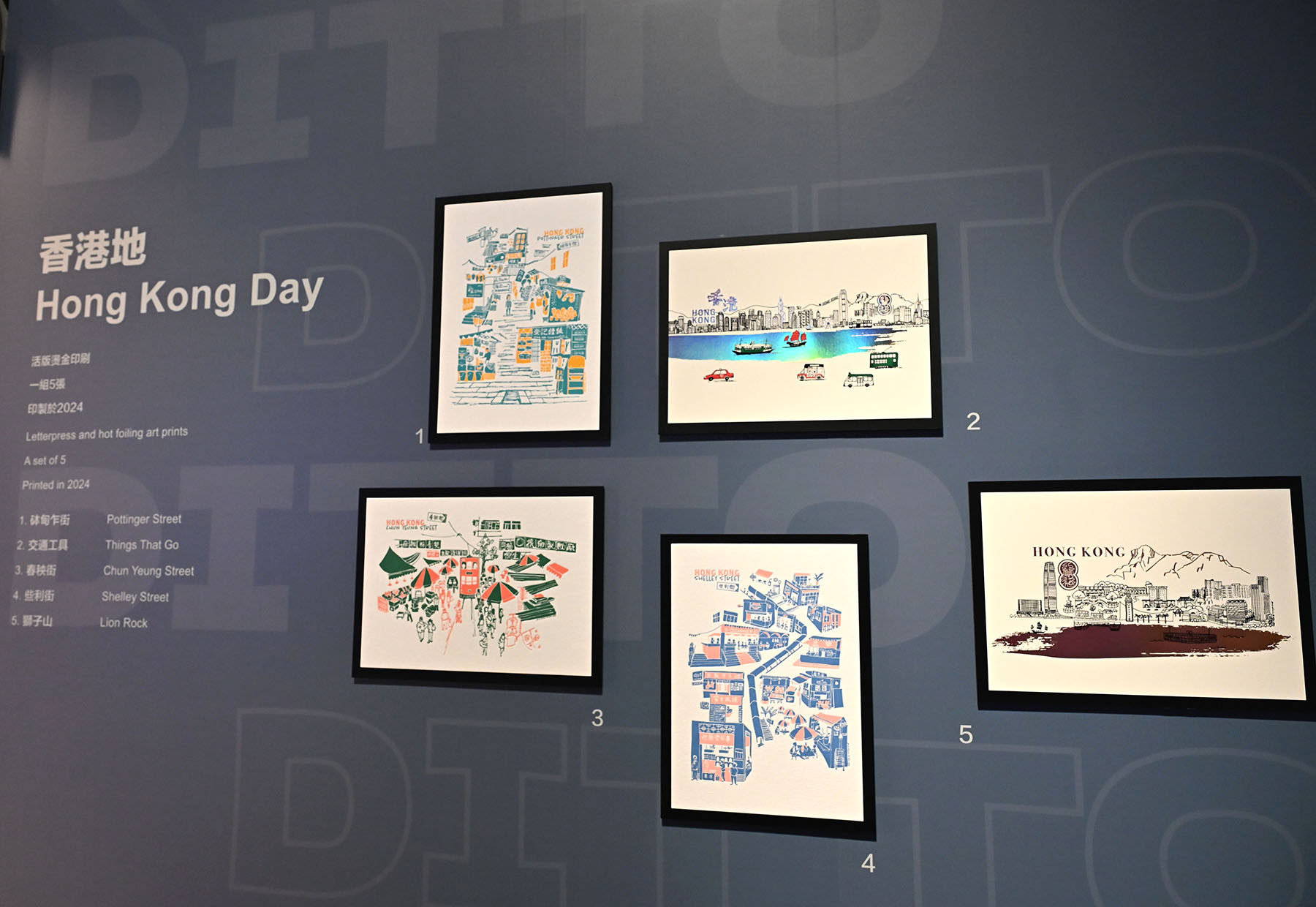
The letterpress-printed postcards and calendars produced by Ditto Ditto depict Hong Kong’s food culture and urban landmarks. “Letterpress creates a unique, tangible feel that digital printing cannot replicate,” says design collective co-founder Donna Chan.
The studio is also offering print workshops. “I hope the participants can embrace letterpress printing as both consumers and creators, and share what they make with others in person, rather than via a mobile phone.”
Bridging the old and new
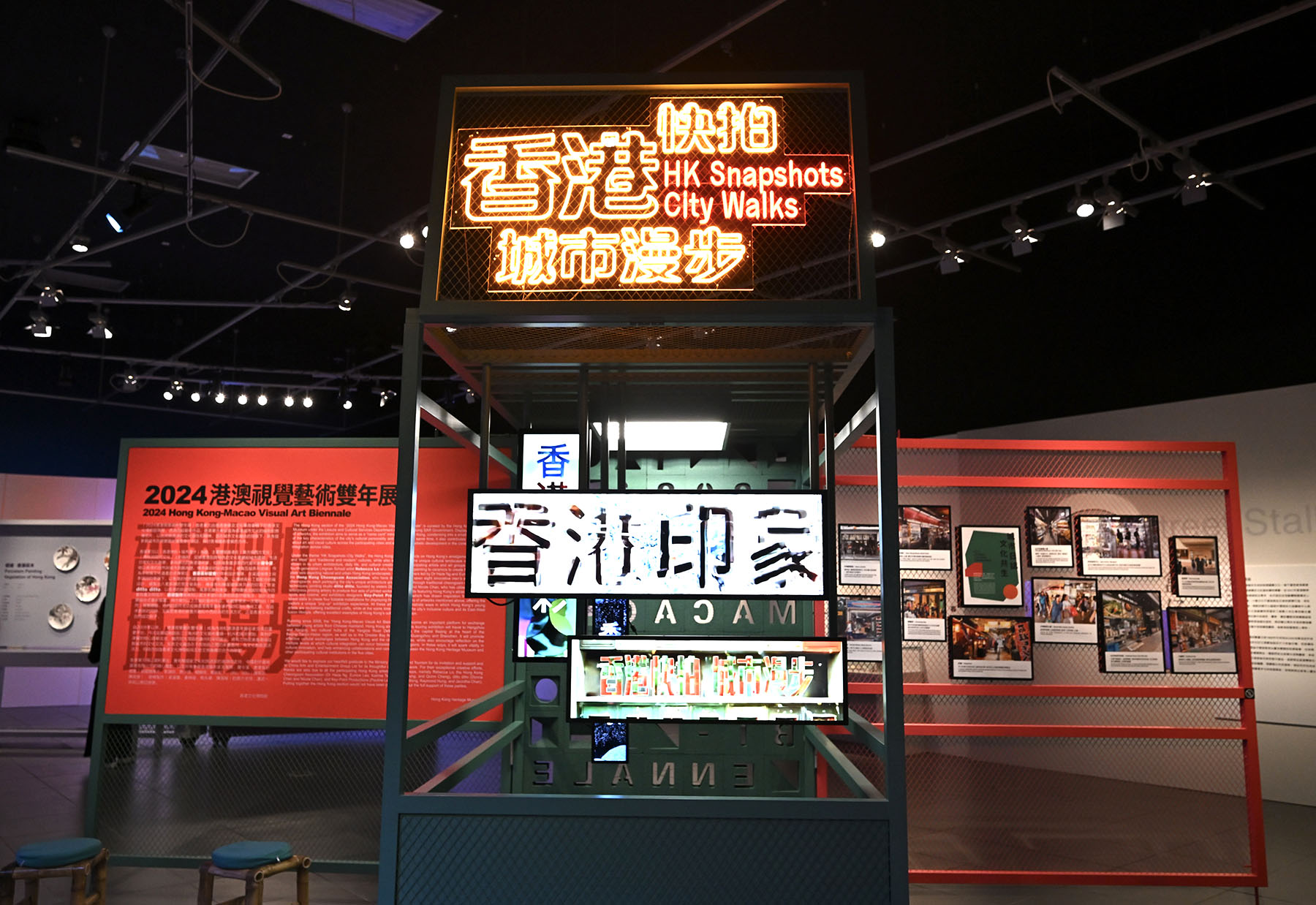
Holding the exhibition together, both literally and conceptually, is Key-Point Productions’ foldaway installation, inspired by the maneuverable frameworks used to set up Hong Kong’s street stalls and informal urban spaces. Its use of neon signage, bamboo stools, and autoclaved aerated concrete blocks refer to elements traditionally used in construction and embellishment of Hong Kong architecture, while creating a flexible social space within the gallery.
Key-Point Productions’ director, Pauline Leung, says that the project is inspired by the way street-level life in Hong Kong “can blur the boundaries between public and private”.
ALSO READ: Of birds and blossoms
She adds that the exhibition acts as a bridge between collective memories of old Hong Kong and a contemporary architectural vision that incorporates “yesterday’s urban architecture aesthetics”.
HK Snapshots · City Walks proposes that Hong Kong’s cultural identity — shaped by hybridity, adaptation and everyday rituals — is a living, and steadily evolving, thing.
“Our goal is to look beyond making this show visually appealing or Instagram-worthy and help young audiences understand the cultural context and techniques behind these traditional crafts and heritage,” says Lam.
If you go
HK Snapshots · City Walks: Fresh Takes on Hong Kong’s Art and Cultural Heritage
Date: Through March 2
Venue: Hong Kong Heritage Museum, 1 Man Lam Road, Sha Tin
hk.heritage.museum/
The writer is a freelance contributor to China Daily.
