

With interactive exhibits and role-playing, students at Jilin International Studies University turn language learning into cross-cultural experiences.
With a fork and knife in hand, Jia Huilin practiced a full sequence of European table manners — moving carefully through each course while maintaining steady eye contact.
She wasn't dining abroad but attending an introductory German course at the German Village in the Global Village of Jilin International Studies University (JISU) in Changchun, Jilin province.
For Jia, a 20-year-old beginner in German, this recreated dining room offered her first real glimpse into the subtleties of European social etiquette. "After practicing how to greet people properly or sit through a family dinner, I realized that German socializing is really about showing respect without overstepping," she said.
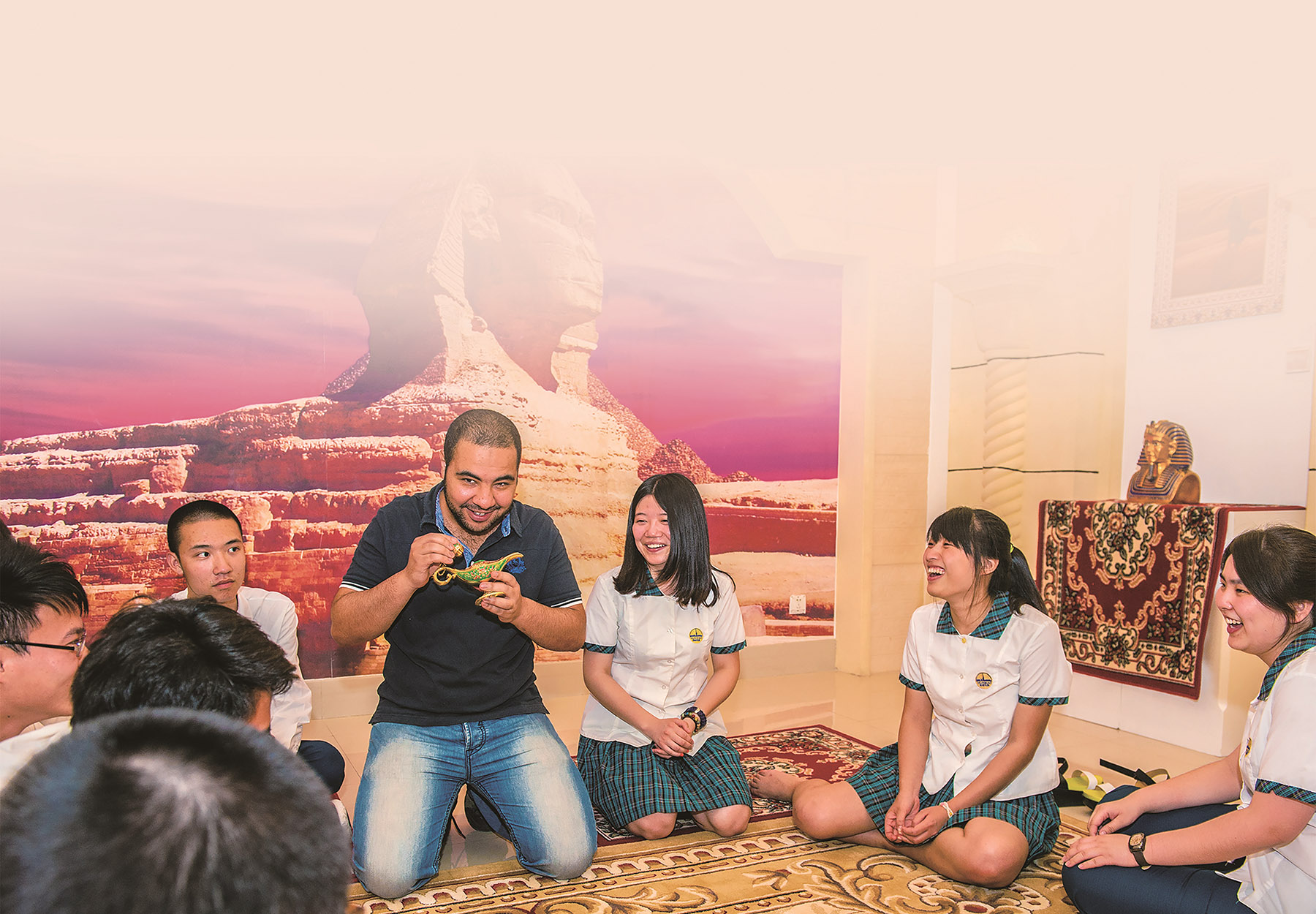
Established in 2010 with the philosophy of integrating language and culture, the Global Village serves as a hands-on learning center. Through immersive environments — sculptures, artifacts, audio-visual installations, and digital displays — it supports multilingual learning by placing students directly in reconstructed cultural settings.
Currently, the 30,000-square-meter village features 26 national-themed areas, where elements of more than 100 cultures converge. Over the years, it has become an integral part of campus life.
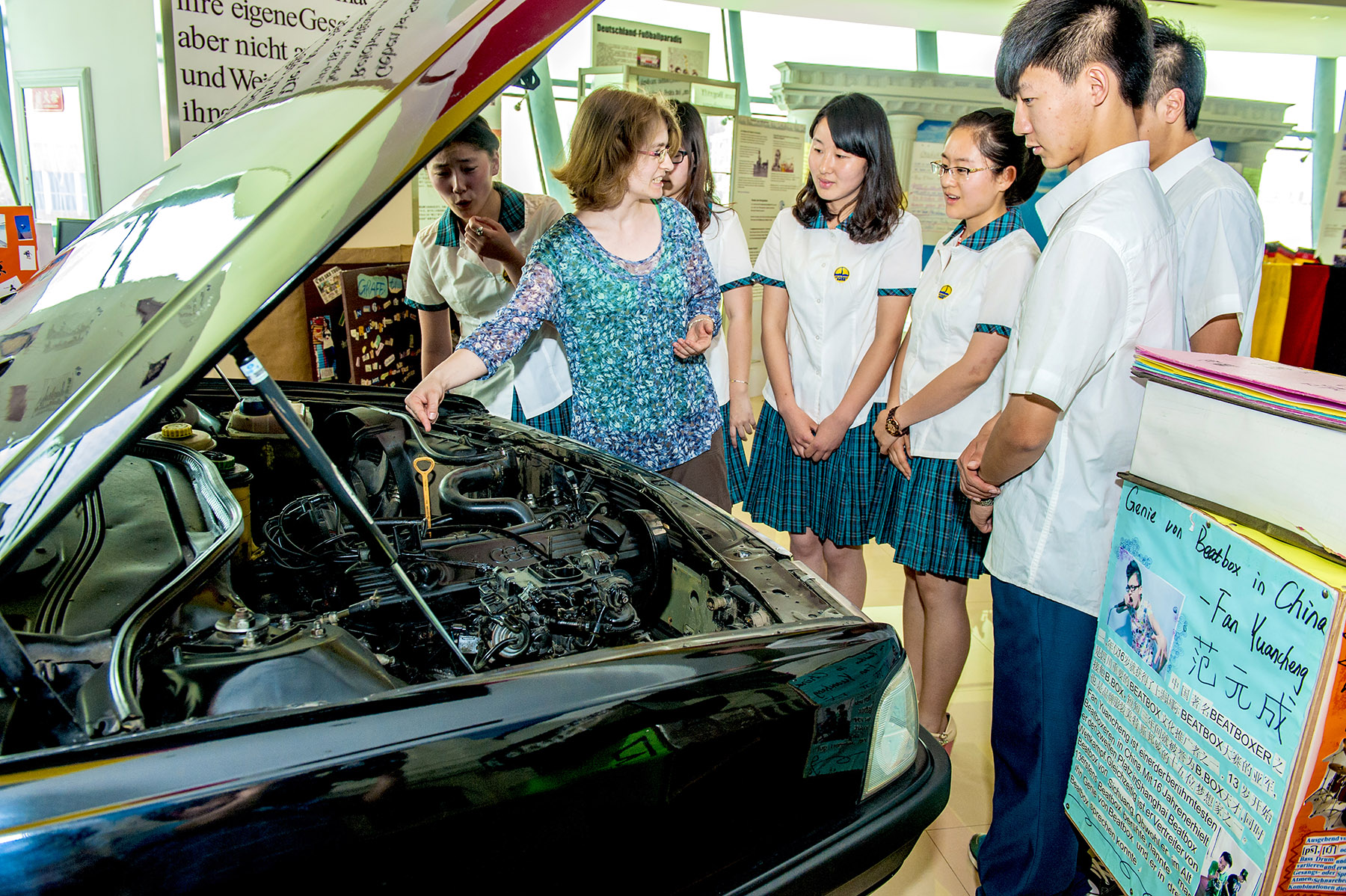
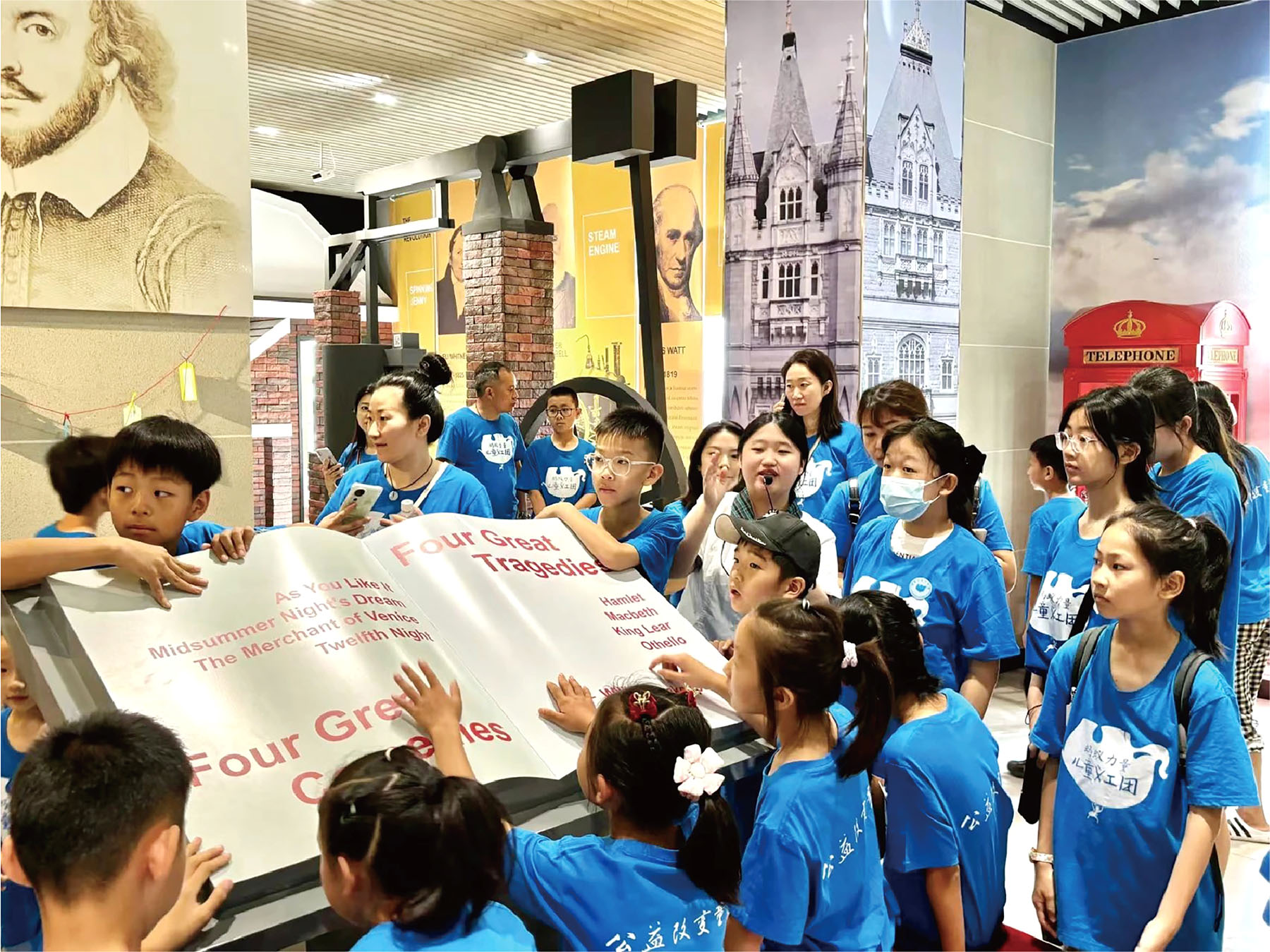
Beyond immersing herself in German culture, Jia took on a new role as a docent at the German Village, guiding visiting groups and study tours through the exhibits. But it was no easy task. She recalled leading a group of 30 elementary school students armed with notebooks, facing a barrage of questions — from festival customs and architectural styles to unexpected ones like, "Why doesn't the Victory Goddess have a head?"
Jia quickly pieced together a clever answer: victory looks different to everyone, so its expression is never fixed. The goddess's missing head, she explained, leaves room for interpretation — much like the deliberate "blank spaces" in traditional Chinese ink painting.
Experiences like this taught her that the job requires patience, knowledge, and a flexible mind. "Even when you don't know the exact answer, you still need to give children a response that feels reasonable and sparks their imagination," she said.
Since early 2024, the Global Village has received 20 visiting student groups. More than 180 university students now work as docents, helping younger visitors form their earliest "experience of the world".
Beyond guiding, JISU students take part in the village's operations in diverse ways. Over the past three years, the village has hosted more than 40 language clubs and 80 cross-cultural competitions and festivals, engaging more than 6,000 students in intercultural activities and discussions.
Global partners
International students have also become vital contributors. Serving as language partners, they work with faculty members to facilitate oral-practice sessions across the different villages.
Niafarra Ayla, an Indonesian student majoring in tourism management, is one of them. During her first session, she noticed many students were shy and worried about making mistakes.
"This is normal because everyone communicates differently," she said. "My role is to introduce lighthearted topics everyone feels comfortable talking about — like hobbies, food, and movies."
One Chinese student left a deep impression on her. Withdrawn at first, he gradually relaxed under Ayla's guidance and soon began participating confidently. Helping peers from different cultures meet in a shared conversational space feels deeply meaningful, she said.
Nadia Kloos, a student from Thailand, made similar discoveries. When faced with imprecise expressions or misunderstandings during Thai-language activities, she initially blamed her own teaching ability. But over time, she realized that communication isn't only about language.
"It also involves tone, facial expressions, gestures, how activities are organized, and even my attitude toward cultural topics," she said.
So Kloos began using simple sketches and short skits to engage students, encouraging them to observe, express emotions, and participate physically.
She also organized a Thai-festival-themed workshop to make culture more accessible. When students struggled with the Thai explanations she had prepared, she quickly shifted her plan — dividing them into small groups and using music and movement so they could experience rather than merely listen. The atmosphere immediately came alive.
Through these activities, Kloos has met students from around the world and regularly introduces aspects of Thai life and traditions.
"The value of the Global Village is that it keeps creating opportunities to be understood," she said.
Her experience echoes that of many instructors who use the village's immersive settings to reshape traditional teaching.
In one Russian-language practice session, for example, students sat on a bench "outside the Bolshoi Theater", discussing a performance, while others strolled through a birch grove toward a log cabin — scenes staged entirely within the Russian Village.
Practice-based sessions now account for nearly one-fifth of major-specific coursework hours, said Xu Xiujuan, who teaches Russian at the village.
Xu believes the village's strength lies in creating authentic scenarios that spark students' initiative.
"A natural affinity for a culture guides students forward," she said. "Only after they experience and grow to like it can they truly learn better."
Contact the writers at mengshuyan@i21st.cn
