

Oil master's two-year program cultivated a long line of prominent painters through his commitment and collaborative spirit, Lin Qi reports.
At the graduation party of a training class he instructed for two years, oil artist K. M. Maksimov (1913-93) said to his students at the Central Academy of Fine Arts in Beijing: "Now, (after two years of studying) all of you can take a rest for a few days. Then, in calm, you summarize the experiences and lessons (you learned in the class) … I hope that, in two or three years at most, I will be able to see your new works on show."
After teaching in Beijing from 1955 to 1957, Maksimov returned to his home country, then the Soviet Union.
Many of the 21 members in the "Maksimov class" became prominent figures in the circles of Chinese art and education in the decades that followed. Their works shaped the landscape of Chinese oil art in the second half of the 20th century. They also cultivated their own students, who have become influential in today's contemporary art scene.
READ MORE: Sketching a timeless tribute
Now, seven decades after Maksimov's class, the students, many in their 80s or older, and those who once worked with Maksimov at the Central Academy of Fine Arts, are paying tribute to this well-respected teacher and his contributions to Chinese oil painting with an exhibition at the CAFA Art Museum.
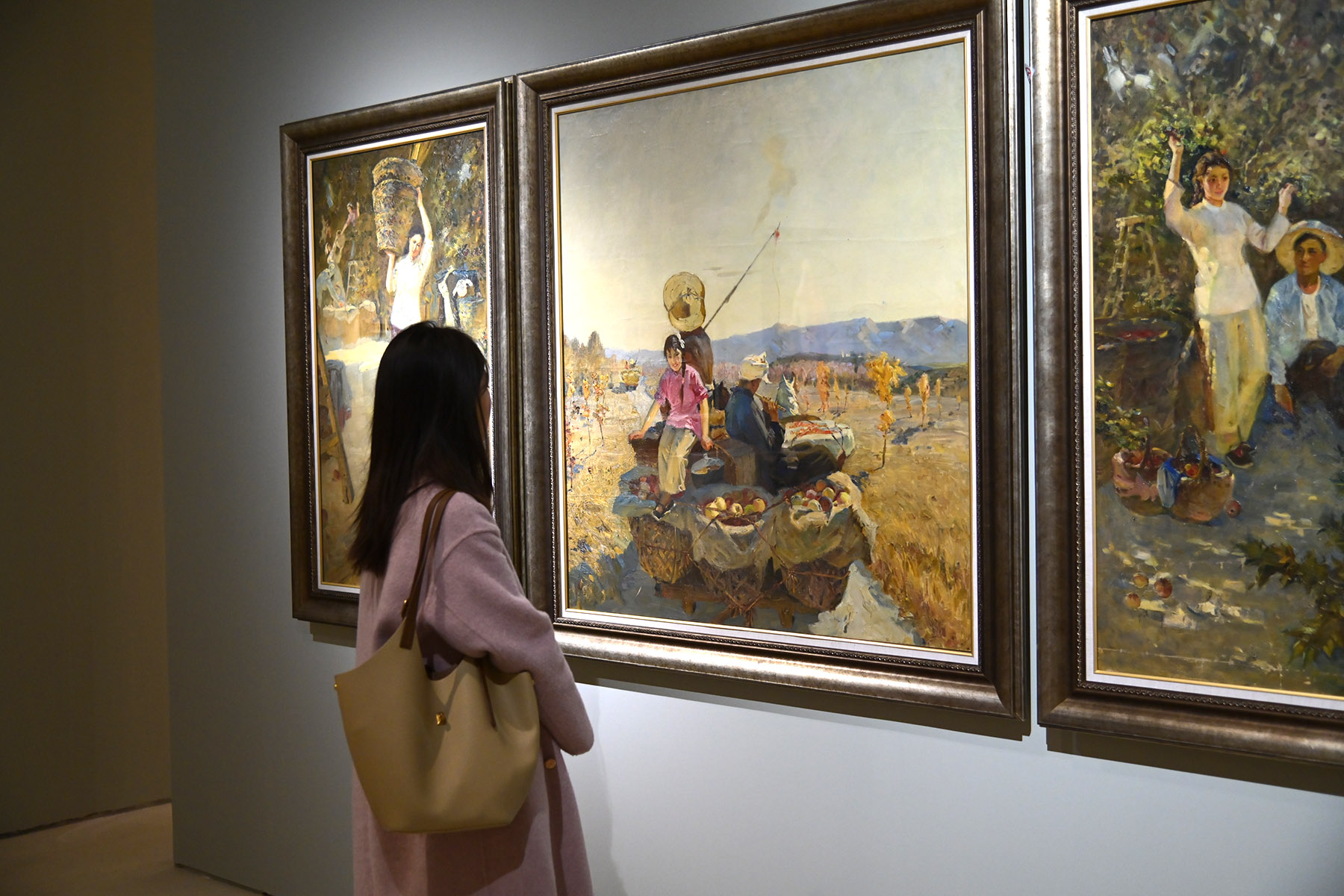
Imported Oil Painting: A Retrospective Exhibition of the Maksimov Oil Painting Training Program at CAFA (1955-1957) will be held until Jan 3. The exhibition showcases Maksimov's sketches, drawings, oil works, as well as work by those who attended his course at the academy, including manuscripts, photos, letters, documents, and publications to unfold the influential social and cultural contexts of the class.
Lin Mao, dean of the academy, says oil painting was introduced to the country by European missionaries during the Ming Dynasty (1368-1644). The early 20th century saw a trend of young people studying "yanghua" (foreign painting — mostly oil painting, watercolor and gouache) in Europe and Japan.
The Maksimov program claimed another milestone in the integration of Western art with Chinese aesthetics, which attests to the emerging social demands. After the founding of the People's Republic of China in 1949, students were sent to learn at I. Repin St. Petersburg State Academy Institute of Painting, Sculpture and Architecture; while a special two-year course, officially called the Maksimov Oil Painting Training Program, opened in Beijing.
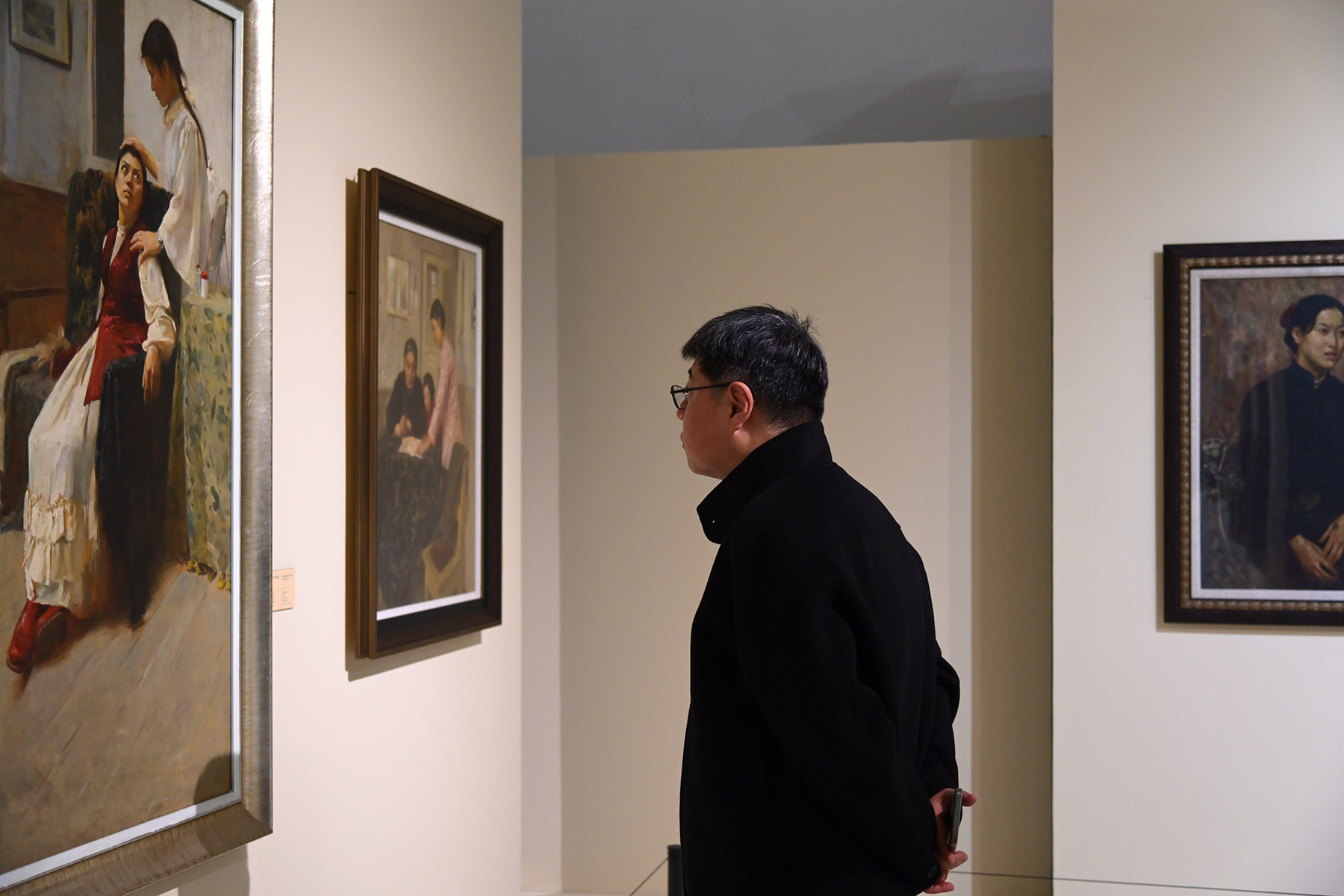
Lin says the exhibition hails "the commitment and collaborative spirit" of Maksimov, his students, and the people participating in this project to advance art skills and education, creating "an inspiring chapter" in modern Chinese art.
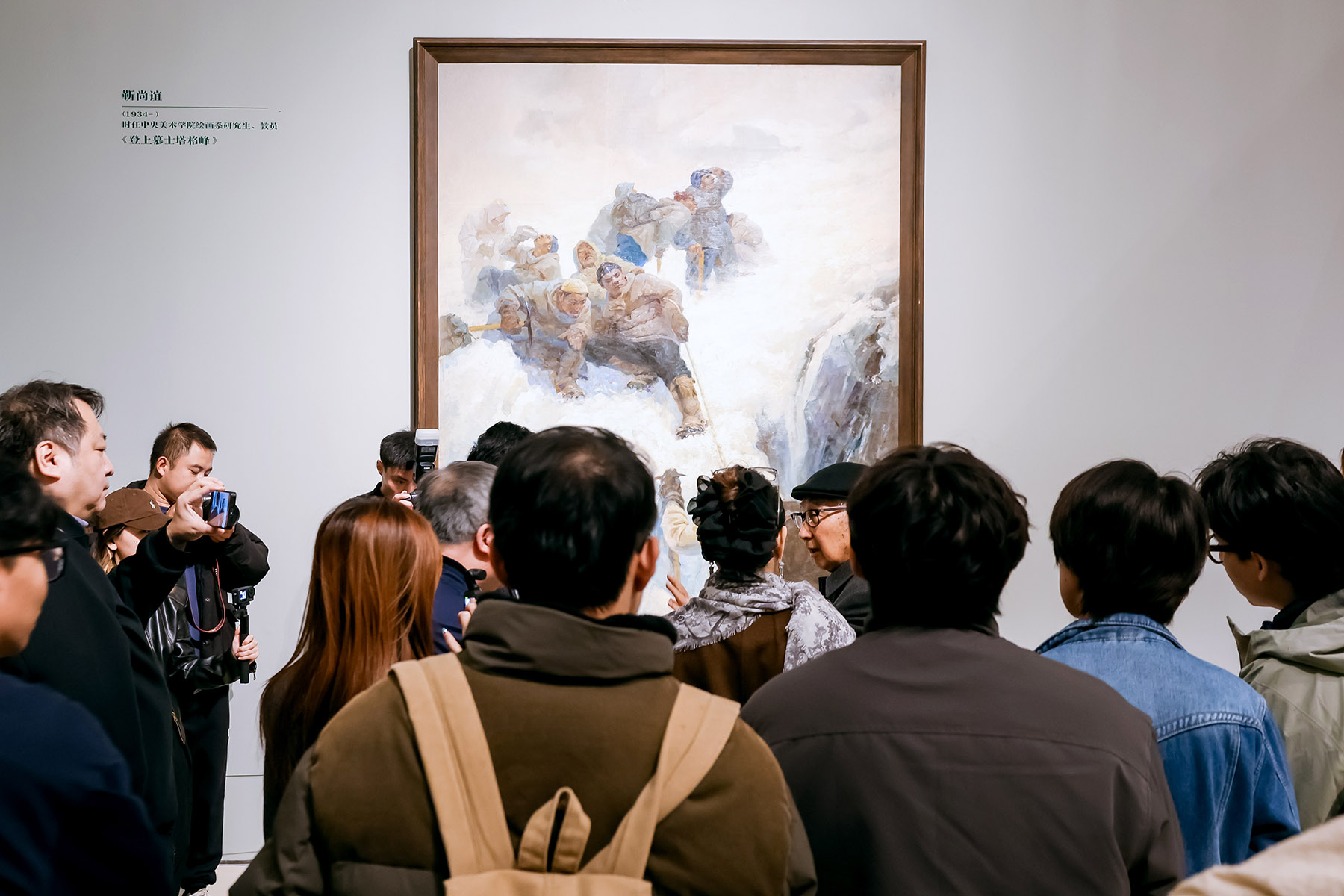
Maksimov's class cultivated students who enriched the public's art vision. One of his students, Jin Shangyi, 91, is known for a series of portraits that elicit a peaceful, meditative atmosphere. The exhibition displays his Climbing Muztagh Ata, which depicts mountaineers on their way to summit Muztagh Ata, a majestic peak in the Xinjiang Uygur autonomous region. This 2.7-meter-tall painting, created in 1957, is an example of Jin's endeavors in realism, long before he formed his individual style.
"At the time, there were seasoned artists who had returned from Europe, such as Lin Fengmian and Xu Beihong," says Jin, "although the country was wanting in good oil artists and a well-structured education system to cultivate them."
What Maksimov faced at the beginning was a class of young painters who had been trained but didn't truly understand the medium of oil painting and were particularly inexperienced in shading to render their subjects a refreshing, vibrant feeling. However, he later recollected in an article, The Two Years Spent with Chinese Students, that he had a class in which "every student was diligent, focused, and so much interested in learning".
In addition to perfecting their sketching techniques inside the classroom, Maksimov often took his students outside to learn how to capture the ephemeral qualities of natural light, which he believed to be indispensable. "Many life events happen on the streets: farmers work under the sun all day long, and construction workers pave the streets in daytime," he said.
"Painting outside and capturing the light are difficult ... painters need to work hard at that," he added.
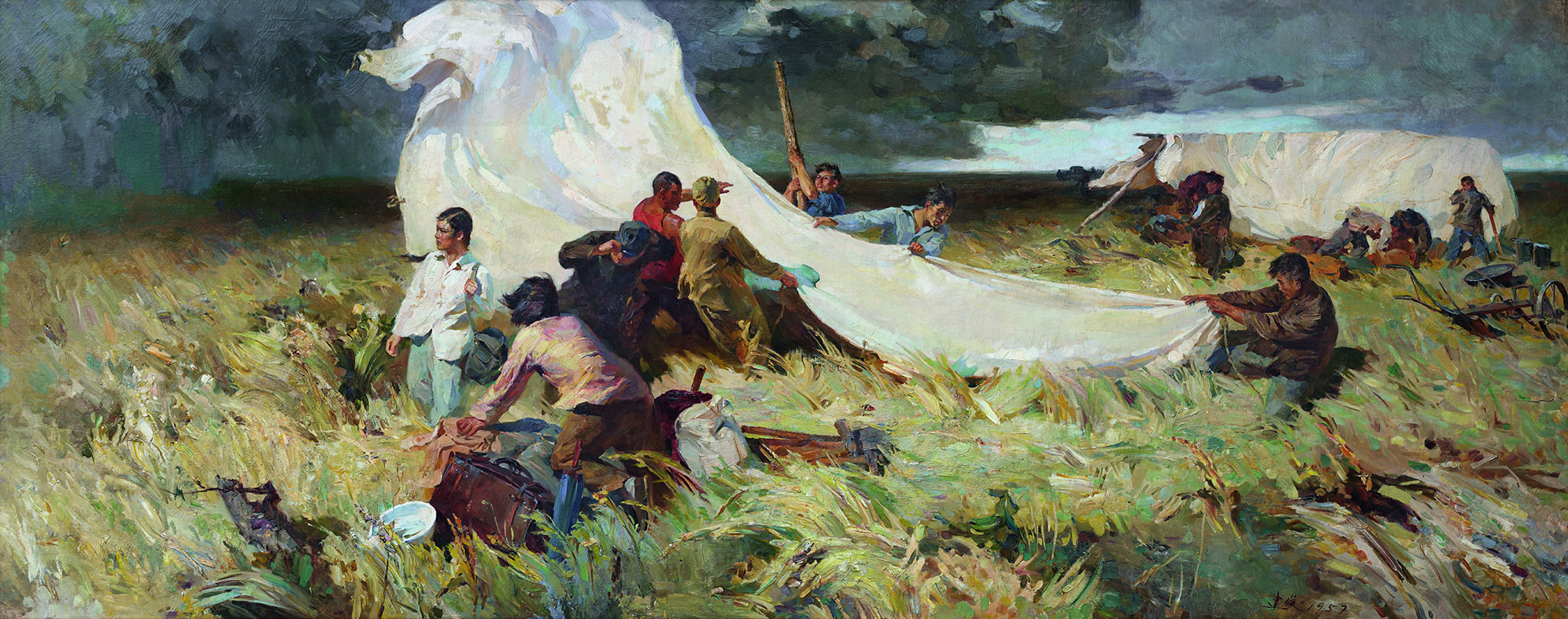
He went with the class to sketch the rural areas outside Beijing and the factories on the outskirts of the city, where they would observe people and paint. He instructed the students to present the subtlety of the varying tones of light and enhance contrast between the warm and cool hues of daylight. He wanted them to learn how to capture the fleeting atmosphere surrounding their subjects during different times of the day.
Maksimov wanted his students to see and feel the world the way their subjects did, and to understand that technique serves the realities. "He (Maksimov) often asked us to see if our works would make sense and be persuasive," said the late oil artist Yuan Hao about his teacher.
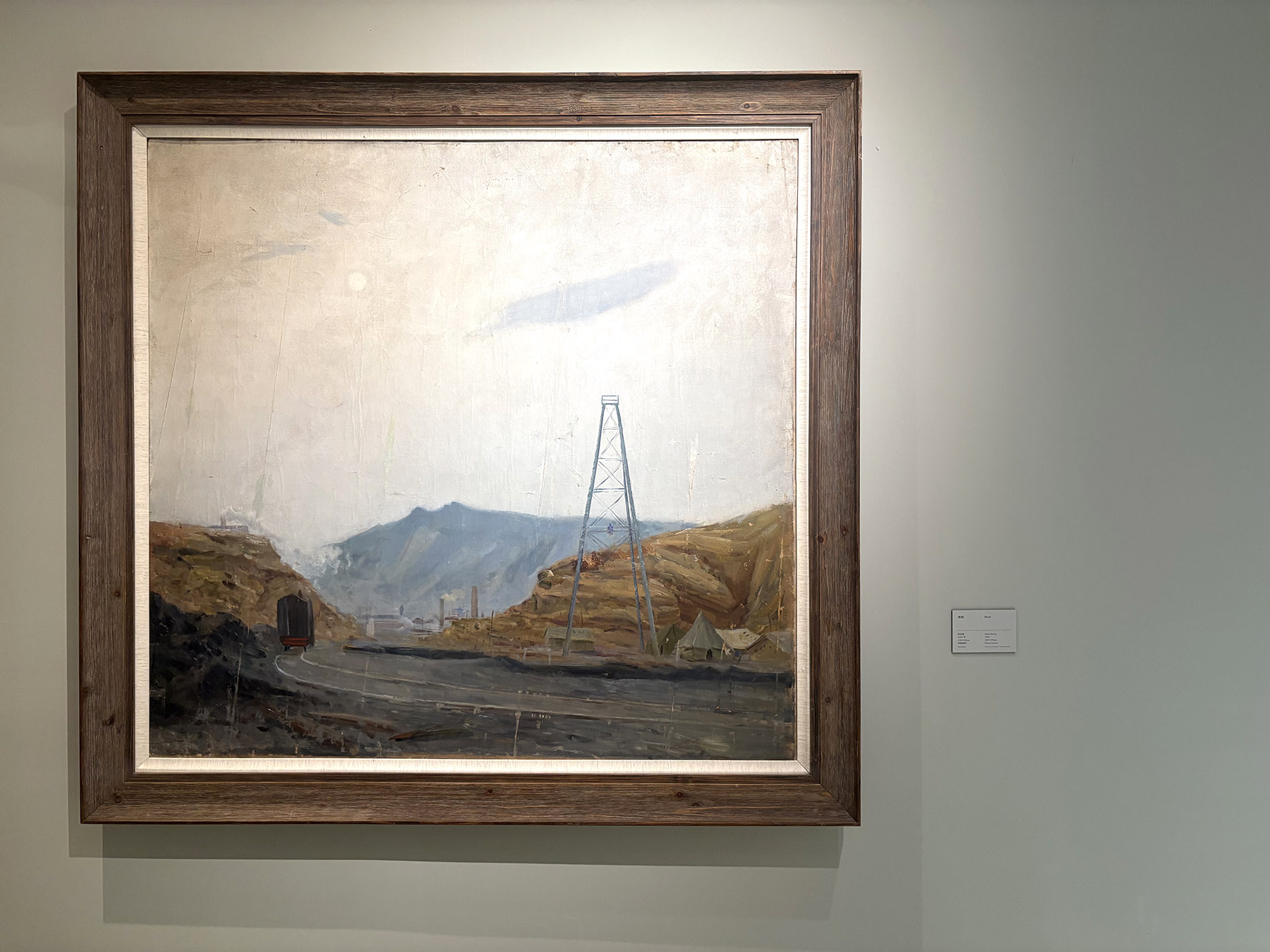
While attending the Maksimov class, Chen Beixin created Dusk, a painting now on display, which depicts a coal mine in Beijing's Mentougou district.
Explaining why he included a large area of sky in the painting, he says he was reenacting the feeling of coal miners, whom he spent a lot of time with: "After working underground for a long time, one would feel the sky looks rather bright and high. To show the reality and their true feelings was what Maksimov emphasized in his lectures."
ALSO READ: Exhibition honors artist's illustrious career
When the two-year program ended in 1957, Maksimov and some of his students traveled to Wuhan, Hubei province, as well as to Sichuan province, the Huashan Mountain in Shaanxi province, and Sanmenxia in Henan province, before reaching Chongqing, the last stop of the trip, where Maksimov bid farewell to his disciples and flew home.
The class is remembered as two years of a shared pursuit of beauty by artists from different cultural backgrounds, "the stories of which we need to tell the next generations as a precious heritage", says Cao Qinghui, the exhibition's curator and a professor of the academy.
Contact the writer at linqi@chinadaily.com.cn
