

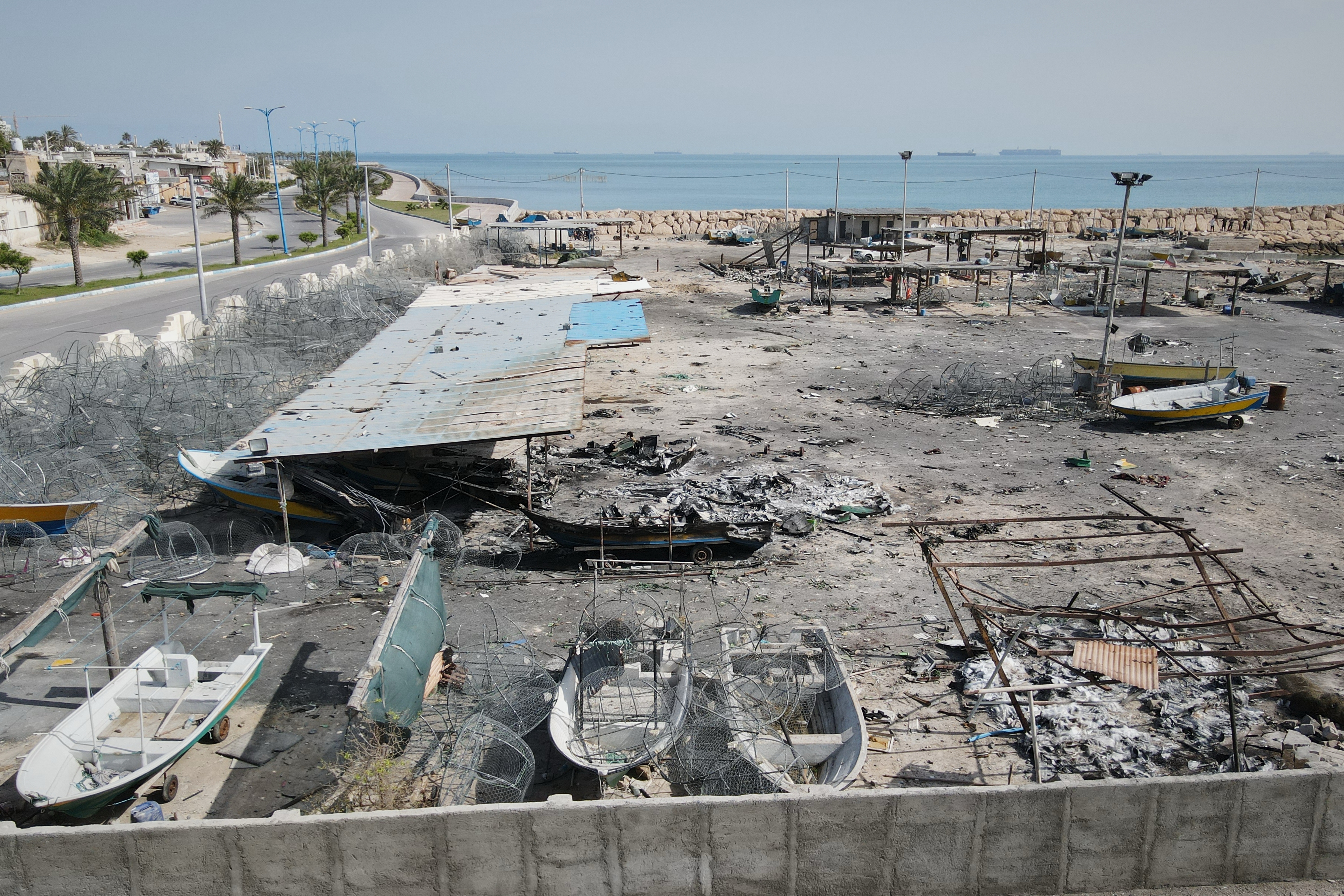
TEHRAN/JERUSALEM/BEIRUT/LONDON/MELBOURNE - Iran on Wednesday said it had struck several US bases in the region in retaliation for the latest wave of US attacks on Iran, further straining the ceasefire after Iran and Israel traded missile attacks in a recent major escalation.
Iran's Islamic Revolution Guard Corps (IRGC) said Wednesday that it launched a drone attack on the US Fifth Fleet in Bahrain in response to the US attacks on southern Iran.
The IRGC said it also targeted Ali Al Salem Air Base in Kuwait with drones, as well as four sites at the US al-Azraq base in Jordan using long-range missiles, Iranian media reported.
"In the event of continued hostility, heavier responses are on the way," the IRGC said in a statement.
ALSO READ: Trump: Israel could be left alone if war with Iran resumes
The US strikes began at 5 pm ET (2100 GMT) Tuesday, according to the US Central Command, which oversees US military operations in the Middle East.
The command said it struck Iranian air defense, ground control stations and surveillance radar sites near the strait with munitions from the US Air Force and Navy fighter jets.
A series of explosions was reported early Wednesday in the southern Iranian port city of Bandar Abbas, as well as Qeshm Island and Sirik County, triggering the activation of air defenses, the state-run IRIB news agency said, citing sources.
Meanwhile, the IRGC said that US forces attacked several locations in Jask, Sirik and Qeshm, damaging a telecommunications mast and destroying two water tanks in Sirik.
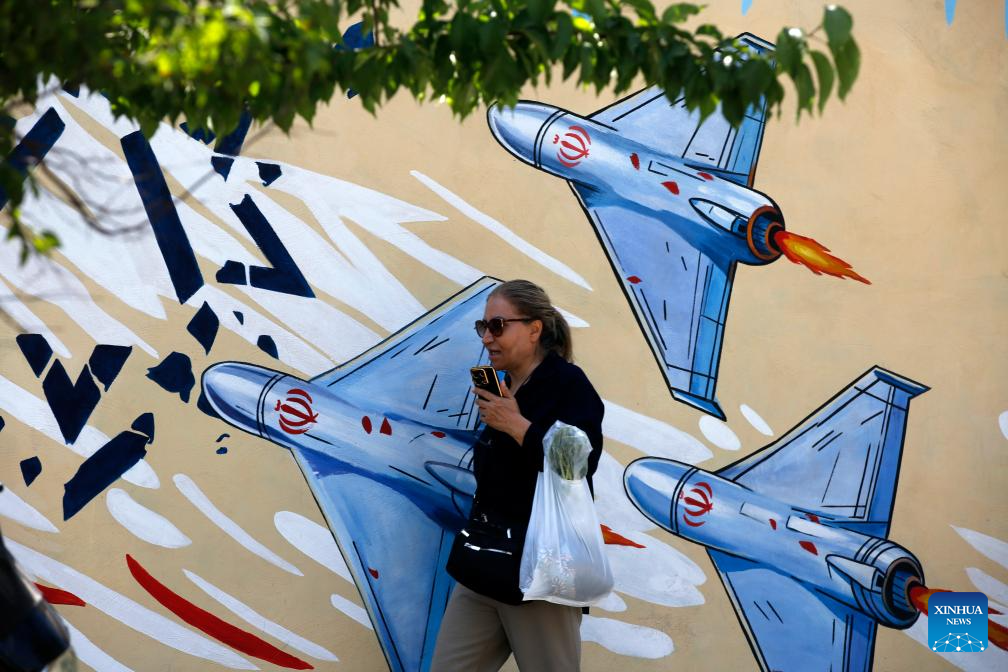
Hours later, the command said it had completed strikes against Iran, which was confirmed by the IRIB.
The latest wave of US attacks came after President Donald Trump claimed that Tehran had shot down a US Apache helicopter in the Strait of Hormuz, vowing "very strong, very powerful" response.
"I have just been informed ... that last night the Iranians shot down one of our highly sophisticated Apache helicopters while (it was) patrolling over the Strait of Hormuz," Trump said in a post on Truth Social.
Two pilots onboard the aircraft "are safe and uninjured," he said. "Nevertheless, the United States must, of necessity, respond to this attack."
However, the IRIB news agency quoted a military source as saying that "no offensive aerial military operation was carried out" over the Strait of Hormuz within the past 24 hours.
ALSO READ: Iran's IRGC says targeted 2 Israeli airbases in retaliatory attack
"If the enemy commits another malicious act under the pretext of a military helicopter's crash, it will face a decisive response," the source said.
Shortly after the US strikes, Iran's Foreign Minister Seyed Abbas Araghchi warned that Iran "will leave no attack or threat unanswered."
"Despite its defeats on the battlefield, the US opted to test our determination," Araghchi said on X. "Leave our region if you want to be safe. History of the Persian Gulf has many chapters on dire fates of intruding outsiders."
The Iranian Foreign Ministry on Wednesday strongly condemned the latest US "military aggression" earlier in the day against Iran, saying the "brutal" attacks were a "flagrant violation" of the UN Charter.
It also urged regional countries to prevent any use of their territories and facilities for designing, organizing, perpetrating and supporting "acts of aggression" against Iran, warning of retaliatory actions.
Following the attacks, Araghchi made separate phone calls to his Turkish and Saudi counterparts, Hakan Fidan and Faisal bin Farhan Al Saud, over the latest regional developments, the ministry said.
Israel says prepared for bigger blow on Iran
In Jerusalem, Israeli military chief Eyal Zamir said on Tuesday that his country's strikes against Iran on Monday were "preparation for a much more significant and forceful blow."
"We are prepared to strike Iran again with another severe and far-reaching blow," Zamir said during a drill in northern Israel, without elaborating.
Israel launched airstrikes on Beirut's southern suburbs on Sunday, killing at least two people and wounding some 20 others, according to Lebanese sources.
The strikes triggered a series of mutual attacks between Iran and Israel from Sunday night into Monday, marking the most serious escalation since a ceasefire between Iran, the United States and Israel in April.

Later on Monday, Iran and Israel signaled a halt to their attacks against each other. Still, Israel has warned that it would strike Beirut in response to any attack on northern Israel and continue attacks against Hezbollah in Lebanon, whereas Iran has cautioned that any further Israeli attack on Iran or Lebanon would trigger a much more "severe and crushing" response from Tehran.
Earlier on Tuesday, the Iranian army said two members of its air defense force were killed in the Monday Israeli strikes while defending Iran's airspace.
'16 killed in Israeli airstrikes in S. Lebanon'
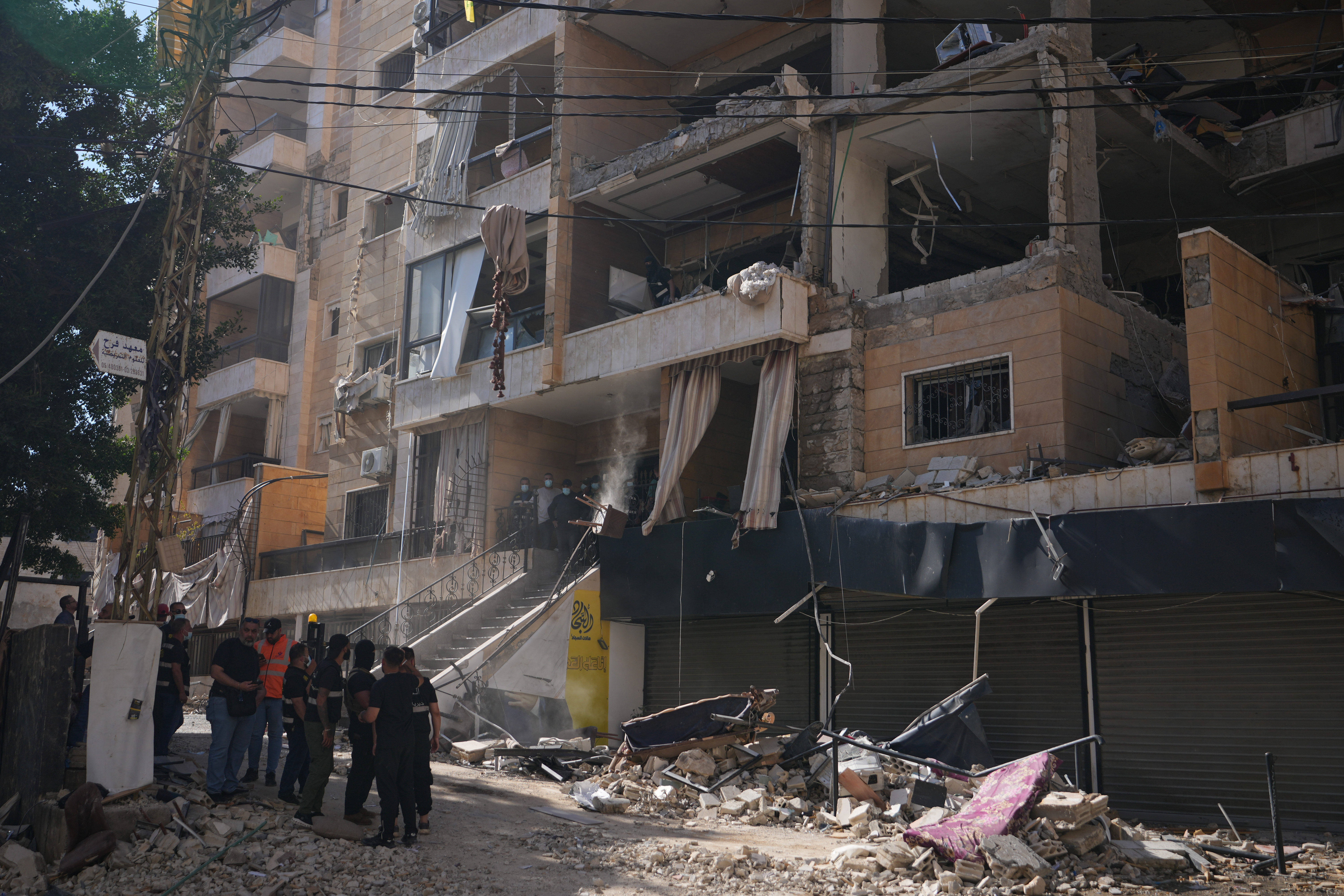
In southern Lebanon, at least 16 people were killed and dozens injured in a wave of Israeli airstrikes and drone attacks on Tuesday, according to Lebanon's sources, underscoring the continuing volatility along the Lebanese-Israeli border.
The deadliest attack targeted a residential area in the southern city of Tyre, where eight people were killed and 32 others wounded, according to Lebanon's National News Agency (NNA) and local rescue officials.
Lebanon's Public Health Emergency Operations Center said the cumulative toll from Israeli attacks between March 2 and June 9 had reached 3,666 dead and 11,321 injured.
The Israeli military said it intercepted a rocket fired by Hezbollah at Israeli troops in southern Lebanon on Tuesday night.
The continued violence comes despite a ceasefire agreement reached on June 3 following trilateral negotiations in Washington involving Lebanon, Israel, and the United States.
IMO warning on Hormuz Strait transits
Also on Tuesday, the secretary-general of the International Maritime Organization (IMO) warned against vessels' attempts to transit the Strait of Hormuz without credible security guarantees, stressing that no commercial consideration can justify exposing seafarers to extreme danger.
"I am increasingly concerned by reports that vessels continue to attempt to transit the Strait of Hormuz without any credible security guarantees," IMO Secretary-General Arsenio Dominguez said in a statement.
READ MORE: US forces down 2 Iranian drones that allegedly threatened Hormuz ships
Dominguez said seafarers had already been killed, injured and detained in recent incidents, while the security situation in the region remained highly volatile and lacked reliable assurances for safe navigation.
The IMO chief emphasized that ship masters and shipping companies bear ultimate responsibility for voyage planning and risk assessment under international safety and security management frameworks.
According to IMO figures, as of June 9, a total of 42 maritime incidents had been confirmed since the outbreak of the conflict in late February, resulting in 11 confirmed seafarer fatalities.
Aussie PM says ‘very worried’ about Mideast situation
In Melbourne, Prime Minister Anthony Albanese said on Wednesday that Australia is "very worried" about the human impact of the war in the Middle East after the United States launched new strikes against Iran.
Albanese said that Australia wants to see a de-escalation of the conflict in the Middle East, declaring that a permanent ceasefire would be in everyone's interest.
"We're very worried both about the human impact, of course, that comes with war, but also the economic impact that is having a massive effect on the global economy will get worse rather than better," he told Australian Broadcasting Corporation (ABC) television.
