

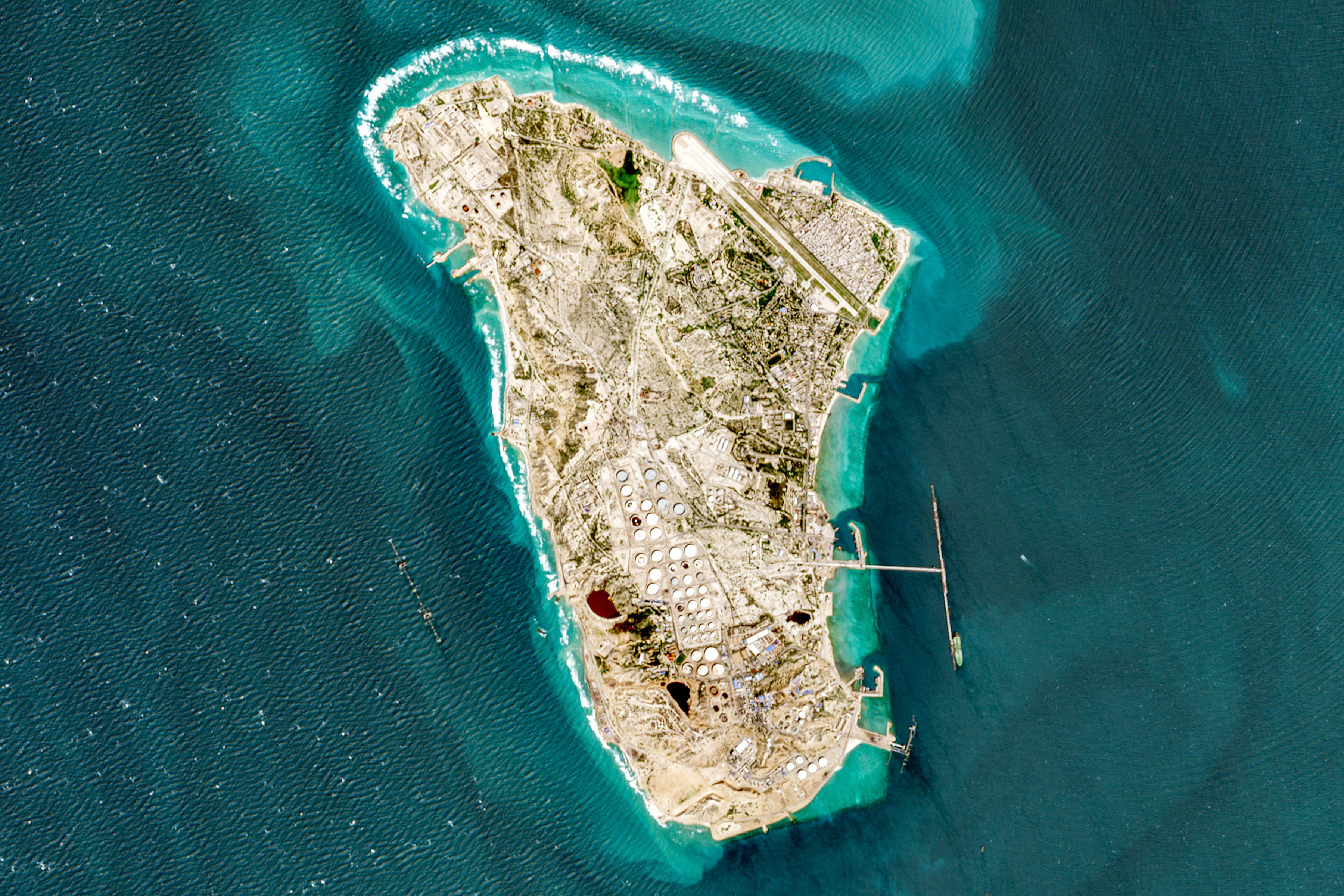
WASHINGTON/ISLAMABAD/JERUSALEM/TEHRAN/VIENNA - US President Donald Trump said Sunday that he wants to "take the oil in Iran" and could seize Kharg Island, the country's oil export hub.
In an interview with the Financial Times, Trump said, "To be honest with you, my favorite thing is to take the oil in Iran," comparing the US move to Venezuela, where Washington intends to control the oil industry "indefinitely" after it forcibly seized President Nicolas Maduro in January.
Taking Iranian oil would involve seizing Kharg Island, through which over 90 percent of Iran's oil is exported, the Financial Times reported, warning that such "an assault" risks raising casualties and prolonging the war.
"Maybe we take Kharg Island, maybe we don't. We have a lot of options," it quoted Trump as saying. "It would also mean we had to be there for a while."
ALSO READ: Report: Pentagon prepares for weeks of ground ops in Iran
He added that he believed Iran had little or no defense on the island. "We could take it very easily," he said.
Trump's remarks came as he steps up the US military buildup in the Middle East while weighing a military operation to extract nearly 1,000 pounds of uranium from Iran, according to US officials.
He has also encouraged his advisers to press Iran to agree to surrender the material as a condition for ending the war, The Wall Street Journal reported, citing an anonymous source familiar with Trump's thinking.
The Pentagon is reportedly deploying up to 10,000 additional ground troops to the region, with the US Central Command announcing Saturday that over 3,500 troops, including 2,500 Marines, had arrived in the Middle East.
Despite the threat, Trump noted that indirect talks between the United States and Iran via Pakistani "emissaries" were making progress. "A deal could be made fairly quickly," he said.
Oil prices have surged since the United States and Israel launched massive attacks on Iran on Feb 28, with Brent crude rising as high as $119.5 a barrel in March, the highest since June 2022.
Pakistan's initiative
In Islamabad, the foreign ministers of Pakistan, Saudi Arabia, Türkiye and Egypt on Sunday expressed full support for Pakistan's initiative to host peace talks between the United States and Iran.
Pakistan's Deputy Prime Minister and Foreign Minister Mohammad Ishaq Dar said in a televised message that participants agreed that dialogue and diplomacy remain the only viable path to achieving lasting peace and emphasized the need to prevent further military escalation in the Middle East.
Dar said he had briefed the visiting foreign ministers on the prospects of potential talks between the United States and Iran, noting that both sides have expressed confidence in Pakistan's role as a facilitator.
Houthi drones
On Monday, the Israeli Defense Forces said its air force intercepted two drones launched by Houthi forces in Yemen.
The drones triggered air raid sirens in the southern city of Eilat on the Red Sea.
The Houthi group issued a broad warning on Friday, stating they were prepared to act if the regional conflict, sparked by a Feb 28 strike on Iran, continues to widen.
On Saturday, Houthi forces fired two missiles toward southern Israel, marking the first time the group attacked Israel since the beginning of the conflict. The missiles were intercepted, according to the Israeli military.
The group had previously targeted shipping lanes in the region, striking vessels in the Red Sea in retaliation for the Israeli offensive against the Gaza Strip, an enclave of Palestine.
Tehran attacked
On Sunday night, several areas in the Iranian capital Tehran and the neighboring Alborz province came under US and Israeli attacks, which led to blackouts in a number of neighborhoods, the semi-official Fars news agency reported.
In Tehran, the strikes targeted five districts of the city and hit some residential units, the report added.
According to Fars, the power outage in parts of Tehran and Alborz was due to the bombs' shrapnel that damaged electricity facilities and installations, including a high-voltage transmission tower in Alborz and a substation in Tehran.
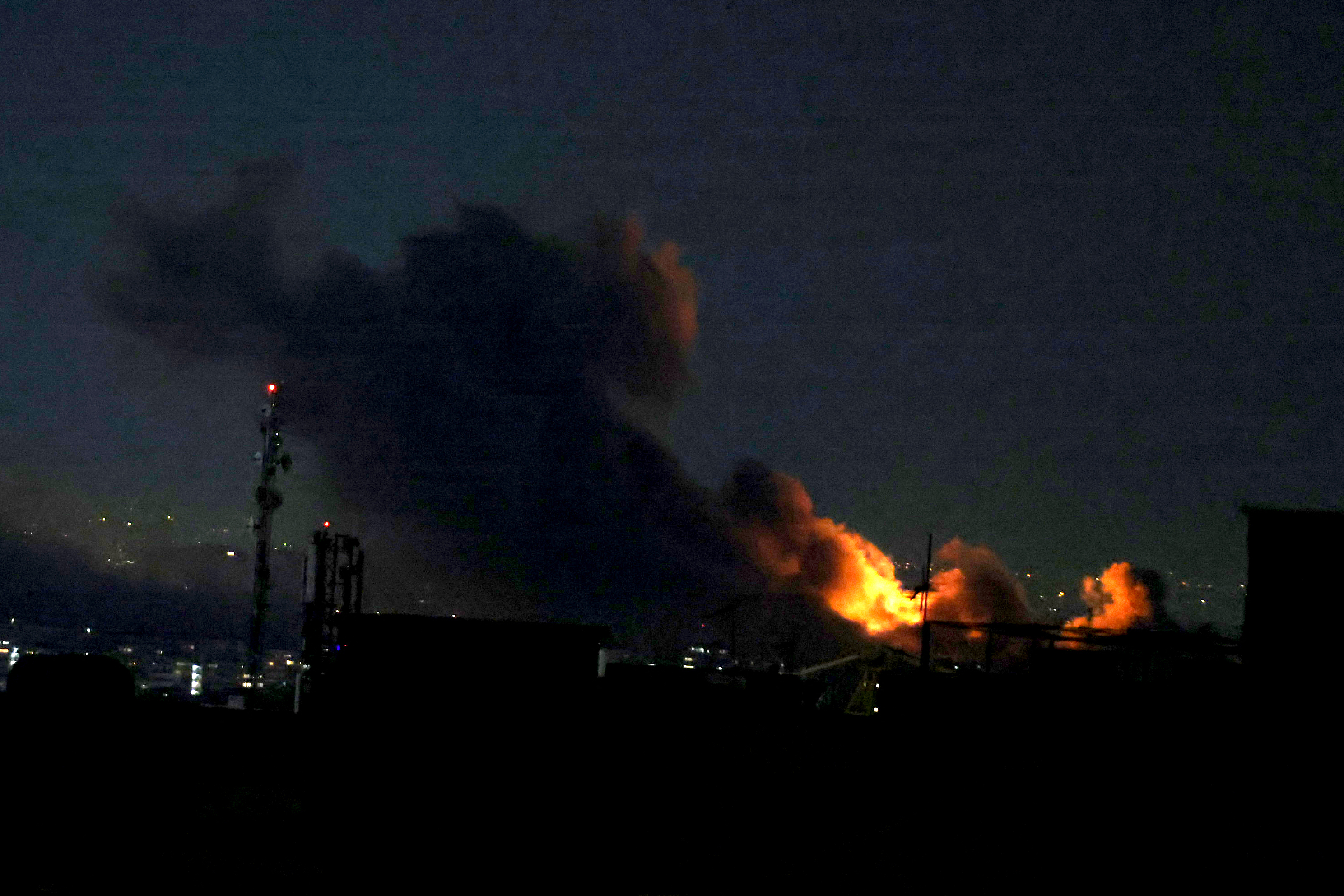
Fars later reported that electricity supply in all affected areas has been resumed and is stable.
The Israeli military said in a statement on Sunday night that it is striking targets across Tehran.
IRGC: Israeli, US unis legitimate targets
Iran's Islamic Revolution Guards Corps (IRGC) warned Sunday that it now considers all Israeli and US universities in West Asia "legitimate targets," following attacks on Iranian universities.
The IRGC issued the warning on its official news outlet Sepah News, responding to the attacks on the University of Science and Technology in Tehran on Saturday and on the Isfahan University of Technology in central city of Isfahan on Thursday.
It said all Israeli and US universities will remain legitimate targets until Iran strikes two of them in retaliation.
The IRGC warned staff, students and residents near the universities to stay at least 1 km away to avoid being harmed.
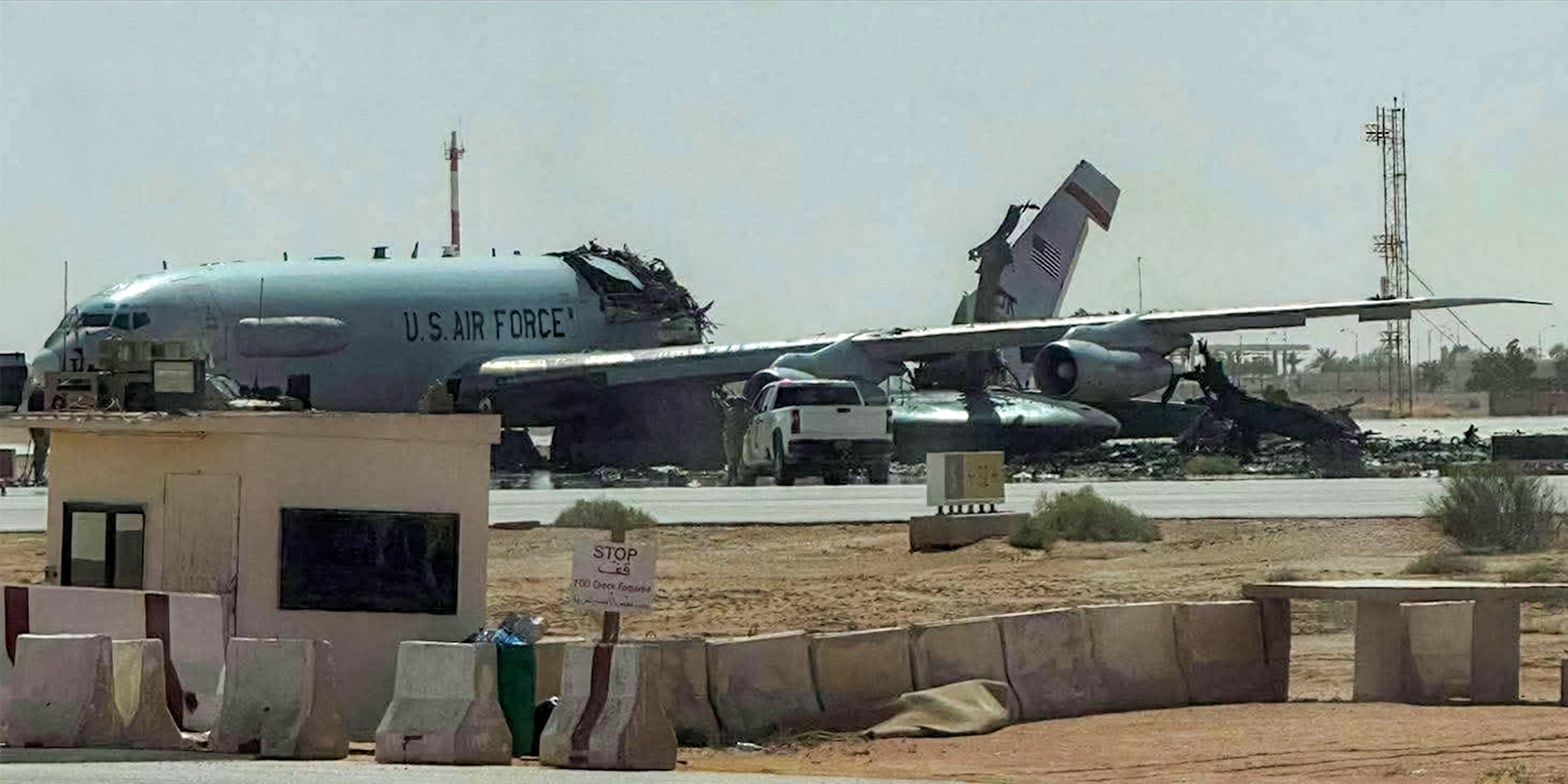
The IRGC also said on Sunday that it has completely destroyed a US E-3 Sentry aircraft equipped with an airborne warning and control system (AWACS) in a recent missile and drone operation against the Prince Sultan Air Base in Saudi Arabia.
In a statement published on its official news outlet Sepah News, the IRGC said the operation was conducted by its Aerospace Division.
Other nearby aircraft also sustained serious damage during the strike, it added.
On Friday, the IRGC attacked the Prince Sultan Air Base, located some 96km (60 miles) southeast of the Saudi capital Riyadh, damaging several KC-135 aerial refueling tankers and destroying one completely.
Heavy water production plant severely damaged
Meanwhile, Iran's heavy water production plant at Khondab, located in central Iran, has been severely damaged and is no longer operational, the International Atomic Energy Agency (IAEA) said on Sunday.
"Based on independent analysis of satellite imagery and knowledge of the installation, the IAEA has confirmed the heavy water production plant at Khondab, which Iran reported had been attacked on March 27, has sustained severe damage and is no longer operational," the IAEA said on social platform X.
The plant contains no declared nuclear material, the IAEA added.
READ MORE: Rubio: Iran operation to conclude in weeks
The developments came amid a US-Israel-Iran conflict starting from Feb 28, with heavy fighting continuing between the relevant parties and no breakthrough on a ceasefire as it entered its 30th day on Sunday.
